A 300- to 400-Year-Old Black Coral Found Deep in New Zealand Astonishes Researchers
A giant black coral reported from Fiordland—about four metres high, 4.5 metres wide and estimated at 300–400 years old—shows how slowly deep-sea animal forests grow and why exact context matters.
Mira Vale ·
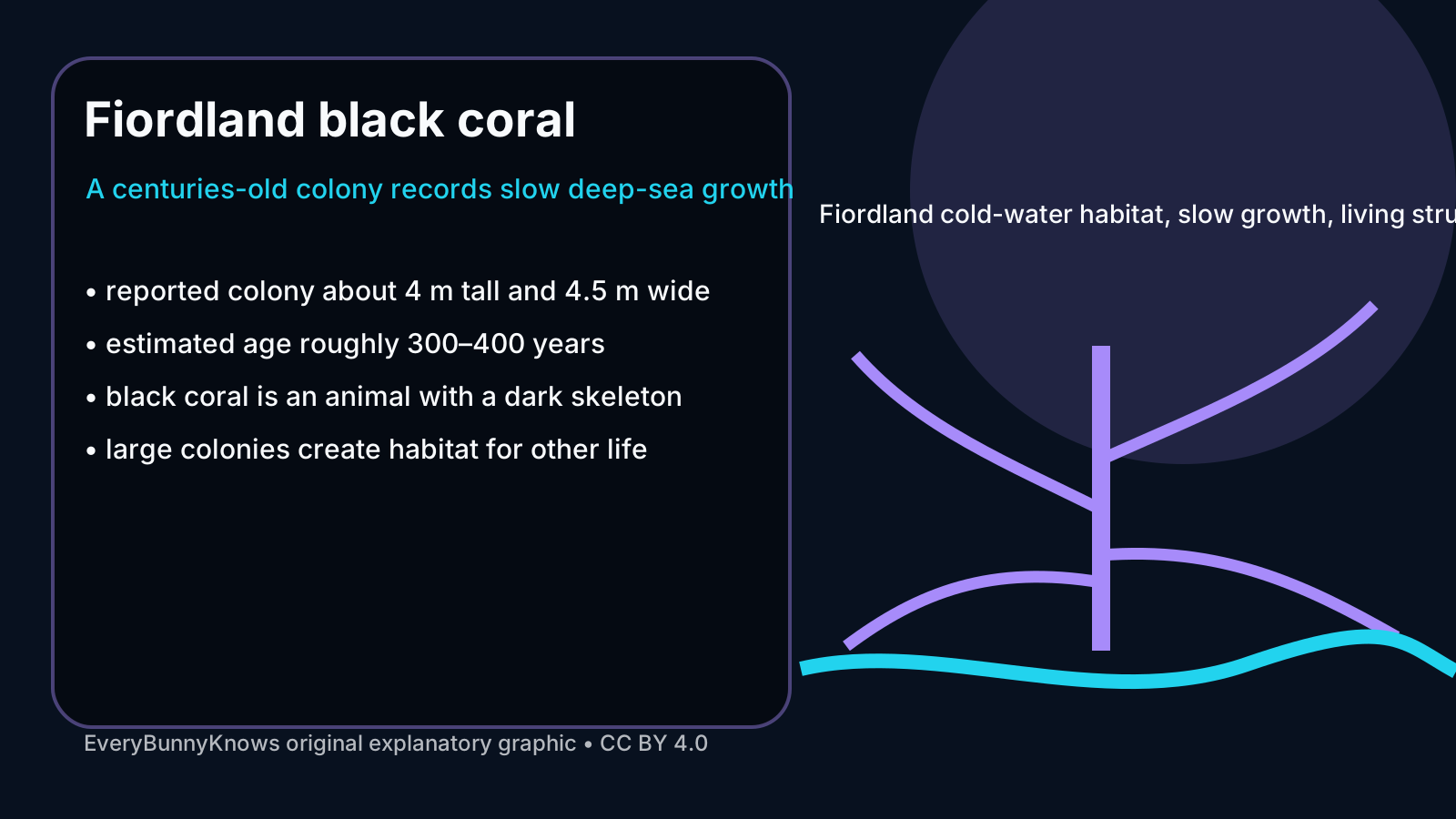
In the dark water of Fiordland, New Zealand, researchers reported a black coral colony so large that its size changes the way a casual reader imagines deep-sea life. The colony was described as roughly four metres tall and about 4.5 metres wide, with an estimated age of 300 to 400 years. Those numbers make the animal feel less like a “specimen” and more like a living piece of seafloor architecture, older than many coastal towns and still filtering food from moving water.
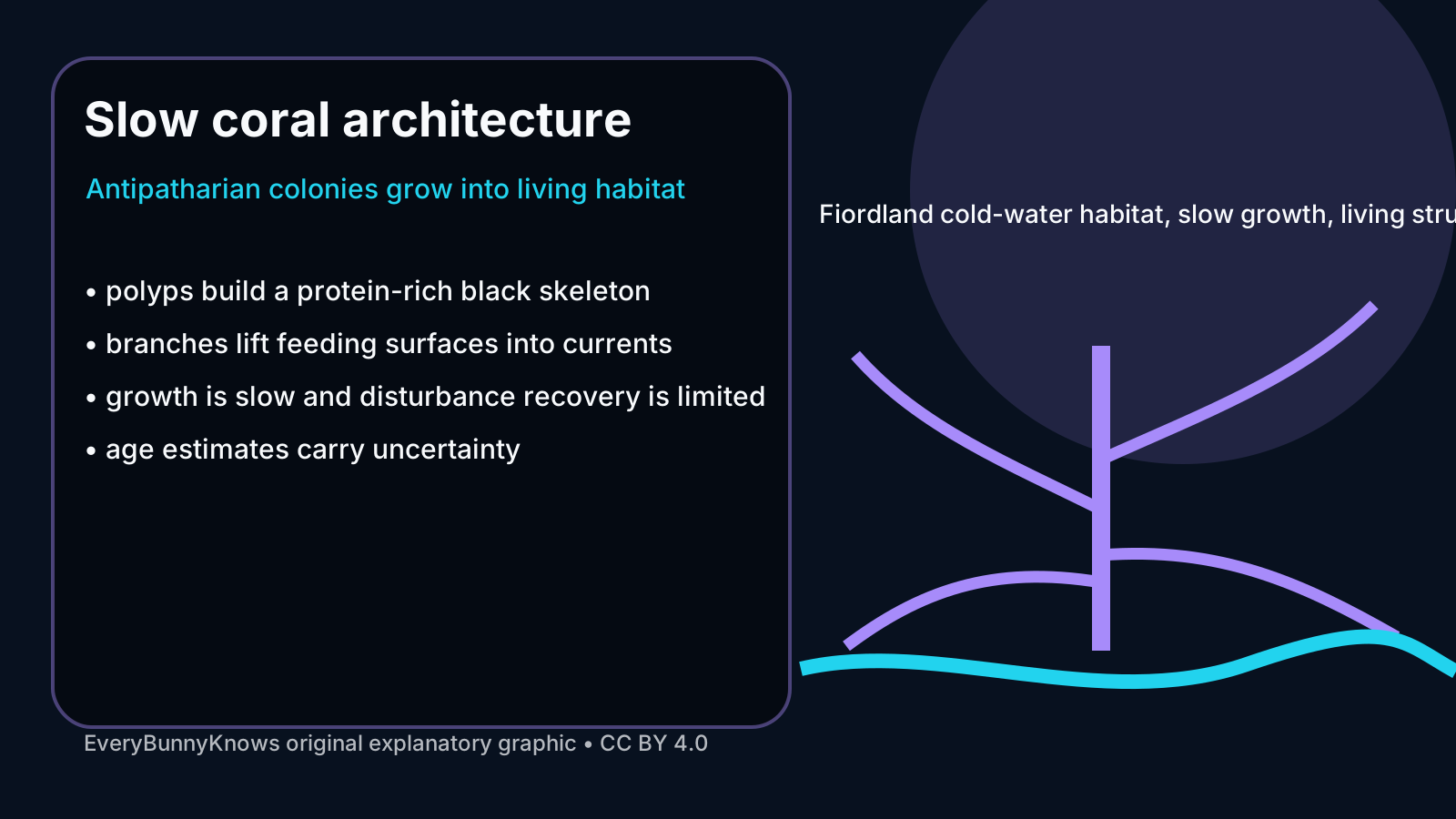
Black corals are antipatharian cnidarians. Their living polyps can look pale or bright on the outside, while the skeleton beneath is dark, tough and protein-rich, which gives the group its common name. Unlike tropical reef-building corals that lay down massive calcium-carbonate frameworks, black corals often grow as branching colonies that lift feeding surfaces into currents. Each branch is built slowly by tiny animals capturing plankton and organic particles. In cold, dim, deep or fjord environments, that slow growth means a large colony can represent centuries of stable conditions.
Fiordland makes the story more specific. The southwest of New Zealand is cut by steep glacial fiords where dark, tannin-stained freshwater can sit above colder seawater and alter the light climate below. The region is known for unusual black-coral communities that can occur shallower than expected in some fiords because the dark surface layer mimics deeper-water light conditions. A giant colony found in deeper Fiordland water therefore belongs to a wider New Zealand context: steep land, cold water, complex currents and habitats that are difficult to survey without divers, cameras or remotely operated vehicles.
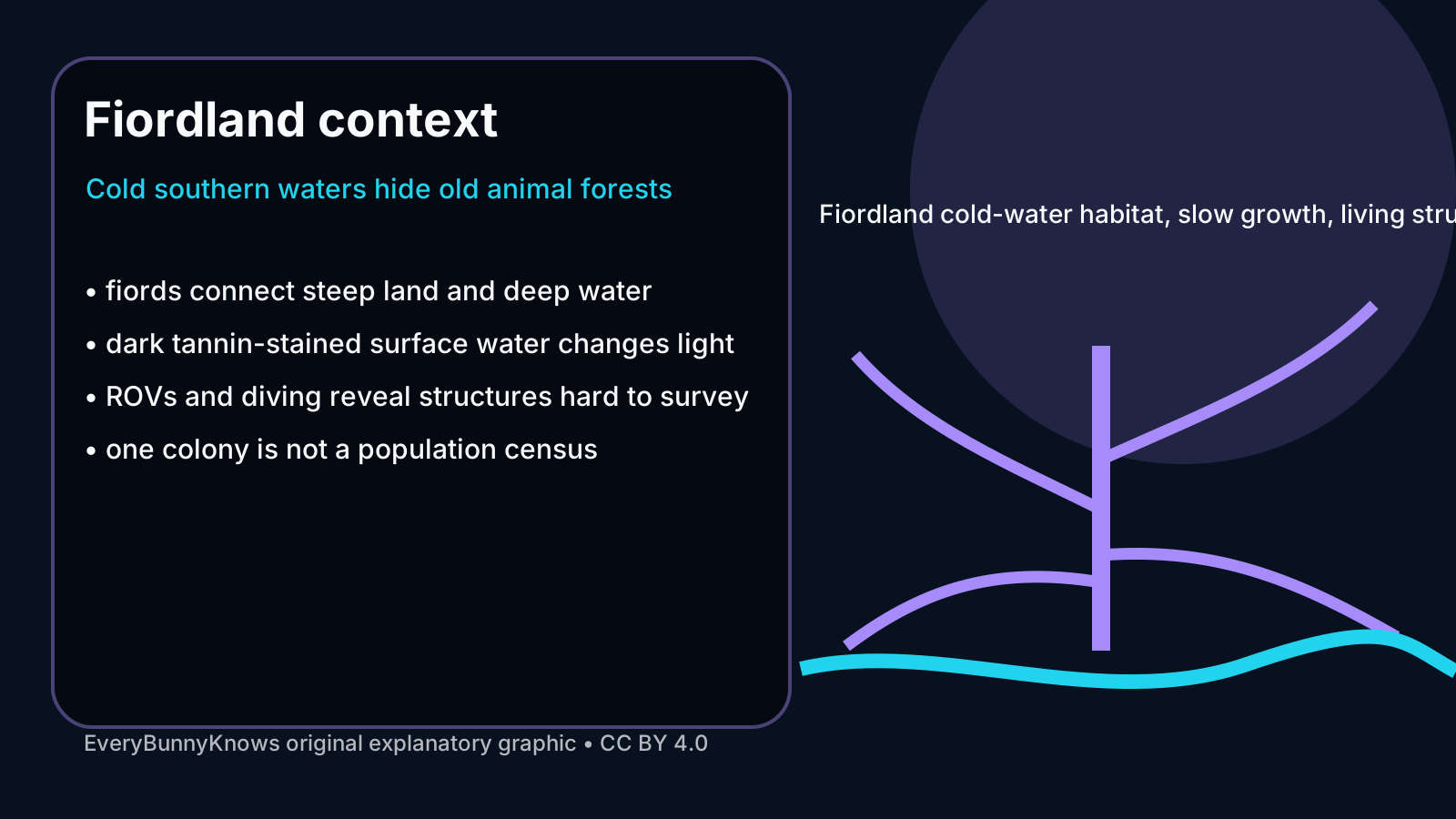
The ecological mechanism is habitat formation. A large coral colony adds three-dimensional structure to otherwise open seafloor or rocky wall. Small fishes and invertebrates can shelter among branches; plankton-feeding animals can use the same currents; other organisms may settle nearby. That does not mean one colony is a whole ecosystem by itself, but it can act as a node in a deep-water animal forest. When such structures are broken by anchors, fishing gear, careless contact or sediment stress, the lost shape may take decades or centuries to replace.
The age estimate also deserves care. Researchers can infer age from colony size, growth rates, radiometric methods or comparisons with known black-coral growth, but a 300- to 400-year figure is still an estimate unless the specific method is spelled out and sampled. Large size does not automatically prove exact age, and one spectacular colony does not prove that a population is thriving. It does, however, mark Fiordland as a place where long-lived coral habitat can persist and where surveys may still reveal structures that were unknown to science and management.
That is why accurate images and words matter. A wrong coral photograph, a generic reef scene or a chart unrelated to coral biology would mislead readers. The important picture is not just “something underwater.” It is a branching antipatharian-style animal in the New Zealand fjord setting, with the humility that public reports may show the discovery while scientific follow-up refines species identity, age and distribution.
The hopeful lesson is patient rather than dramatic. Discoveries like this help managers decide where anchoring, fishing and tourism need extra care, and they remind the public that deep habitats are not empty space. Some are old living archives. To protect them, scientists first have to find them, measure them and describe their limits honestly.