A 400-Year-Old Black Coral in Fiordland Shows How Slowly the Deep Sea Builds a Refuge
A four-metre black coral found in Fiordland is estimated at 300–400 years old, making it a living structure whose size, slow growth and protected status matter for New Zealand’s deep-water conservation.
Felix Arden ·
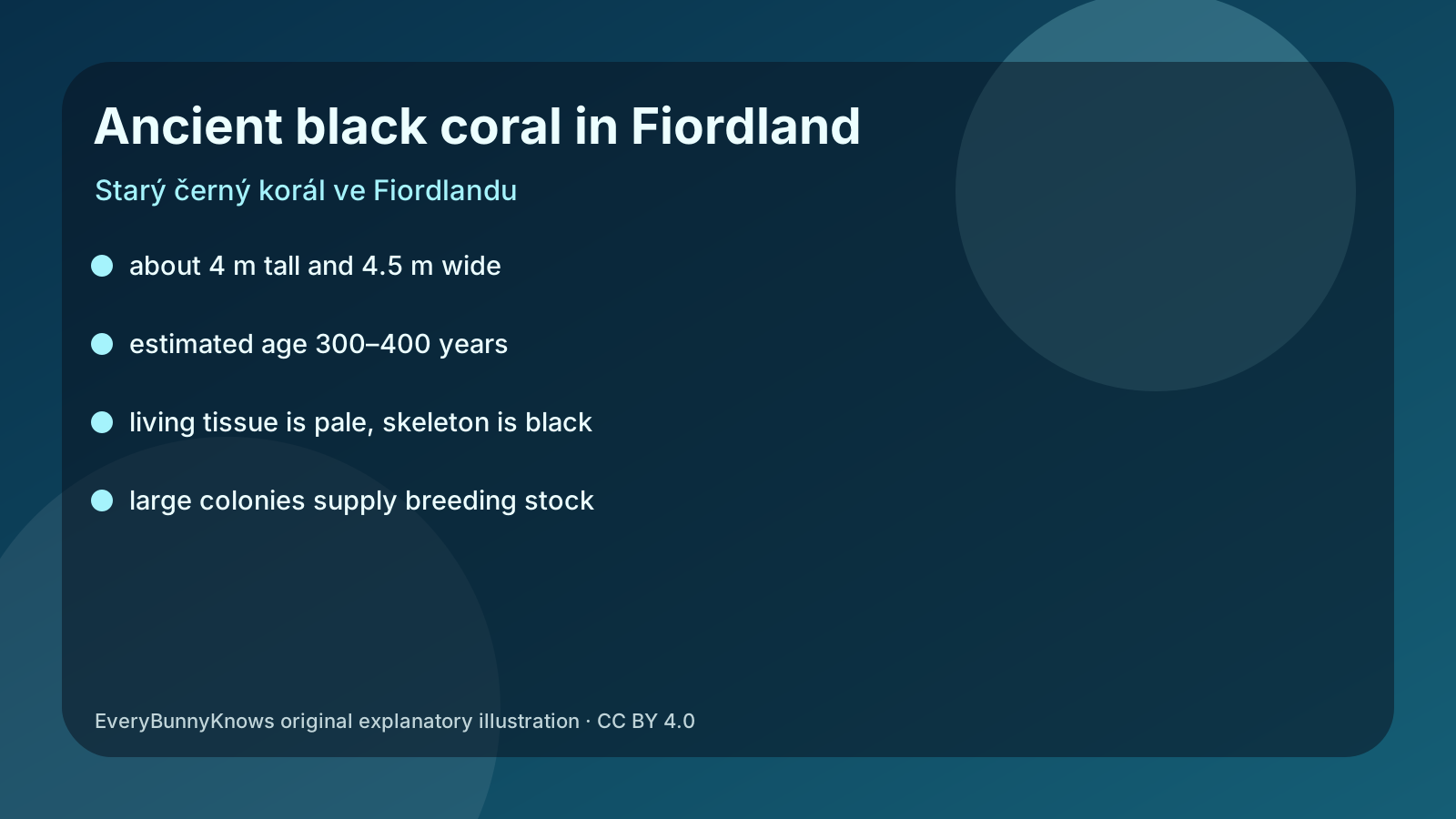
The black coral found in New Zealand’s Fiordland is impressive because it turns time into a visible structure. Divers working with Te Herenga Waka Victoria University of Wellington, the Department of Conservation and the Fiordland Marine Guardians encountered a colony about four metres tall and 4.5 metres wide. Marine biologist Professor James Bell estimated it to be roughly 300 to 400 years old, among the largest black corals recorded in Aotearoa New Zealand waters. That makes the discovery more than a spectacular underwater photograph: it is a living record of slow growth.
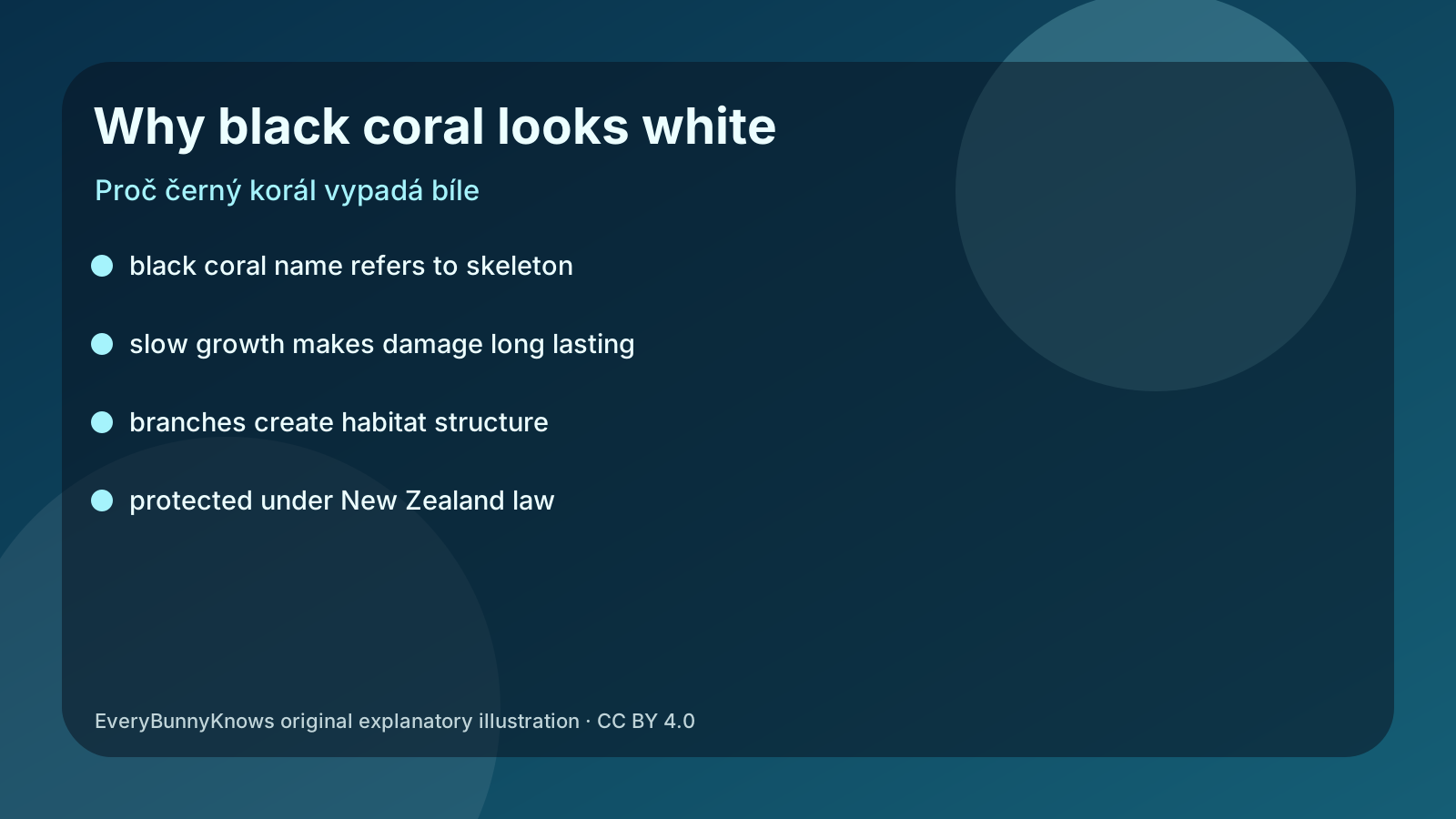
The first mechanism to understand is the name. Black corals, antipatharians, are not necessarily black to a diver. The living tissue can look white or pale, while the internal skeleton is dark. Branching colonies add three-dimensional structure to deep or shaded habitats, offering surfaces and shelter for other organisms. When a colony reaches several metres across, it is not just bigger decoration; it may contribute larvae and habitat complexity built over centuries.
Age estimates for corals are careful approximations rather than birthdays. Researchers infer age from size, growth rates, species knowledge and local context. Even if the range is broad, a 300–400-year estimate changes how people should see the animal. Damage from an anchor, pot line or careless contact can erase structure that began growing before modern New Zealand, and recovery would not happen on a management timetable.
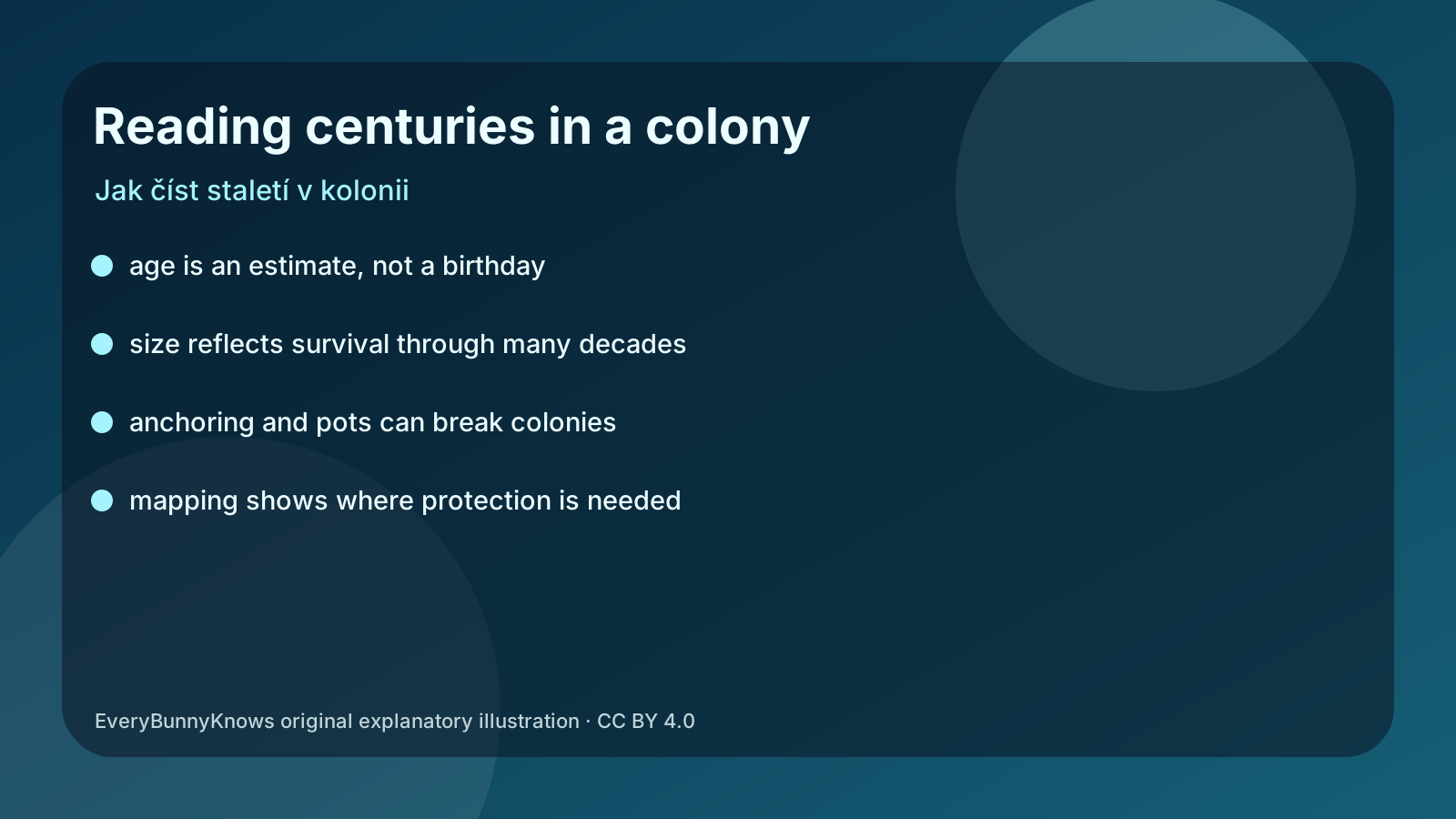
The Fiordland setting matters too. The fiords are dark, steep and cold enough to place deep-water species within reach of scientific divers in some places. That unusual access lets researchers map protected corals more directly than in many offshore systems. The discovery also reminds boaters that conservation is often spatial: knowing exactly where a fragile colony sits can help people avoid anchoring or dropping pots on it.
The limits are important. One giant colony does not prove that all Fiordland black corals are thriving, nor does it measure recruitment, disease, warming impacts or the full distribution of the species. It is a strong clue that large old colonies exist and should be mapped, but it needs follow-up observations, reports from divers and careful handling of location data so public interest does not create new risk.
The hopeful message is precise. A coral that may have lived for four centuries cannot be manufactured quickly, but it can be noticed before it is broken. Mapping, legal protection under New Zealand’s Wildlife Act and simple changes in where people anchor or fish can protect living structures already built by time. The colony’s value is that it makes slowness visible, and visible things are easier to defend.
One further point keeps the story practical: a conservation result is not made by one image or one measurement alone. It needs repeated monitoring, local context, management cooperation and a clear account of what remains uncertain. That combination is what turns an interesting finding into evidence people can use for the next decision and keeps a specific study from becoming a vague nature fable.
One further point keeps the story practical: a conservation result is not made by one image or one measurement alone. It needs repeated monitoring, local context, management cooperation and a clear account of what remains uncertain. That combination is what turns an interesting finding into evidence people can use for the next decision and keeps a specific study from becoming a vague nature fable.