Thecacera sesama: a sesame-seed-sized sea slug from Taiwan gets a name
The tiny black-and-yellow nudibranch Thecacera sesama was described from Taiwan using morphology and DNA, turning a sesame-sized coastal animal into a named piece of marine biodiversity.
Klára Novák ·
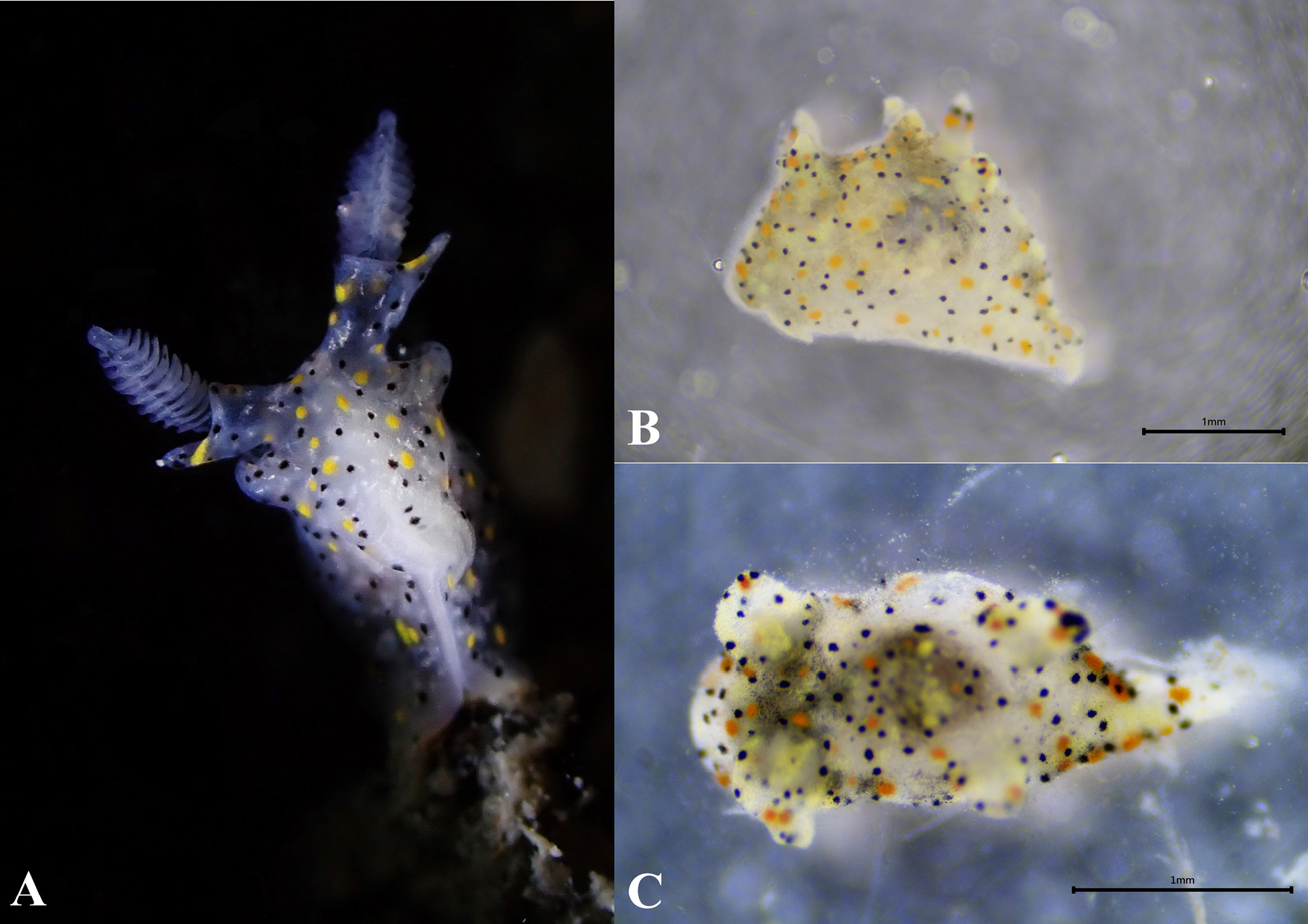
The new sea slug from Taiwan is almost comic in scale: a black-and-yellow animal small enough to invite comparison with a sesame seed. Its scientific name, Thecacera sesama, makes that resemblance part of the story. But the important point is not cuteness. A 2026 ZooKeys paper described the nudibranch as a new species by combining close anatomical work with DNA evidence from mitochondrial 16S rDNA and cytochrome c oxidase I, the COI gene often used in animal barcoding.
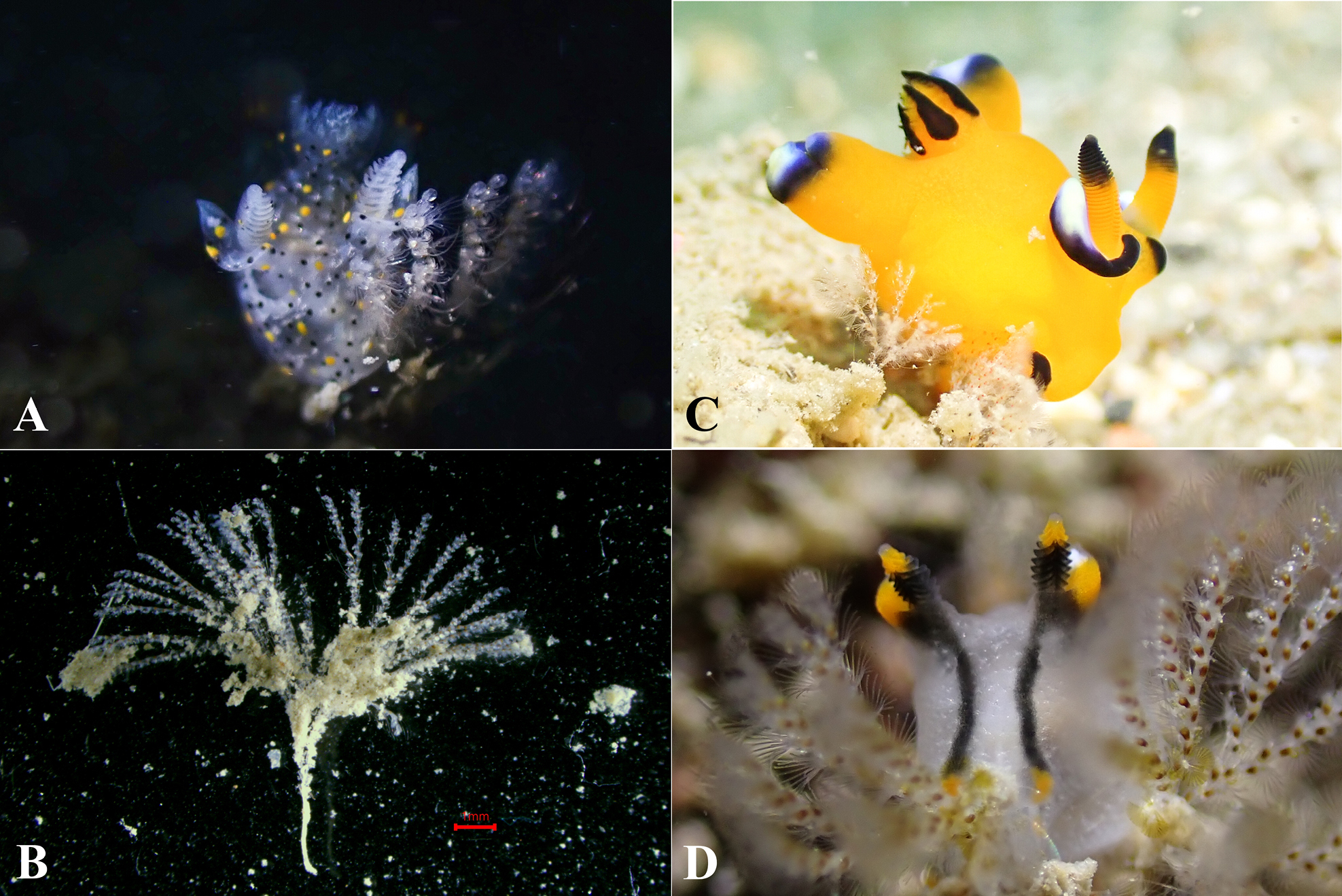
Nudibranchs are sea slugs that carry much of their beauty and biology on the outside. Thecacera belongs to Polyceridae, a family of dorid nudibranchs with small appendages, exposed gills and species that can look like living punctuation marks on the seafloor. T. sesama is tiny, patterned in dark and pale yellow tones, and was recorded in Taiwanese coastal waters. The paper’s coordinates place the research in the north of Taiwan, and its photographs show animals on or near bryozoans, the colonial invertebrates that many polycerid nudibranchs use as food.
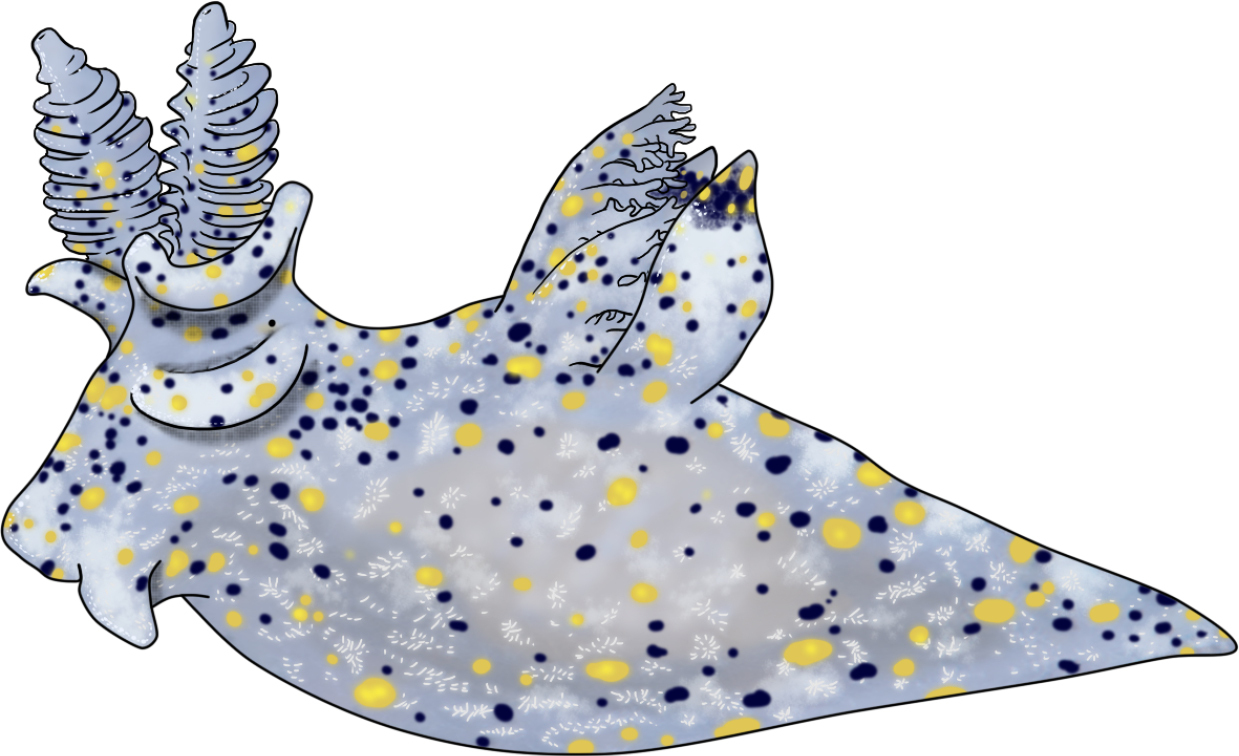
The mechanism of discovery is taxonomy rather than a lucky photograph. Researchers compared body shape, colour pattern, rhinophores, gills, appendages, radular or external features where available, and genetic sequences. DNA matters because small nudibranchs can converge on similar colours or body forms, especially when they live on the same food. Morphology matters because a barcode alone is not a full animal. Together, the two lines of evidence let scientists separate T. sesama from relatives such as Thecacera pacifica and other polycerids.
Its habitat also changes how the discovery should be read. A millimetre-scale animal on a bryozoan patch is easy to overlook even in a coast that divers, students and researchers visit. Bryozoan colonies can be food, shelter and a stage for egg laying; they also make the slug’s life local and fragile. If the food colony shifts with water quality, temperature, sediment, storms or coastal development, the slug’s records may shift too. A species this small may be widespread but rarely noticed, or genuinely restricted to a narrow set of places.
The limits are clear. A species description is not a conservation assessment. It does not tell us how many individuals exist, whether populations are rising or falling, or how climate change will affect the bryozoans they use. The sampled animals and sequences give a strong starting point, not a complete map of Taiwan’s nudibranch diversity. Future work will need more sites, seasons, photographs, genetic samples and ecological observations.
Still, naming Thecacera sesama is more than adding a charming label. A named species can be searched in databases, recognized by divers, compared in museum collections and included in future monitoring, including repeated checks of the same bryozoan patches after storms or warm seasons. The discovery reminds readers that marine biodiversity is not only whales, reefs and fisheries. It is also a sesame-sized animal whose identity becomes visible only when someone slows down enough to look at a bryozoan colony, measure a body smaller than a grain of rice, and ask whether a familiar-looking speck is actually new.