A Tiny Underwater Antenna Is Changing How Robots Talk in Dark, Murky Seas
Underwater robots cannot rely on ordinary wireless links; small short-range antennas may fill the gap between slow acoustics, fragile optical links and cables.
Ivy Stone ·
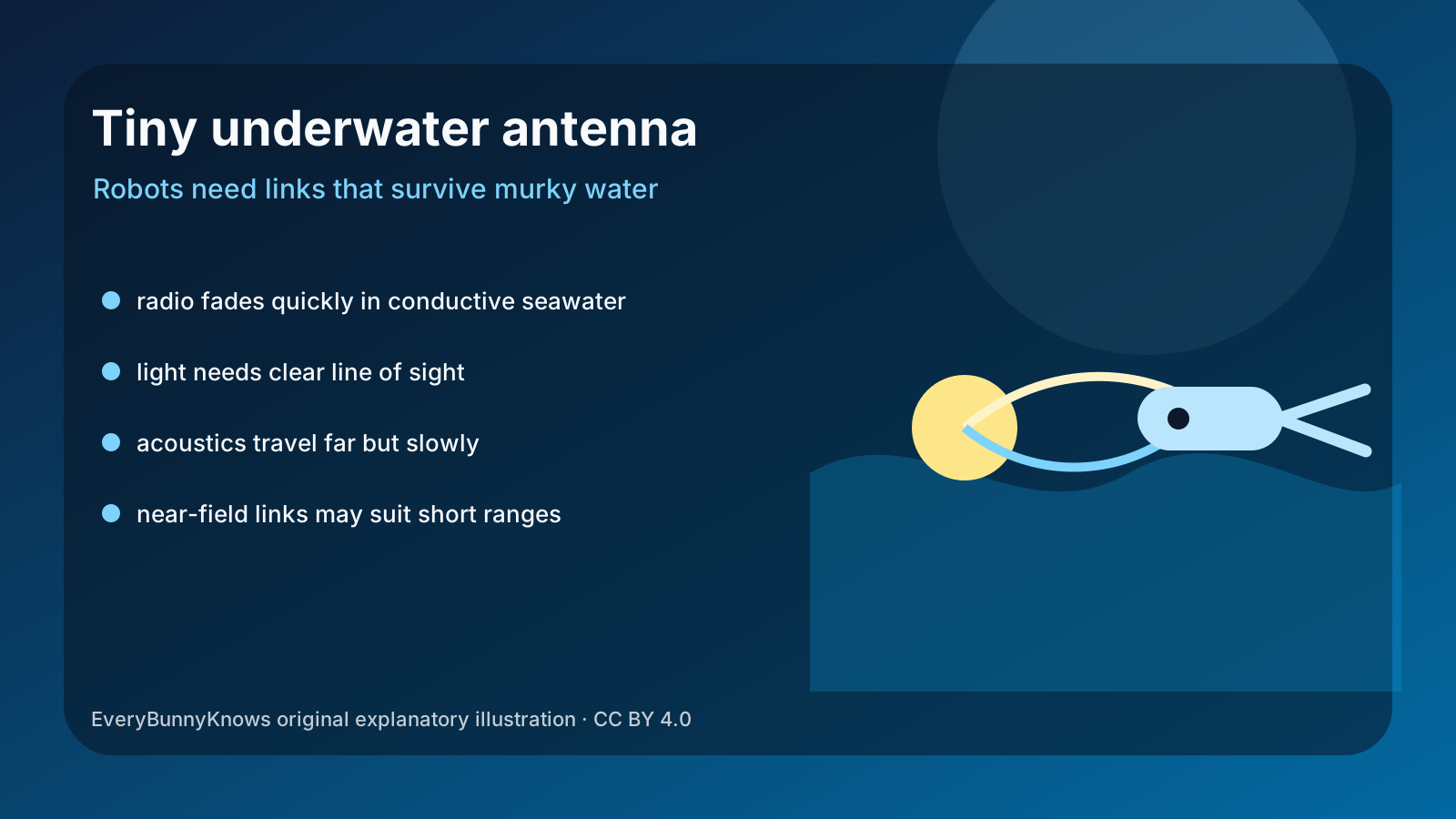
The problem with an underwater robot is not only that it must move without a pilot. It must also talk through a medium that treats ordinary wireless communication harshly. Seawater conducts electricity and quickly weakens most radio waves. Muddy water scatters light. Sound travels far, which is why acoustic modems are common, but it brings low bandwidth, delay, echoes and interference from boats, animals and waves. A tiny antenna for underwater robots matters because it tries to widen that menu of imperfect choices.
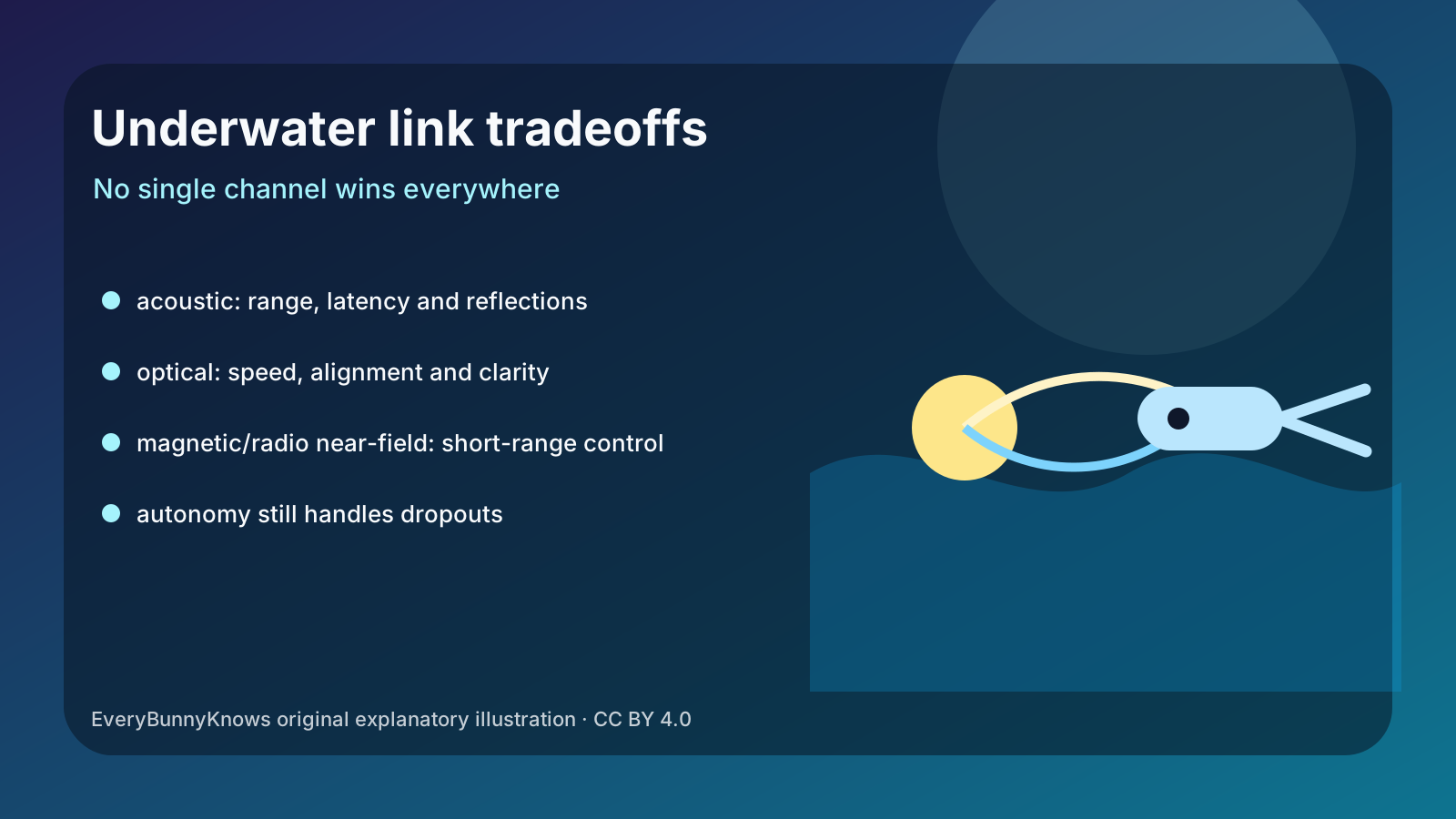
Reports on the University of Florida work describe researchers testing robot communication in water such as Lake Wauburg and in ocean settings. The important mechanism is short-range robustness, not science-fiction conversation. Compact antennas and near-field electromagnetic or magnetically coupled links can be useful when two devices are close together: a robot docking with a charger, a sensor handing data to a passing vehicle, or several small robots coordinating in a harbour where acoustic echoes are messy. The water may be dark or turbid, but a short electromagnetic link does not need a clear optical path.
That does not make acoustics obsolete. Long-distance underwater communication still usually depends on sound because it can cross hundreds or thousands of metres where radio and light fail. Optical links can be excellent for fast data transfer when the water is clear and alignment is good. A small antenna is therefore best understood as another tool in a layered system: autonomy handles routine behaviour, acoustics provides longer reach, optical or wired docking moves large files, and short-range antenna links fill the close, cluttered gaps.
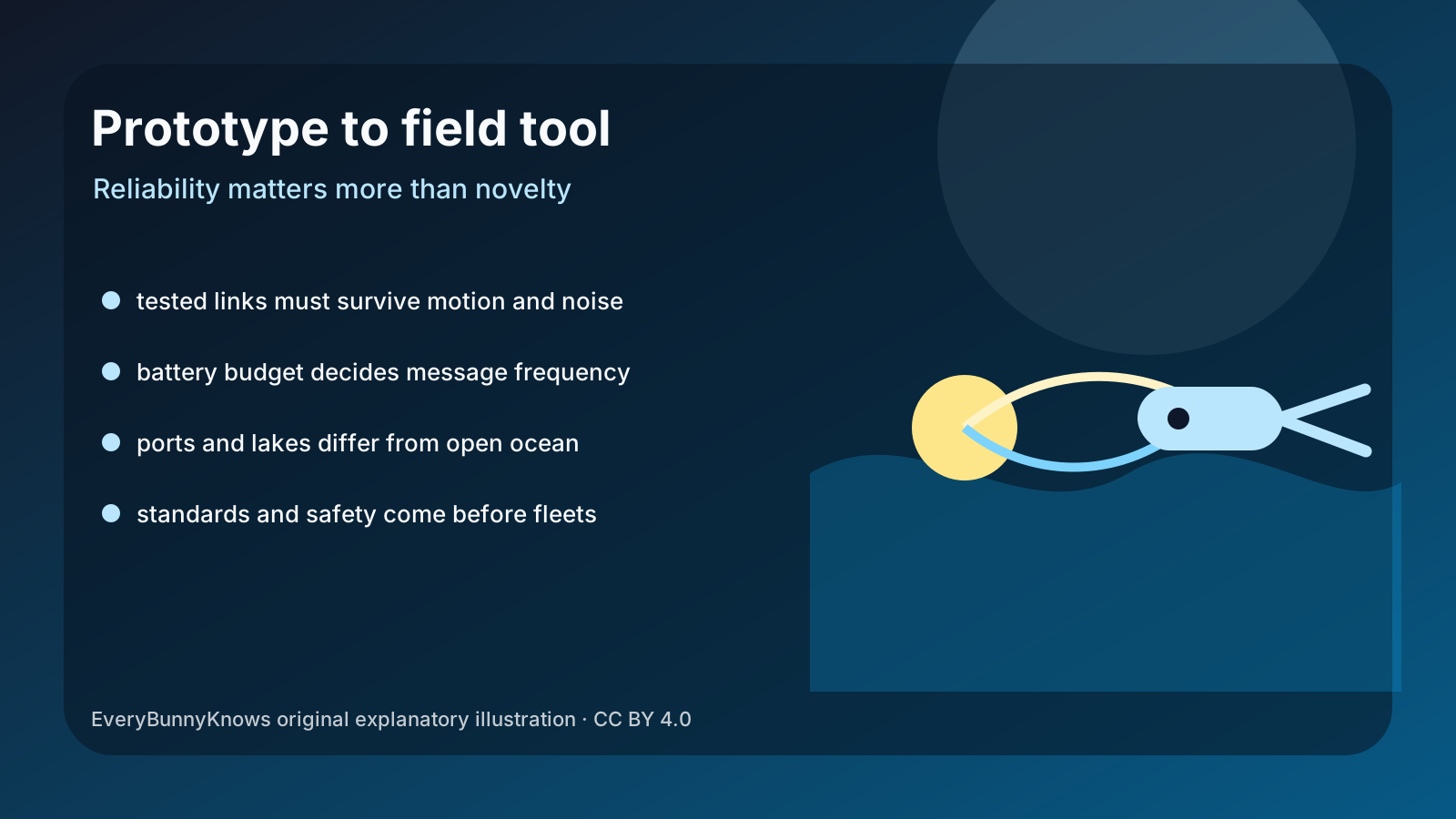
The maturity limit is important. A lake or lab demonstration can show that the physics works, but it is not the same as a fleet of inspection robots operating for months around piers, aquaculture cages or offshore infrastructure. Engineers still have to measure range in fresh water and seawater, error rates, power draw, antenna orientation, interference with sensors, corrosion, waterproof packaging and how the link behaves when a robot is moving rather than neatly parked.
The deployment case is strongest where failure is expensive but distances are short. A robot inspecting a bridge pile may need to send health data through suspended sediment. A low-power sensor on a reef or water-treatment intake may need to wake only when a vehicle is nearby. A docked robot may need a reliable handshake before charging. In those cases, a small antenna is less glamorous than a broadband underwater internet, but more plausible. It is an enabling component, not a whole ocean network.
Readers should be wary of the phrase “robots talk” if it suggests fluent underwater chatter. What is changing is the engineering stack: more ways to move small messages when acoustics, light and cables are awkward. If the device proves cheap, rugged and standards-friendly, it could make underwater robots less solitary. If not, it will remain a useful prototype. Either way, the real advance is the same sober one: communication designed for the water we actually have, not the clear, quiet water engineers wish they had.