What a wind-powered undersea data center really tests
Shanghai’s Lin-gang project puts sealed data-center modules beside offshore wind and seawater cooling. It may save land and freshwater, but maintenance, marine impacts and power reliability remain hard constraints.
Mira Vale ·
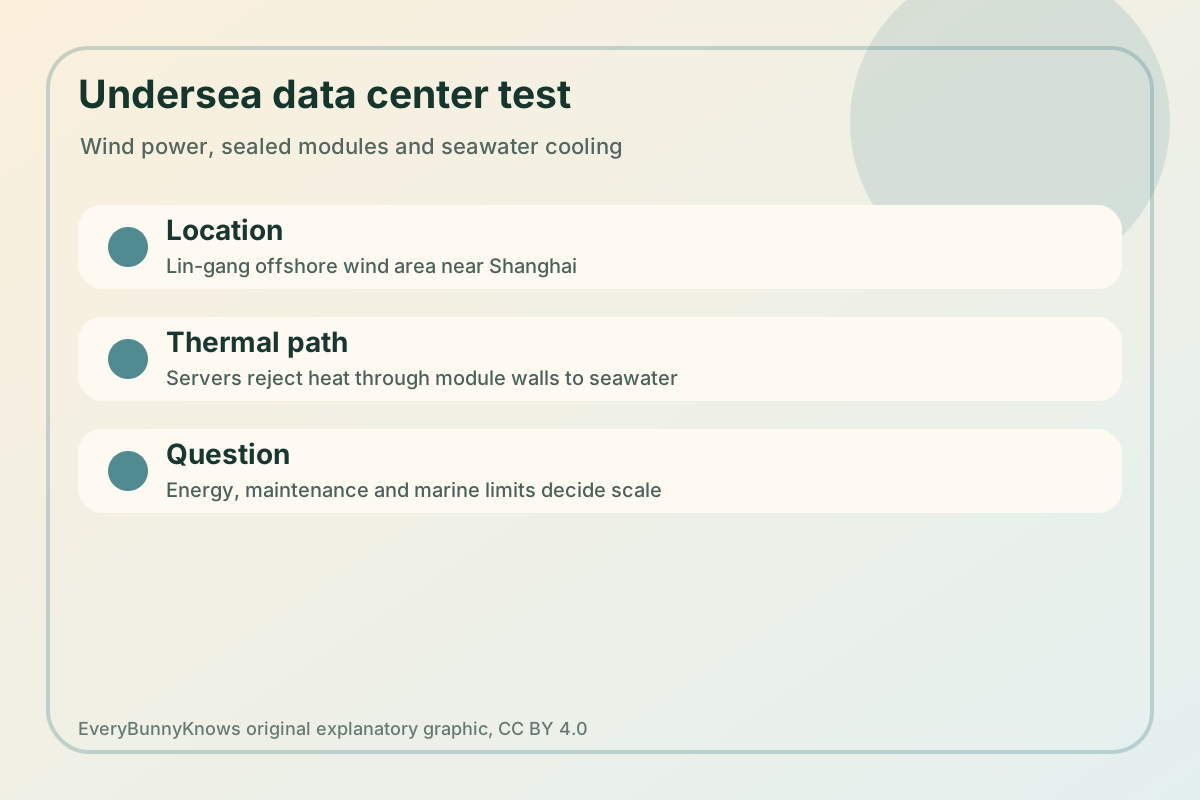
A data center under the sea sounds like a stunt until the cooling problem is taken seriously. Servers turn electricity into heat all day, and ordinary cloud buildings spend money, water and land moving that heat away. Shanghai’s Lin-gang Special Area is testing a different geometry: sealed underwater data-center modules placed near offshore wind power and surrounded by seawater. Reports from Lin-gang, Offshore Wind and New Atlas describe a 1.6-billion-yuan project with a planned 24-megawatt scale, located between phases of the local offshore wind farm.
The mechanism is not that computers like water. They must be isolated from it. The useful part is the thermal path. Heat from chips moves through internal cooling systems and module walls into a stable surrounding environment, rather than relying on evaporative cooling towers that consume freshwater. The project also puts computing load close to renewable generation; Lin-gang’s public description says the modules sit next to offshore turbines and use nearby wind power directly. New Atlas and Lin-gang report design claims including more than 95 percent wind electricity, roughly 22.8 percent lower power consumption, no freshwater use for cooling, more than 90 percent less land use and a power usage effectiveness around 1.15.
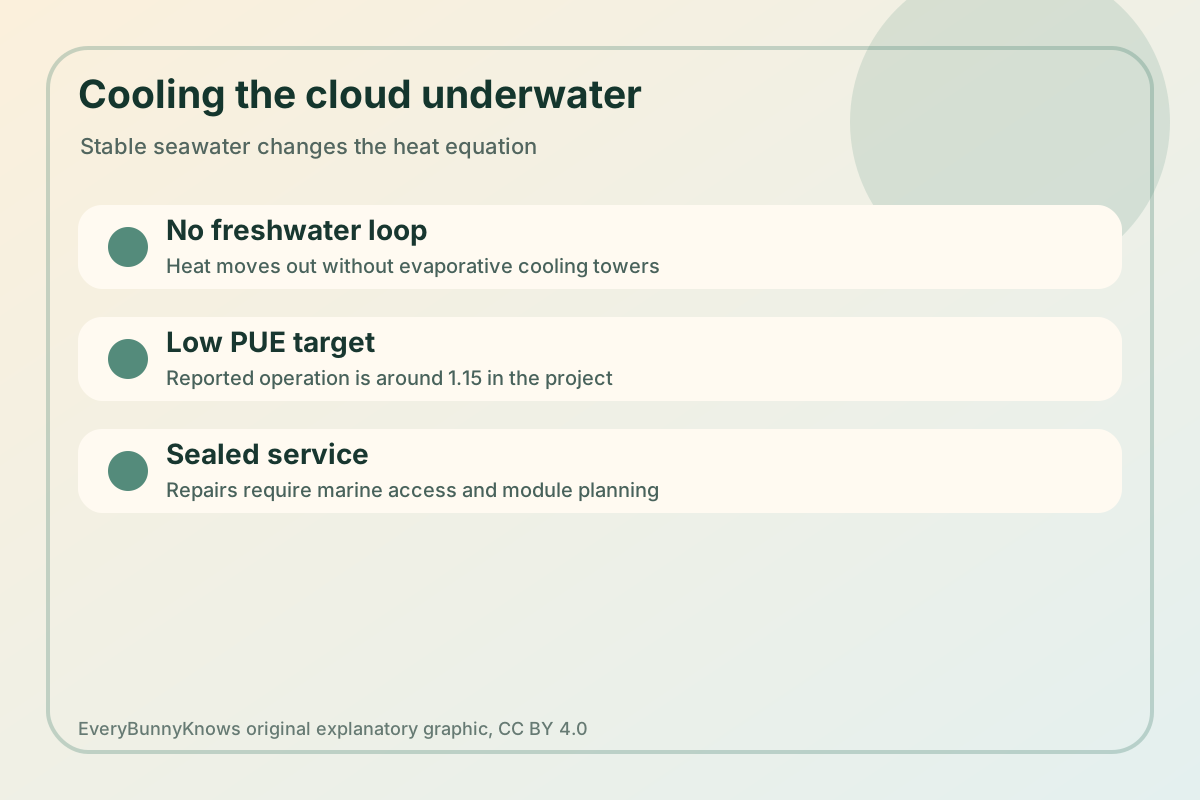
Those numbers need context. Power usage effectiveness compares total facility energy with IT equipment energy; a lower number means less overhead for cooling and support systems. A PUE near 1.15 is efficient, but it is not the whole climate story. The carbon result depends on how consistently wind power is available, what backup power is used, how cables and converters perform, how the modules are manufactured, and how often marine vessels are needed for service. A data center can save freshwater and land while still being a large industrial installation.
The maturity level is demonstration-to-infrastructure pilot, not a universal template. Microsoft’s earlier Project Natick showed that sealed underwater data-center capsules could run reliably in a controlled trial off Scotland, but it did not create a mass market. Lin-gang’s project is larger and tied to offshore wind, which makes it more relevant to coastal computing demand. It also makes the system harder: subsea power cables, data links, corrosion control, retrieval plans, storm loads, seabed work and regulatory review all become part of the data-center design.
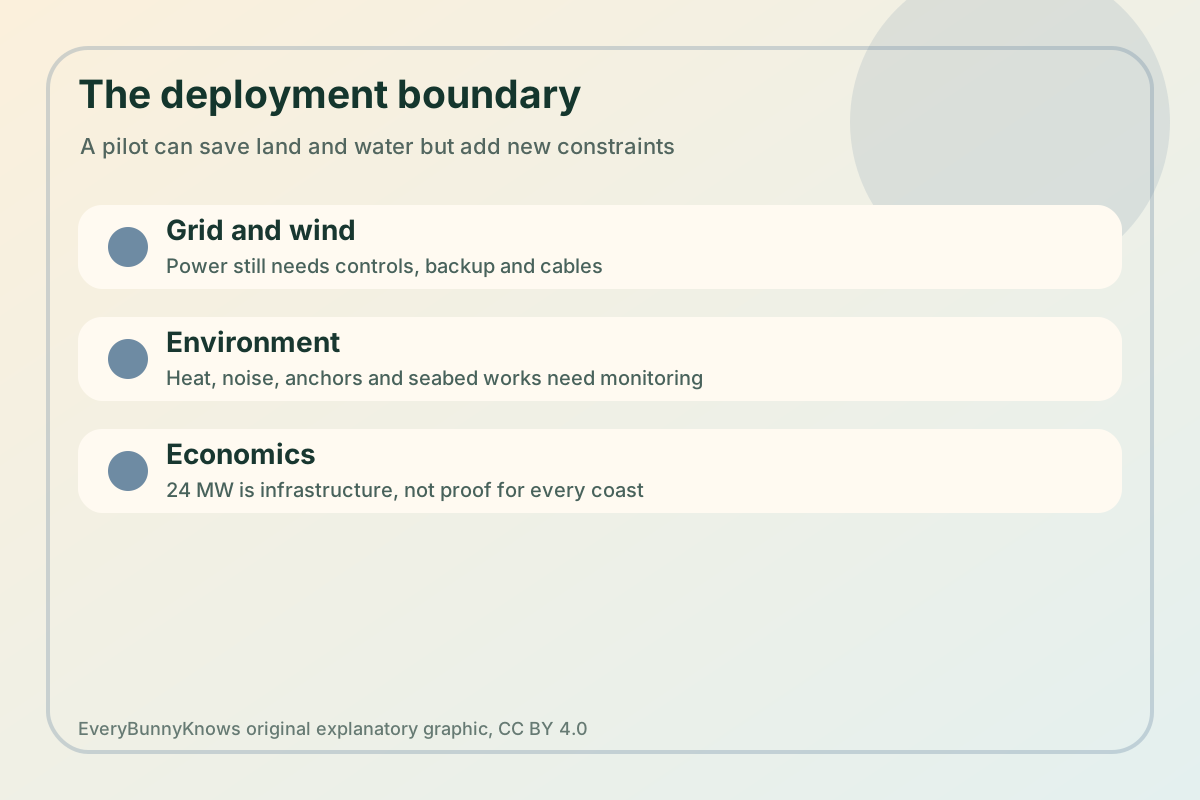
Environmental limits should be stated plainly. Removing cooling towers can reduce freshwater demand, and offshore siting can reduce pressure on urban land. At the same time, modules release heat to the marine environment, occupy seabed space, require anchors or foundations, and may affect local maintenance traffic. Any serious deployment needs monitoring for temperature plumes, noise, electromagnetic fields around cables, leakage risk and end-of-life recovery. The ocean is not an empty radiator.
For cloud users, the practical question is not whether every future data center should sink. Many workloads need low latency near cities, robust grid connections and easy technician access. Undersea modules may fit specific coastal regions where offshore wind, seabed permissions, fibre links and maintenance capacity align. The hopeful part is therefore narrower and stronger: if the Lin-gang system performs over years, it could add one option to the data-center toolbox, especially where land and freshwater are scarce. It tests whether cooling the cloud can become less thirsty without hiding new costs below the surface.