Ancient DNA Shows Women Helped Weave Prehistoric Europe Together
Ancient genomes from Europe’s Neolithic and Bronze Age suggest that cultural change was carried not only by migrating groups or new tools, but also by women moving between communities, marrying across boundaries and linking households over generations.
Matyáš Král ·
Ancient DNA has made prehistoric Europe more personal. The old map of the Neolithic and Bronze Age often showed arrows: farmers moving from Anatolia, hunter-gatherers persisting in forests and coasts, steppe-related ancestry spreading later with new forms of mobility. Those arrows are useful, but they can make change look impersonal. Genome and isotope studies now show that women moving between communities were one of the mechanisms that made those transformations real.
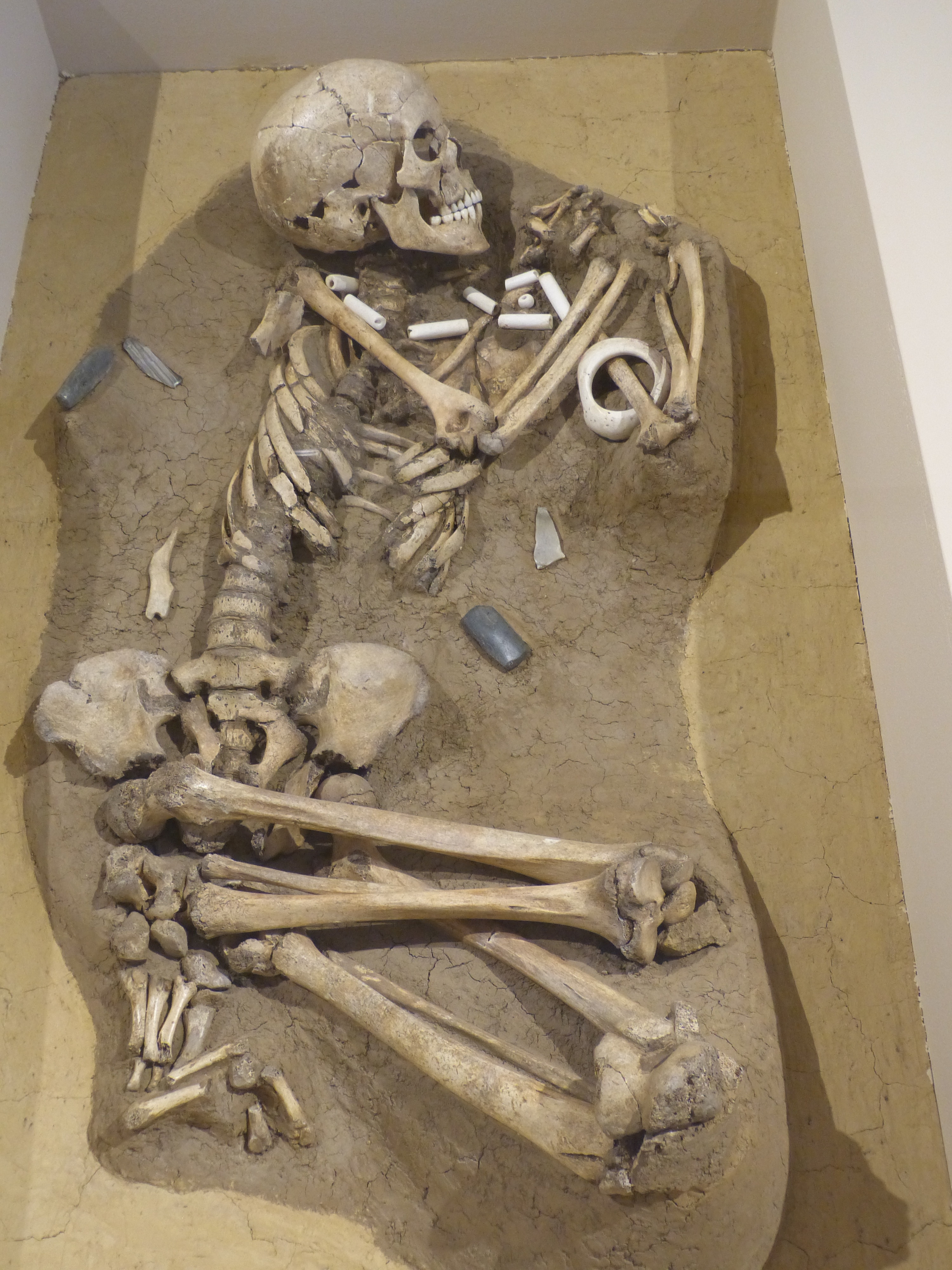
The evidence works by combining several kinds of signal. Genome-wide DNA shows broad ancestry: early farmer, hunter-gatherer, steppe-related or mixtures of them. Mitochondrial DNA follows maternal lines, while Y chromosomes follow paternal lines. Strontium isotopes in teeth can sometimes show whether a person grew up on the local geology or somewhere else. Burial position, grave goods and cemetery layout add social context, although they never speak clearly on their own.
When these data are read together, some communities look less like sealed ethnic blocks and more like networks of households. In parts of Neolithic Europe, hunter-gatherer ancestry reappeared among farming groups after the first agricultural expansion, showing contact, marriage and adoption rather than simple replacement. In later periods, including Bell Beaker and Bronze Age contexts, several studies have found sex-biased patterns: men and women did not always move in the same numbers, by the same routes or with the same social meaning.
That is where women become historically visible. A woman marrying into another settlement could carry ancestry, language habits, food knowledge, textile skills, alliances, stories and obligations. Her children might belong to a new household while preserving genetic links to another region. Over generations, many such ordinary moves can transform a continent as surely as a migration visible in a textbook map.
This does not mean that women alone “spread farming” or that every genetic pattern is a marriage story. Prehistory was not a single custom repeated everywhere. Some communities may have been patrilocal, with women moving more often; others may have followed different rules. Violence, trade, fosterage, slavery, adoption and seasonal mobility can all complicate the picture. The careful point is that cultural change happened through families and local decisions, not only through anonymous populations.
For readers, the payoff is a better idea of agency. Ancient DNA does not reduce people to ancestry percentages when it is used well. It lets archaeologists ask who was related to whom, who grew up elsewhere, and how new practices entered existing communities. The hopeful conclusion is methodological and human. As more cemeteries are studied with consent, care and context, the story of prehistoric Europe becomes less like a parade of cultures and more like a web of lives, including women whose movements helped hold that web together.
This perspective also changes the scale of explanation. A continental ancestry shift can be measured in thousands of genomes and displayed as a curve, but it was lived one household at a time. A newcomer had to learn paths to fields, water sources, kin obligations, burial customs and seasonal work. A local community had to decide whether that person belonged. Women’s mobility is therefore not a decorative detail added to a migration story. It is one of the ordinary social processes through which ancestry, skills and trust could become durable.