Atmospheric Wave Theory Falls Short in Explaining Rising Extreme Weather, Study Suggests
A Harvard-led study tests whether persistent atmospheric wave patterns can explain rising Northern Hemisphere extremes and finds a more cautious answer: waves matter, but they are not the whole climate story.
Simon Glass ·
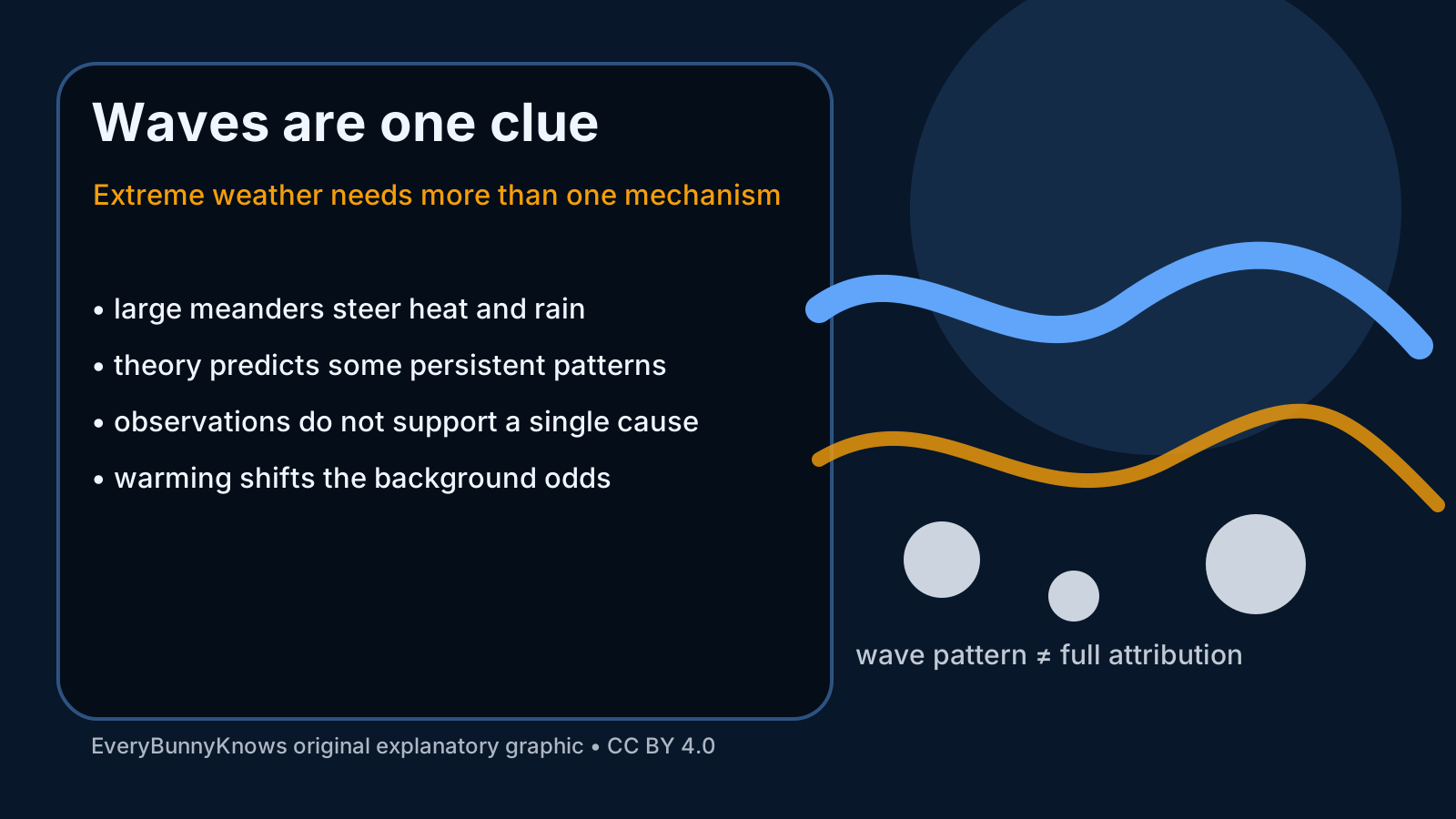
Extreme weather often arrives with a shape on the weather map. A jet stream meanders north, heat lingers over one region, a trough guides repeated storms into another, and the pattern can feel stuck long enough to turn ordinary weather into disaster. It is natural to ask whether those large atmospheric waves are the missing explanation for the rise in Northern Hemisphere heat waves, heavy rain and other extremes.
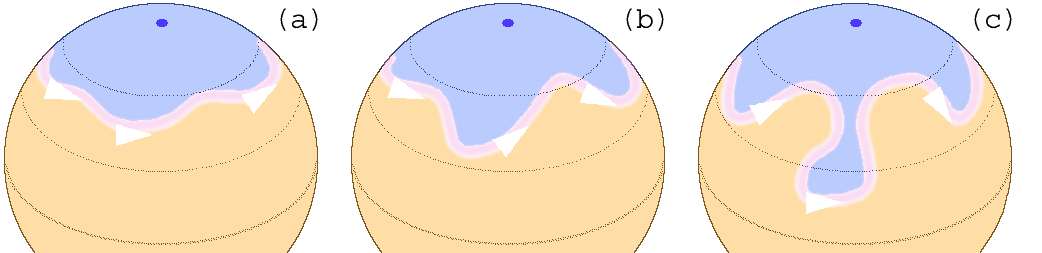
A study described by Harvard’s John A. Paulson School of Engineering and Applied Sciences and Phys.org tests that idea with a careful warning: the wave theory by itself appears to fall short. The work focuses on planetary-scale Rossby waves, the broad bends in the westerly flow that help move heat and moisture around the hemisphere. Some earlier explanations emphasised quasi-resonant or persistent wave patterns as a driver of simultaneous extremes. The new result does not say waves are unimportant. It says they do not, on their own, account for the observed rise in many extremes over recent decades.
The mechanism matters because it separates weather dynamics from climate background. Rossby waves can steer air masses, slow down systems, block the usual west-to-east progression and create persistent hot, wet or cold conditions. But a heat wave inside a warmer climate begins from a higher baseline. A heavy-rain event in warmer air can draw on more water vapour. Land drying, soil moisture, snow cover, sea-surface temperatures, aerosols and local circulation all change how the same wave pattern plays out near the ground. A wave can arrange the stage; the climate system helps decide how intense the performance becomes.
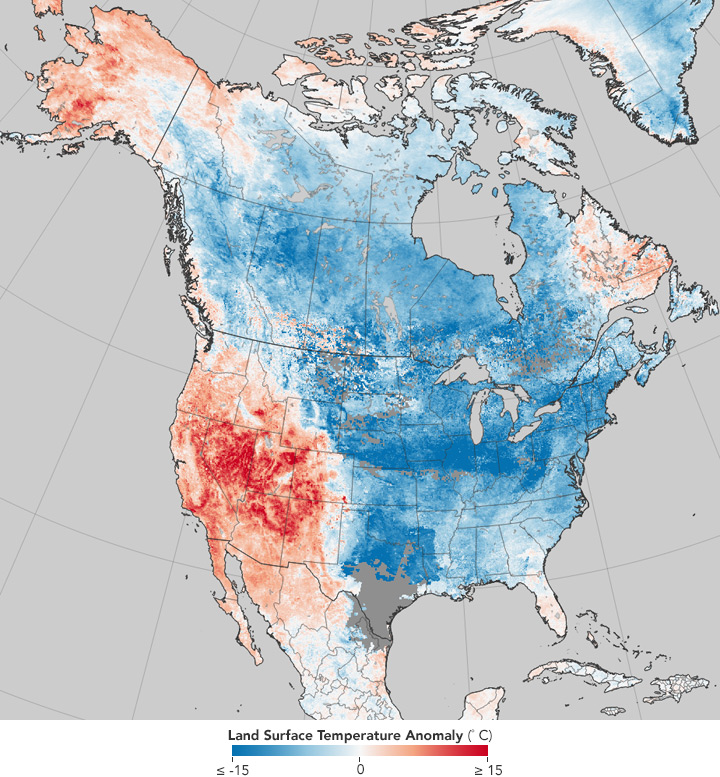
That distinction is useful for public understanding. When a flood, heat dome or cold outbreak is explained only as “the jet stream got wavy,” the phrase can imply that climate change is secondary or absent. When every event is explained only as “global warming,” the local circulation that produced the timing and geography disappears. Attribution science tries to hold both ideas together. It asks how much more likely or intense an event became in the human-warmed climate, while meteorology explains why this region, this week, experienced that particular pattern.
There are limits to the finding. Atmospheric waves are difficult to diagnose across seasons, regions and datasets. Different definitions of persistence, resonance or wave amplitude can produce different results, and models do not represent every land-atmosphere feedback perfectly. The study also addresses a particular proposed explanation, not every way circulation can affect extremes. Blocking highs, storm tracks, monsoons and tropical-extratropical links remain important parts of weather risk.
The hopeful part is intellectual rather than flashy: better explanations prevent bad decisions. If rising extremes were mainly a matter of one wave mechanism, planners might look for one diagnostic signal. If they arise from waves interacting with a warmer, wetter and more uneven surface, preparation must be broader: heat-health plans, flood design, soil and water management, early warnings and emissions cuts all belong in the same conversation. The atmosphere still moves in waves, but the ocean of air those waves cross is no longer the one our grandparents measured.