Burnet-saxifrage and the careful memory of a meadow root
Burnet-saxifrage is a real Czech meadow plant with a long herbal afterlife. Its root belongs in cultural and botanical history, while modern health writing must avoid turning old use into treatment advice.
Felix Arden ·
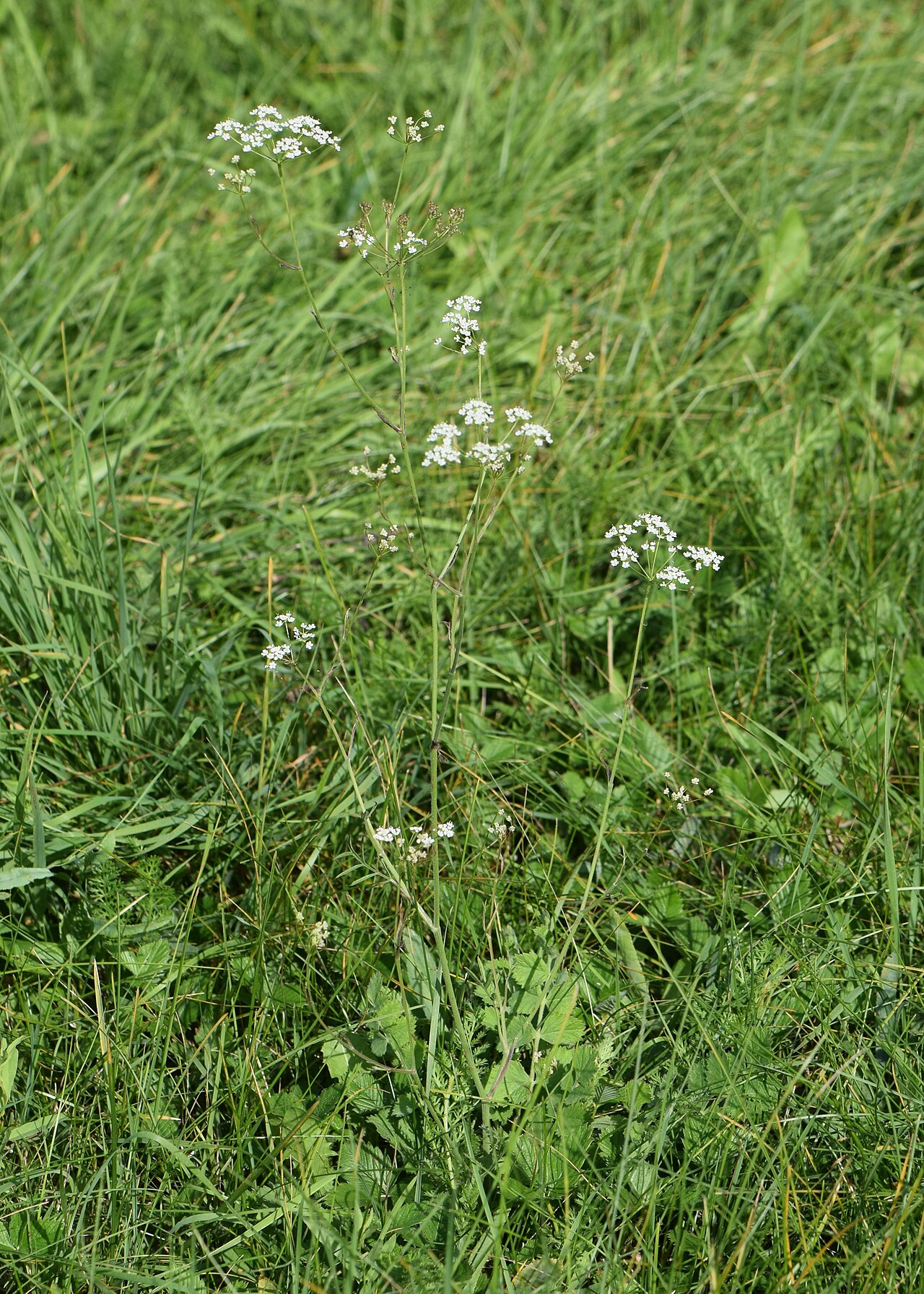
Burnet-saxifrage does not look like a dramatic medicine plant. Pimpinella saxifraga is a modest umbellifer of dry grassland, meadow edges and open places, with divided leaves, pale umbels and a root that older European herbal books remembered more vividly than most walkers do. In Czech, bedrník obecný belongs to the everyday flora as much as to the herbal shelf, which is exactly why it needs a grounded story.
The botanical starting point is identification. Pladias lists Pimpinella saxifraga in the Czech flora and places it in habitats such as grasslands, margins and lighter, often calcareous sites. Modern taxonomy treats it as a member of the carrot family, Apiaceae. That family includes foods, spices, medicines and highly dangerous look-alikes, so precision is not pedantry. For any plant with a history of root use, the first safety boundary is knowing exactly which species, which part and which preparation a source is describing.
The herbal memory of burnet-saxifrage centers on the root. Older herbals and medicinal-plant plates recorded it for aromatic, pungent qualities and for complaints that earlier medicine grouped around digestion, throat and chest. The likely mechanism behind the memory is not magic but sensory chemistry: roots of Apiaceae plants can contain essential-oil components and other compounds that smell or taste active. People notice such plants, name them and test them culturally over generations. That history is valuable, but taste and tradition do not establish dose, benefit or safety in the modern clinical sense.
A modern Medicine article should therefore resist two mistakes. The first is dismissal: old plant knowledge is not automatically foolish, because it preserves observations about habitat, season, smell, preparation and use. The second is romantic overreach: an entry in a herbal or a pretty plate from Köhler’s Medizinal-Pflanzen is not proof that a reader should use a root for symptoms. Regulatory traditional-use frameworks can recognize long-standing minor uses for some herbal substances, but they also require defined material, warnings and boundaries.
Those boundaries are especially important for respiratory, digestive or throat complaints. Persistent cough, breathing difficulty, chest pain, fever, blood in sputum, severe allergic symptoms, unexplained weight loss or trouble swallowing are clinical problems, not opportunities to experiment with a meadow root. Pregnancy, children, liver or kidney disease, allergies and prescription medicines all change the safety calculation. This article cannot identify plants in the field for a reader, cannot set a dose and cannot replace a clinician or pharmacist.
There is also an ecological boundary. A plant that is common in some meadows can still be locally pressured by mowing changes, fertilization, abandonment, drought or enthusiastic gathering. The more attractive an old herbal story sounds, the more important it becomes to keep living habitats and accurate records ahead of harvesting impulses.
What remains is still worth keeping. Burnet-saxifrage shows how a small plant can connect ecology, language and medicine without becoming a cure story. Its value for readers is a disciplined curiosity: look closely at the meadow, read old sources as evidence of culture, and ask modern questions before making health claims. The quiet improvement is not a new remedy. It is a clearer way to talk about traditional plants—one that respects memory while protecting people from certainty the evidence has not earned.