Madagascar’s smaller endemic wonders: chameleons, frogs and leaf-litter specialists
Beyond lemurs, Madagascar’s nature is built from microendemic chameleons, frogs and invertebrates whose ranges can be one forest block, one mountain slope or one humid leaf-litter world.
Tomáš Hare ·
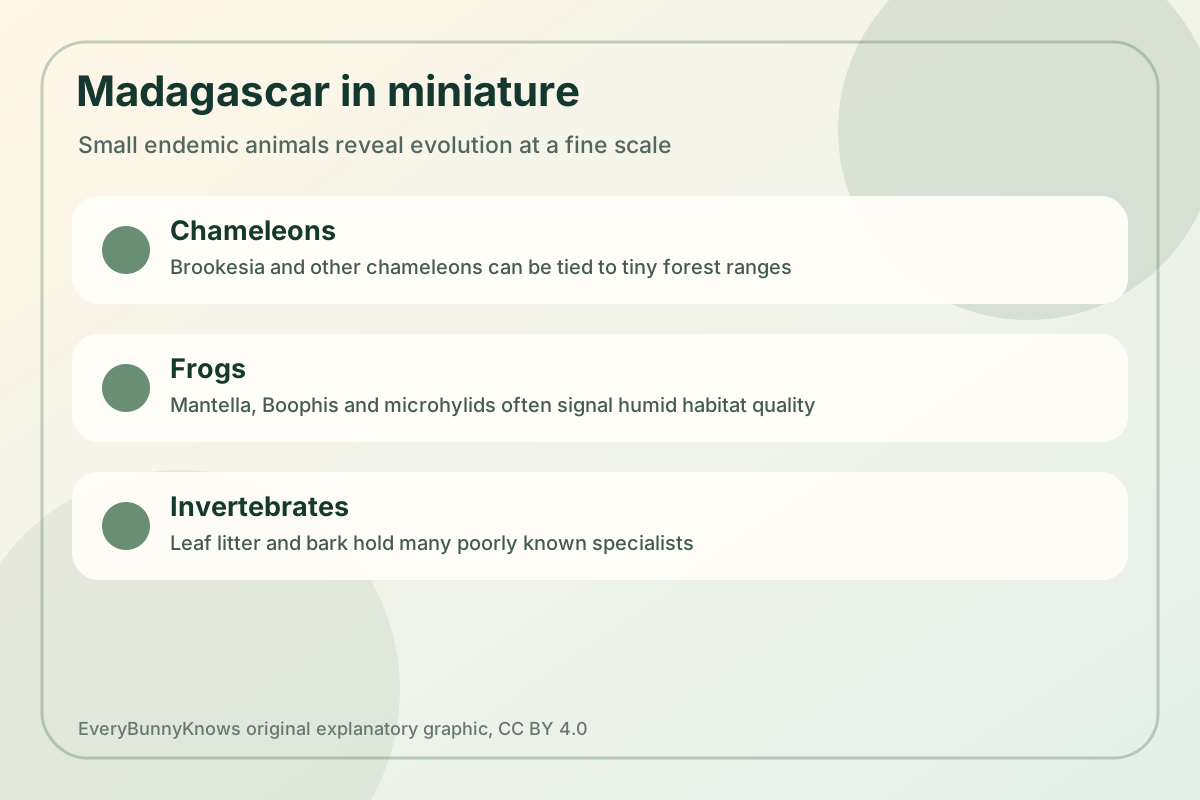
Madagascar’s wildlife is easy to reduce to lemurs, but the island’s smaller animals carry an equally powerful evolutionary story. Chameleons, frogs, geckos, insects and leaf-litter invertebrates show how an island can generate diversity at very fine scale. A species may belong not to “Madagascar” in a broad postcard sense, but to one humid forest block, one limestone outcrop, one mountain slope or one strip of leaf litter that stays damp through the dry season.
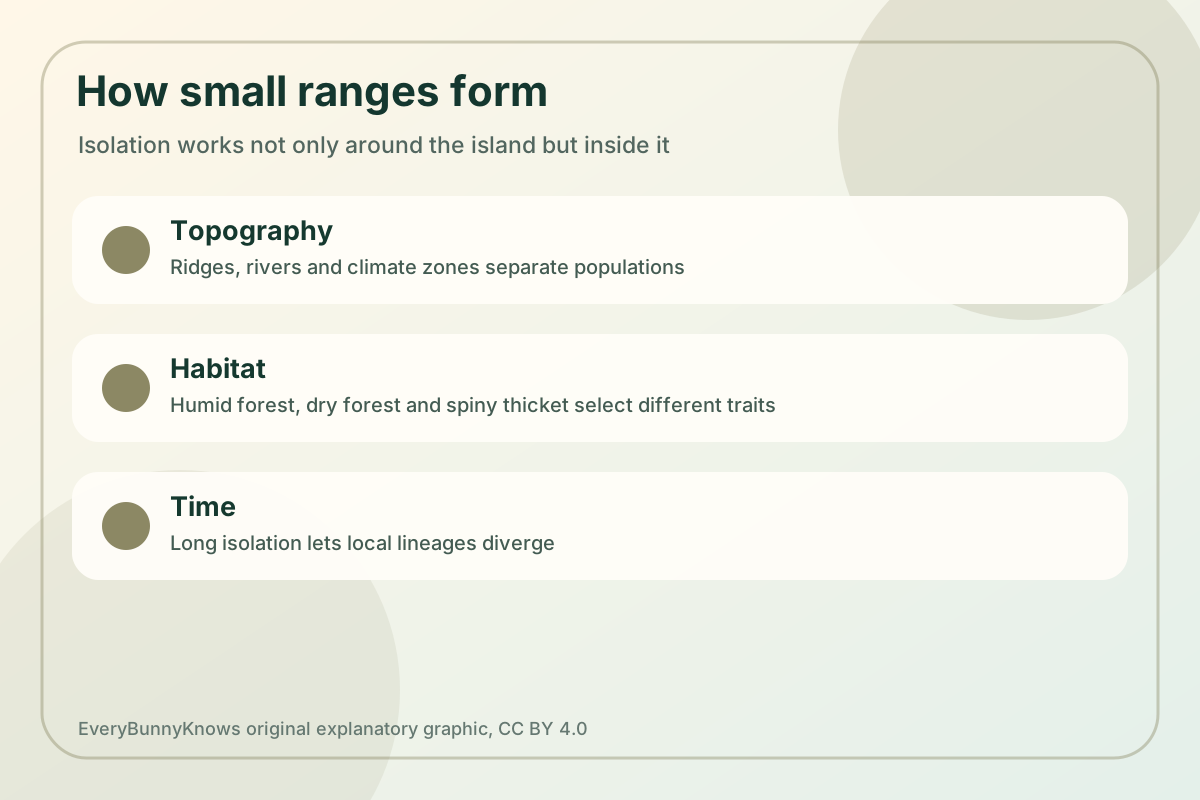
The mechanism is microendemism. Madagascar has been isolated for tens of millions of years, but isolation also operates inside the island. Ridges, rivers, dry corridors, altitude, soil and forest type can restrict movement for tiny animals. A bird may cross a valley; a leaf chameleon only a few centimeters long may not. Over time, separated populations face different humidity, predators, calling environments, food and breeding sites. Natural selection, drift and limited gene flow can turn local populations into distinct lineages.
Chameleons make this visible. Madagascar is a global centre of chameleon diversity, from larger, colorful species to minute Brookesia species that live near the forest floor. The famous examples Brookesia micra and the even smaller Brookesia nana are not simply curiosities for size records. They remind us that miniaturization changes biology: vision, reproduction, thermoregulation, predator avoidance and the structure of a usable territory all operate under different constraints when an adult animal is shorter than a fingernail.
Frogs tell a parallel story through sound and water. Malagasy frog diversity is overwhelmingly endemic, with genera such as Mantella, Boophis and many microhylids tied to streams, tree holes, wet leaves or small breeding sites. Calls help scientists find and distinguish species at night, while DNA and morphology test whether similar-looking frogs are truly the same. Bright colors can warn of toxins in some groups, but color alone is not a safe identification guide. Habitat, call, body form and genetic evidence matter together.
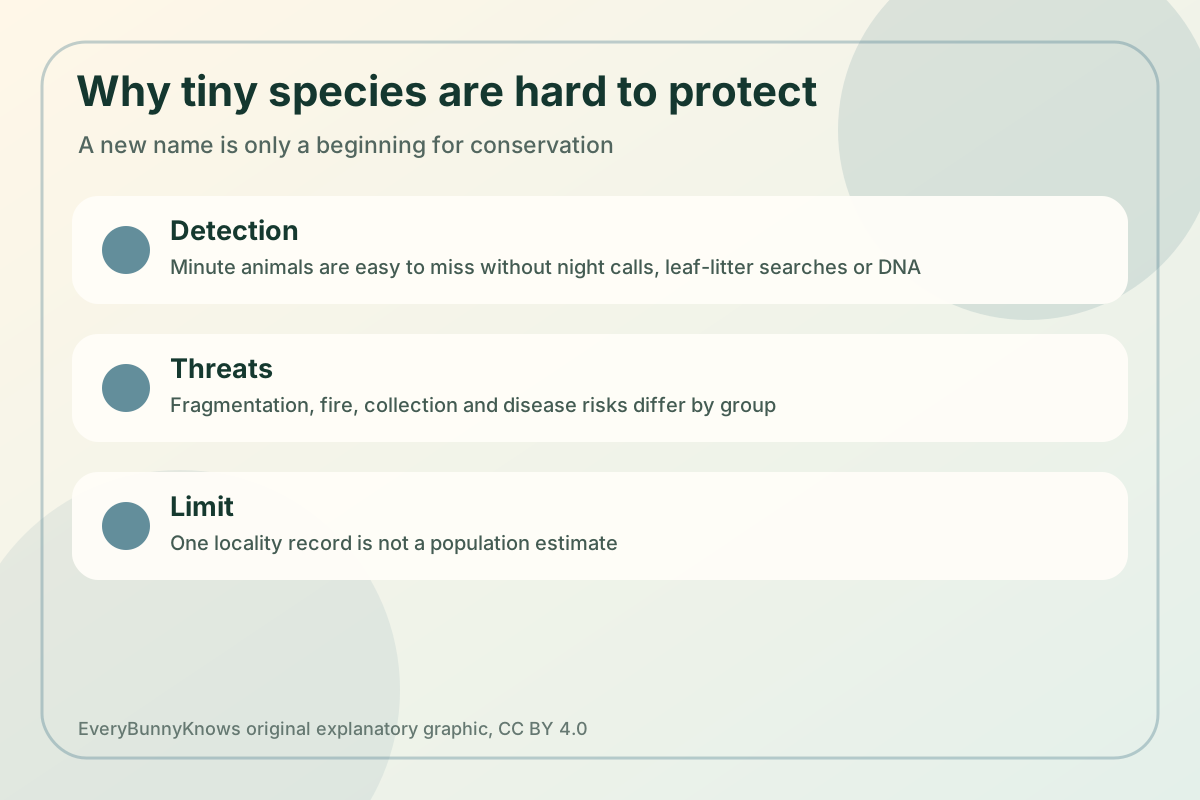
The limits are central. Newly described or tiny species are often known from few localities, and absence from a survey does not always mean absence from the forest. Remote areas remain under-sampled; disease risks such as chytrid fungus, illegal collection, fire, mining and forest loss affect groups differently. A single photograph cannot prove abundance, and a new name does not automatically produce protection. Conservation must move from wonder to mapping: exactly which species, which forest, which threats and which local partners?
This is also why exact images and captions matter. A random tropical frog or colorful chameleon can miseducate if it implies that all Malagasy specialists share the same range or habitat. When an exact free-use species photograph is not the safest option, a clear habitat-and-mechanism diagram is more honest than a lookalike. The reader should know whether the visual shows a named organism, a forest layer, or the evolutionary process being explained.
The hopeful point is that small animals make conservation more precise. Protecting a Malagasy forest is not only about saving a scenic green patch. It can mean keeping the damp leaf litter where a Brookesia hunts, the stream where a Boophis calls, the pandanus or tree hole where a frog breeds, and the canopy shade that keeps the whole microclimate intact. Once readers notice those small specialists, Madagascar becomes less like a distant symbol and more like a set of living, testable relationships that can still be studied and defended.