Chimpanzee and Bonobo Grooming Networks Look Strikingly Familiar
A comparative study of chimpanzee and bonobo grooming suggests that both apes keep close partners and looser ties, with chimpanzees narrowing circles more with age while bonobos remain broader and more inclusive.
Simon Glass ·
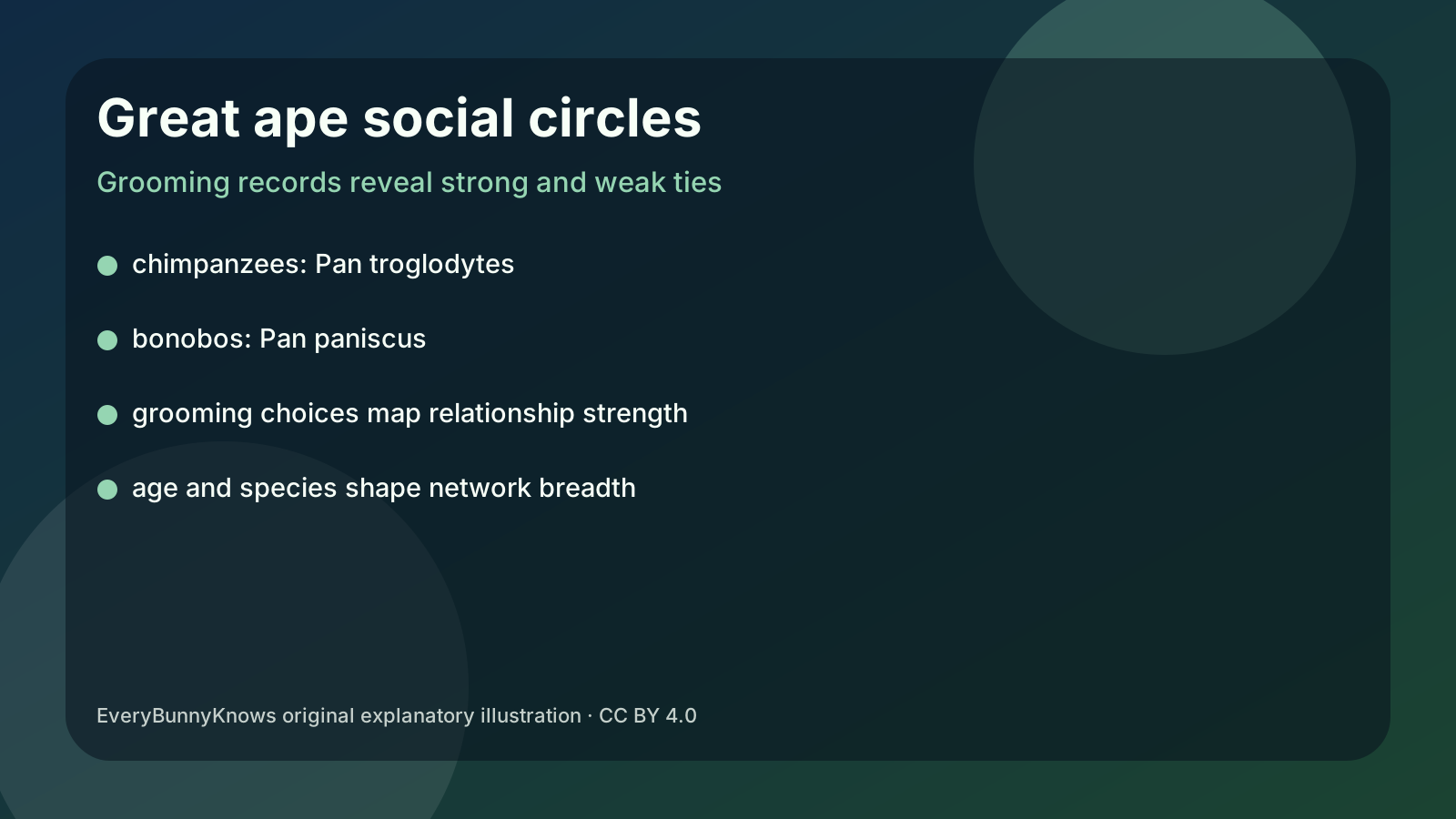
Pan troglodytes and Pan paniscus do not make friends in the human cultural sense, but their grooming choices can still reveal a social pattern that feels familiar. Chimpanzees and bonobos live in flexible communities where individuals split, rejoin, compete, cooperate and remember past interactions. When researchers compare who grooms whom, how often and how those relationships change with age, the result is not a greeting-card story about friendship. It is a map of strong and weak ties among our closest living relatives.
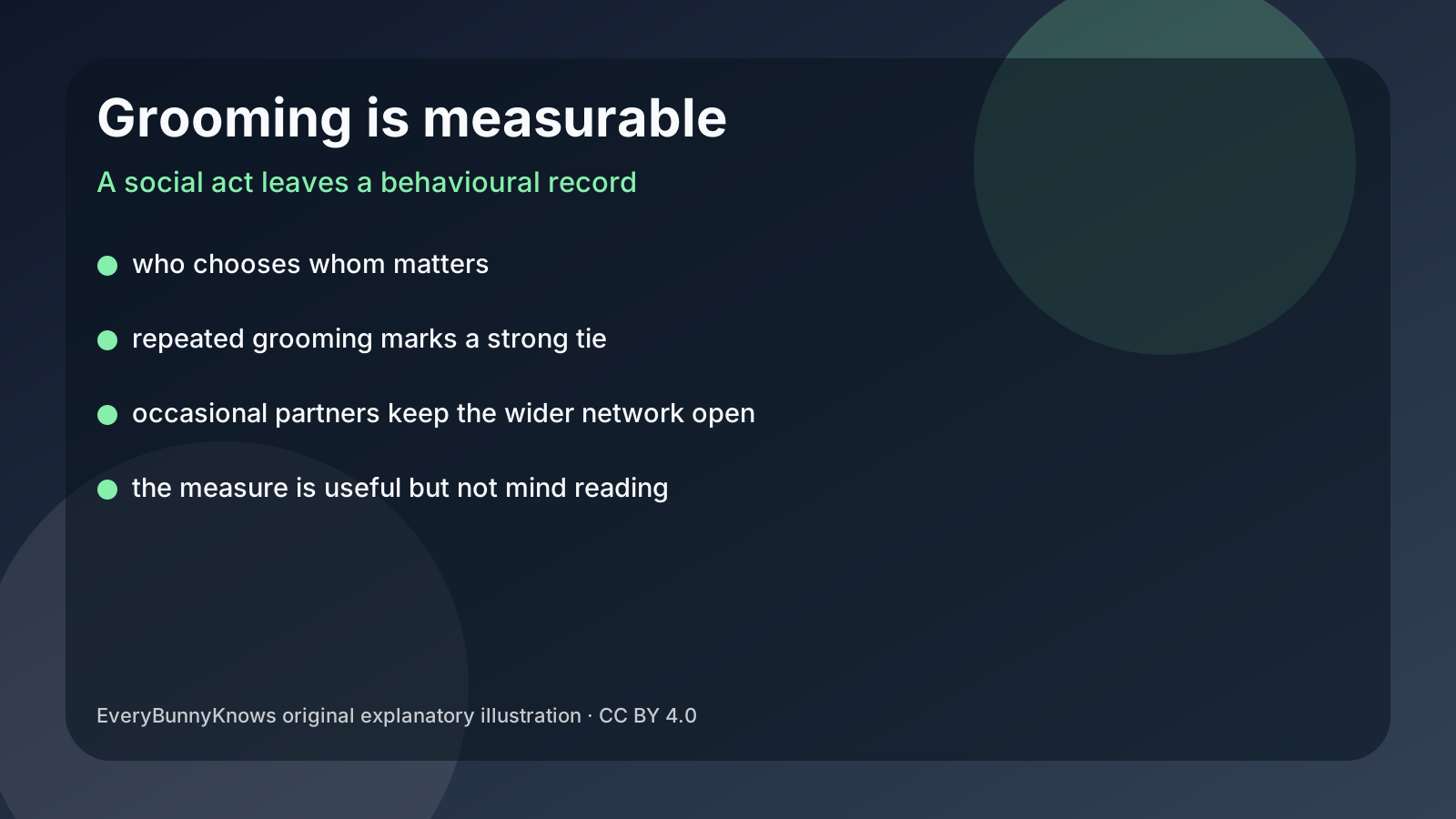
The mechanism is grooming. In apes, picking through fur removes debris and parasites, but it also buys calm time beside another individual. Repeated grooming with the same partner can mark a close relationship; occasional grooming with several others keeps a wider network open. A comparative study reported by Utrecht University and Universidad Carlos III de Madrid found a nested pattern that resembles human social circles: a few close partners, more moderate ties and an outer layer of weaker connections. The reported difference is equally interesting. Chimpanzees appeared to become more selective with age, while bonobos kept broader and more inclusive circles.
That contrast fits what primatologists already know about the two Pan species without making them identical to people. Chimpanzee societies can be more male-bonded and politically tense, with rank, kinship and alliance history shaping access to partners. Bonobo societies are often described as more socially tolerant, with female relationships and socio-sexual behaviour helping reduce tension. Grooming networks sit inside those larger systems. They are not decoration; they are one way an ape manages risk, affiliation and information in a changing group.
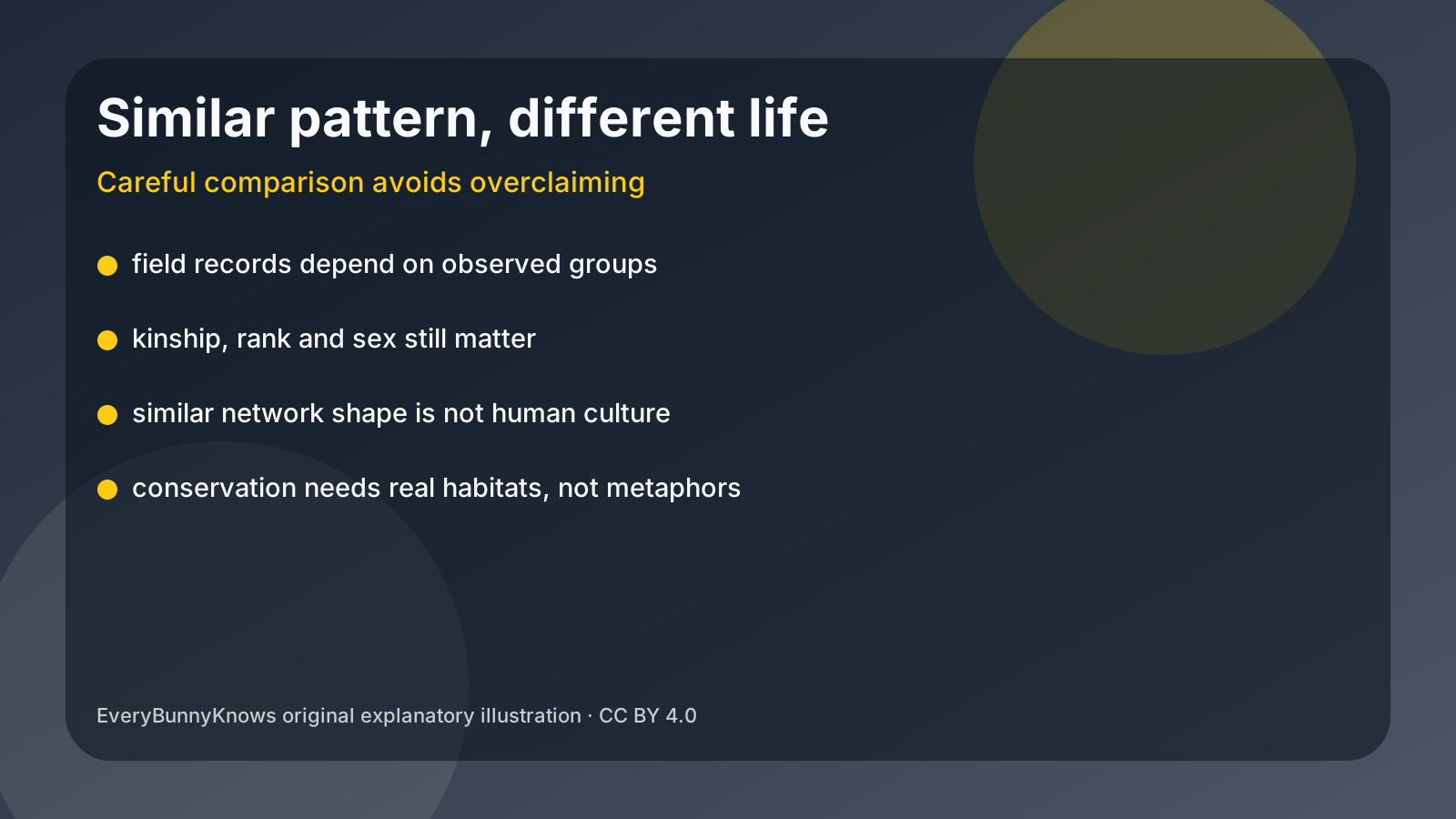
The limits matter because the word friendship carries human baggage. A grooming tie does not prove private affection, moral loyalty or the same emotional vocabulary that people use. Field records depend on which groups were observed, how long observers watched, the sex and age of individuals, kinship, rank and local ecological pressure. A network graph can show that two animals often choose each other; it cannot by itself explain everything they feel.
The study is valuable precisely because it avoids the weaker claim. It suggests that layered sociality is older than modern human culture and may have deep roots in great ape life. Strong ties can provide support, tolerance and predictability. Weaker ties can keep an individual connected to information and opportunities beyond the closest partners. Aging may then change the balance between maintaining many ties and investing in the most reliable ones.
It also gives readers a sharper way to think about social aging. In people, later life often brings a smaller circle of emotionally meaningful partners. The ape comparison does not prove the same psychology, but it asks whether older animals in complex societies also become more selective because time, rank, energy and past experience change the value of each interaction. That is a concrete biological question, not a metaphor.
For conservation, the lesson is practical. Chimpanzees and bonobos are not only species names on a list; they are social animals whose welfare depends on intact communities, enough space and the chance to maintain learned relationships. Protecting habitat in central and western Africa therefore protects more than trees and food. It protects the slow social histories that make an ape group understandable to itself.