Clinical-grade intestinal organoids bring gut repair closer, but not yet routine care
New work on patient-derived intestinal organoids shows how researchers are replacing research-only materials with GMP-compatible culture systems. The advance is about manufacturing readiness, not a treatment already available to patients.
Elena Moss ·
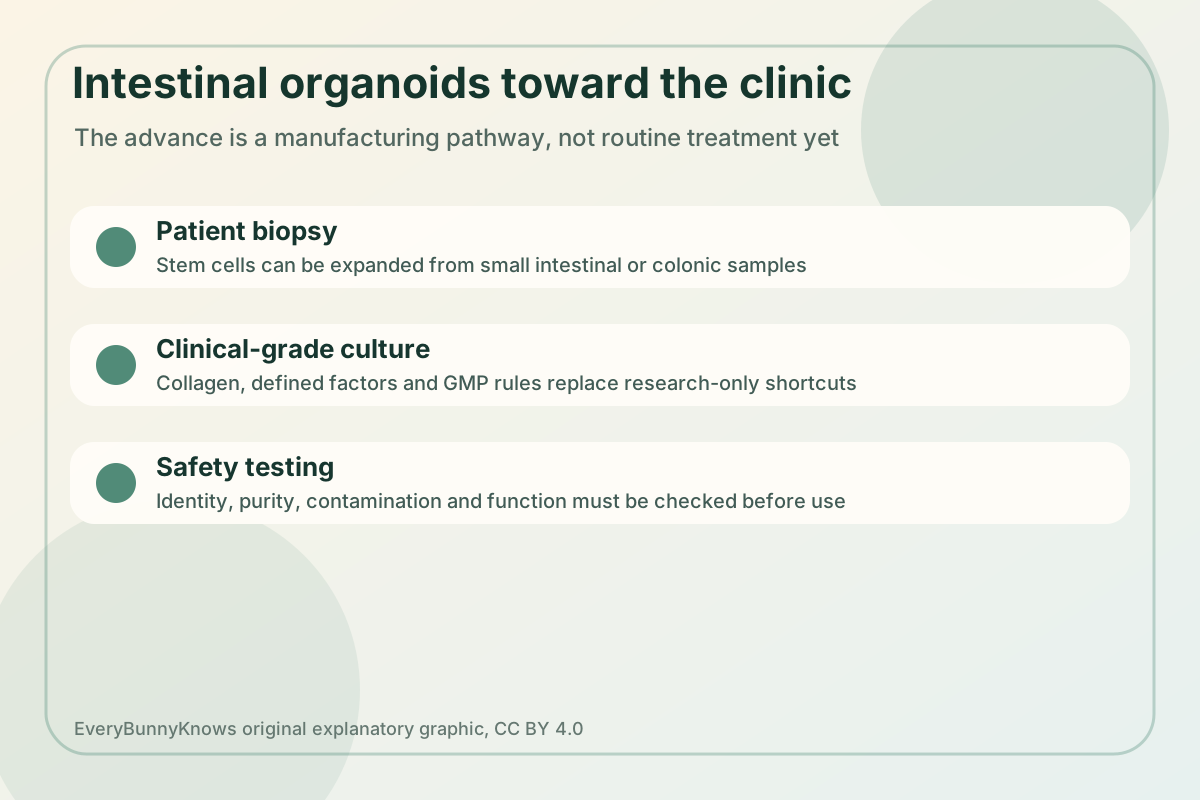
Intestinal organoids are tiny, organised clusters of gut cells grown in the laboratory from stem cells. They are not miniature people and they are not a finished treatment. Their value is more specific: they can model intestinal biology, preserve some patient-specific features and, in the long run, may provide cells for repairing damaged gut lining. A 2026 paper in Stem Cell Research & Therapy moves that long road forward by focusing on a practical bottleneck: how to grow patient-derived colonic organoids in a way that is compatible with clinical manufacturing.
The study developed a GMP-compliant protocol using endoscopic biopsies from patients and Type I collagen rather than the research-standard Matrigel, a basement-membrane extract with animal-derived and variable components. The authors reported that clinical-grade collagen cultures had similar establishment efficiency to conventional organoid culture, with an 82 percent establishment rate from 60 patients. They also tested ways to make expansion more reliable, including area-based passaging, one-well plate culture and a Wnt-activating peptide called PG-008.
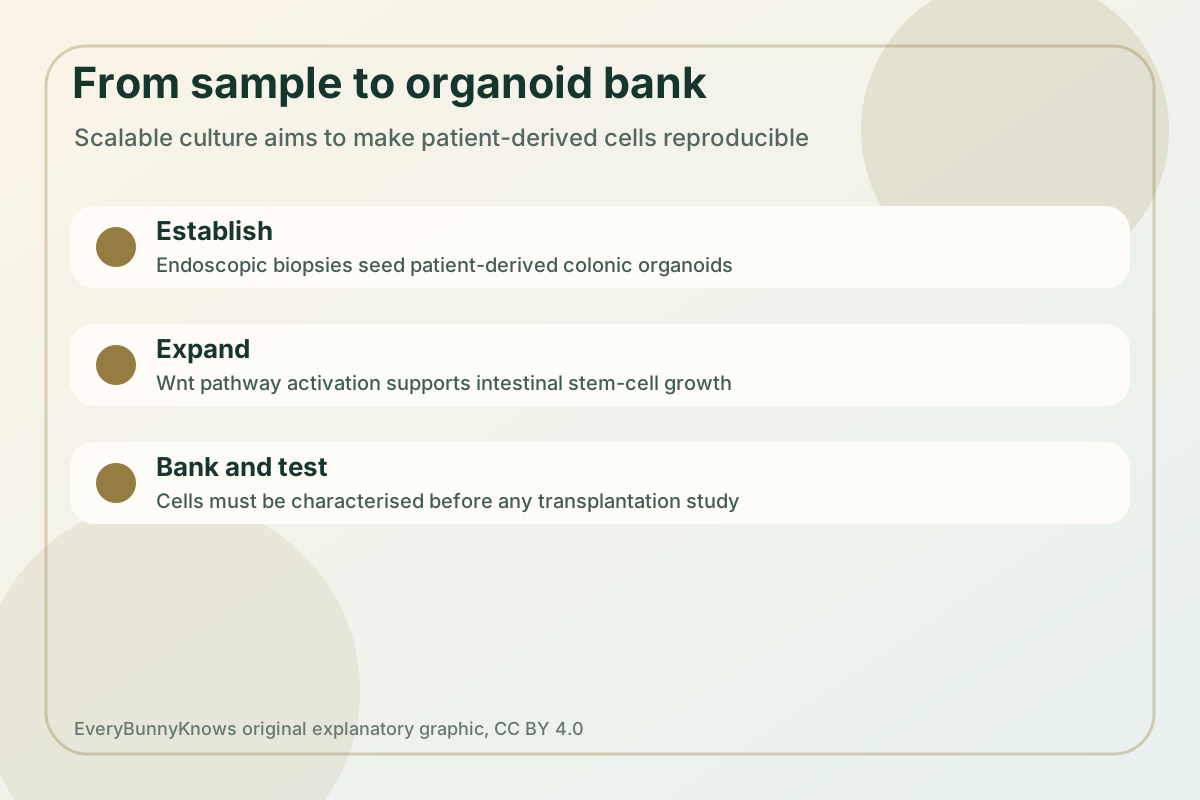
The mechanism sits in the Wnt pathway, a signalling system that helps maintain intestinal stem cells. Conventional cultures often rely on recombinant WNT3A and Matrigel-like matrices. For a therapy candidate, researchers need materials that are more defined, reproducible and acceptable under good manufacturing practice. In this study, PG-008 supported growth and reduced patient-to-patient variability; single-cell RNA sequencing suggested enrichment of intestinal stem cells and transit-amplifying cells, the proliferative populations needed for expansion.
That is why the phrase “clinical-grade” matters. It does not mean the organoids are already approved for patients with inflammatory bowel disease, short-bowel syndrome or radiation injury. It means the culture system is being redesigned so that cells could, in principle, be produced, documented, quality-controlled and compared under rules closer to those used for therapies. Another recent Nature Communications study points in the same direction by using xenogeneic-free polymer-coated substrates to maintain human intestinal stem cells and test transplantation in mouse injury models.
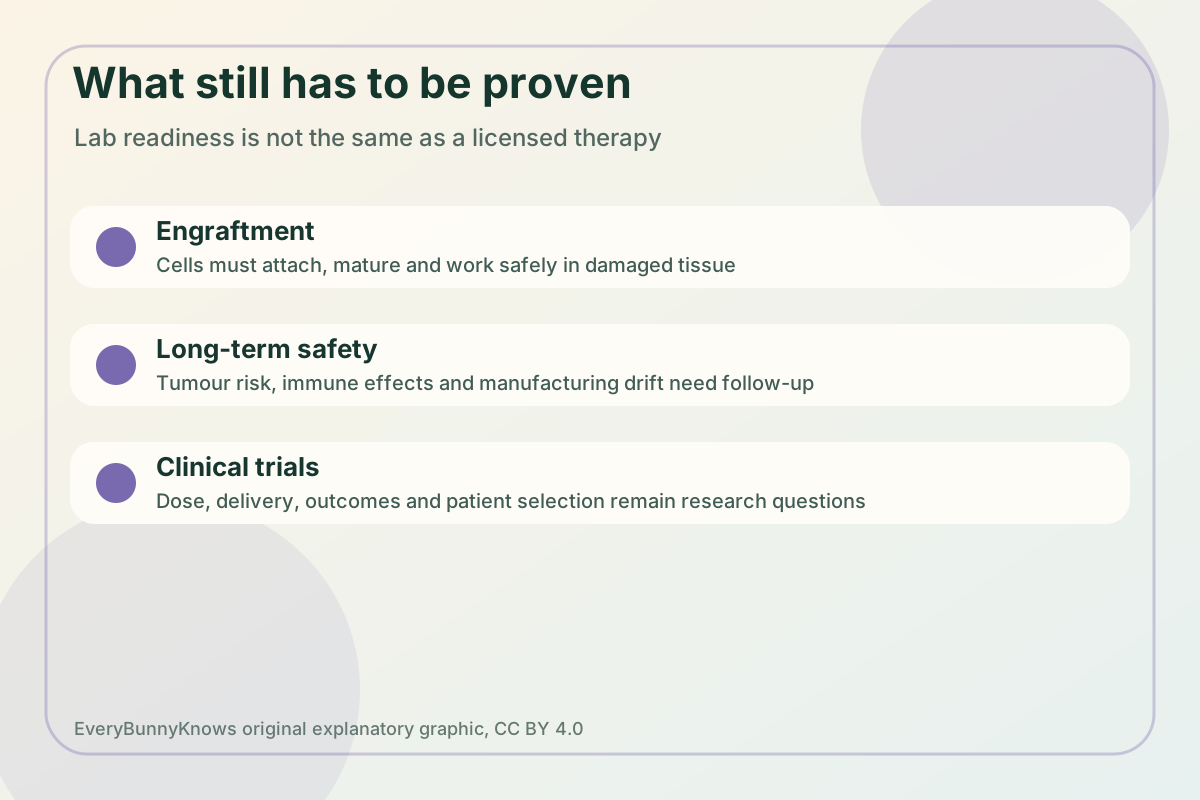
The limits are substantial. Cells would need to engraft in damaged intestine, mature correctly, avoid unwanted growth, resist contamination, keep genetic stability and show benefit in carefully designed clinical trials. Delivery method, dose, patient selection, immune issues, costs and manufacturing consistency all remain open questions. Mouse-model regeneration and laboratory purity are not the same as durable benefit in a person with complex disease.
A further challenge is comparability. If each laboratory grows organoids with slightly different matrices, growth factors, passaging schedules and release tests, regulators and clinicians cannot easily know whether two products are alike. Clinical-grade work is therefore partly a language of records: batch numbers, sterility checks, cell identity, potency assays and predefined acceptance criteria. Those details sound bureaucratic, but they are how a living-cell product becomes something a trial can responsibly evaluate.
For readers, the safest optimism is about readiness. Organoid science is moving from beautiful laboratory demonstrations toward the unglamorous disciplines of manufacturing, quality control and regulatory evidence. If regenerative intestinal therapy eventually works, it will not be because a dish of cells looked impressive. It will be because the cells can be made repeatedly, checked carefully and tested ethically in the patients most likely to benefit.