Why Camper Toilet Chemicals Worry Regional Wastewater Plants
Research from Australia highlights a quiet geography problem: small wastewater plants in tourism regions can receive pulses of chemical-toilet waste whose disinfectants and deodorants may stress the microbes that treatment depends on.
Emma Rybar ·
The growth of camper and caravan travel has a hidden geography. It is not only a story of scenic roads, small-town spending and crowded holiday parks. It is also a story of what happens after a cassette toilet is emptied at a public dump point. Research highlighted by Flinders University in Australia draws attention to a practical risk for regional wastewater systems: chemical toilet waste can arrive in small, concentrated pulses, and the additives that make a toilet tolerable inside a vehicle may be awkward for the biology of treatment plants.
Most modern wastewater treatment depends on living communities of bacteria and other microbes. In activated-sludge systems and related processes, those organisms break down organic matter and help convert nitrogen compounds through steps such as nitrification. The process is robust when flows are predictable and diluted. It is less comfortable with sudden doses of disinfectants, deodorants or preservatives designed to suppress odour and microbial activity in a holding tank. A product that seems sensible in a caravan bathroom can therefore conflict with the needs of a municipal plant.
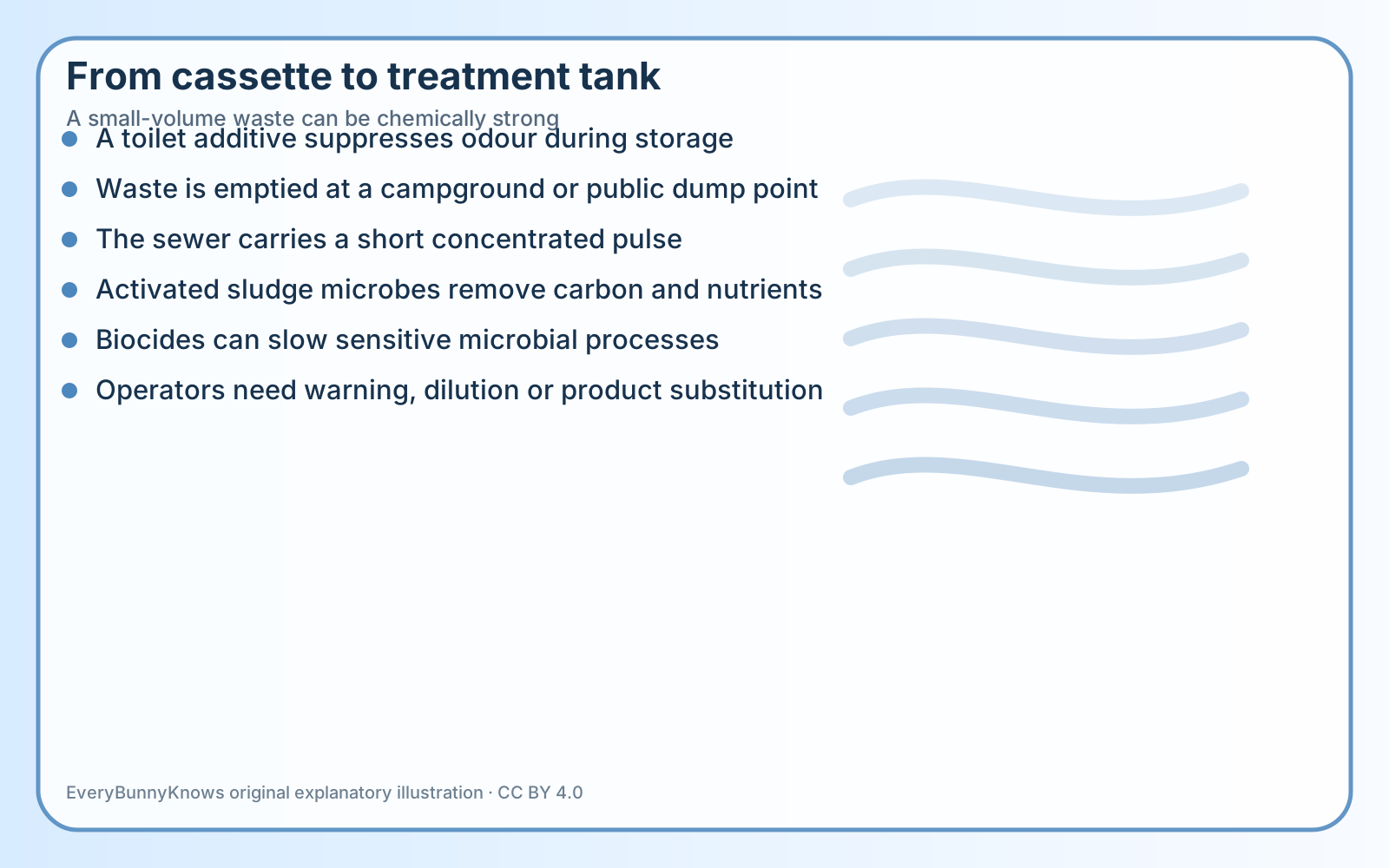
The geography matters because many dump points sit in tourism regions served by relatively small treatment works. A capital-city plant has more volume, monitoring and operational flexibility than a small coastal or inland facility whose population swells on long weekends. When many visitors empty tanks at once, the issue is not only the number of litres. It is the timing, concentration and chemistry of the load. Operators may see stress in the microbial community, changes in oxygen demand, odour complaints or difficulty meeting discharge conditions if the pulse is large enough and poorly understood.
The concern is not an argument against camper travel. It is an argument for matching tourism infrastructure to the systems behind it. Travellers often assume that a signed dump point means any commercial toilet chemical is acceptable. Local councils may install the visible facility without fully mapping what happens downstream. Manufacturers may label products as convenient or odour-controlling while the term “septic safe” is used inconsistently. The result is a gap between personal convenience and regional water management.
The mechanism is especially important for nitrogen removal. Nitrifying microbes, which help convert ammonia to nitrate, are often sensitive to toxic shocks and environmental change. If they are inhibited, a treatment plant can take time to recover even after the camper season quiets down. Other processes may be affected by high-strength organic waste, surfactants, fragrances or preservatives. The exact risk depends on the product formulation, dilution, sewer travel time, plant design and receiving environment, so a blanket panic would be as unhelpful as ignoring the issue.
Better solutions are practical. Regions can map dump points against plant capacity, collect data during peak travel periods, recommend lower-toxicity or genuinely treatment-compatible products, and design receiving tanks that allow dilution or controlled release. Campgrounds can give clearer instructions at the point of use, not only on council websites. Travellers can choose products carefully, avoid illegal dumping and understand that “out of sight” still leads somewhere.
The wider lesson is that tourism has pipework. A holiday route is connected to water, waste, staff, microbes and river permits as surely as it is connected to lookout points. If regional towns want the benefits of mobile travel without overloading small utilities, they need to treat wastewater as part of the visitor map. That is a hopeful message because the fix does not require abandoning caravans. It requires making invisible infrastructure visible enough for better choices.