What a Danish intelligence-test study says about bilingual pupils and fair assessment
A Danish report on bilingual young people is a reminder that intelligence tests measure performance in a testing situation, not ability in a vacuum. Language load, norms and school context can change what a score means.
Felix Arden ·
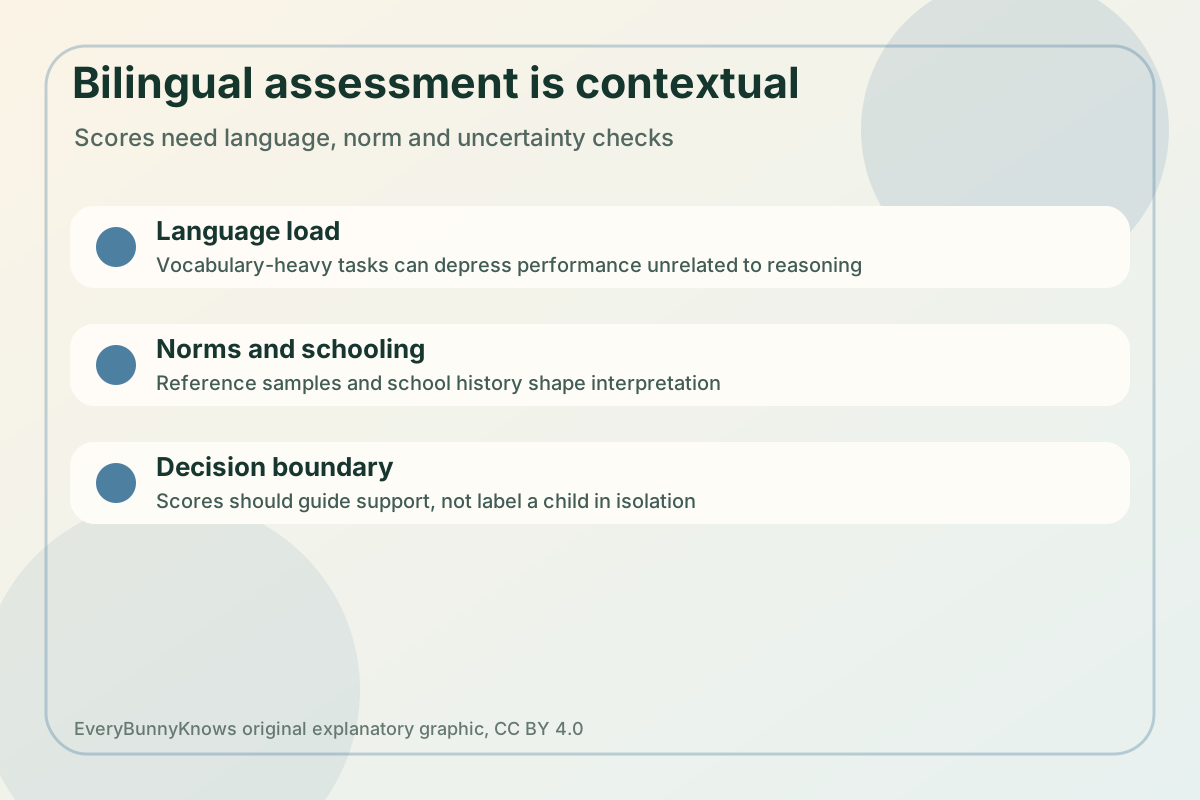
A Danish report circulated by Medical Xpress in June 2026 puts a familiar school question into sharp focus: what happens when a standard intelligence test is used with young people who navigate more than one language? The concern is not that bilingualism lowers intelligence. The concern is that a test score can be pulled downward when tasks depend on vocabulary, cultural familiarity, speeded verbal instructions or norms that do not fully match the child being assessed.
Intelligence tests are useful only when their limits are visible. Instruments such as the Wechsler scales are built from subtests that sample different skills: verbal comprehension, working memory, processing speed, visual-spatial reasoning and fluid reasoning. Some subtests require little spoken language; others ask the test-taker to understand words, explain similarities, remember sequences or follow instructions precisely. For a young person who speaks Danish at school and another language at home, the score may partly reflect language exposure and testing comfort as well as reasoning.
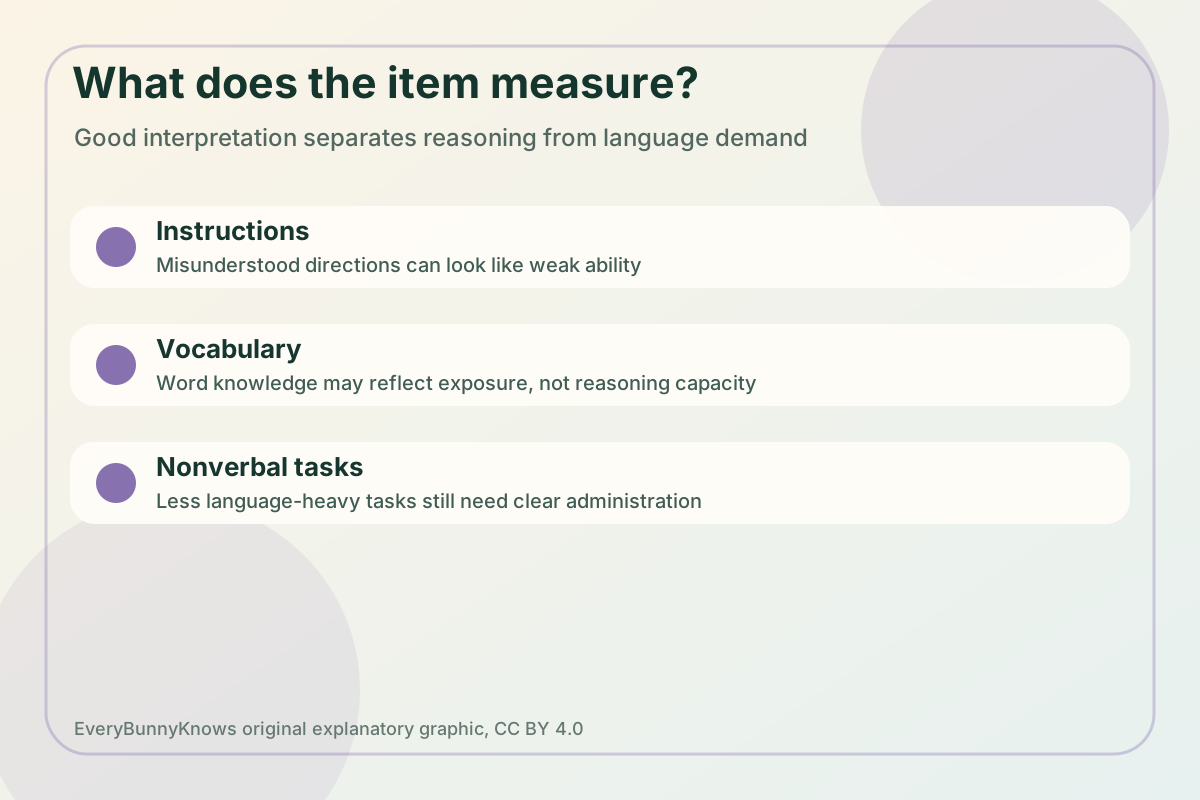
The mechanism is simple but easy to miss. A child may understand a concept yet need extra time to retrieve a word in the test language. A phrase in an instruction may be formally correct but unfamiliar. A timed task may reward practice with school-like materials. A norm group may represent the national population in broad terms while still leaving some multilingual pathways thinly represented. None of this means the test is useless; it means the result needs careful interpretation.
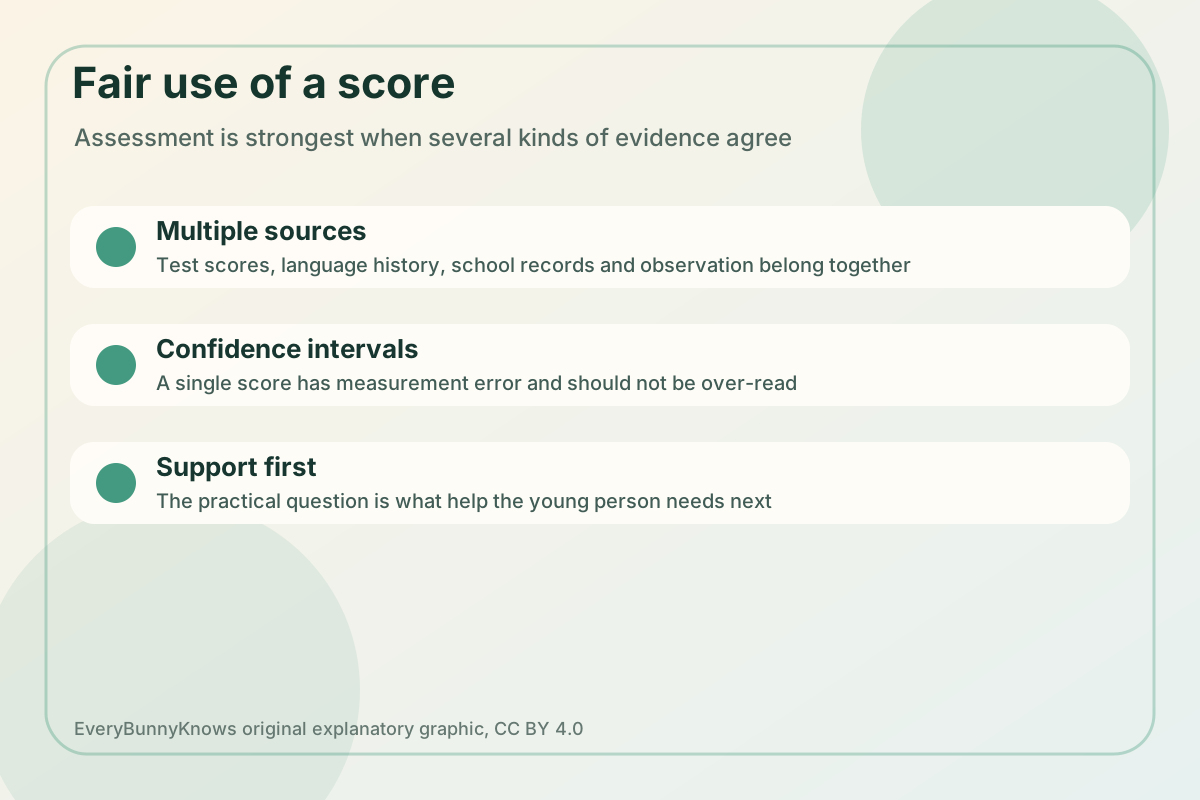
Psychometric fairness is usually built from several checks. Researchers ask whether a test measures the same construct across groups, whether individual items behave differently after ability is accounted for, and whether scores predict real-world outcomes similarly. Clinicians and school psychologists add a practical layer: language history, quality of schooling, hearing and vision, stress, migration experience, teacher observations and family information. A single IQ number should not carry more weight than this fuller picture.
The limits matter. The publicly available news report does not by itself settle which Danish test version, sample size or statistical method should guide every school decision. Bilingual children are also not one group: age of acquisition, proficiency in each language, literacy, socioeconomic context and special educational needs vary widely. Some bilingual pupils may score exactly as expected; others may be underestimated on language-heavy tasks; still others may need assessment for reasons unrelated to bilingualism.
The useful lesson is therefore cautious and hopeful. Better assessment does not mean ignoring scores or replacing expertise with good intentions. It means using trained interpreters when needed, choosing less language-loaded measures where appropriate, reading confidence intervals, comparing several sources of evidence and asking what support will help the young person learn.
For schools and clinics, the practical implication is modest but important: document the languages a pupil uses, how long each has been used, where literacy developed, and whether the test language matches everyday learning. If a result could affect placement, services or expectations, the interpretation should say what was measured confidently and what remains uncertain. When tests are treated as tools rather than labels, bilingualism becomes part of the context for fair interpretation, not a reason to underestimate a child.