DNA reveals the Seychelles’ lost crocodiles were saltwater crocodiles
DNA from historic museum specimens indicates that the crocodiles once reported from the Seychelles were an isolated population of saltwater crocodile, Crocodylus porosus, not a separate island species.
Sofia Lane ·
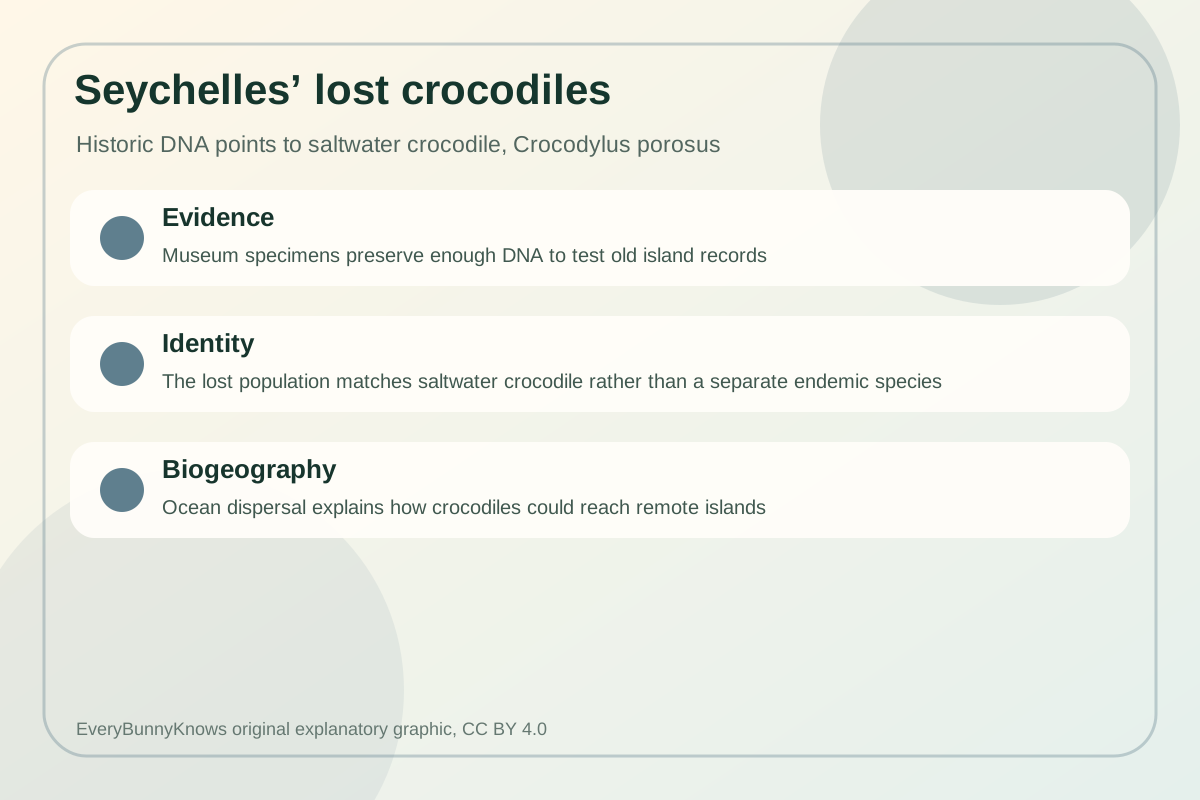
For more than two centuries, the Seychelles carried a strange natural-history footnote: early accounts described crocodiles on islands now famous for giant tortoises, seabirds and granite beaches, but the animals were gone and their identity remained uncertain. DNA from historic museum specimens has now made the story clearer. The lost Seychelles crocodiles were not a separate island species. The evidence points to an isolated population of the saltwater crocodile, Crocodylus porosus.
That identification matters because it changes the kind of mystery being solved. If the animals had been a unique endemic crocodile, the Seychelles would represent a lost evolutionary experiment found nowhere else. If they were saltwater crocodiles, the story becomes one of long-distance dispersal, island colonization and local disappearance. Crocodylus porosus is the living crocodile best suited to that explanation. It tolerates salt water, can travel along coasts and between islands, and has a vast Indo-Pacific range.
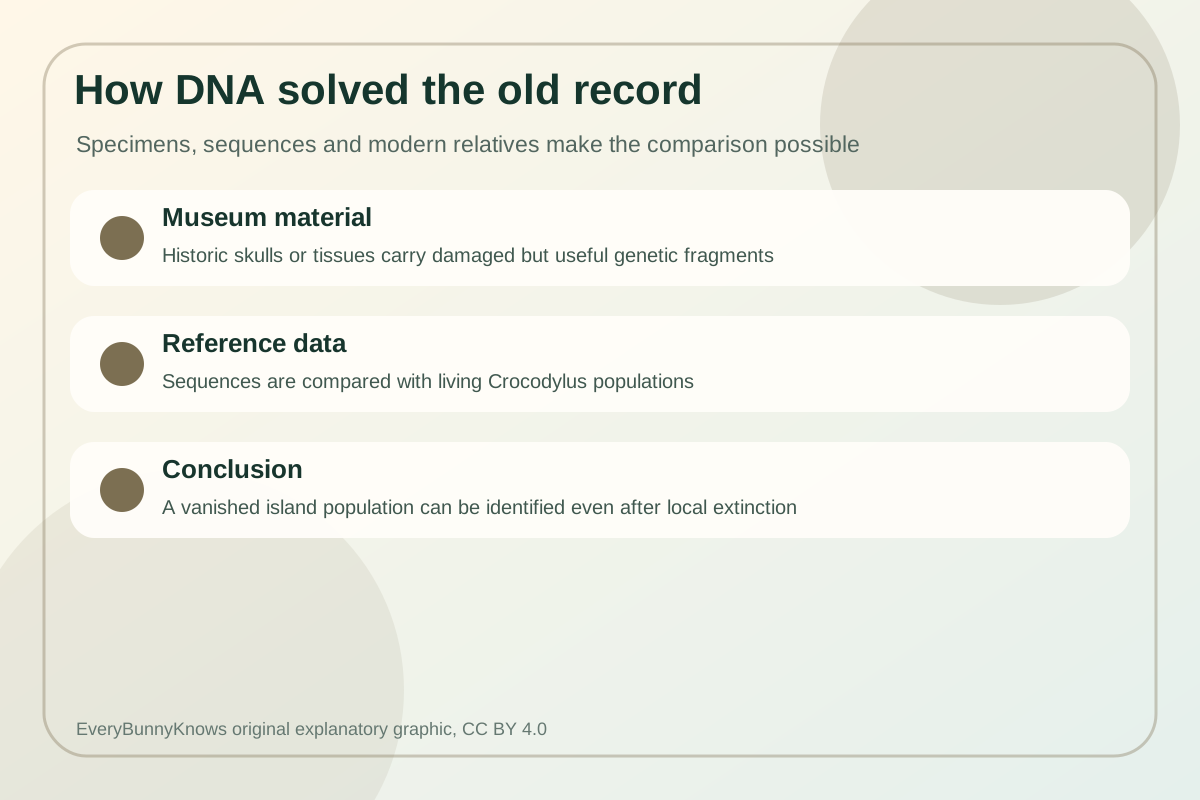
The mechanism is museum genomics. Old bones, teeth or preserved tissues may contain short, degraded DNA fragments. Researchers extract those fragments carefully, sequence what survives and compare the result with reference data from living crocodile species and populations. A name written in an old catalogue can be wrong or incomplete; DNA supplies an independent line of evidence. In this case, the genetic signal fits saltwater crocodile rather than a distinct Seychelles-only lineage.
The finding also fits crocodile biology. Most crocodilians are tied strongly to fresh water, but saltwater crocodiles use estuaries, mangroves, tidal rivers and open coastal water. Individuals can ride currents and move over surprising distances. That ability does not make colonization easy, but it makes the Seychelles record plausible: a remote archipelago could receive occasional crocodiles from the wider Indian Ocean region, and a small population could persist for a time before disappearing.
It also prevents a common island-history mistake. Absence today is not proof that an animal was never part of the system, and an old traveler’s account is not proof of a separate species. The strongest answer comes when written records, specimen labels, morphology and DNA are forced to agree or disagree in the same test.
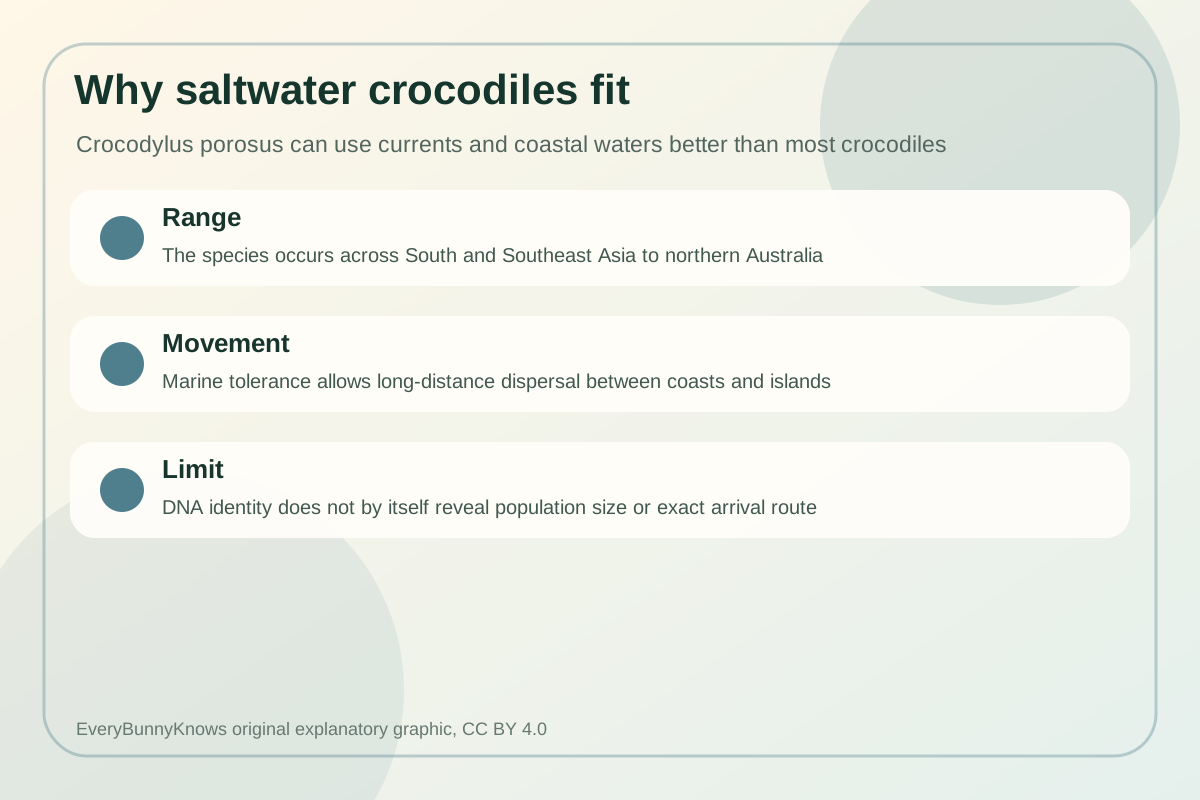
The limits keep the answer from becoming too neat. DNA can identify affinity, but it may not reveal exactly when crocodiles arrived, how many colonization events occurred, how large the Seychelles population became or which human and ecological pressures ended it. Historical reports can be uneven, and museum specimens represent only the animals that happened to be collected and preserved. The result also does not mean the modern islands should be imagined as waiting for crocodiles to return; today’s conservation choices involve people, tourism, beaches, protected species and changed habitats.
The hopeful lesson is about archives. A specimen stored for generations can still answer a question that field observers can no longer ask, because the population has vanished. By pairing old collections with modern DNA, researchers turned a 250-year-old anecdote into a testable biogeographic story. The Seychelles’ lost crocodiles are still gone, but they are no longer nameless: they were part of the saltwater crocodile’s remarkable capacity to cross the edges of the sea.