DNA time stamps reveal the strawberry’s tangled family tree
Transposable-element “time stamps” and whole-genome comparisons show that today’s octoploid strawberries were assembled by repeated hybridization, genome doubling and later breeding, not by one simple origin event.
Tereza Field ·
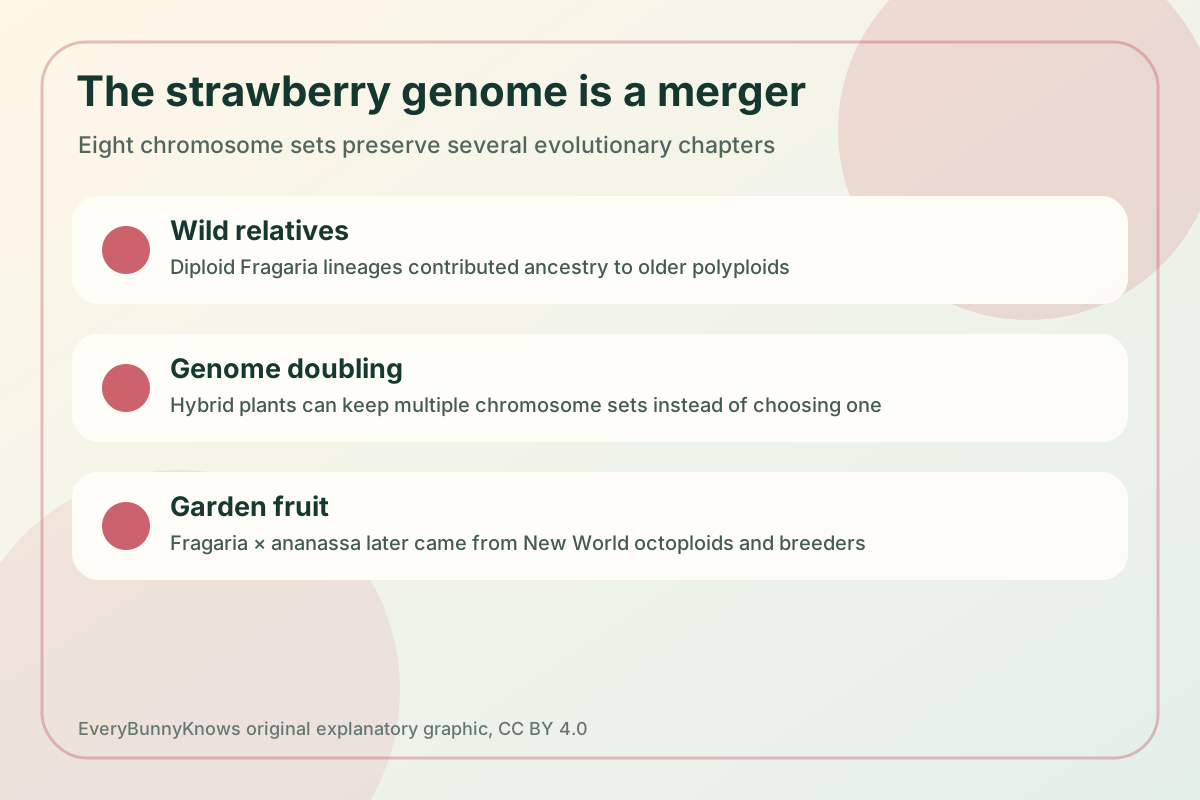
A garden strawberry looks simple because it arrives as one red fruit. Genetically, it is a crowded archive. Modern cultivated strawberry, Fragaria × ananassa, is an octoploid: most cells carry eight sets of chromosomes rather than the two sets familiar from many animals. Genome studies have shown that those sets were not assembled in one neat step. They record older hybridizations among wild Fragaria relatives, later genome doubling, and finally the human breeding history that made the large, sweet garden strawberry familiar today.
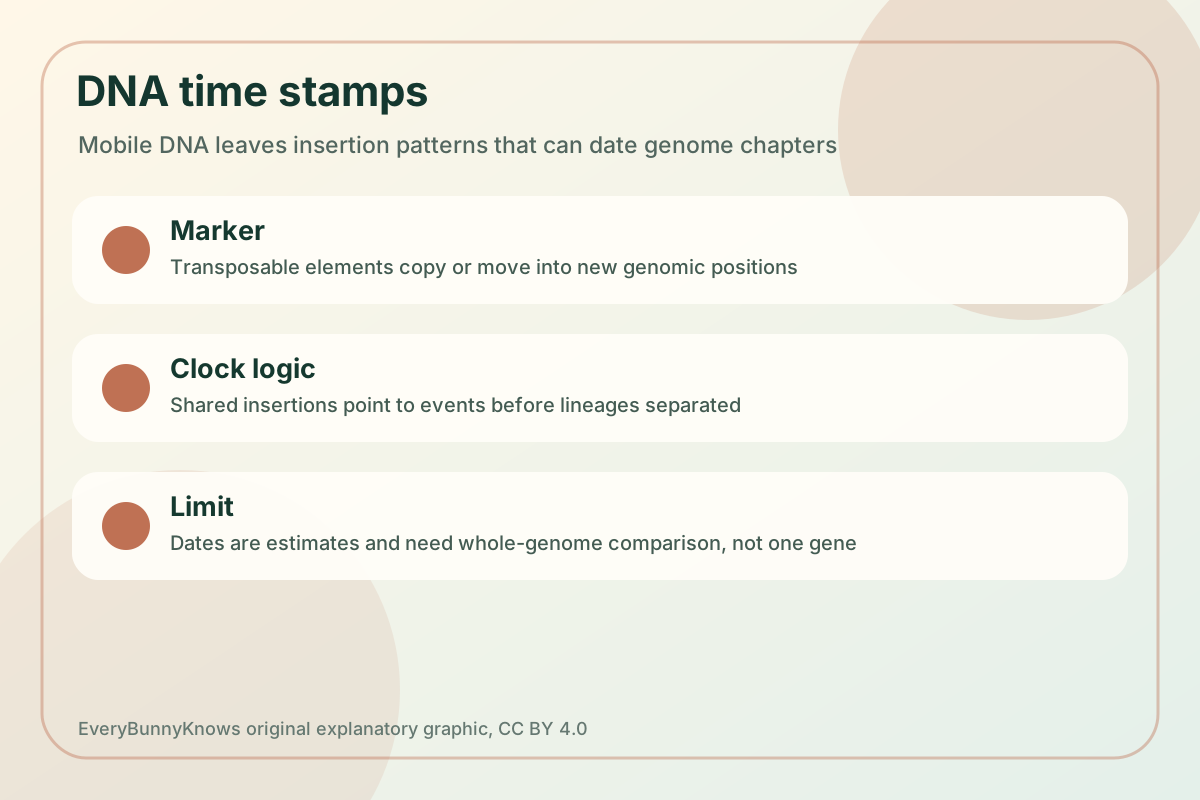
The “time stamp” idea comes from transposable elements, stretches of DNA that can copy or move into new positions. Once an insertion lands in a genome, descendant lineages may inherit it. If two strawberry subgenomes share the same insertion pattern, that pattern probably predates their split; if an insertion appears only in one branch, it likely happened later. Researchers combine many such signals with whole-genome comparisons to order events that no botanist could have watched directly.
The mechanism is polyploid evolution. Plants can survive hybridization and chromosome doubling more readily than many animal groups. A hybrid plant may inherit chromosome sets from different relatives and, instead of losing one side, keep multiple copies. That can create short-term problems, because genes from different parents must work in the same cell. It can also create opportunity: extra gene copies may be silenced, repurposed or selected for traits such as fruit development, disease response, cold tolerance or flowering time.
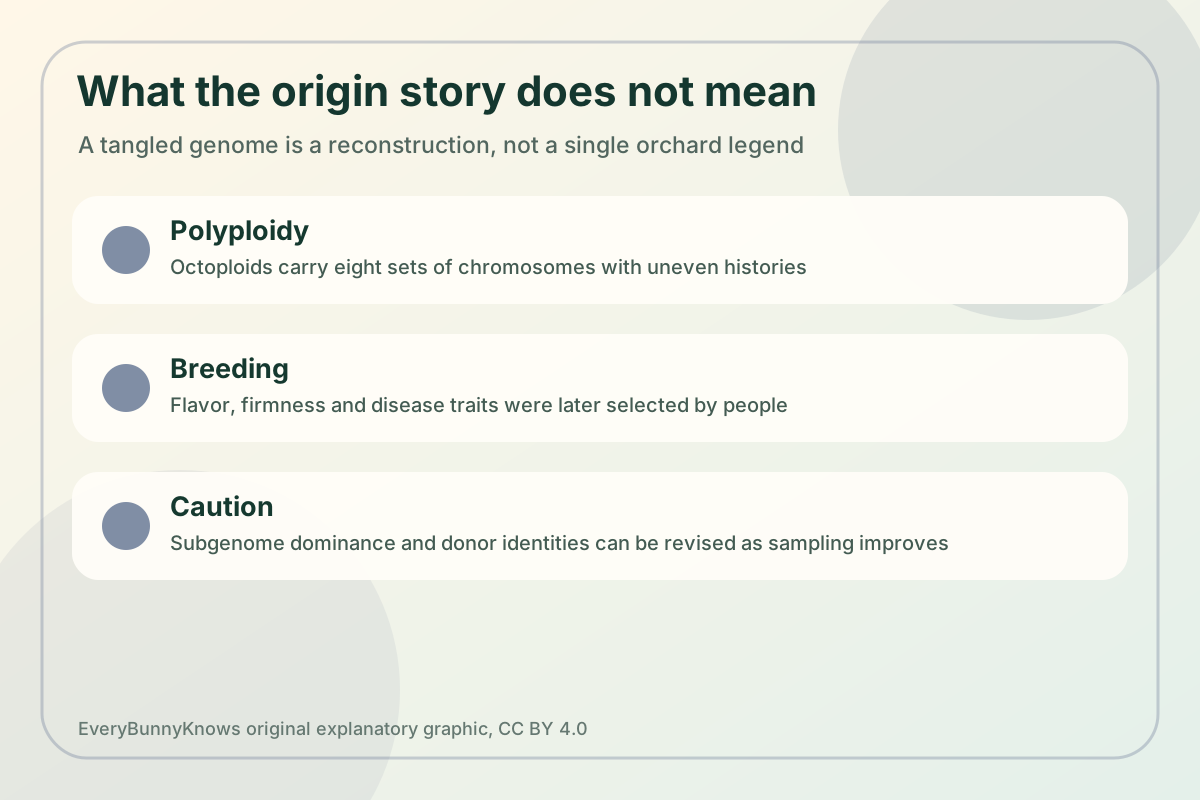
The surprise is that the familiar crop is both ancient and recent. Its deeper ancestry reaches into wild diploid and polyploid Fragaria lineages, including relatives in Eurasia and the Americas. The garden strawberry itself arose in Europe after New World octoploid species, commonly described as Virginia strawberry and Chilean strawberry, were brought into cultivation and hybridized. Later breeders selected fruit size, flavor, firmness, color, yield and disease resistance. A supermarket berry therefore contains evolutionary history and agricultural history at once.
There are limits. Genomic dating is reconstruction, not a photograph of the past. Transposable elements do not move at a perfectly regular pace, older insertions can be lost or obscured, and donor relationships can be revised when more wild species and genomes are sampled. Subgenome dominance, where one inherited genome contributes more active genes than another, is also complex. The safest conclusion is not that one wild plant is “the” strawberry ancestor, but that today’s strawberry is a merger shaped by repeated contact among lineages.
That also explains why origin research matters beyond curiosity. Breeders need to know which chromosome set carries useful disease resistance, flavor chemistry or stress tolerance, because a trait may sit in one subgenome while a similar-looking region in another behaves differently. Conservation of wild Fragaria relatives is therefore not a nostalgic exercise. It preserves genetic options that future fruit breeding may need as pathogens, heat and water stress change.
For readers, the payoff is a more accurate sense of plant evolution. A fruit bowl can hold an evolutionary puzzle usually hidden inside chromosomes. The sweetness of a strawberry is real, but so is the deeper lesson: biodiversity often works by combination. Hybridization, genome doubling, mobile DNA and breeding all helped turn small wild relatives into a crop that millions of people know by taste before they ever learn its genome.