Earth’s first animal communities changed slowly until sex raised the evolutionary stakes
A Cambridge-led modelling study argues that clonal reproduction in Ediacaran-style animal communities could dampen competition, while sexual reproduction reshuffled variation and made faster diversification possible.
Matyáš Král ·
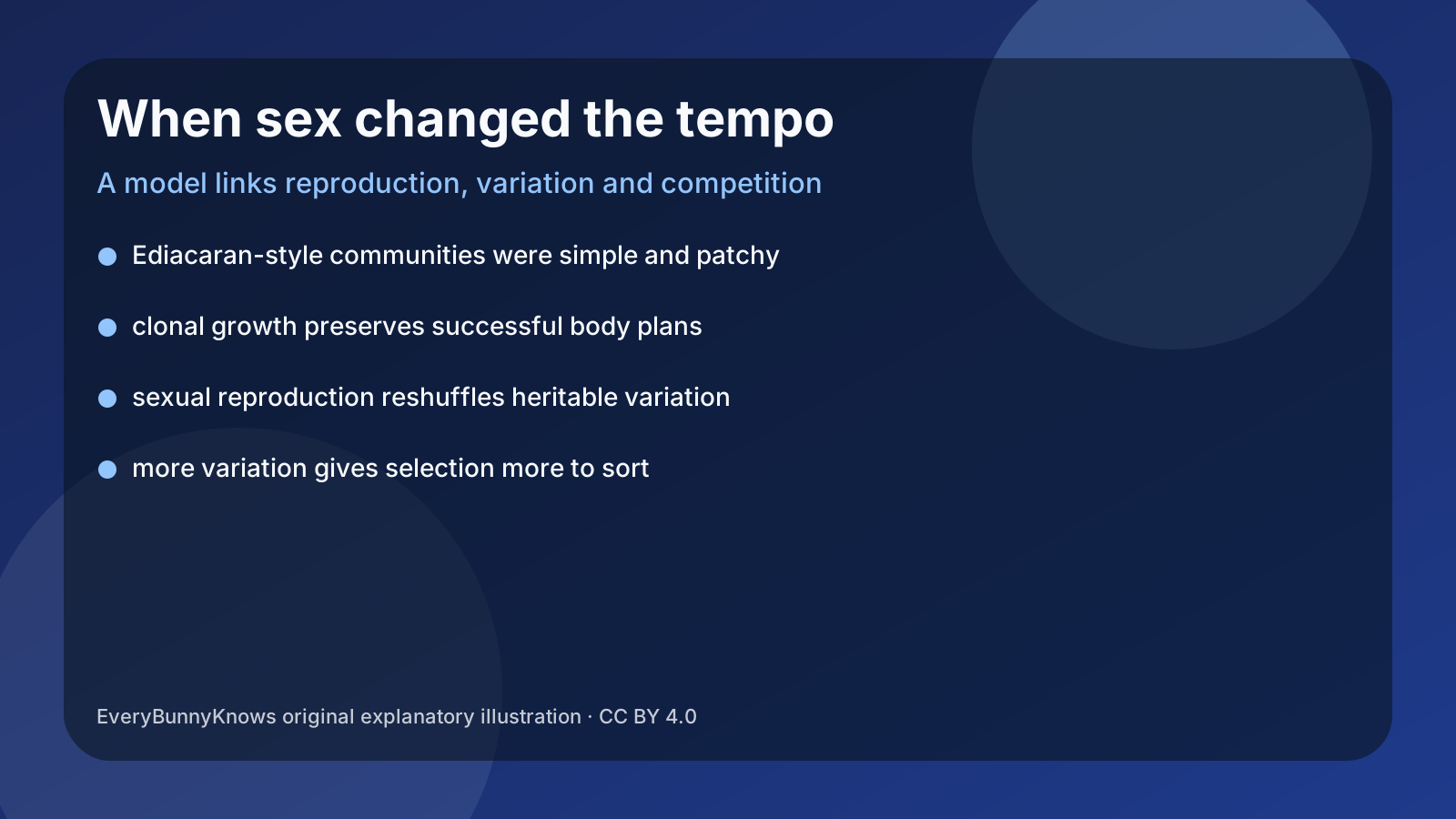
The first animal communities did not explode into modern biodiversity the moment animals appeared. A Cambridge-led study reported in 2026 asks a slower and more interesting question: could the way early animals reproduced have held evolution in a low gear for millions of years? In Ediacaran-style communities, before the familiar Cambrian world of abundant shells, teeth and burrows, many organisms may have grown or spread largely by clonal or asexual means. That can make a seabed look alive while keeping competition surprisingly muted.
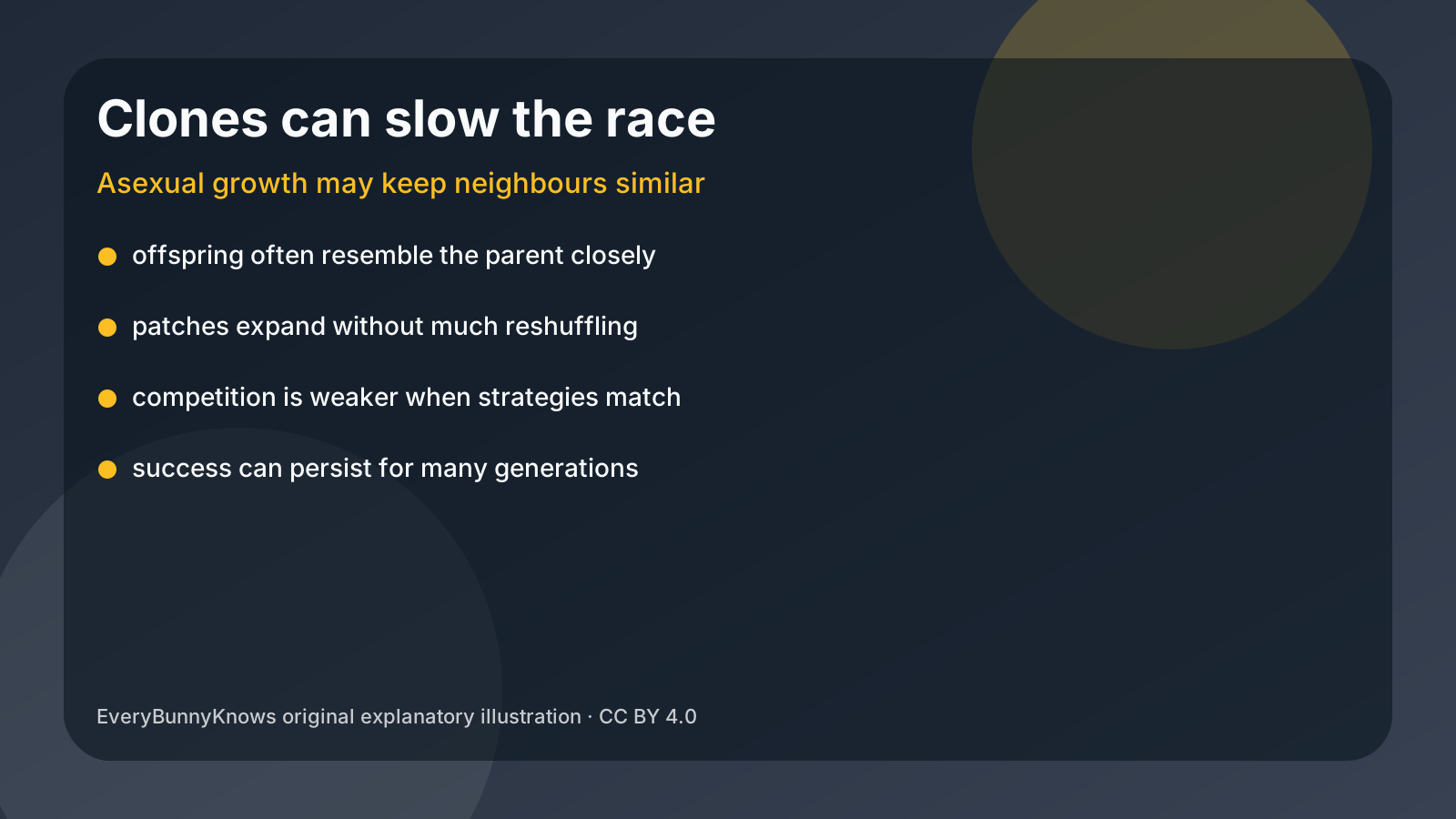
The mechanism is variation. In asexual reproduction, offspring are usually very close copies of the parent. A successful body plan can expand across a patch, but each new individual does not automatically bring a fresh mixture of inherited traits. If neighbours are similar and use resources in similar ways, natural selection still operates, yet there may be less sharply different material for competition to sort. Evolution does not stop; its tempo and visible branching can be slower.
Sexual reproduction changes that arithmetic. By combining genetic material from two parents, sex can produce new trait combinations in each generation. Some combinations will fail, some will be neutral and a few may work better in a changing environment. That gives selection more variation to test. In a model of early animal communities, the arrival or spread of sex can therefore raise the evolutionary stakes: populations compete with more varied bodies, behaviours and life histories, and diversification can accelerate.
The fossils behind this question are difficult witnesses. Ediacaran organisms such as Dickinsonia, rangeomorphs and other soft-bodied forms preserve outlines, surfaces and sometimes growth patterns, not courtship or gametes. Palaeontologists can infer ecology from shape, position, sediments and comparison with living organisms, but they cannot watch a 560-million-year-old animal reproduce. That is why modelling is useful. It lets researchers test whether different reproductive rules could plausibly generate different evolutionary tempos.
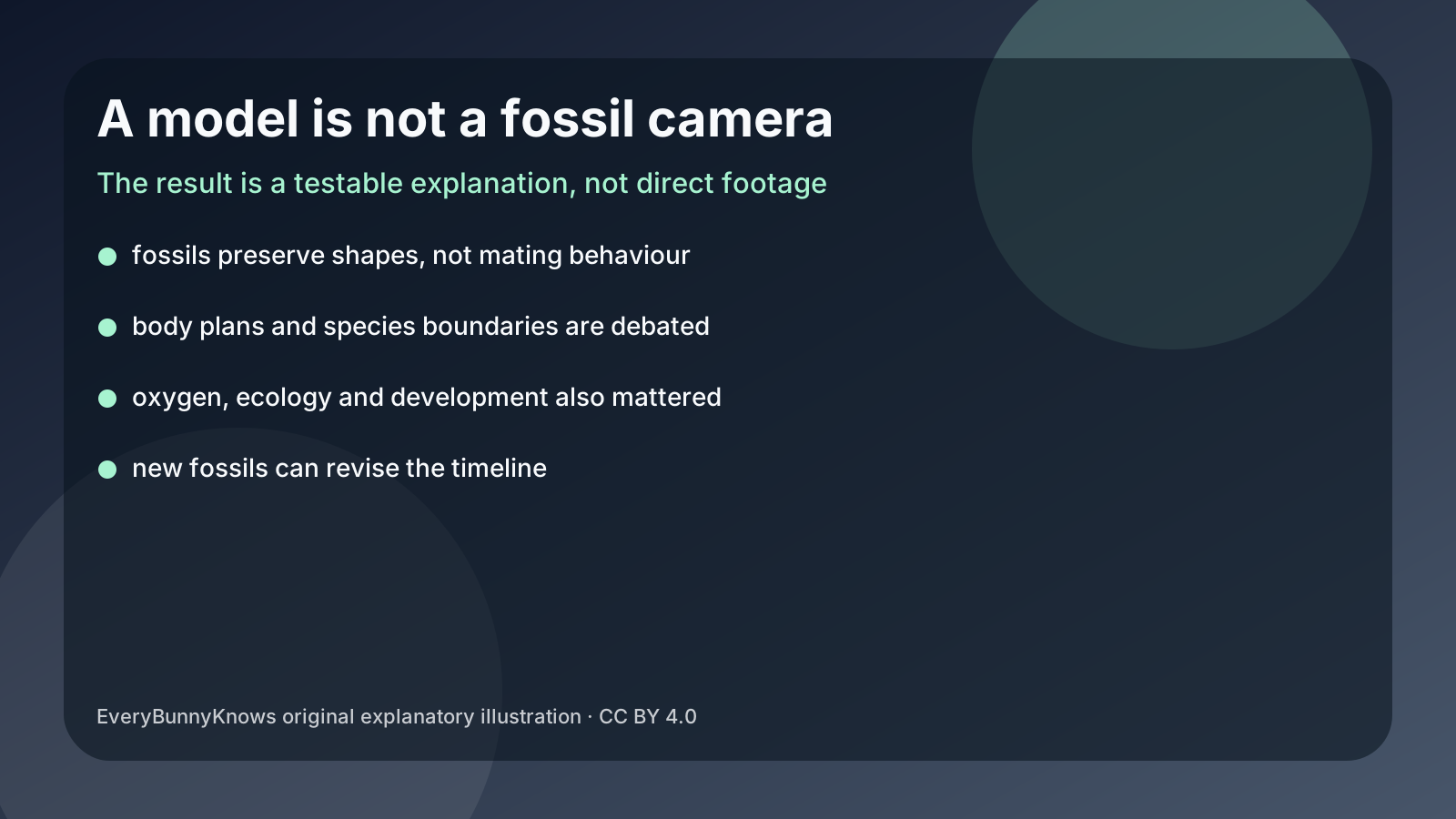
The limits keep the story honest. Sex was not the only reason animal life diversified. Oxygen levels, developmental genes, predation, movement, burrowing, ecological engineering, climate and preservation bias all shaped the transition from the Ediacaran to the Cambrian. A model can show that reproduction is a powerful lever, but it cannot prove that every early animal lineage followed the same path or that one switch explains all later biodiversity.
The idea is still valuable because it makes deep time less vague. “Animals evolved” can sound like a smooth upward arrow. The reproductive mechanism shows a more physical process: how offspring resemble or differ from parents, how much variation sits in a population, and how strongly competition can amplify small advantages. When sex reshuffles inheritance, a community has more ways to respond to disturbance, opportunity and ecological pressure.
For readers, the hopeful part is intellectual rather than sentimental. Fossils that look quiet can still ask dynamic questions. A flat Ediacaran impression on stone is not just an ancient shape; it is evidence in a larger puzzle about reproduction, competition and the origins of animal diversity. The next fossil bed or model will not give a simple origin story, but it can make the early history of animals testable in sharper, more beautiful detail.