Ultrasonic Espresso Shows What Heat Usually Does
UNSW Sydney researchers made espresso-strength coffee with room-temperature water by vibrating a portafilter basket with ultrasound; the useful question is where a lab process can save energy at scale.
Noah Circuit ·
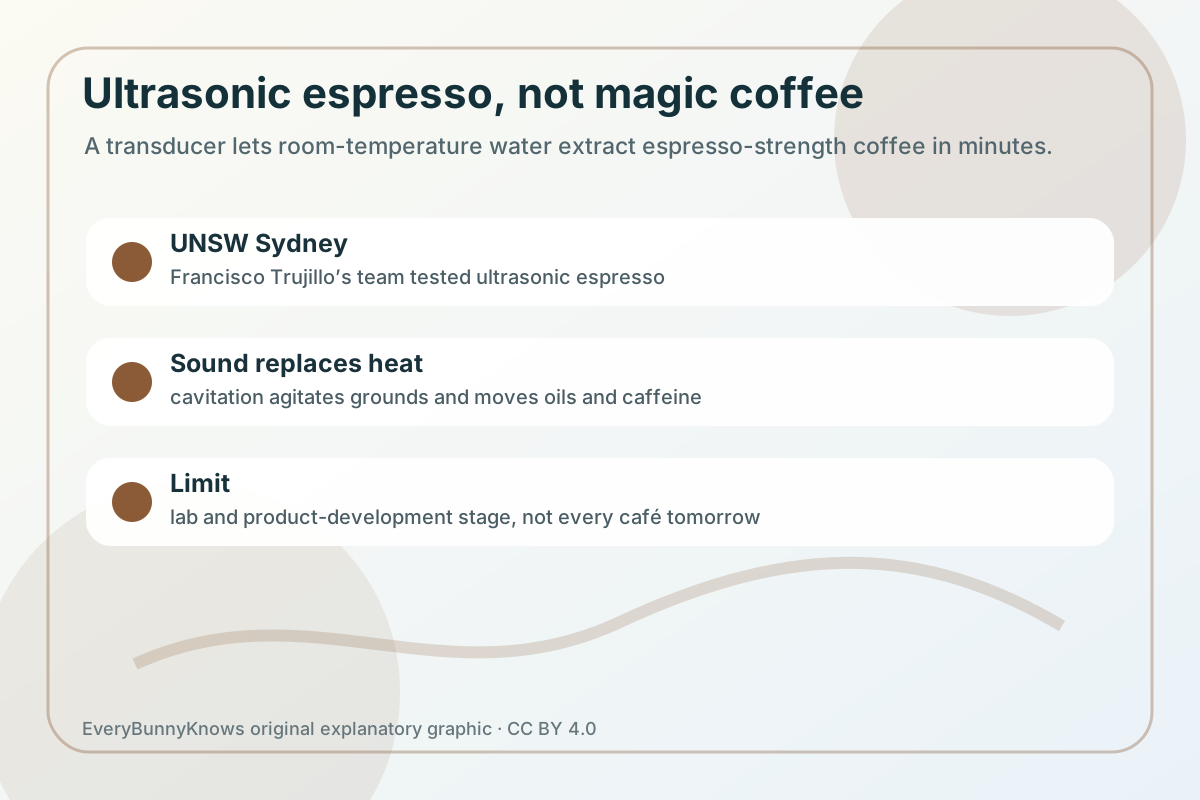
Espresso usually feels like a small performance of heat and pressure: finely ground coffee, hot water, a compact puck and a short, intense shot. The UNSW Sydney experiment asks a useful engineering question rather than a lifestyle one. What if part of that extraction work can be done by high-frequency sound waves, so the water does not need to be heated first? Francisco Trujillo and colleagues at UNSW's School of Chemical Engineering reported an ultrasonic process that produced espresso-strength coffee with room-temperature water in under three minutes, with energy use cut by up to 75 percent because the water is not boiled.
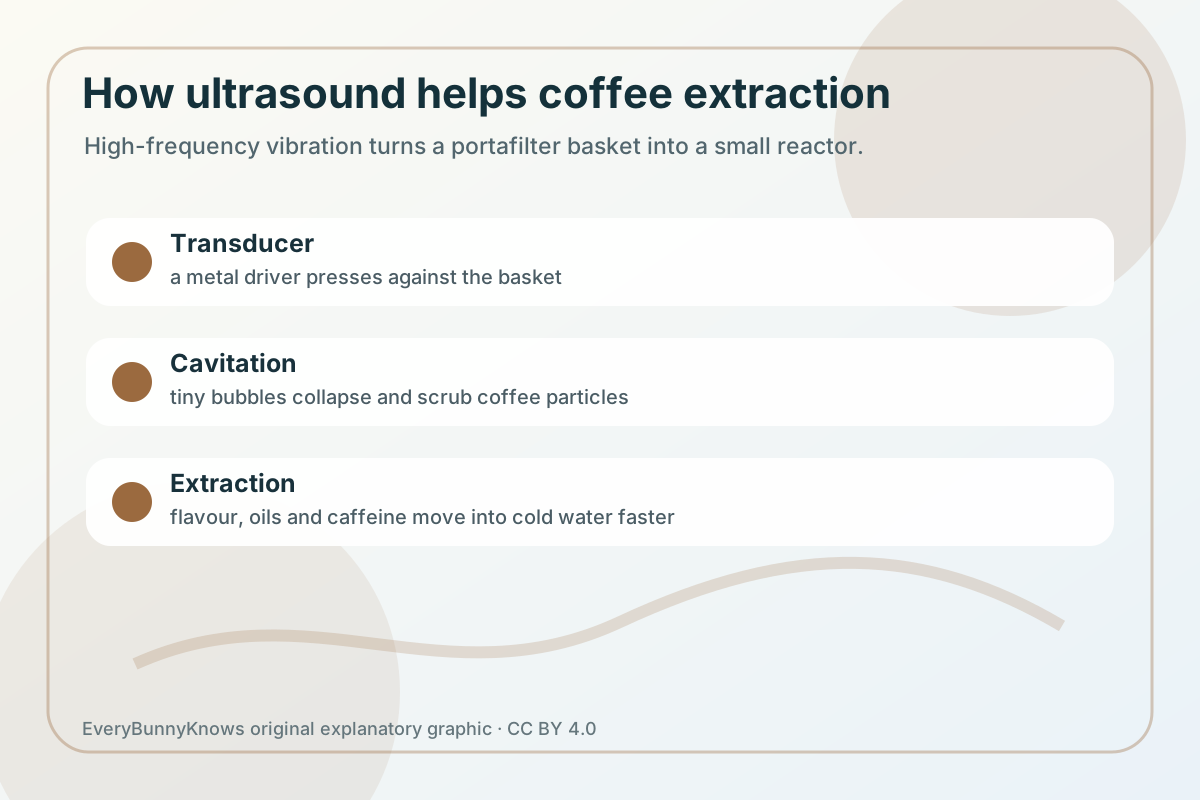
The mechanism is acoustic cavitation. A metal transducer presses against the side of a conventional espresso basket and makes it vibrate at ultrasonic frequencies, above the range of human hearing. Those vibrations travel through the water and grounds. Tiny bubbles form and collapse in the liquid; near coffee particles, that collapse produces small jets and shear forces that pit or fracture the surface. In plain terms, ultrasound adds a mechanical scrubbing action that helps flavour compounds, oils and caffeine leave the grounds quickly without the thermal push of hot water.
This is not simply cold brew made faster. Cold brew normally steeps for 12 to 24 hours and tends to be smoother, more dilute and less espresso-like. UNSW's newer work aimed at the concentration, body and caffeine level of espresso. According to the university release, blind taste tests with 100 regular coffee drinkers found that participants could not distinguish the room-temperature ultrasonic version from a traditional espresso shot. Daily Coffee News also noted that the study appeared in the Journal of Food Engineering and that a related UNSW patent application covers the system.
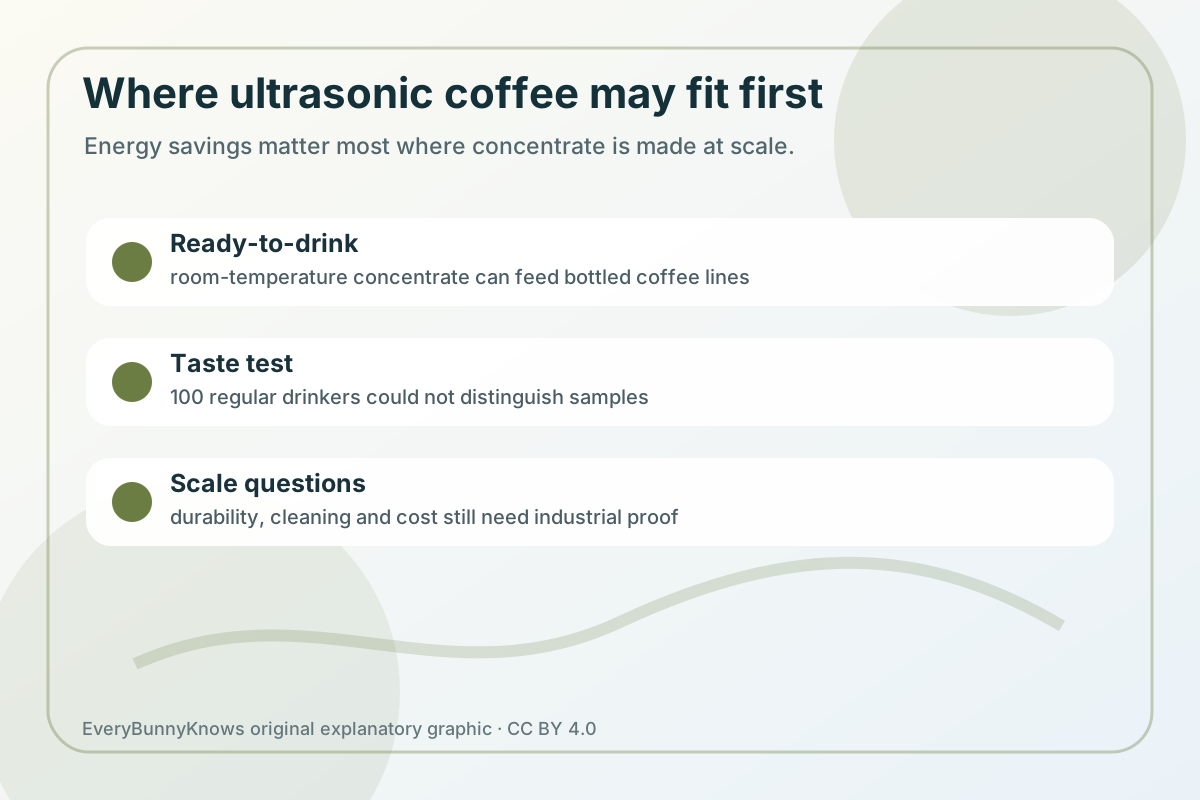
The maturity is early. The method has been demonstrated as a research and product-development process, not as a replacement part that any café can bolt onto a busy machine tomorrow morning. Cafés care about flavour repeatability, cleaning, speed, noise, service life, cost and how a barista fits the step into an existing workflow. A transducer that works in a lab must survive thousands of wet cycles, detergent, scale, vibration fatigue and different grind settings.
The industrial path may be more realistic at first. Companies that make bottled coffee, milk-based drinks or chilled coffee concentrates heat large volumes of water and then often cool products again. A room-temperature concentrate could reduce energy use and possibly shorten processing time. That benefit still depends on the full system: pump losses, cleaning water, food-safety validation, equipment price and whether consumers accept the flavour across beans and recipes.
The hopeful part is therefore precise. Ultrasonic espresso does not make coffee free of energy, and it does not prove that heat no longer matters for every brewing style. It shows that extraction is a physical process with more than one lever. If engineers can make the ultrasonic hardware reliable and cleanable, a familiar morning drink may become a small example of how food technology saves energy by understanding the mechanism rather than by asking people to give up flavour.