WHO expert advice on Bundibugyo Ebola candidates keeps the line between urgency and evidence clear
WHO advisory groups reviewed candidate treatments and vaccines for Ebola disease caused by Bundibugyo virus and recommended that promising products be evaluated in clinical trials rather than used as routine care. The message is urgent but cautious: protect communities now, and learn safely enough to improve the next response.
Elena Moss ·

When Ebola disease is caused by Bundibugyo virus, urgency is real and evidence is scarce. A WHO news release from 28 May 2026 describes how the organization convened expert and advisory groups during an outbreak affecting the Democratic Republic of the Congo, with cases also reported in Uganda, to review candidate treatments and vaccines. Their central message was deliberately cautious: promising products should be used within clinical trials, not treated as already proven tools.
That line matters because Bundibugyo virus disease is not the same regulatory problem as the better-known outbreaks caused by Zaire ebolavirus. WHO stated that no therapeutics or vaccines were specifically licensed for prevention or treatment of Bundibugyo virus disease at the time of the advice. The experts prioritized several candidates for research evaluation, including monoclonal antibodies MBP134 and maftivimab, the antiviral remdesivir, possible combination therapy, and obeldesivir as a post-exposure prophylaxis candidate for contacts where tracing can be done.
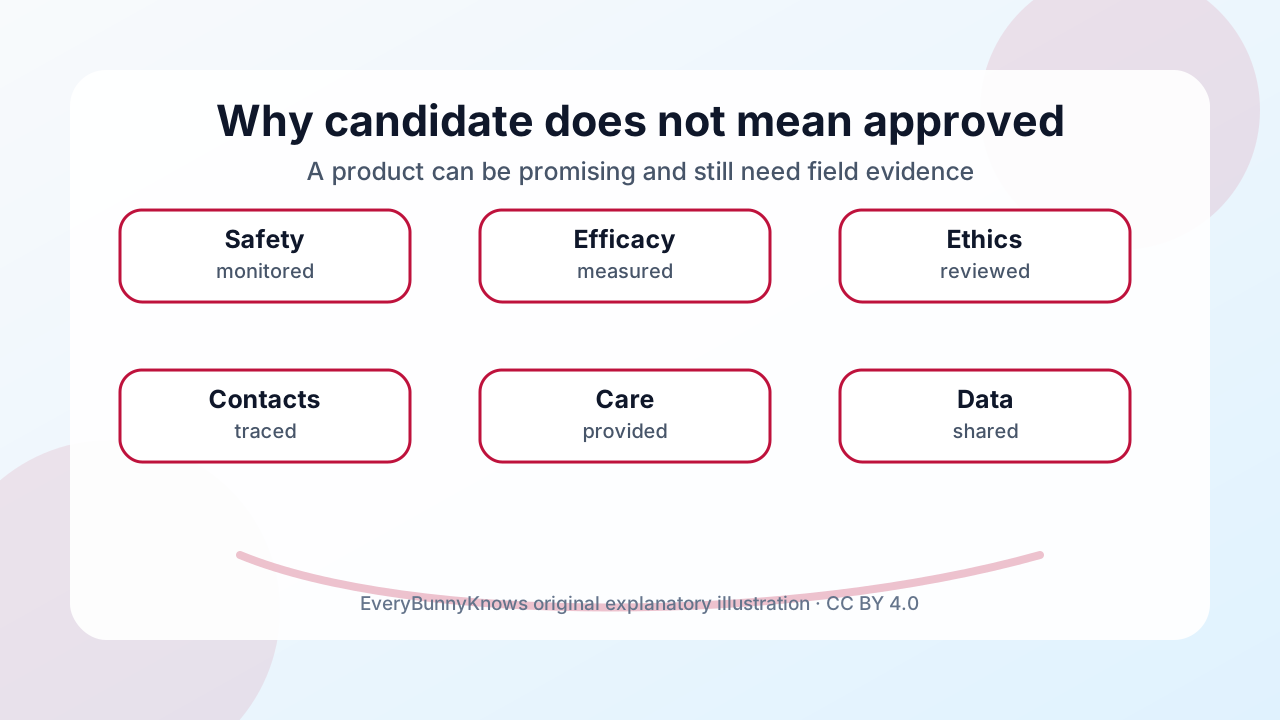
Vaccine advice followed the same logic. WHO described a single-dose rVSV Bundibugyo vaccine being developed by IAVI as a promising candidate that would likely need seven to nine months before clinical-trial assessment, and a ChAdOx1 Bundibugyo candidate from Oxford University and the Serum Institute of India that might be available sooner for efficacy assessment, pending additional animal data. Experts also reviewed Ervebo, the licensed Ebola vaccine for outbreaks caused by the most common Ebola virus in Africa, and said it should not be used for Bundibugyo outside carefully designed research settings because cross-protection evidence remained limited and inconclusive.
The mechanism of the advice is ethical as much as scientific. During a dangerous outbreak, clinicians and public-health teams need options, but communities also need safety monitoring, fair consent, clear protocols and data robust enough to guide future responses. Trials can be difficult in emergencies, especially where contact tracing, transport, trust and health-system capacity are strained, yet using unproven countermeasures outside research can leave everyone uncertain about whether they helped, harmed or made no difference.
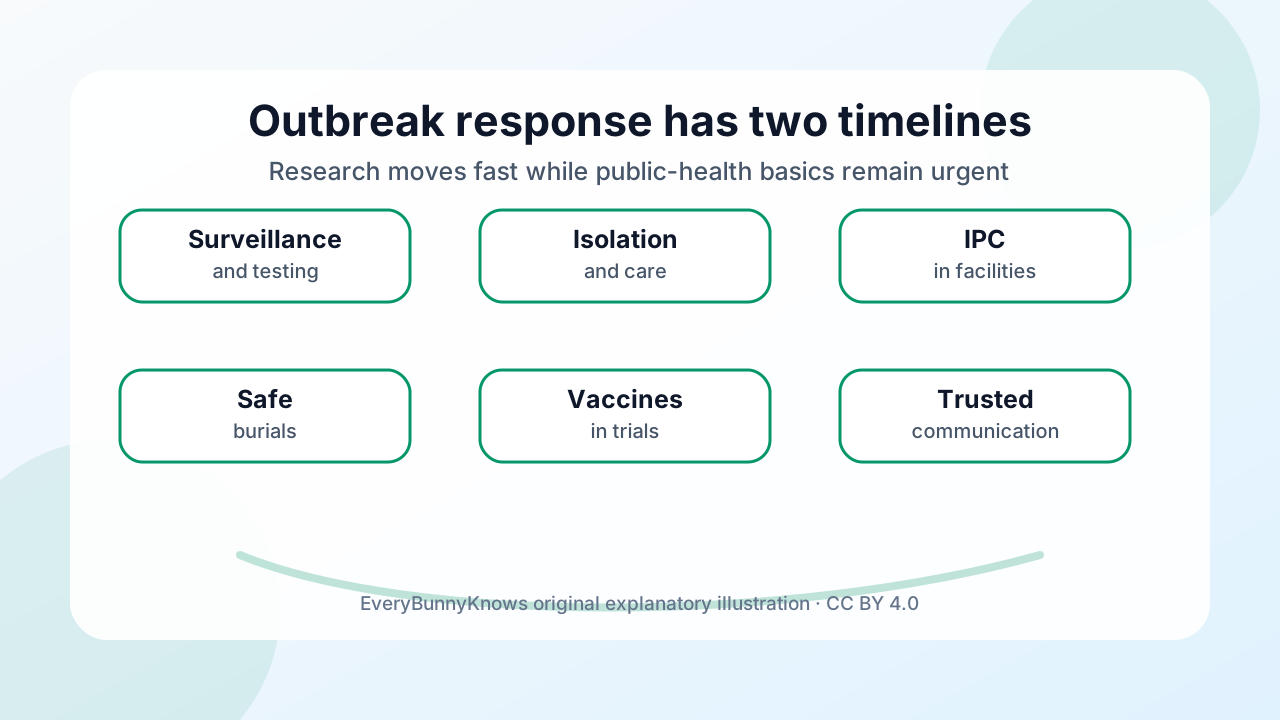
The safety boundary for readers is simple. Ebola symptoms, exposure concerns or outbreak instructions require local public-health and clinical authorities; an article cannot provide diagnosis, treatment or travel decisions. WHO emphasized that stopping transmission still depends on the tools used across decades of Ebola responses: surveillance, rapid testing and diagnosis, contact tracing, isolation and care, infection prevention and control, community engagement, and safe and dignified burials.
The hopeful part is disciplined. Global experts did not claim that a solution was ready; they narrowed the research path so that urgent action can produce trustworthy knowledge. For rare but severe diseases, that may be the difference between repeating uncertainty and building the evidence needed before the next outbreak arrives.