Native American breast-cancer tissue study shows why precision medicine needs fairer evidence
An npj Precision Oncology study profiled 17 breast tumors from Native American women and found molecular differences worth testing in larger cohorts. Its strongest message is about evidence gaps, community trust and precision oncology that does not leave small populations behind.
Ivy Stone ·
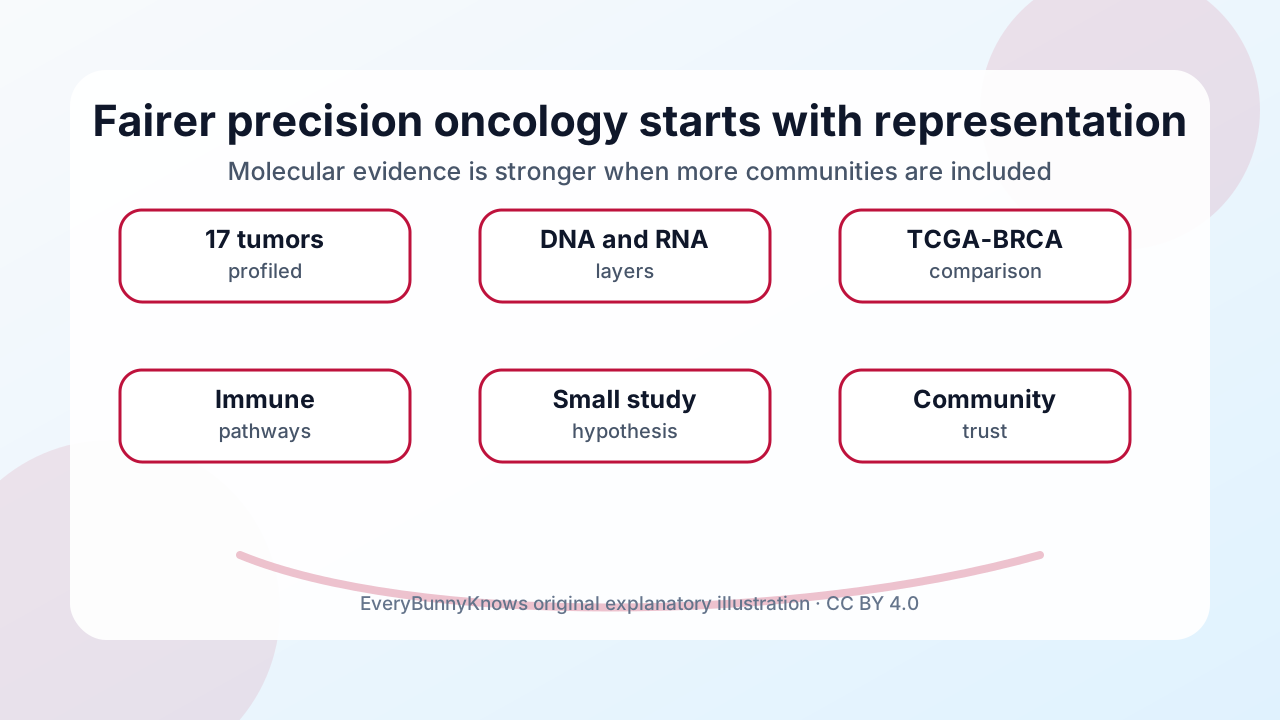
Precision oncology depends on comparison. A tumor sample is read for mutations, copy-number changes, gene expression and pathways, and those signals are compared with reference datasets that help researchers ask what might matter for prognosis or treatment response. A study in npj Precision Oncology asks a difficult equity question: what happens when Native American women are scarcely represented in those reference maps?
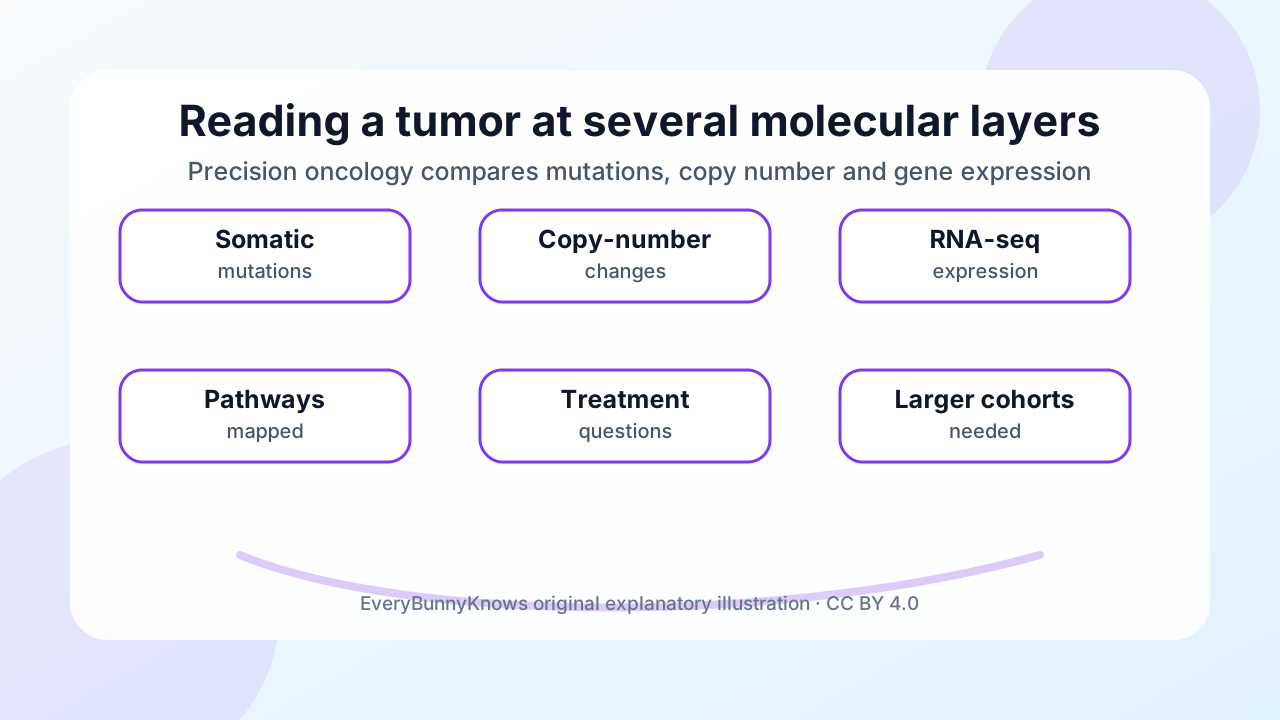
The team generated matched somatic-mutation, copy-number and RNA-sequencing profiles for 17 breast tumors from Native American women, then compared the results with White cases from The Cancer Genome Atlas breast invasive carcinoma cohort. The paper reported population-associated differences across molecular layers, including signals in genes and immune pathways that deserve follow-up. The important point is not that identity can be reduced to a tumor label. It is that tumor biology is measured through the datasets medicine chooses to build.
That mechanism matters because precision medicine is often described as individualized. In practice, the tools behind it are collective: sequencing pipelines, reference cohorts, statistical comparisons, clinical trials and treatment guidelines. If some populations are missing from those layers, a molecular report may be less informative for the very patients who are supposed to benefit. Representation is therefore not a decorative fairness issue. It changes the questions researchers can ask and the confidence clinicians can place in answers.
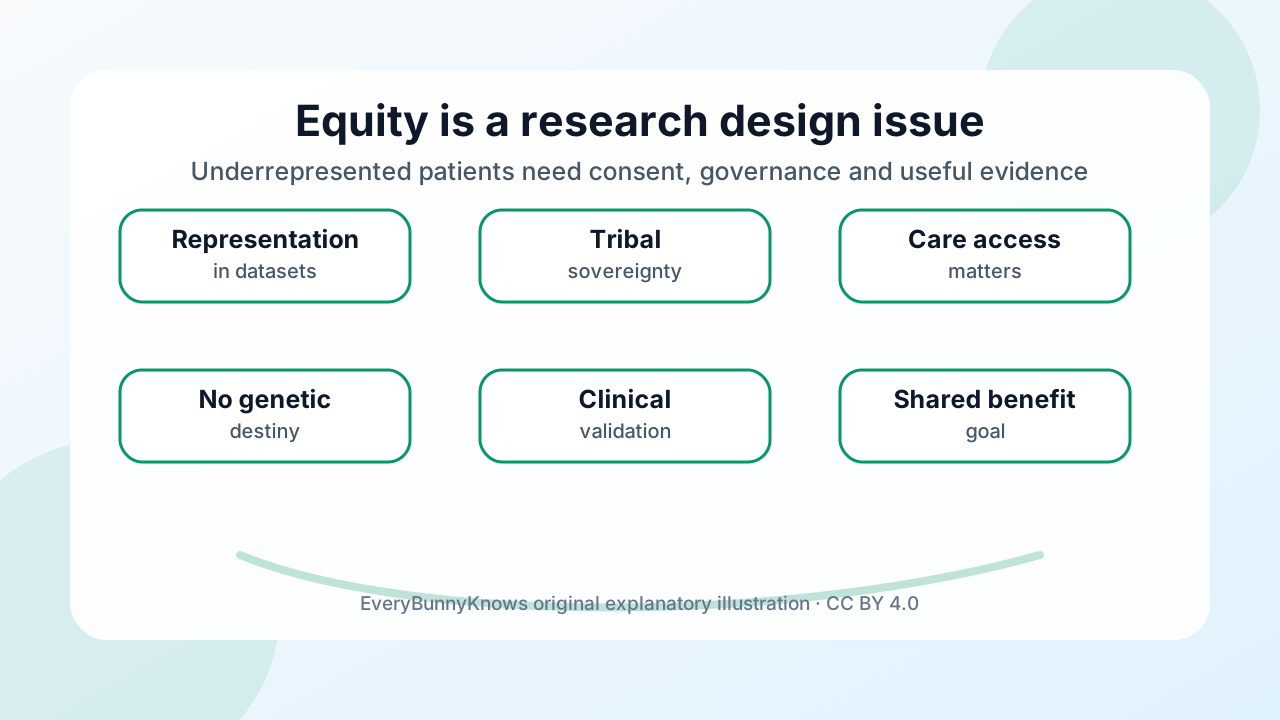
The limits are clear. Seventeen tumors can reveal patterns worth following, but they cannot define Native American breast cancer as one biological category. Native American communities are diverse, and ancestry, environment, access to screening, tumor stage at diagnosis, coexisting illness, geography and insurance or referral barriers can all shape outcomes. A comparison with TCGA is useful for hypothesis generation, but larger harmonized cohorts are needed before any clinical conclusion is strong enough for practice.
The safety boundary is also important. This article does not tell any patient what test or therapy to choose. A genomic finding becomes care only when it is interpreted with pathology, stage, receptor status, family history, available medicines, patient priorities and a qualified oncology team. Population-level differences should never be used as genetic destiny or as a reason to stereotype risk.
Equity also has a practical clinical side. If sequencing is available only after long travel, if follow-up appointments are difficult, or if trials are not offered in trusted settings, a better molecular map may not reach the person whose tumor raised the question. Precision medicine therefore needs ordinary health-system work alongside genomics: screening access, navigation, culturally safe communication, transparent consent and affordable oncology services. The molecular signal is meaningful only when the pathway around it can respond.
The study’s hopeful message is that a gap has been made visible in a way researchers can address more responsibly. Better precision oncology will require consent, community partnership, tribal sovereignty and data governance where relevant, and a return of useful knowledge to the people whose samples make research possible. The goal is not merely more data. It is evidence broad enough and humble enough to serve communities that older cancer datasets often left out.