How Fog Nets Turn Dry Hills into Drinking Water
Fog collectors work only where coastal wind, cloud height, mesh design, storage and local maintenance line up — but in the right dry hills they can turn a passing cloud into measured drinking water.
Mira Vale ·
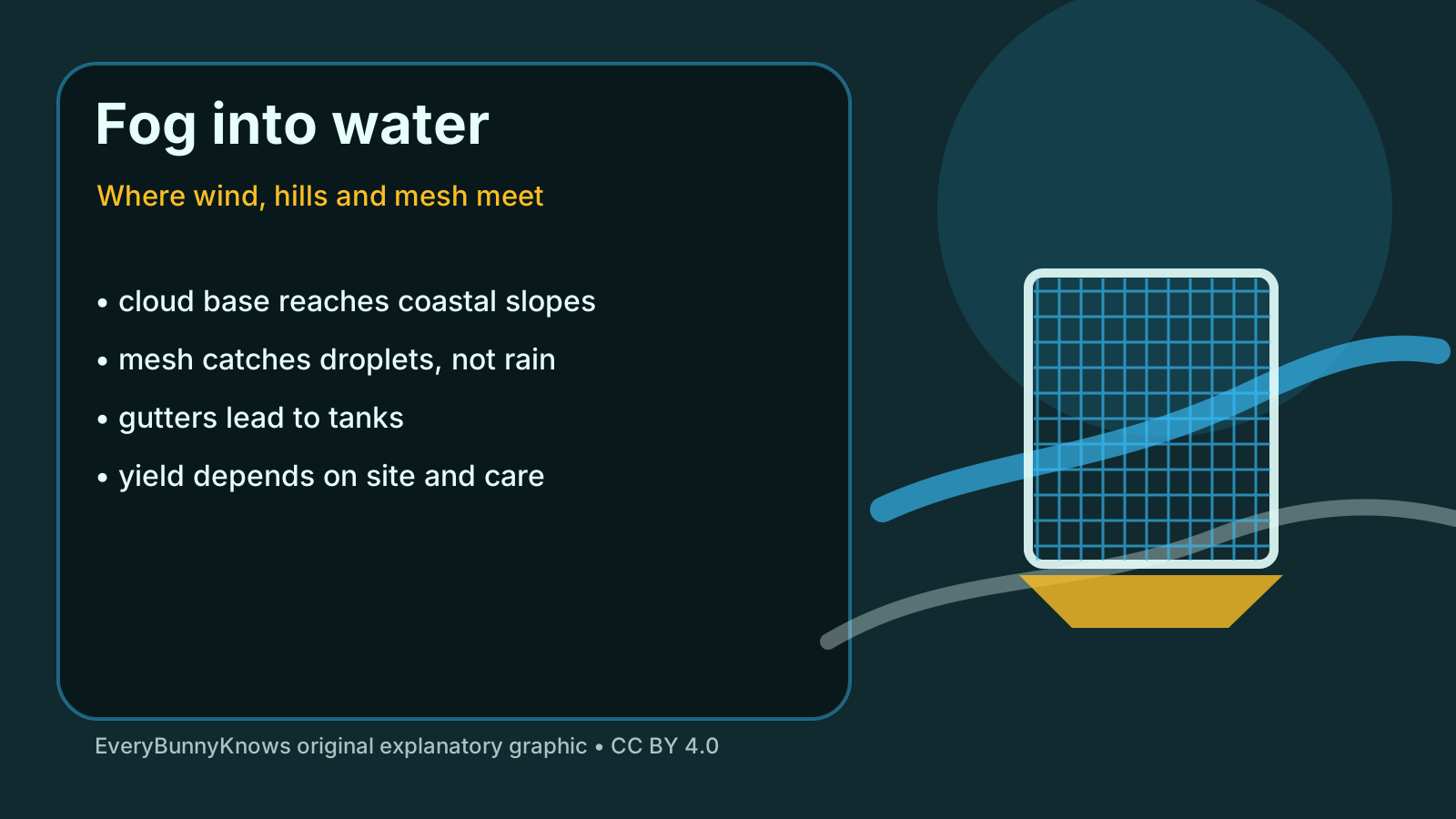
In the hills above the Pacific coast of northern Chile, a water source can arrive without rain. Low cloud rolls inland from the cold ocean, touches dry slopes near places such as Alto Patache, and leaves tiny droplets on anything rough enough to catch them. A fog net is a deliberately simple answer to that geography: a panel of mesh, a gutter, a pipe and a tank.
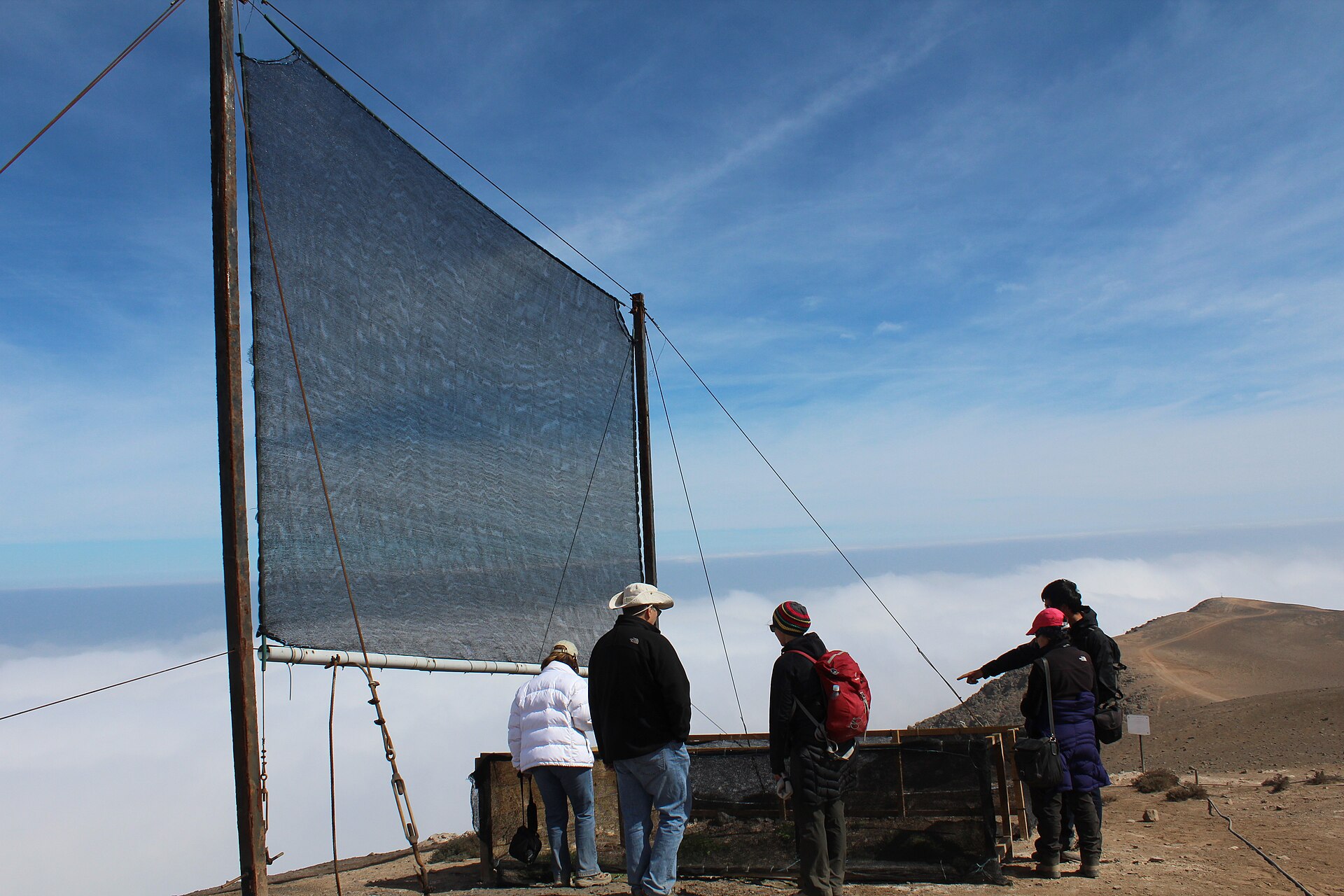
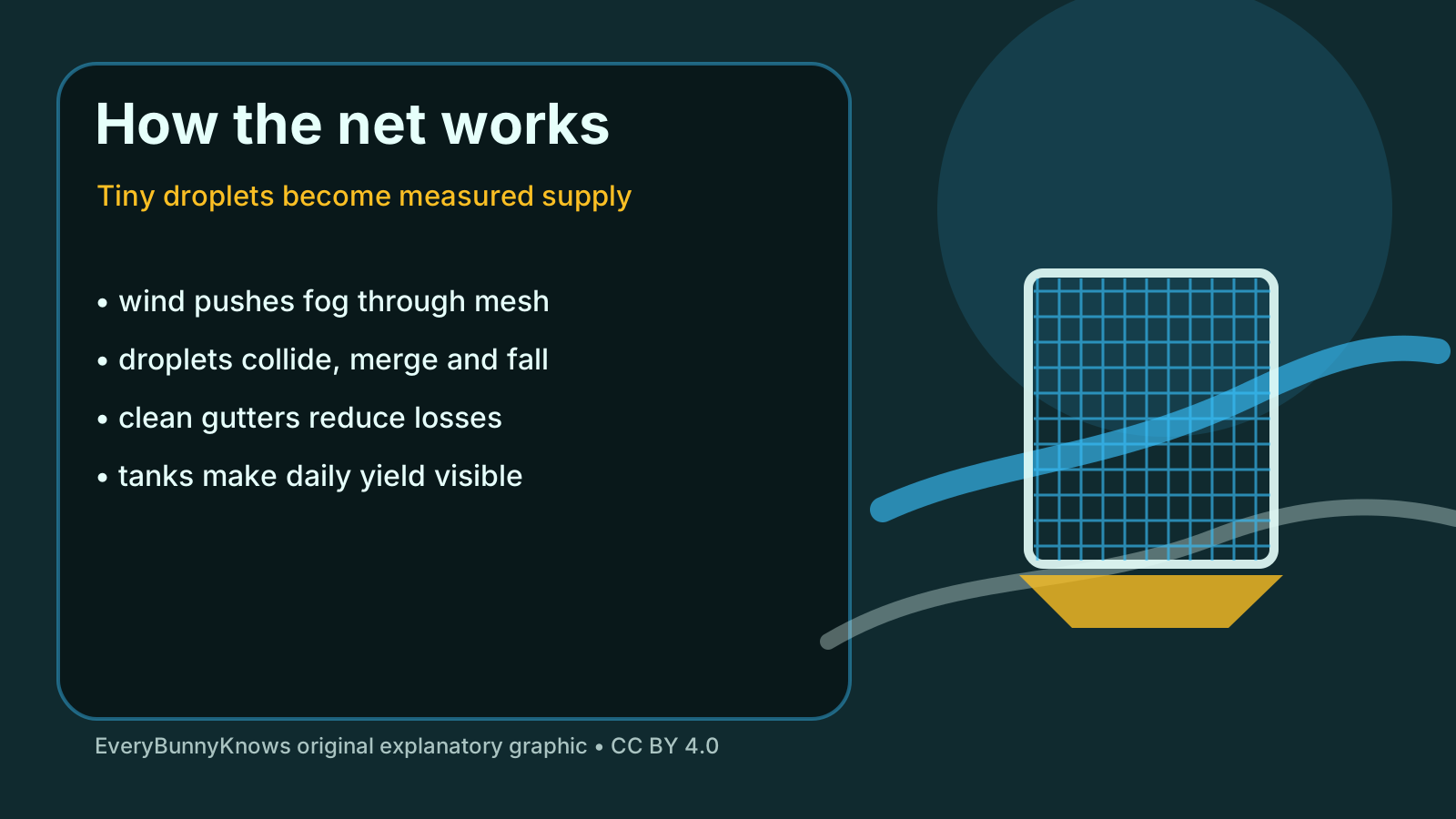
The mechanism is physical, not magical. Wind pushes fog through a vertical mesh. Microscopic droplets collide with the fibres, merge into larger drops, run downward and enter a gutter. From there the water can be filtered, stored and measured. Researchers working on fog collection often use standard collectors to compare sites because the yield can vary dramatically with wind speed, droplet size, season, slope exposure and how often the mesh is cleaned.
That is why fog harvesting belongs in geography as much as engineering. The technology has been tested or used in coastal deserts and mountains where fog is frequent but rainfall is scarce: Chile and Peru along the Humboldt Current, parts of Morocco, the Canary Islands, Eritrea and other high, windy drylands. In each place, the question is less “can a net catch fog?” than “is the fog reliable enough, close enough and clean enough to serve people without creating a maintenance burden they cannot carry?”
FogQuest and other practitioners have shown that community-scale systems can help villages, schools, tree nurseries or small farms, especially where every trucked litre is expensive. Morocco’s Anti-Atlas projects, including large CloudFisher-style collectors supported by local organisations, are often cited because they connect the mesh to household taps and because women and children previously spent time fetching water. In Chile, research sites such as Alto Patache have become outdoor laboratories for understanding how fog, topography and desert ecology fit together.
The limits matter. A fog net does not replace a river, aquifer or municipal treatment plant. It performs poorly in the wrong season, breaks in strong winds, needs cleaning when dust and salt build up, and must be protected from contamination. Its water may need treatment before drinking. A village also needs pipes, tanks, rules for sharing water, spare mesh and someone responsible for repairs. Without those ordinary systems, the most beautiful collector becomes a symbol rather than a service.
The promise is therefore modest and useful. Fog nets make an invisible part of a landscape visible. They teach planners to look at cloud height, wind corridors and ridge lines, not only rainfall totals. They also create records: litres per square metre, days without yield, repair costs and the seasons when families still need another source. Those numbers keep hope honest and help a community decide whether to expand, redesign or stop.
In a warming world where many dry settlements face stressed groundwater and more expensive water delivery, that kind of local knowledge is valuable. A good fog project does not command the desert to become wet. It listens for the mornings when the desert is already offering water, then gives that gift a gutter, a tank and a careful routine.