Misfit wood becomes useful when engineers calculate the tree’s real shape
A study of curved and forked roundwood shows how logs often treated as waste could become load-bearing columns. The promise is not “use any tree,” but better geometry, grading and connection design.
Matyáš Král ·
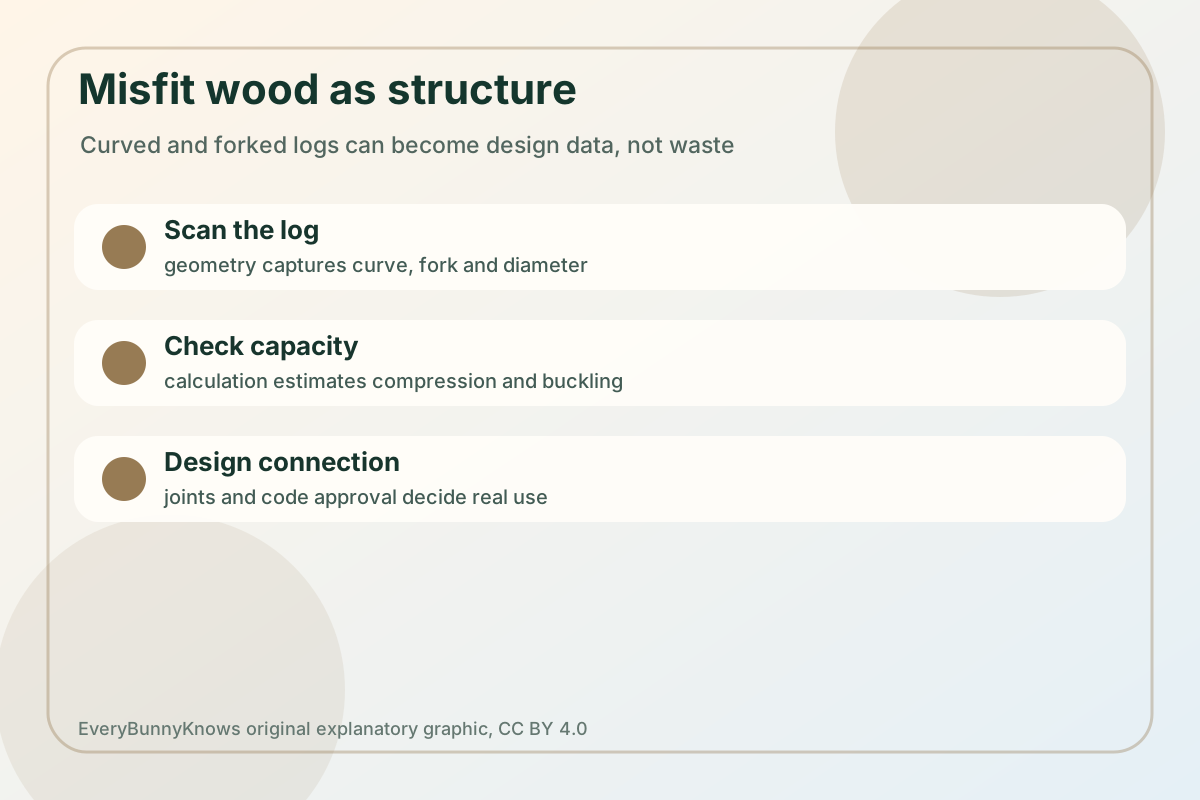
The phrase “waste wood” can hide a design mistake. Many logs are rejected not because the material is useless, but because it is curved, forked, double-bent or awkward for sawmills that expect straight boards. A 2026 paper in Wood Material Science & Engineering, reported by Tech Xplore, examined the structural potential of curved and bifurcated “misfit wood” logs. The important idea is modest: if engineers describe the actual geometry of a log, they can estimate when that irregular shape may serve as a column instead of becoming low-value fuel or chipped material.
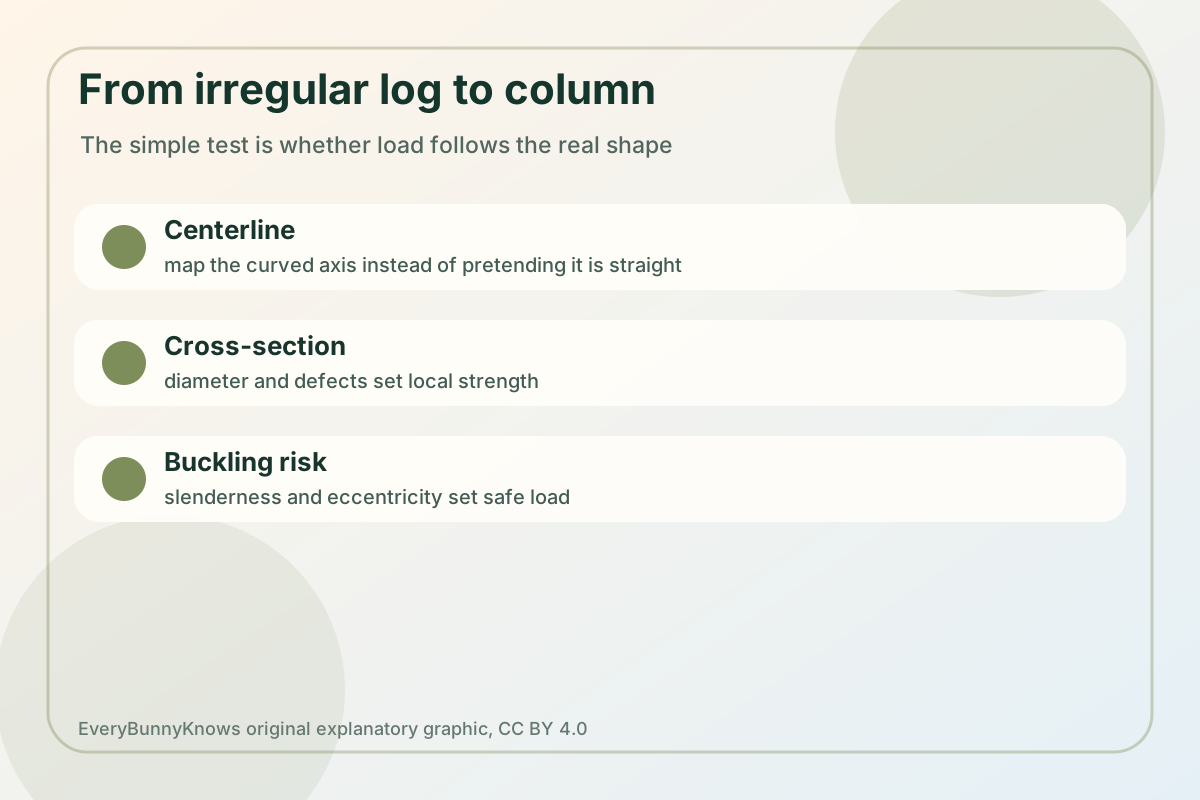
The mechanism is structural, not cosmetic. A straight column carries compression through a fairly simple line from roof or floor to foundation. A curved or forked log carries load along an eccentric path: force may bend the member, concentrate stress near a fork, or make buckling happen earlier than a straight piece of the same diameter. A practical calculation therefore starts with the log’s centerline, local diameter, knots, cracks, moisture condition and support points. Those measurements turn an odd tree form into engineering data.
That is why the research is useful for sustainable construction. Standard timber supply chains are optimized for uniformity. They mill, laminate and grade wood so designers can rely on predictable tables. That system is powerful, but it wastes some of the form that trees naturally grow. If a curved trunk can be safely used as a visible brace, porch post, pavilion column or low-rise architectural feature, less material may need to be cut away, glued, transported or burned. The carbon benefit depends on long service life and avoiding replacement, not on romance about natural shapes.
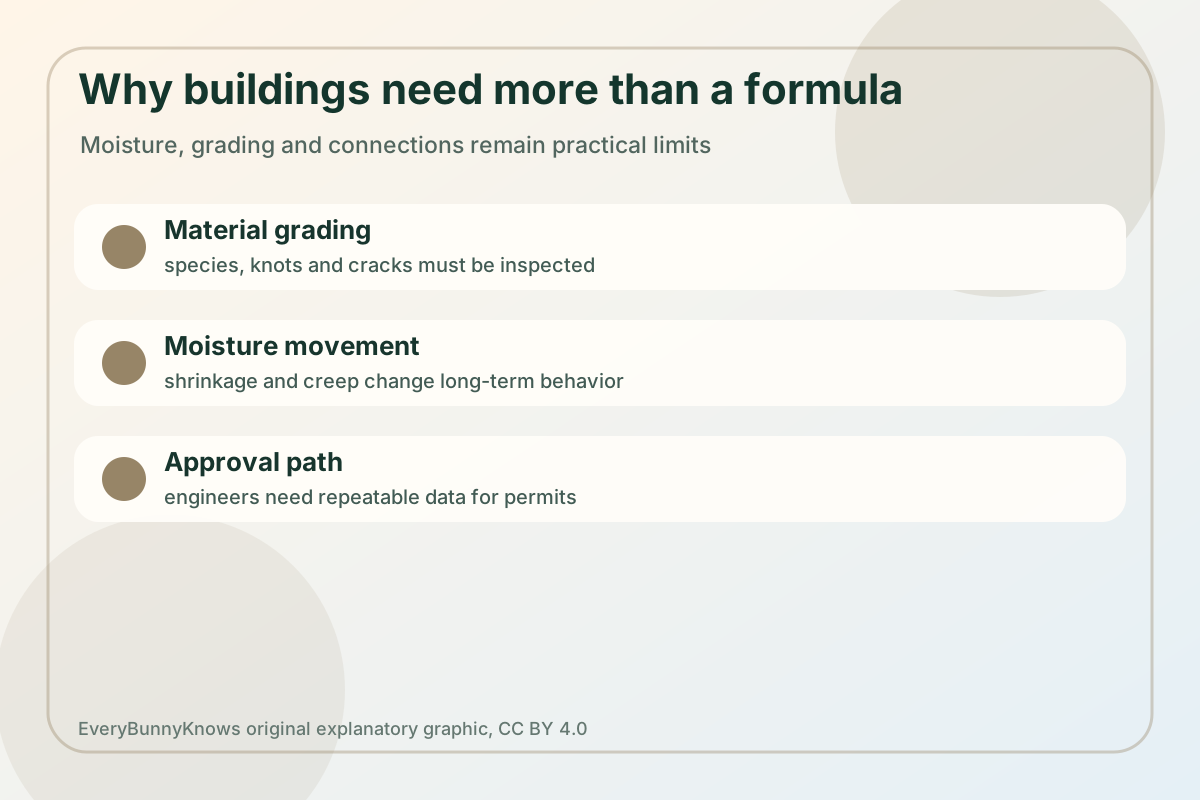
The limits are serious. A simple calculation is not permission to install any attractive branch in a building. Species, growth history, hidden rot, slope of grain, checks, insect damage and previous drying all affect strength. Wood also creeps under sustained load and changes dimension with moisture. Connections are often the weakest practical problem: a forked column may look strong in the middle, yet fail if bolts split the grain or if metal shoes introduce bending the calculation did not include.
Building codes add another boundary. Engineers and permitting authorities need repeatable grading rules, safety factors and inspection methods before unusual roundwood can move from experiment to routine practice. Digital scanning can help by capturing the real shape, but the data still has to feed a verified model. Full-scale load tests, long-term monitoring and conservative design values are the bridge between a promising calculation and an occupied public building.
The hopeful part is not that every irregular tree becomes architecture. It is that structural design can become less wasteful when it stops pretending all useful wood is straight. Misfit logs may fit best in small buildings, temporary structures, canopies, landscape architecture or bespoke projects where each member can be measured and documented. That is a narrower promise than mass-produced lumber, but a useful one.
The article’s larger lesson is about materials. Circular construction often sounds like a recycling slogan, yet the practical work is measurement: knowing the shape, strength, moisture and future load of each piece well enough to give it a safe second role. If engineers can make that process cheap and reliable, some wood now treated as a problem could become a load-bearing feature with a visible story and a smaller waste pile.