How Fungal Networks Help Forests Recover
Mycorrhizal fungi connect tree roots to water, phosphorus, nitrogen and soil partners. In recovering forests, that hidden infrastructure can help seedlings establish — but it is not a magical internet.
Tomáš Hare ·
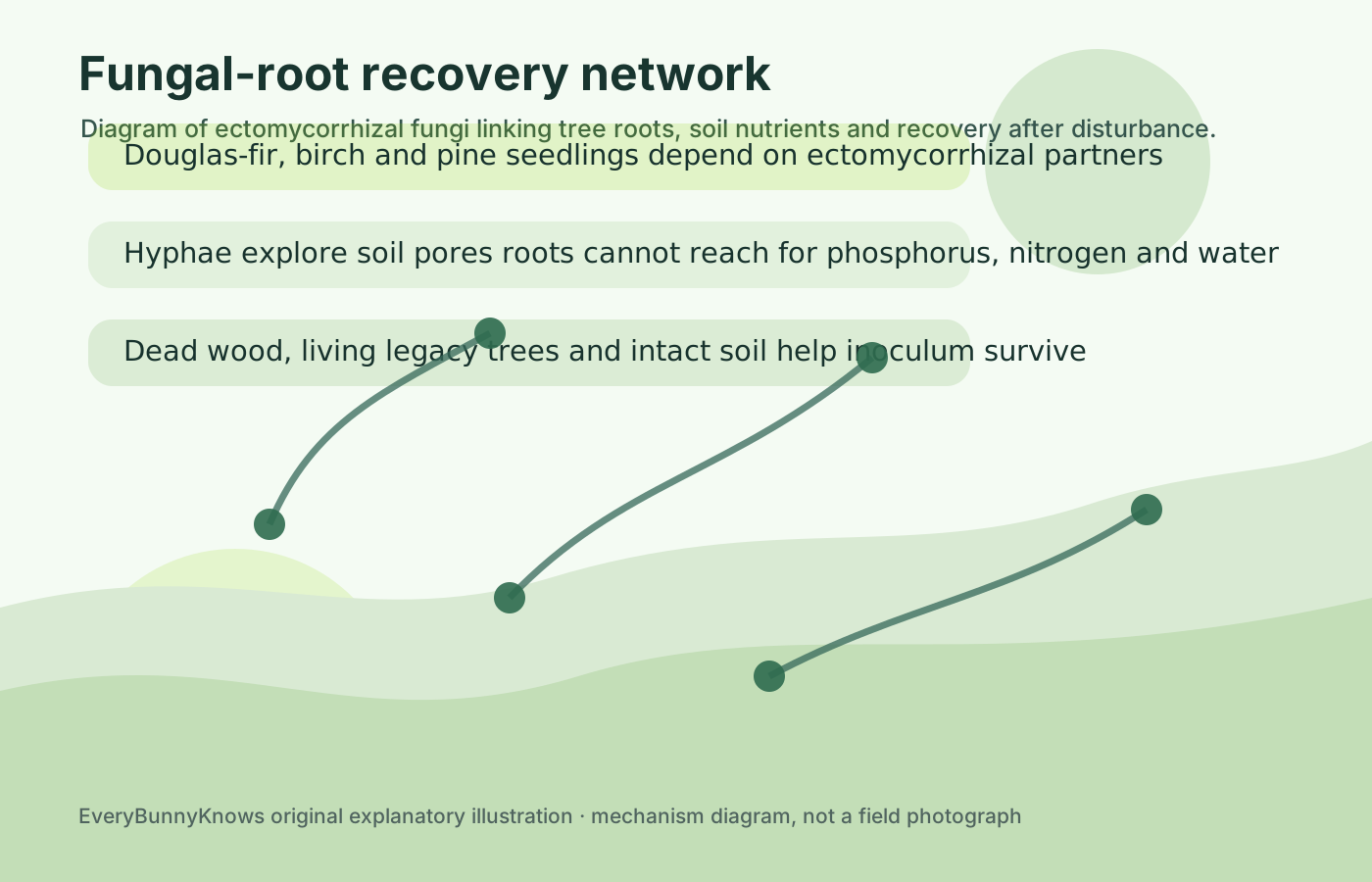
When a disturbed forest begins to recover, the most important activity may be out of sight. Under Douglas-fir, pine, birch and many other trees, mycorrhizal fungi wrap or enter fine roots and extend hairlike hyphae into the soil. Those threads reach tiny pores that roots cannot explore alone, helping plants obtain phosphorus, nitrogen and water while the fungi receive sugars made by leaves. In a young stand after logging, fire, windthrow or drought, that exchange can decide whether a seedling merely appears or actually becomes part of the next forest.
The best-known research on forest networks comes from temperate and boreal systems, including work by Suzanne Simard and colleagues on interior Douglas-fir and paper birch in British Columbia. Experiments using isotopes showed that carbon can move among neighboring plants through soil pathways associated with ectomycorrhizal fungi such as Rhizopogon. The finding mattered because it shifted attention from trees as isolated competitors to forests as communities whose roots, fungi, bacteria, dead wood and moisture form a living infrastructure.
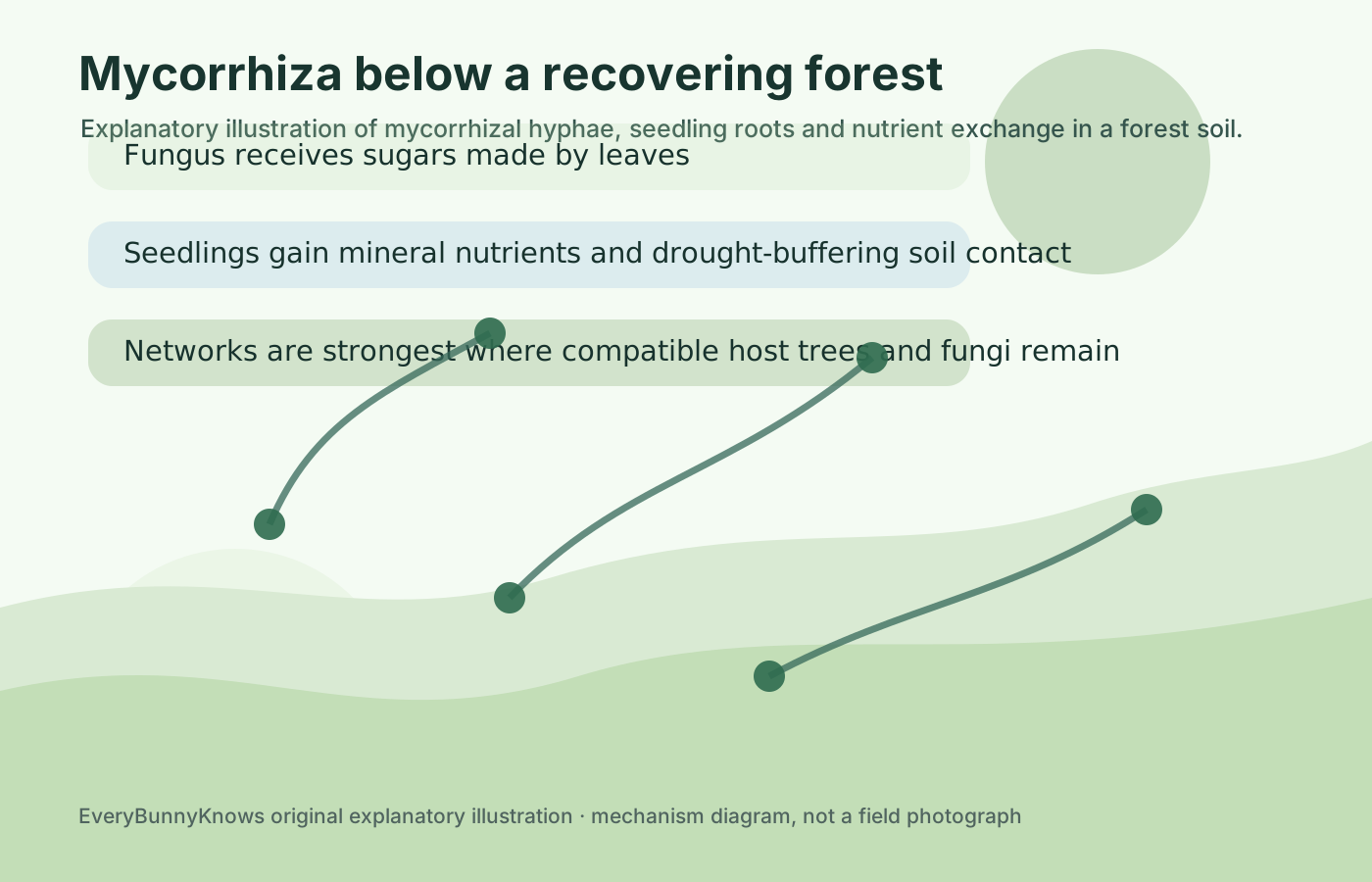
Recovery is not simply a matter of planting more trunks. A clear-cut that removes old stumps, compacts soil and scrapes away organic layers also removes fungal inoculum, nurse logs and shaded microsites. By contrast, retaining legacy trees, coarse woody debris and patches of undisturbed soil can leave propagules and compatible fungal partners close to new roots. In some restoration projects, managers also use local soil or nursery practices that encourage native mycorrhiza rather than treating seedlings as bare hardware to be installed.
The mechanism is practical. Hyphae increase the absorbing surface around a root system; some fungi mobilize mineral nutrients from organic matter; fungal mantles can alter how roots experience drought; and connected roots may exchange small amounts of carbon, nitrogen or chemical information. For a seedling in a dry summer or on poor volcanic or glacial soil, a few centimeters of fungal reach can mean access to a different pocket of water or phosphorus.
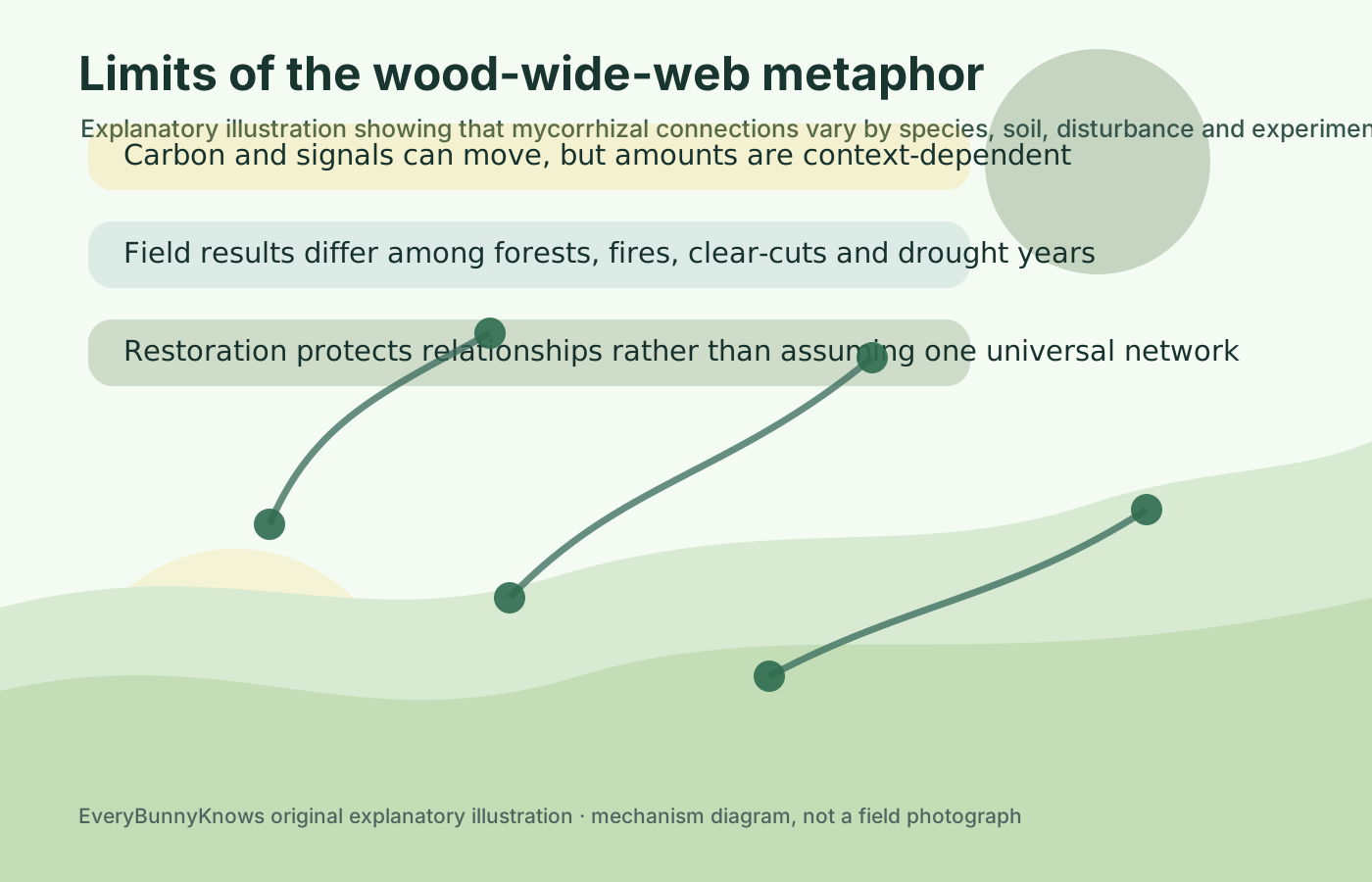
There are limits, and they are important. Popular language about a “wood wide web” can make forests sound like a single intentional internet, with mother trees consciously feeding their young. The evidence is more careful. Transfers have been measured, but their size, direction and ecological importance vary with species, soil, season, fungal identity and experimental design. Some mycorrhizal relationships are mutualistic; others can become costly for a stressed plant. Fire severity, invasive pathogens and repeated soil disturbance can also reset the community so strongly that recovery takes years or decades.
A photo of mushrooms on the forest floor can therefore be misleading if it suggests that fruiting bodies are the whole story. Most of the relevant life is microscopic, seasonal and woven through mineral soil, litter and root tips. Restoration monitoring increasingly treats those hidden communities as part of the habitat, alongside birds, mammals and tree cover.
For readers, the hopeful lesson is not that fungi will solve forest loss by themselves. It is that restoration improves when it protects the belowground relationships that make trees possible. Leaving dead wood, avoiding unnecessary soil compaction, planting mixed native species, keeping moisture refuges and allowing old trees to remain as biological reservoirs all respect the same fact: a forest is a web of exchanges long before it is a canopy.