Cradled by Rock, Cut by Water: The shaping of Salzburg
Salzburg is more than its baroque architecture. It's a city whose very form is dictated by the Salzach river that divides it and the sheer cliff of the Mönchsberg that holds it in a protective embrace.
Nina Kaplan ·
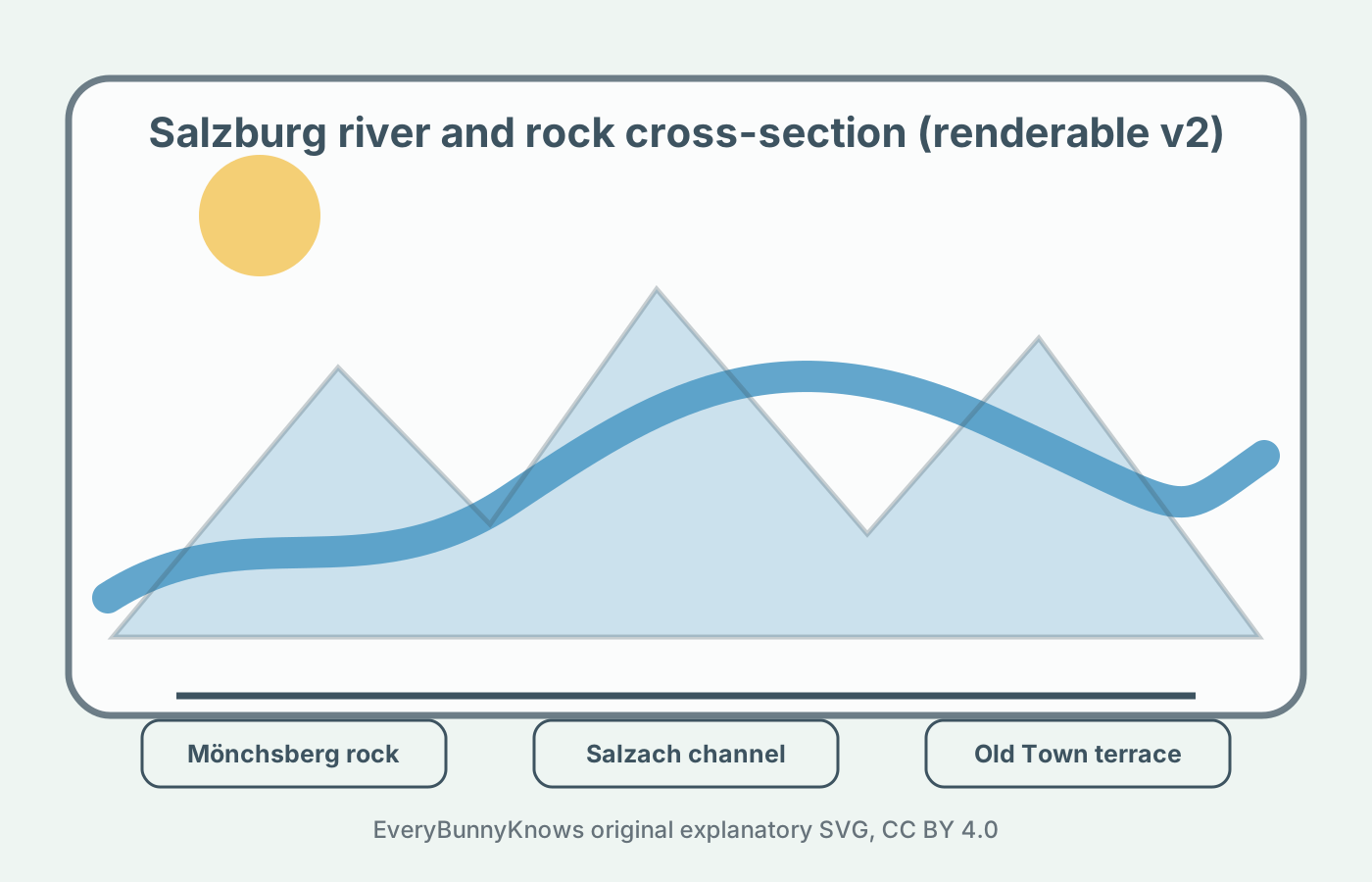
To understand the geography of Salzburg is to look past the gilded spires and ornate facades and see the two raw, natural forces that shaped it: river and rock. The city exists in a dramatic conversation between the fast-flowing Salzach river and the abrupt, monolithic cliff of the Mönchsberg. The Old Town (*Altstadt*) doesn't simply sit near the mountain; it is pressed up against it, tucked into its embrace like a child seeking shelter. This limestone massif isn't a passive backdrop; it is an active boundary, a wall that dictated the city’s dense, vertical growth and protected it for centuries.
The Mönchsberg is a geological anomaly, a 508-metre-high plateau of solid conglomerate rock—known locally as *Nagelfluh*—rising sheer from the city floor. Walking its shaded paths today, you are treading on the city’s ceiling. From up here, the layout becomes clear: the Salzach forming a swift, curving line through the valley, and the Old Town huddled on its left bank, contained by the mountain. This rock has been tunnelled, climbed, and consecrated. The early Christian catacombs carved into its face and the mighty Hohensalzburg fortress crowning its southern end are testaments to how Salzburg’s inhabitants have always engaged with this defining feature, using it for sanctuary, defence, and perspective.
Then there is the river. The Salzach, whose name means “Salt River,” was the city’s original highway, the artery that pumped wealth from the southern mines into the heart of the Prince-Archbishopric. Its pale green, glacial-fed waters slice the city into two distinct halves: the historic, UNESCO-listed Altstadt on the left bank, and the “New Town” (*Neustadt*) of the 19th and 20th centuries on the right. Bridges like the Staatsbrücke and the pedestrian Makartsteg are more than just crossings; they are sutures binding two different urban characters, two different eras. To stand on one of these bridges is to feel the city's essential tension—the pull between ancient and modern, all orchestrated by the constant, powerful flow of the river below.
The interplay is intricate. The river deposited the flat plains on which the city could expand, while the mountain provided an impassable western border. The very stone used to build many of Salzburg's churches and palaces was quarried from the Untersberg and other nearby peaks, geologically kin to the Mönchsberg. Even the city's famous weather, the *Schnürlregen* (a fine, persistent drizzle), is a product of its geography, with moisture-laden clouds from the west snagging on these first major alpine obstacles and releasing their load onto the city below.
So while visitors rightfully marvel at the baroque perfection of the DomQuartier or follow the footsteps of Mozart through narrow lanes, the deeper truth of the city is underfoot and towering overhead. Salzburg is a place held in geographical suspension. It is a city cradled by rock and cleaved by water, a unique urban form born not from a planner’s pen but from the immense, slow-moving power of geology and hydrology, which set the stage for human history to unfold.
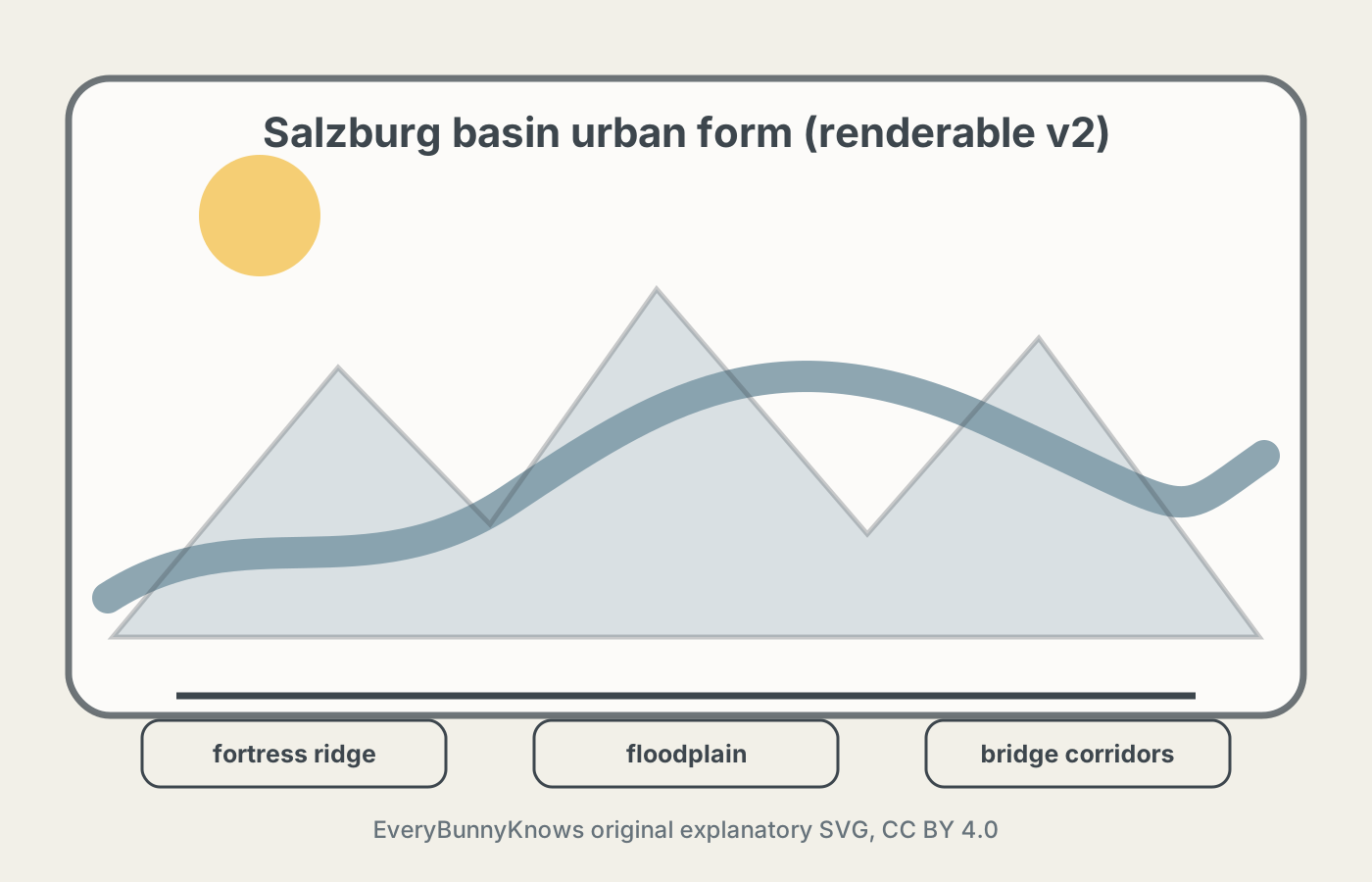
That physical setting also sets limits. A city pressed between river and rock must negotiate floods, bridges, tunnels, slopes and protected views with unusual care. Salzburg’s beauty is therefore not separate from its constraints; it is the visible result of building inside a narrow Alpine frame.