Can old phones become small AI servers?
Google and UC San Diego researchers are exploring clusters of retired smartphones for low-cost AI inference. Reuse can save embodied energy, but reliability, security, cooling and certified recycling decide the boundary.
Ada Brooks ·
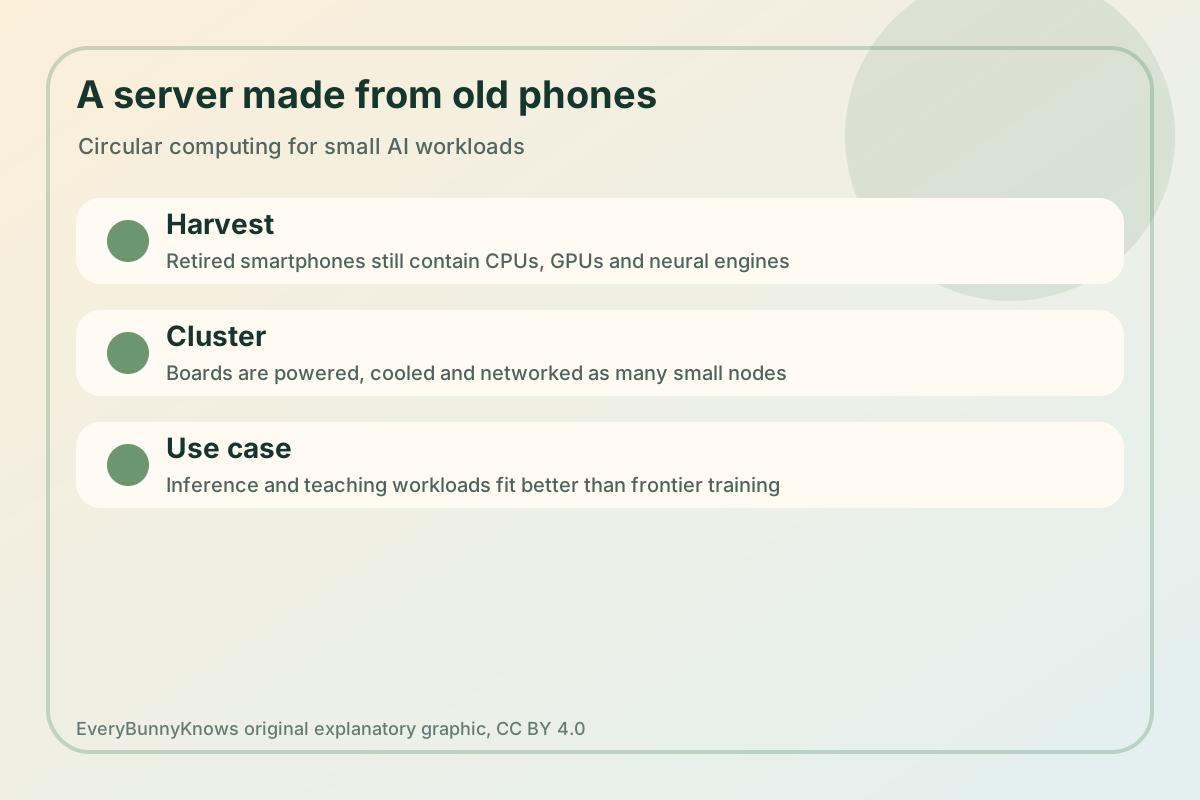
The idea sounds almost backwards in an AI boom: instead of buying another rack of new accelerators, take phones that people have already discarded and ask whether their processors can still do useful work. Google and researchers at the University of California, San Diego have been exploring that kind of system, according to the July 2026 Tech Xplore report behind this article. The target is not to train the largest frontier models. It is to turn still-working mobile chips into a low-cost, lower-embodied-carbon pool for smaller AI inference tasks.
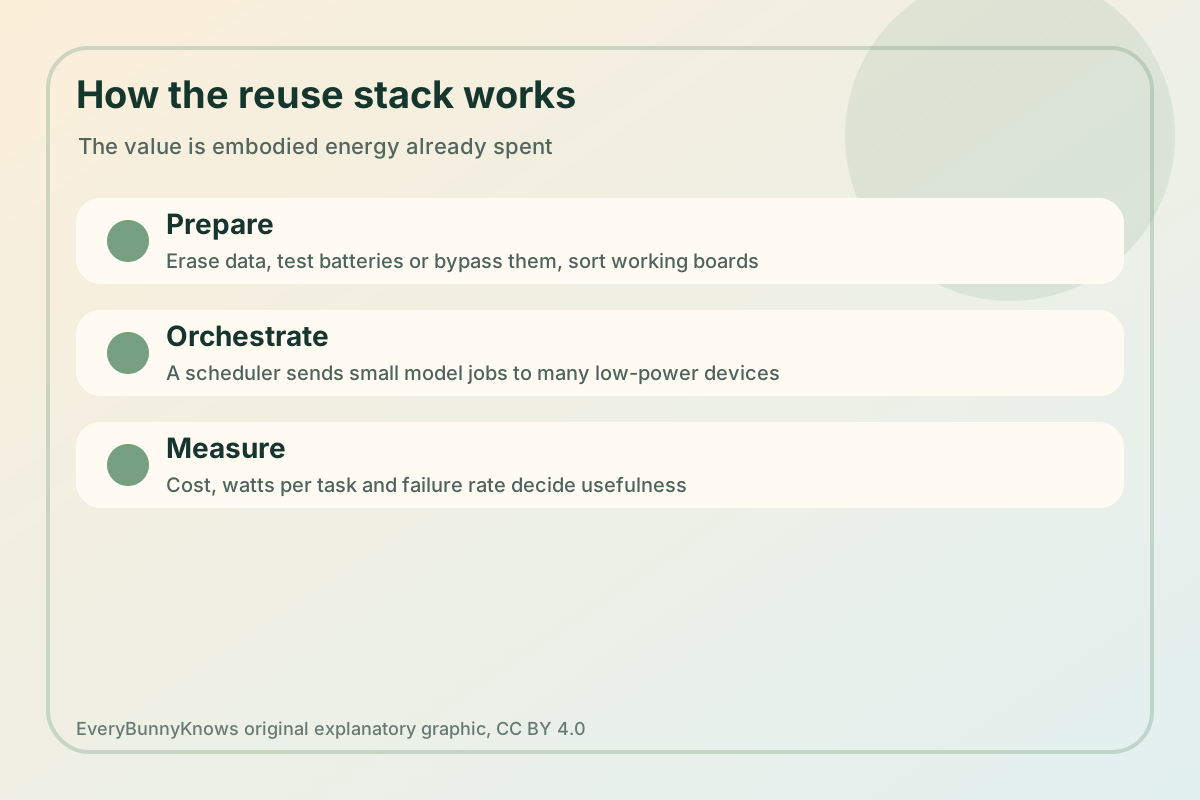
The mechanism is familiar distributed computing with unusual hardware. A retired smartphone contains a CPU, GPU, memory, storage and often a neural-processing unit designed for on-device camera, voice and language features. If the screen, case or battery no longer make the phone attractive to a consumer, the compute board may still function. A cluster can power many boards from a managed supply, connect them over a network, install a controlled software image and send small model jobs to whichever nodes are healthy.
This matters because electronic waste is both a material problem and a missed-compute problem. The United Nations Global E-waste Monitor has repeatedly shown that tens of millions of tonnes of electronics are discarded globally each year, while only a minority is formally collected and recycled. Meanwhile, AI demand pushes companies toward new chips, new data centres and new cooling systems. Reusing phones cannot erase that demand, but it asks a useful circular-design question: how much inference can be squeezed from processors whose manufacturing energy and mining impacts have already happened?
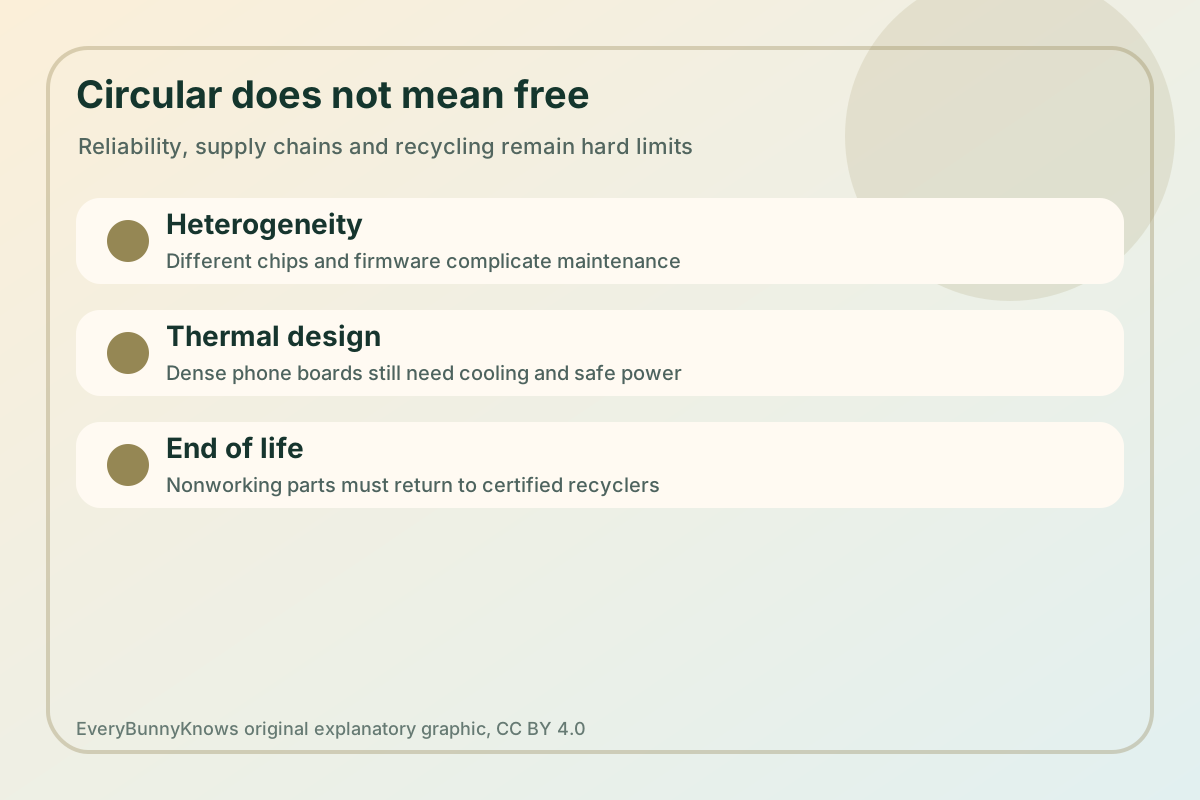
The maturity is experimental. Phone chips are efficient, but they are not server accelerators. They differ by model, age, firmware and memory. They may lack the software ecosystem expected in a data centre. Some devices have worn flash storage, damaged ports or unsafe batteries that must be removed or bypassed. A dense tray of phone boards still produces heat, needs fire-safe power distribution and must be monitored for failures. Security is also central: devices must be wiped, booted from trusted images and isolated so a second life does not become a privacy risk.
The best workloads are therefore narrow. A reused-phone cluster might serve small vision models, speech models, classroom experiments, edge prototypes or batch inference where latency is flexible. It is not a replacement for specialised GPUs when a company needs huge matrix operations, high-bandwidth memory and predictable service-level agreements. Cost also depends on collection, testing, labour, repair, logistics and the rate at which boards fail after redeployment.
Recycling remains part of the story, not the opposite of reuse. Phones that cannot be safely powered should go to certified recyclers so copper, gold, aluminium, cobalt and rare earth elements are recovered as responsibly as possible. Reuse is valuable when it delays disposal and produces real computation per watt; it is not valuable if it merely parks waste in a new warehouse. The hopeful lesson is practical: circular computing will not look like a slogan. It will look like inventories, erasure logs, thermal tests, workload benchmarks and a clear path back to recycling when the second life is finished.