Stone Tools from Xigou Show Central China’s Ice Age Makers Were Innovators
At Xigou in central China, tools dated to roughly 160,000–72,000 years ago show small-flake production, standardized retouch and evidence for hafting, complicating old ideas about a simple East Asian Paleolithic.
Sofia Lane ·
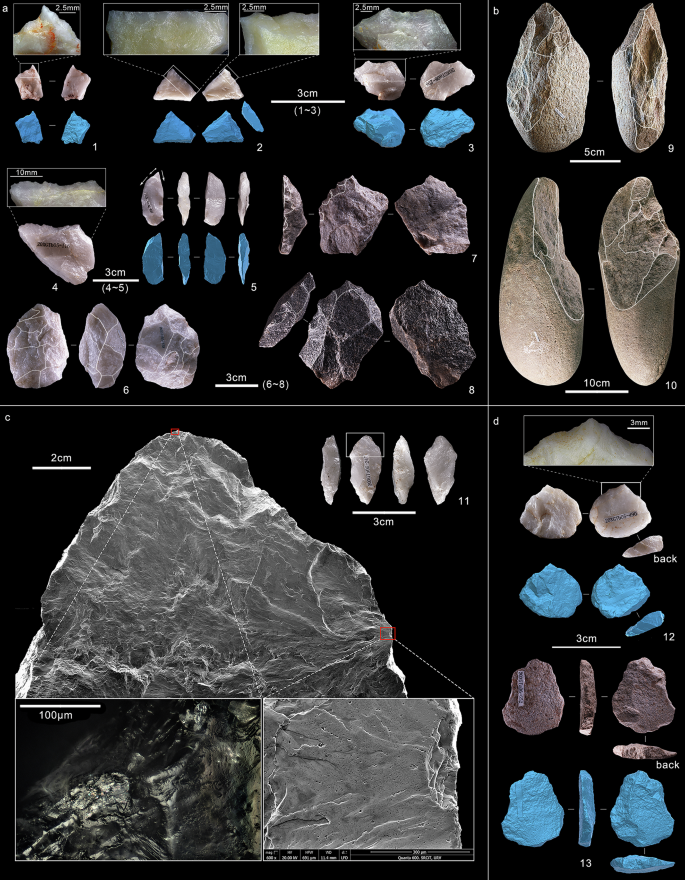
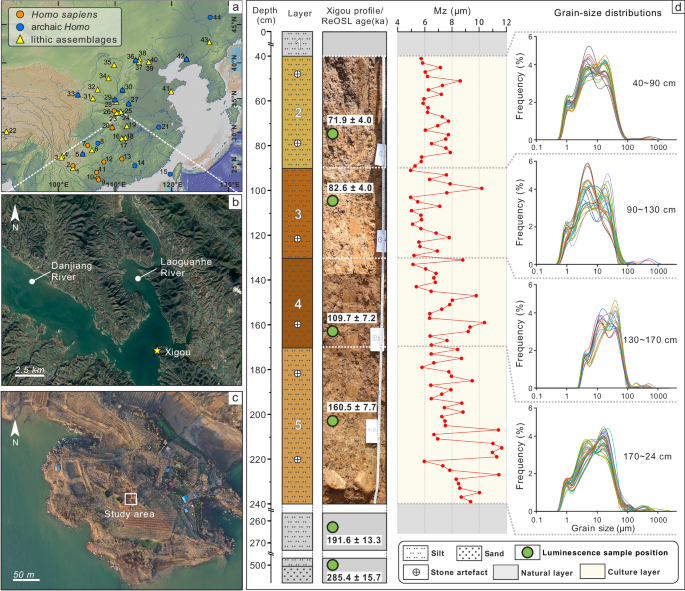
The Xigou site in central China matters because it makes an old story too simple. For decades, East Asian Paleolithic toolkits were sometimes described as conservative when compared with the prepared-core and hafted technologies known from parts of Africa and western Eurasia. A Nature Communications study now places Xigou, in the Danjiangkou Reservoir Region, inside a more inventive picture. Across layers dated roughly 160,000 to 72,000 years ago, researchers found repeated choices that produced small flakes, shaped edges and tools likely fixed into handles.
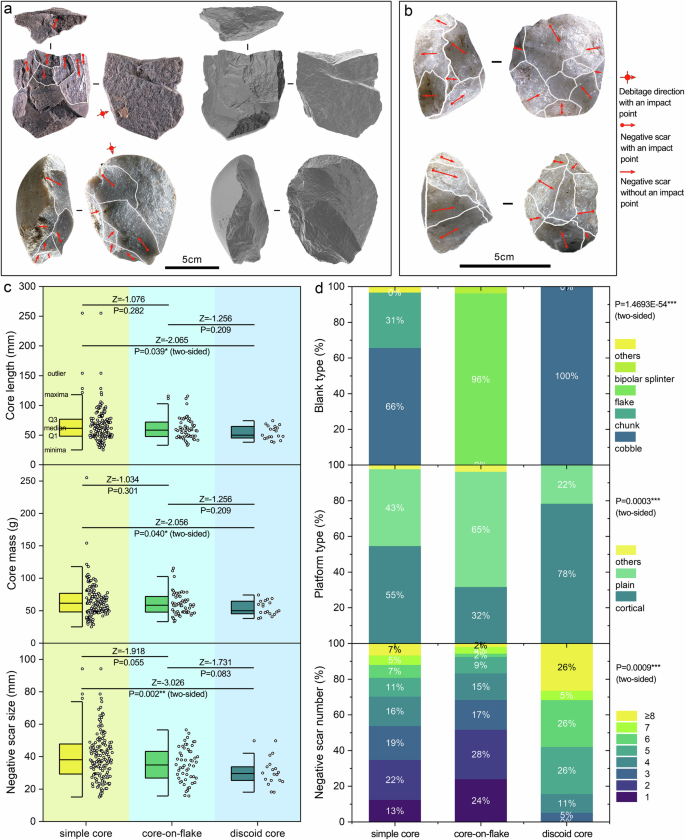
The mechanism is technological planning. The Xigou makers used core-on-flake and discoid methods, both ways of managing stone so that useful flakes can be struck off with some control over size and shape. Many of the finished pieces were small. The study reports retouched tools including scrapers, borers, notches, denticulates, points and other forms, with retouched tools dominating the assemblages in several layers. That is not the image of people casually knocking a sharp edge from any rock at hand.
The most striking claim concerns hafting: attaching a stone piece to a handle or shaft to make a composite tool. Use-wear analysis looked for microscopic polish, fractures, rounding and striations consistent with particular motions. If the interpretation holds, Xigou provides some of the earliest evidence for composite tools in Eastern Asia. A handle changes the relationship between hand, stone and task. It can increase leverage, protect fingers, standardize motion and let a small cutting edge become part of a more durable tool.
The date range is also important. Xigou is not one brief flash of innovation; the reported sequence spans more than ninety thousand years of changing environments from the late Middle Pleistocene into the middle Late Pleistocene. That long window matters for climate and behavior. Toolmakers had to return to stone sources, learn what fractures predictably, repair or discard broken pieces, and pass on working habits over many occupations. Archaeology rarely catches those lessons directly, but standardized retouch and repeated tool categories are one way they become visible.
The site also belongs to a wider debate about human evolution in East Asia. The authors connect the Xigou evidence with other signs that hominin populations in China were morphologically and behaviorally varied. In plain language, the archaeological record does not support a single ladder of progress with one region always ahead and another always static. Small flakes can be sophisticated when they are produced intentionally, selected for specific tasks and combined with wood, bone or other perishable materials that usually decay before archaeologists arrive.
For readers, the payoff is a better definition of “advanced.” It does not mean modern people with modern thoughts, nor does it require a dramatic monument. Here it means planning depth: choosing a reduction method, keeping blanks small enough for precise work, retouching edges into recurring forms, and possibly mounting those edges so the whole tool performed better than stone alone. A toolkit like that is a record of problem solving under Ice Age conditions.
There are limits a responsible article must keep in view. The tools do not identify their makers by species. The layers cover long periods, and use-wear interpretation depends on careful comparison rather than a label written on the object. “Advanced” also needs care: it should mean planned, repeated and technically complex, not modern in motive or mind. The hopeful lesson is quieter and stronger. Small stone edges from Xigou show that Ice Age people in central China solved problems with skill, memory and adaptation, and that the deep past becomes richer when archaeologists stop expecting every innovation to look European.