Le Corbusier's Concrete Dream in Chandigarh
Chandigarh’s sectors, Capitol Complex and Open Hand Monument show how post-partition India tried to build a modern capital — and why a planned city must keep adapting after the drawing is finished.
Ada Brooks ·
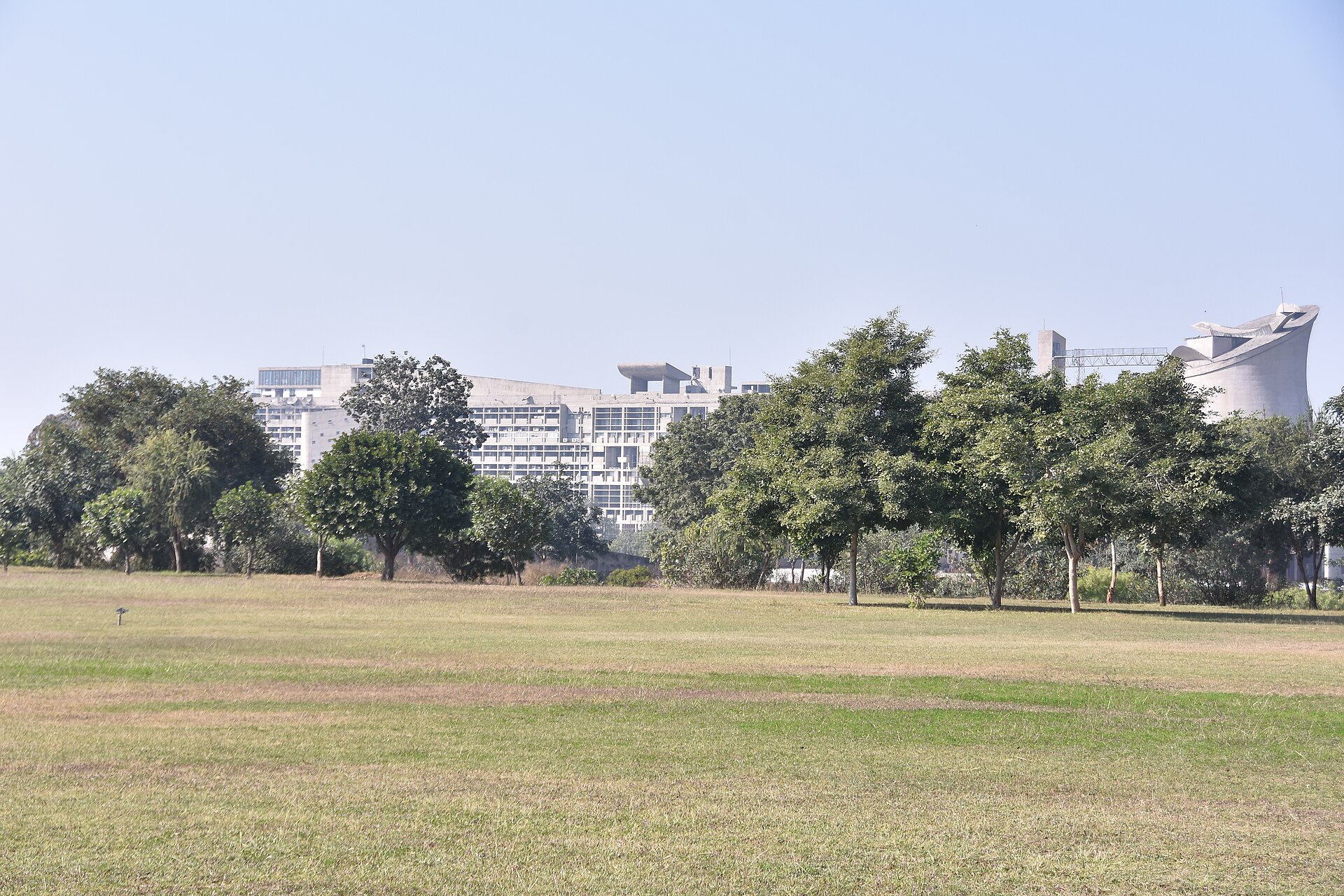
Chandigarh was born from rupture and ambition. After the partition of India in 1947, Punjab lost Lahore, its historic capital, to Pakistan. India decided to build a new capital: modern, secular, orderly and confident. Prime Minister Jawaharlal Nehru wanted a city “unfettered by the traditions of the past.” The result became one of the twentieth century’s most studied urban experiments.
Le Corbusier did not begin the project, but he gave it its most recognizable form after the death of the original planner, Albert Mayer’s collaborator Matthew Nowicki. Working with Pierre Jeanneret, Jane Drew and Maxwell Fry, he organized Chandigarh into sectors, broad roads, green belts and a monumental Capitol Complex. The plan treated the city almost as a body: the Capitol as the head, the commercial centre as the heart, parks and open space as lungs.
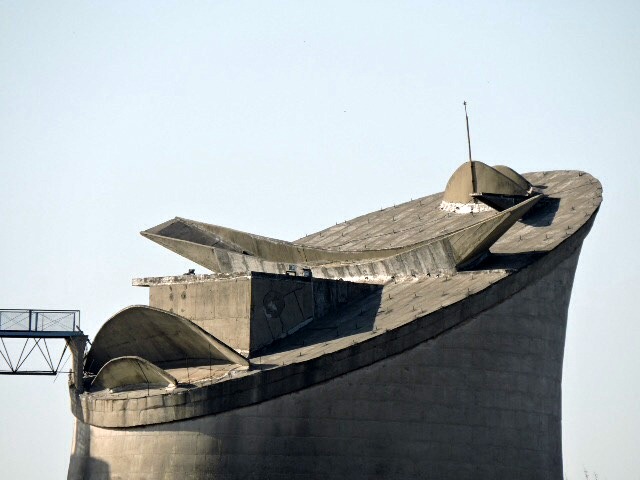
The Capitol Complex is the clearest statement of the dream. The High Court, Secretariat and Palace of Assembly use concrete at civic scale, with deep shadows, sculptural roofs and sun-breaking forms suited to a hot climate. In 2016, the complex was included in UNESCO’s World Heritage listing for the architectural work of Le Corbusier, alongside sites in several countries. Chandigarh is therefore both an Indian city and a global document of modernism.
But a city is not a drawing. Chandigarh’s grid made administration legible and gave many residents unusually generous green space. It also produced distances that can feel difficult without a car, and an urban order that sometimes struggles with informal economies and the density of Indian street life. The most interesting question is not whether Le Corbusier was right or wrong, but how people have adapted a strict plan to ordinary needs.
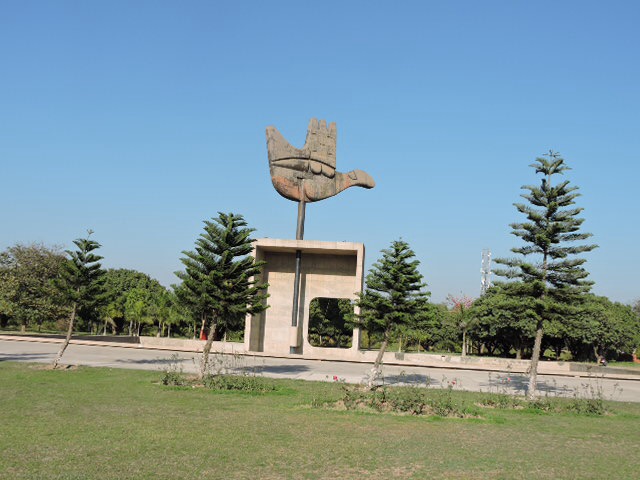
The Open Hand Monument captures that tension beautifully. It was designed as a symbol of giving and receiving, turning with the wind above the Capitol. It is idealistic, almost abstract. Yet around it is a real city of buses, markets, students, gardeners, security guards, families and heat. Chandigarh’s best moments happen when the symbol and the everyday do not cancel each other, but share the same space.
The dream in concrete was never complete, and that may be its saving grace. Chandigarh shows that planning matters: shade, parks, drainage, civic buildings and street hierarchy shape lives. It also shows that no architect can finish a city. Residents keep editing it through use, repair, shortcuts, commerce and memory. The lesson is calm but important: design can offer a frame for dignity, but life must be allowed to occupy it.
That adaptation is visible in the city’s everyday geography. The sector plan kept neighbourhood services within repeated units, while fast roads carried movement between them. In practice, pedestrians, cyclists, rickshaws, buses and cars have never used the plan with equal power. Shade, distance, safety and summer heat decide whether an elegant diagram feels humane at street level. Chandigarh’s green belts and tree-lined avenues remain one of its strengths, but they also require water, maintenance and protection from infill pressure.
The Capitol Complex, now recognized by UNESCO as part of Le Corbusier’s architectural work, is therefore only one piece of the story. The more durable question is how a planned city absorbs population growth, climate stress, informal commerce and changing transport without losing the civic clarity that made it famous. Chandigarh still matters because it is both an artifact and a living place: a concrete dream continually tested by the people who cross its sectors each day.