Lemurs of Madagascar: why island primates need living forests
Madagascar’s lemurs are not a single curiosity but more than a hundred island primate lineages shaped by isolation, forest habitats and fragile ecological relationships with seeds, leaves and people.
Noah Circuit ·
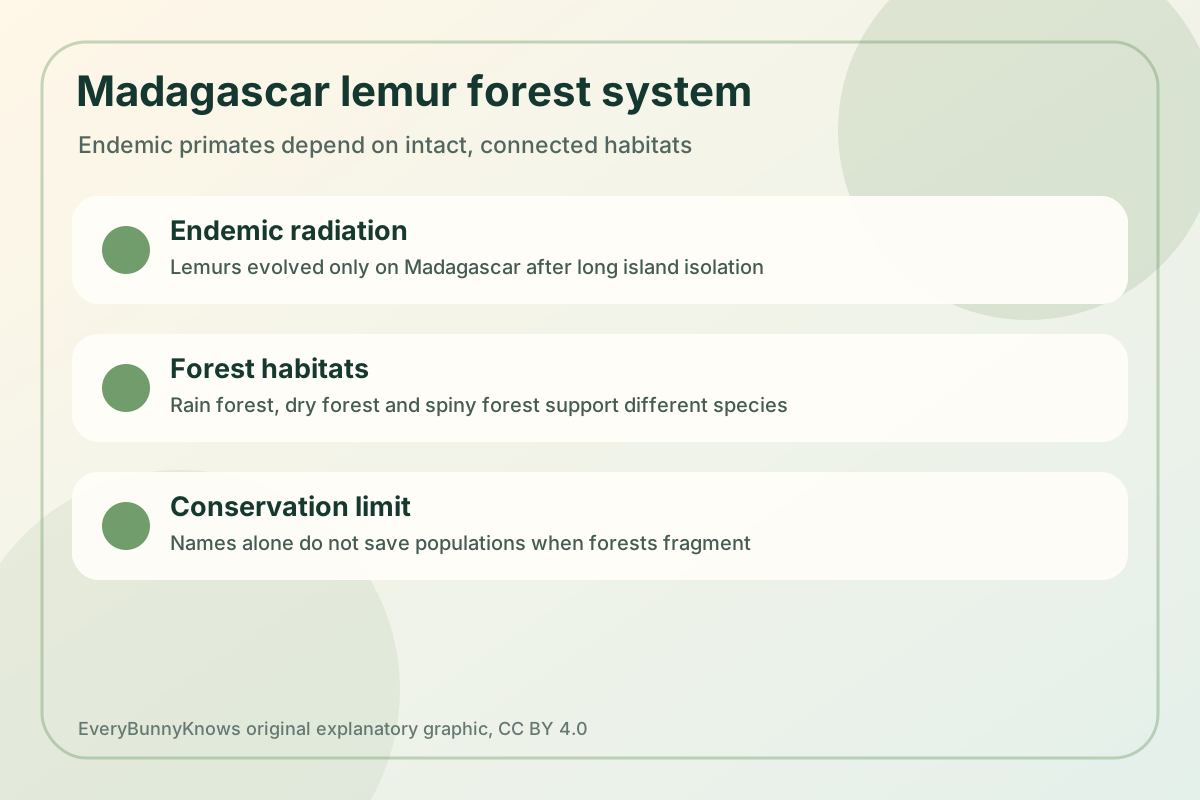
Madagascar’s lemurs are often introduced through one unforgettable face: a ring-tailed lemur holding its striped tail high, or an indri calling through eastern rain forest. That image is useful only if it opens the wider story. Lemurs are an endemic radiation of primates, found naturally only on Madagascar and nearby Comoros introductions, with more than a hundred recognized living species and subspecies depending on the taxonomy used. Their variety is the result of deep island isolation, different forests and millions of years of evolution without the same primate competitors found on mainland Africa.
The mechanism is island evolution meeting habitat specialization. Madagascar separated from other landmasses long before lemurs diversified there, and its landscapes are not one uniform jungle. Eastern humid forests, western dry deciduous forests, southern spiny thickets, montane zones and river corridors create different ecological problems. An indri built for vertical clinging and loud territorial calls is not the same ecological answer as a mouse lemur moving at night through fine branches, a sifaka leaping between trunks, or a ring-tailed lemur using gallery and dry forest edges.
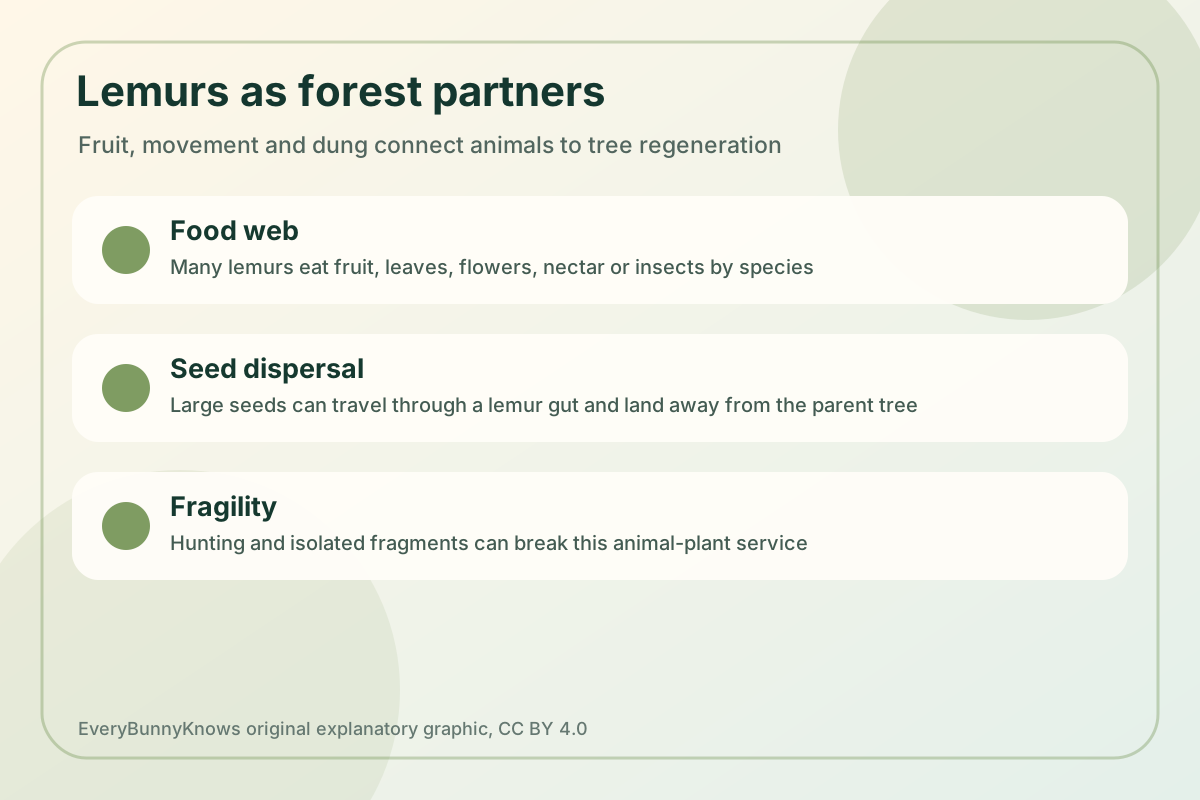
Forests keep lemurs alive in practical ways. They provide sleeping sites, travel routes, leaves, flowers, fruit, bark, insects and seasonal refuges. Many lemurs also help forests work. Frugivorous species can swallow fruit and deposit seeds elsewhere; some seeds germinate better after passing through an animal or after being carried away from dense parent-tree shade. Folivores and nectar feeders shape plant use in other ways. The relationship is not sentimental. It is a living exchange of calories, movement and regeneration.
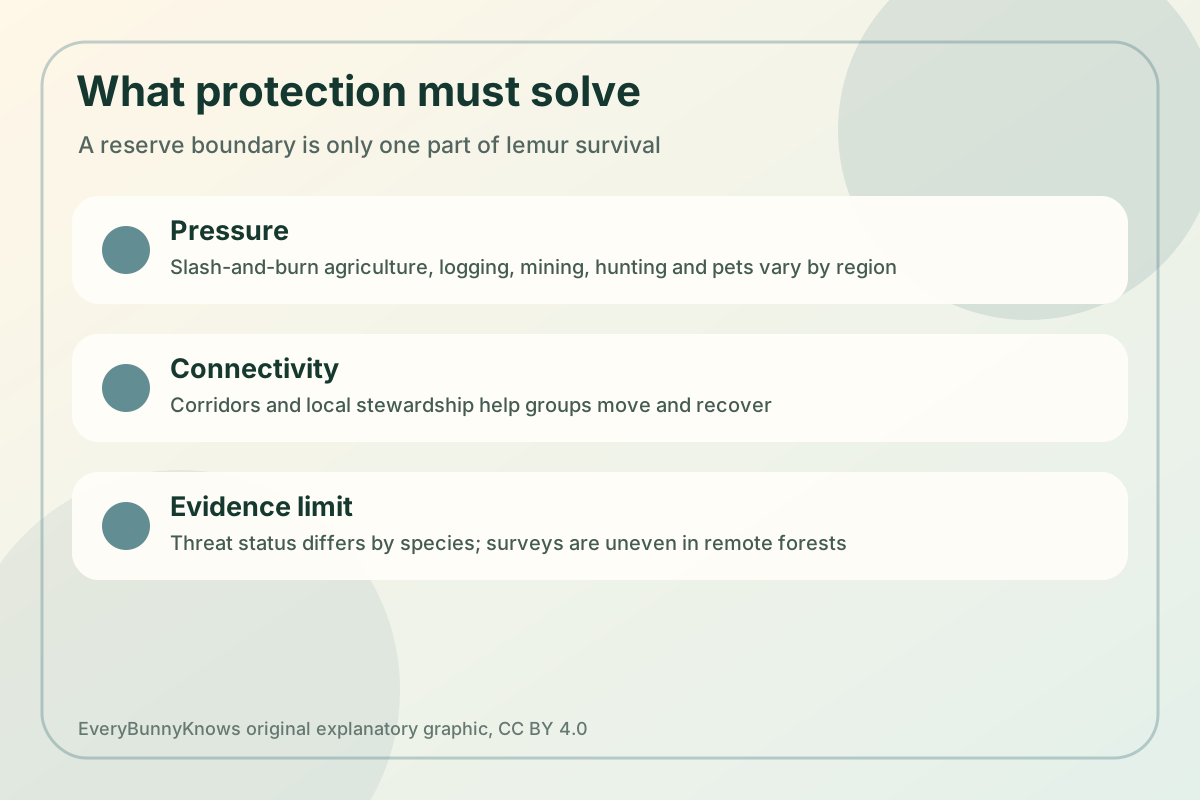
The limits are severe. The IUCN’s lemur specialists have repeatedly described lemurs as one of the most threatened mammal groups, with habitat loss, slash-and-burn agriculture, logging, mining, hunting and capture for pets affecting different regions in different ways. Climate stress can add pressure by changing fruiting seasons or fire risk. But threat is not identical for every species. A widespread, adaptable lemur and a microendemic species in one forest fragment need different evidence, different monitoring and different local partnerships.
Good conservation therefore has to be specific. It means connected habitat where movement and gene flow remain possible, community forestry and livelihoods that reduce pressure on protected areas, anti-hunting work that respects local realities, and field surveys that keep updating where species still persist. It also means not pretending that captive images or famous tourist animals represent the whole group.
A useful article also has to separate Madagascar-wide facts from local decisions. What works around a humid eastern national park may not fit a dry western forest or the southern spiny thicket. Seed dispersal, tourism income, fire risk, hunting pressure and food security all change from place to place. That is why lemur conservation is strongest when species lists are joined to maps, seasons, village agreements and long-term monitoring rather than treated as a single emergency slogan.
The hopeful lesson is precise: lemurs are not just symbols of a strange island. They are working members of forests that can still recover where habitat is protected, corridors are restored and people living near forests have a stake in keeping them standing. Saving lemurs means saving the ecological conversations between trees, seeds, night sounds, pollinators, soils and villages. That is harder than loving a photograph, but it is also more useful.