Lungwort’s spotted leaves and the safe edge of herbal memory
Lungwort links a real spring woodland plant, medieval “signatures” and respiratory folk use. The useful lesson is not a home remedy but how plant identity, tradition, chemistry and modern evidence limits fit together.
Simon Glass ·
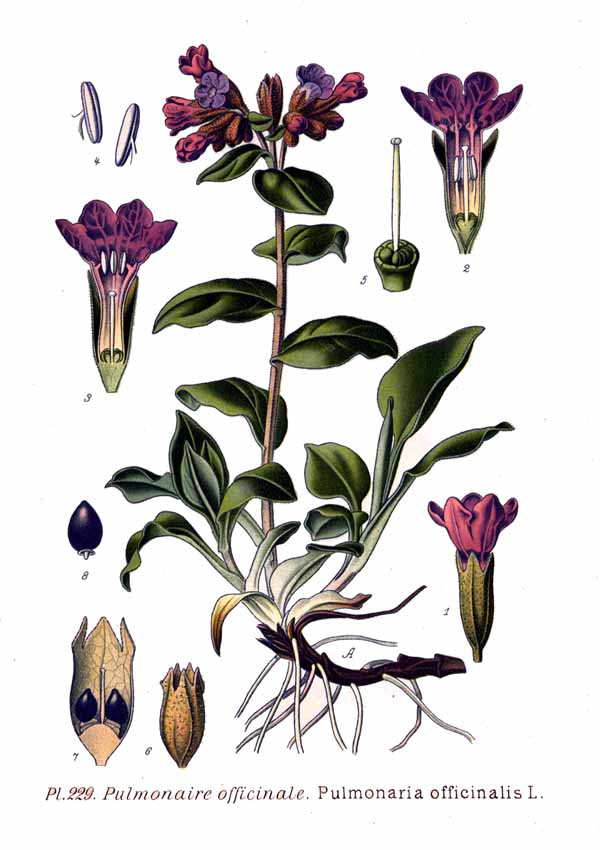
In April and May, lungwort can make a damp deciduous wood look as if someone has scattered small constellations on the leaves. Pulmonaria officinalis grows with pink, violet and bluish flowers and pale spots on rough green foliage; in Czech it is plicník, a name that points directly to lungs. That old association is why the plant is a good Medicine story, but also why it needs a careful one. A name, a resemblance and a long tradition are not the same as clinical evidence.
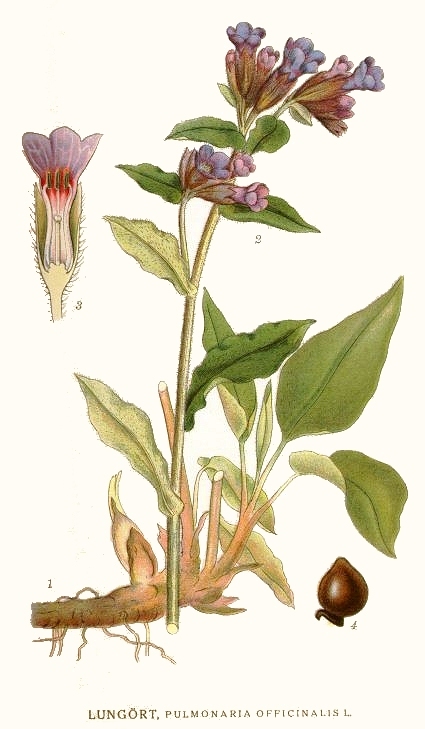
The first factual anchor is botanical identity. Pladias records Pulmonaria officinalis in the Czech flora, especially in nutrient-rich broadleaf woods, shrub edges and shaded places where spring light reaches the ground before the canopy closes. Modern taxonomy places it in the borage family, Boraginaceae. That specificity matters because “lungwort” is not a generic green medicine; it is a particular plant with look-alikes, local names and chemistry that may vary by species, habitat and plant part.
The historical mechanism was symbolic before it was pharmacological. Medieval and early modern European herbalism often used the doctrine of signatures, the idea that a plant’s appearance hinted at its use. Lungwort’s pale leaf spots were read as resembling diseased lung tissue, so the plant entered respiratory folklore. Later herbals described preparations for coughs or chest complaints, often because leaves contain mucilaginous substances that can feel soothing on irritated membranes and tannins that can tighten tissues. That is a plausible explanation for why the tradition persisted, but plausibility is not proof that it treats a disease.
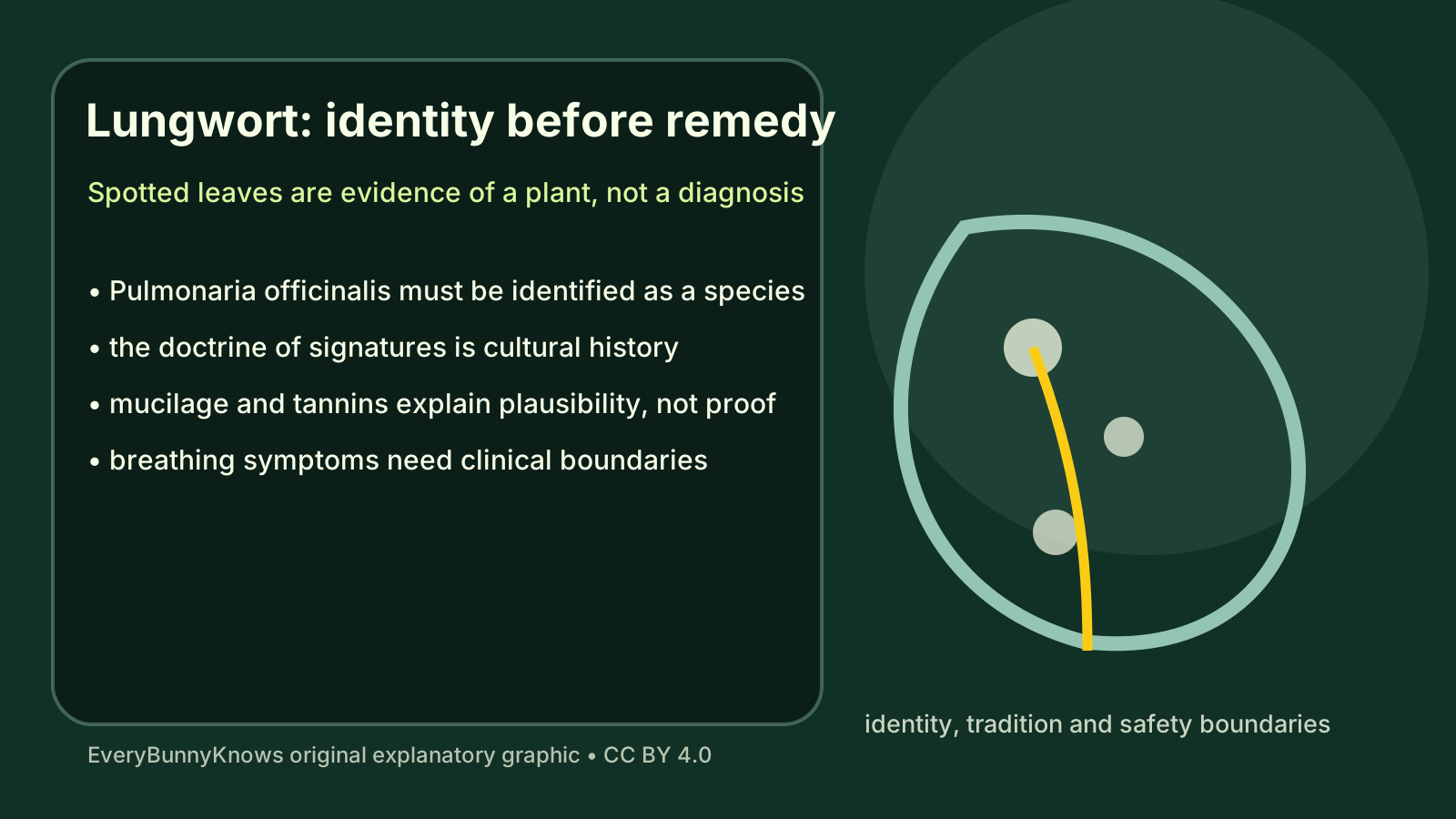
Modern readers need the boundary more than the recipe. Some herbal products are assessed through European traditional-use frameworks, which can recognize long use for minor symptoms while also noting that evidence is not the same as a large modern trial. Lungwort is not a substitute for diagnosis or treatment of asthma, pneumonia, chronic obstructive pulmonary disease, tuberculosis, chest pain or shortness of breath. The borage family also reminds herbal writers to be cautious about plant chemistry, contaminants, pregnancy, children, medication interactions and liver-safety questions that cannot be solved by folklore.
The useful lesson is therefore a method. Start with the species, verify where it grows, separate cultural history from pharmacology, and ask what level of evidence supports each claim. A historical herbal use can be worth preserving without turning into advice. It can tell us how people once read bodies and landscapes, how names travel through languages, and why a spotted spring leaf became a medical metaphor.
This also protects the plant itself. Wild populations are part of woodland ecology, not an unlimited pharmacy, and common names can encourage careless gathering when a garden cultivar, a related Pulmonaria species or another spotted leaf is nearby. Good herbal history begins with restraint: document the specimen, prefer cultivated or regulated material when research is needed, and do not let a romantic story become pressure on living habitats.
That makes lungwort hopeful in a modest way. It does not promise a cure. It teaches that medicine has always depended on observation, but that observation improves when it is checked by taxonomy, chemistry, clinical evidence and safety reporting. The old plant remains beautiful; the modern responsibility is to admire it without asking it to carry more certainty than it has.