How magnetoelectric antennas could help underwater robots stay in touch
The University of Florida’s BlueME system uses magnetoelectric antenna arrays to send low-rate underwater messages over hundreds of metres. It is a prototype link for telemetry, not broadband for the ocean.
Mira Vale ·
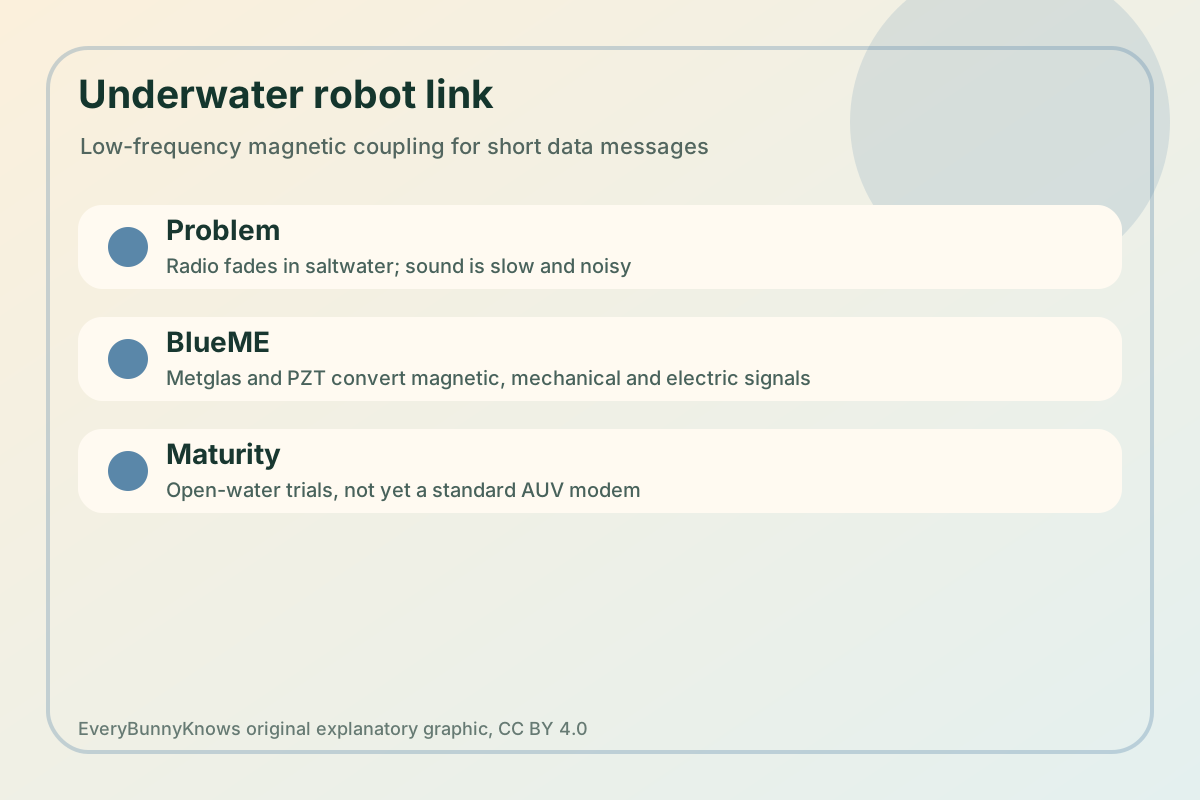
Underwater robots have a communication problem before they have an autonomy problem. Radio signals that work in air fade quickly in conductive saltwater. Acoustic modems can travel farther, but they are slow, noisy, affected by echoes and Doppler shifts, and can add sound to already busy marine environments. Optical links can be fast, but they need a clear line of sight and clean water. That is why many autonomous underwater vehicles still surface, trail a tether or accept long gaps between instructions.
A University of Florida team has tested a different route with BlueME, a system built around magnetoelectric antennas. New Atlas reported the work in June 2026, and the article describes open-water trials at Lake Wauburg in Gainesville and on the Florida Gulf Coast. The reported numbers are useful because they are modest enough to understand: reliable freshwater communication at 200 metres using about 1 watt, and signal detection in saltwater at 730 metres using under 10 watts. Data rates range from roughly 1 to 100 kilobits per second, which is plenty for status pings and commands but not for high-definition video.
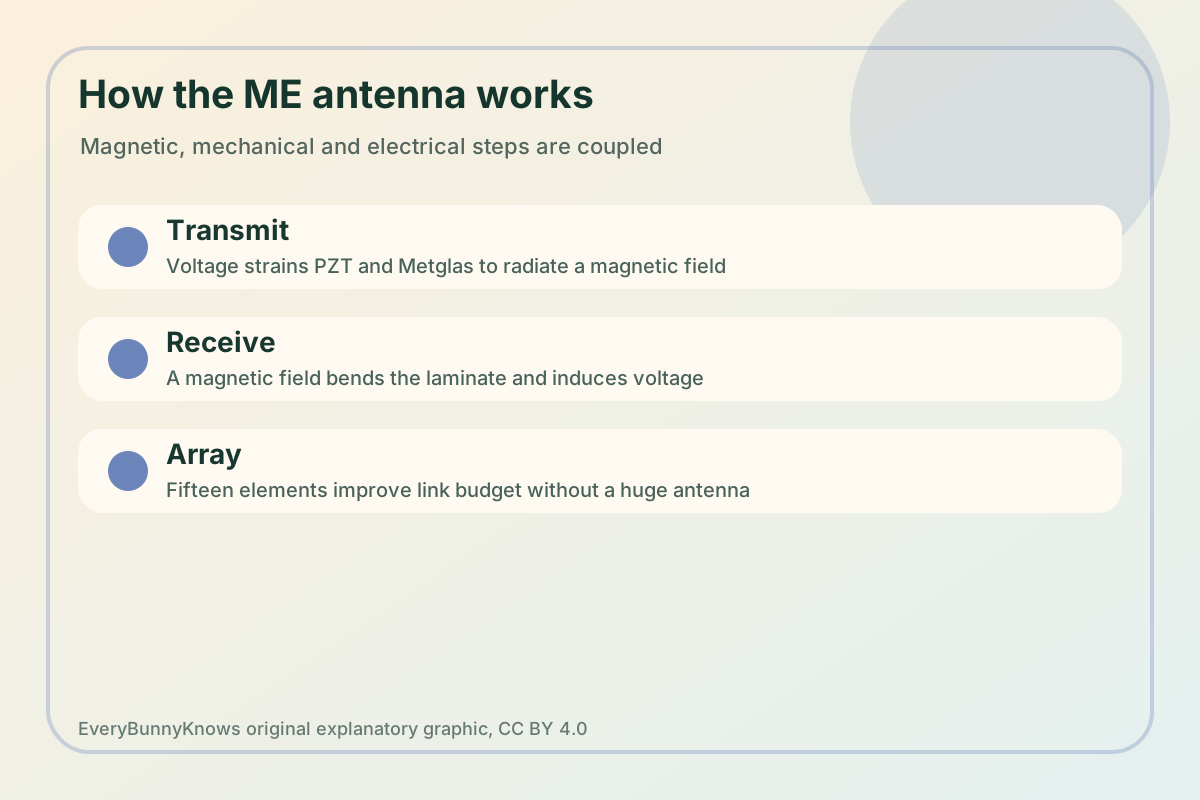
The mechanism is the interesting part. A magnetoelectric antenna couples materials that respond to different fields. In BlueME, a magnetostrictive Metglas layer changes shape in a magnetic field, and an adjacent piezoelectric PZT layer converts mechanical strain into voltage; the process can also run in reverse for transmission. This lets the device operate around 35 to 36 kilohertz while staying much smaller than a conventional electric antenna for the same low frequency. The system uses a 3-by-5 array of 15 elements in oil-compensated waterproof housings, so pressure at depth does not crush the hardware.
That design does not make seawater transparent to every signal. It creates a better fit between frequency, antenna size and the short messages a robot actually needs. A vehicle mapping a seafloor, inspecting a cable or coordinating with a partner vehicle may only need to send position, battery state, mission progress, sensor flags or new waypoints. In those cases, a low-rate magnetic link can be more useful than a fast optical link that fails in murk or an acoustic link that suffers from multipath.
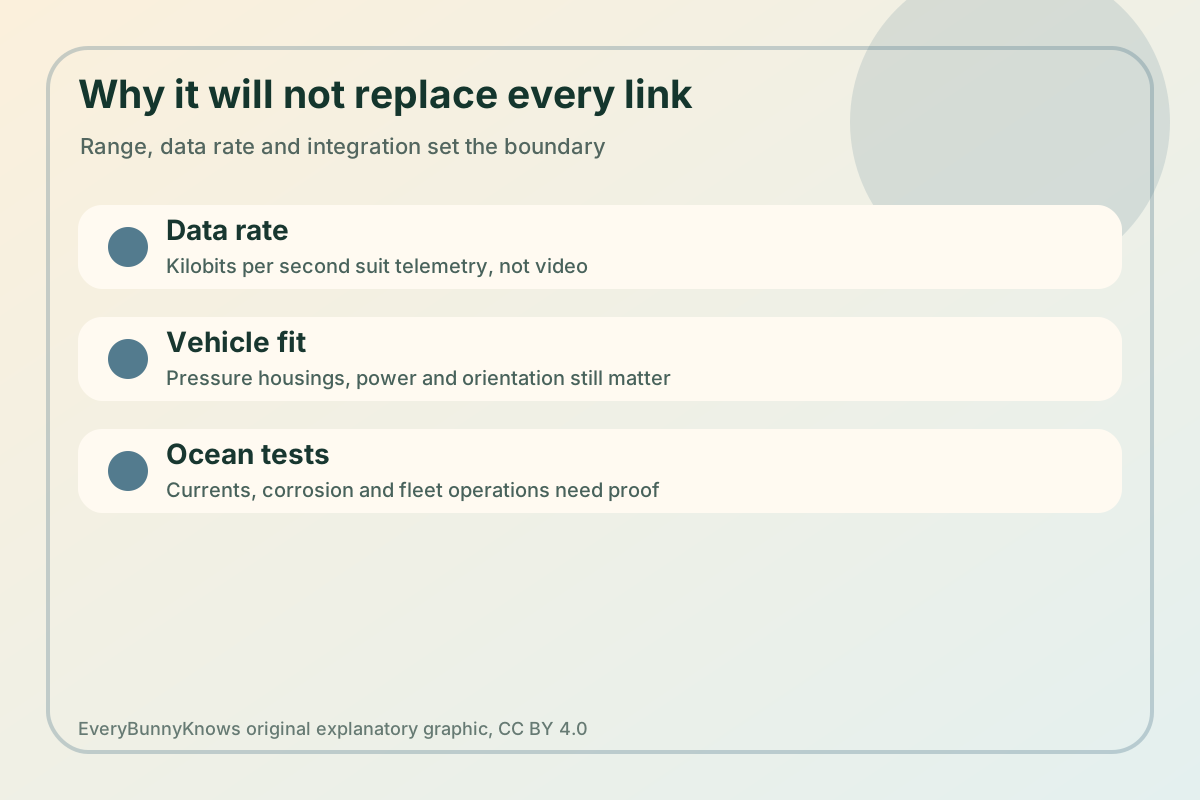
The maturity level is prototype and field trial, not a product that every AUV can buy tomorrow. The team says the work has been accepted in the IEEE Journal of Oceanic Engineering, has a provisional patent and still needs funding for refined hardware and full-scale vehicle trials. Real deployment would require corrosion-resistant housings, connectors, calibration, orientation studies, interference checks, integration with vehicle software and rules for when to switch among acoustic, optical, cable and magnetoelectric links.
The environmental claim also needs care. A quieter low-power link could reduce dependence on loud acoustic signalling for some tasks, but it will not remove all underwater noise or make every robot benign. More capable underwater vehicles still raise questions about data collection, seabed disturbance, maintenance and responsible use. The hopeful part is specific: if BlueME scales, robots could stay submerged longer while operators receive enough information to adapt a mission safely. In the ocean, sometimes the valuable message is not a stream of images; it is a short reliable sentence that arrives before the robot has to surface.