Matera, Italy: cave dwellings, soft stone and the food of Basilicata
Matera’s Sassi are not just photogenic caves. The UNESCO city explains how soft limestone, cisterns, rupestrian churches, forced relocation and careful restoration shaped one of southern Italy’s most memorable places.
Klára Novák ·
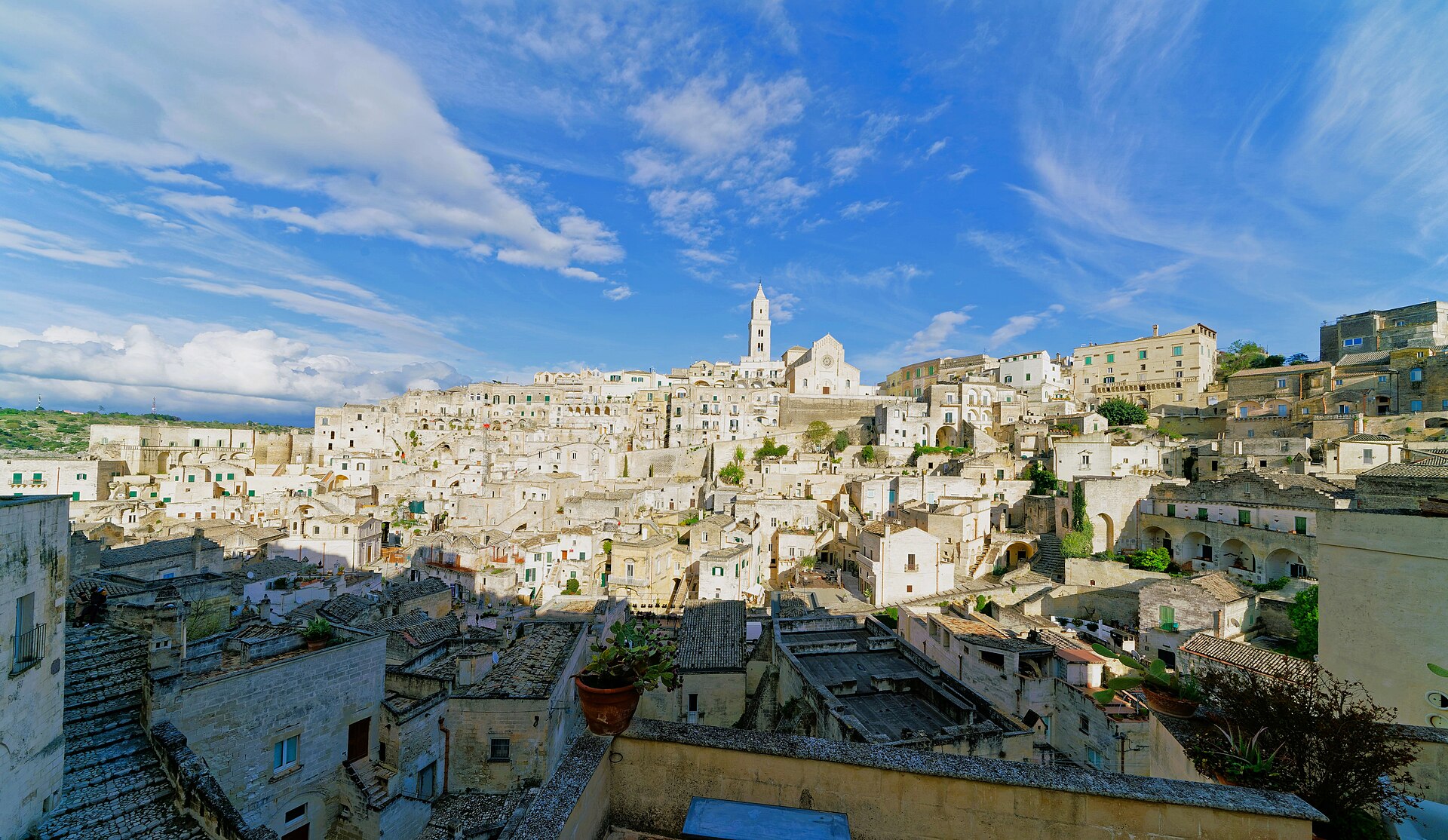
Matera looks ancient at first glance, but its power comes from a more complicated story than age alone. The Sassi districts are carved into calcarenite, the soft limestone of Basilicata, on the edge of a ravine cut by the Gravina stream. Houses, churches, cisterns, stairs and courtyards are not separate from the rock. They are part of one built landscape, which is why UNESCO lists the Sassi together with the Park of the Rupestrian Churches.
The city teaches visitors to read stone as infrastructure. Cave rooms provided shelter; rooftops became lanes for the homes above; channels carried rainwater into cisterns; and rock-cut churches preserved traces of Byzantine and Latin religious life. Walking through the Sasso Caveoso or Sasso Barisano is therefore not only scenic. It shows how a community adapted to a dry southern Italian plateau by storing water, sharing walls and using the temperature of the caves.
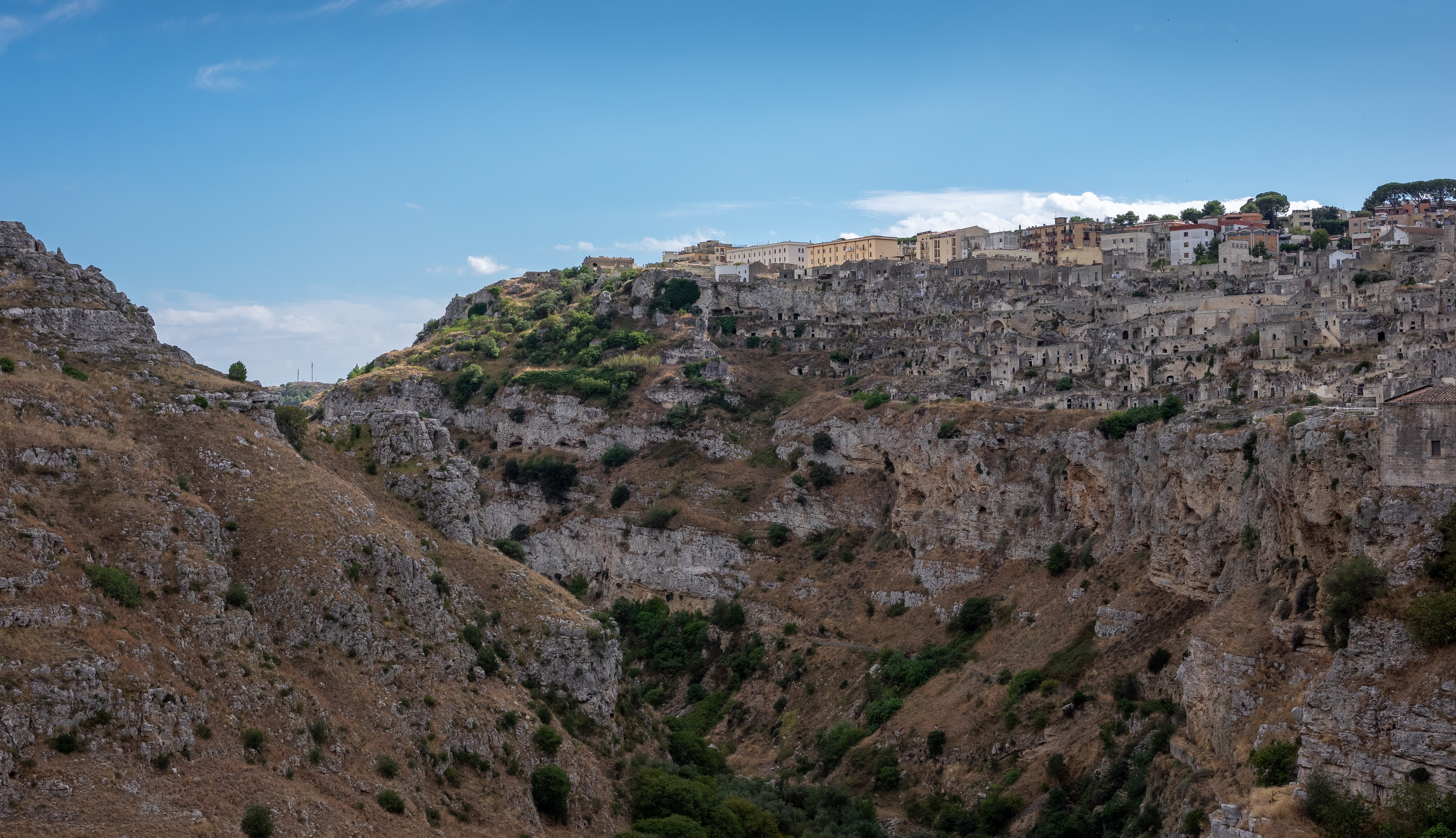
Matera’s recent history keeps the beauty honest. In the mid-20th century, parts of the Sassi were associated with poverty, overcrowding and poor sanitation. Italian authorities relocated residents from cave dwellings to new housing, and for years the old quarters stood partly emptied. Restoration later brought museums, homes, hotels, workshops and restaurants back into the stone. That revival is real, but it should not erase the social cost that made Matera a national question before it became a travel icon.
The best way to visit is slowly and on foot. Morning light clarifies the pale stone, while evening turns the ravine and church façades warmer. The cathedral ridge gives orientation; the cave-house museums explain domestic life; and the Murgia Materana across the ravine shows why the city and the rupestrian park belong to the same story. Good shoes matter more than a tight itinerary, because steps, uneven lanes and viewpoints are the grammar of the place.
Food in Matera is plain in the best sense of the word. Basilicata cooking uses durum wheat bread, legumes, vegetables, lamb, peppers, olive oil and pasta shapes such as orecchiette or strascinati. Pane di Matera, protected by European designation, is more than a souvenir loaf: its long-keeping crust made sense in a city where bread, water and storage were practical concerns. A meal of bread, beans, greens, caciocavallo or local sausage fits the landscape better than a glossy tasting menu.
A practical route links the upper town with the Sassi rather than treating them as separate worlds. The newer streets hold shops, evening walks and everyday services; the old districts show the older logic of caves and courtyards. Crossing between them helps explain why relocation and restoration were never simple opposites. Modern Matera needed safer housing, but the abandoned stone quarters also contained knowledge about climate, water and shared space that later generations learned to value again.
The limit is crowding and simplification. Matera can feel theatrical if visited only for one famous viewpoint or a film-location photograph. The more useful reading is quieter: a city where geology, poverty, policy and restoration are all visible in the same walls. Its optimism is not that everything old becomes beautiful again. It is that a difficult urban inheritance can be studied, repaired and lived in without pretending the past was easy.