A faster way to predict how sheet metal will bend and tear
A Korea Institute of Materials Science model uses microstructure to predict anisotropic sheet-metal behaviour within seconds. It could shorten car and battery-part design loops, but it still needs alloy-specific validation and physical tests.
Tomáš Hare ·
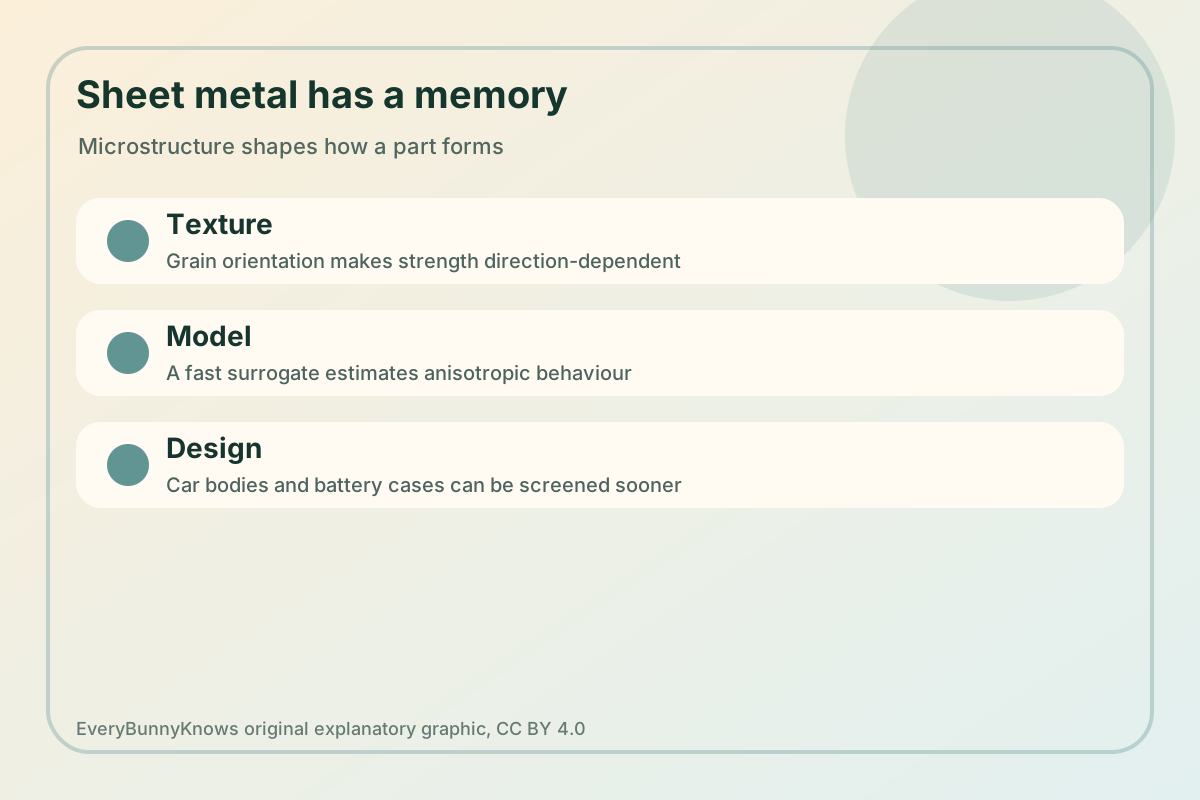
Sheet metal looks simple until it is stamped into a car panel, battery case or structural bracket. Then its internal history begins to matter. Rolling, annealing and alloy chemistry leave grains with preferred orientations, and those orientations make the sheet behave differently along different directions. Engineers call that anisotropy. The Korea Institute of Materials Science has reported a model that predicts anisotropic mechanical behaviour of sheet metals within seconds, according to the Tech Xplore report from late June 2026. The value is speed in the design loop, not the disappearance of testing.
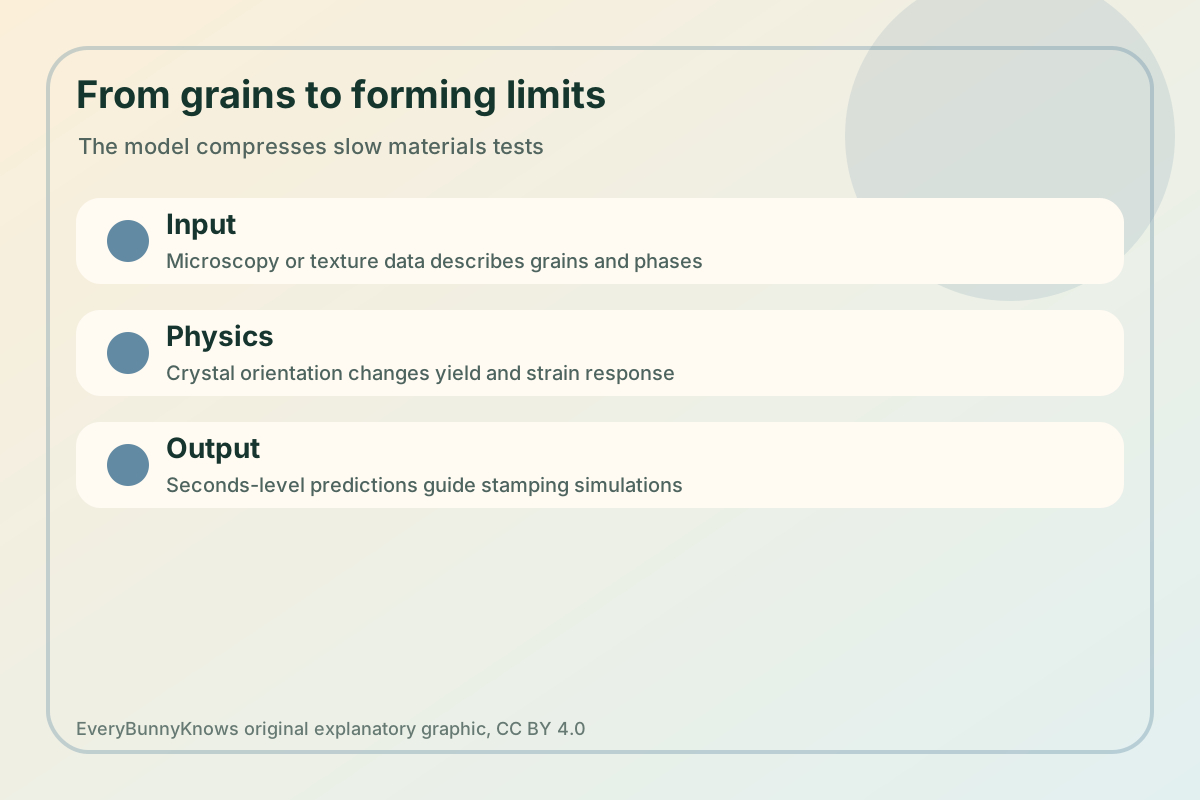
The mechanism begins at the microstructure. A sheet is made of many grains, each with a crystal orientation. When a die pulls and stretches the sheet, grains slip more easily along some directions than others. That directional response affects yield strength, thinning, springback, wrinkling and tearing. Traditional forming simulations need material parameters measured by mechanical tests, and high-fidelity crystal-plasticity calculations can be slow. A microstructure-based model tries to connect measured texture or microscopy data directly to a faster prediction of how the sheet will respond.
That matters for cars and batteries because both industries are trying to make lighter, thinner and more precisely formed parts. Automotive body panels, crash structures, battery enclosures, cell cans and current-collector components all use sheet materials under tight tolerances. A wrong assumption about anisotropy can mean a part springs back after stamping, tears at a corner, wrinkles near a flange or fails a safety margin. Faster predictions let engineers screen material choices and die designs before committing to expensive tooling.
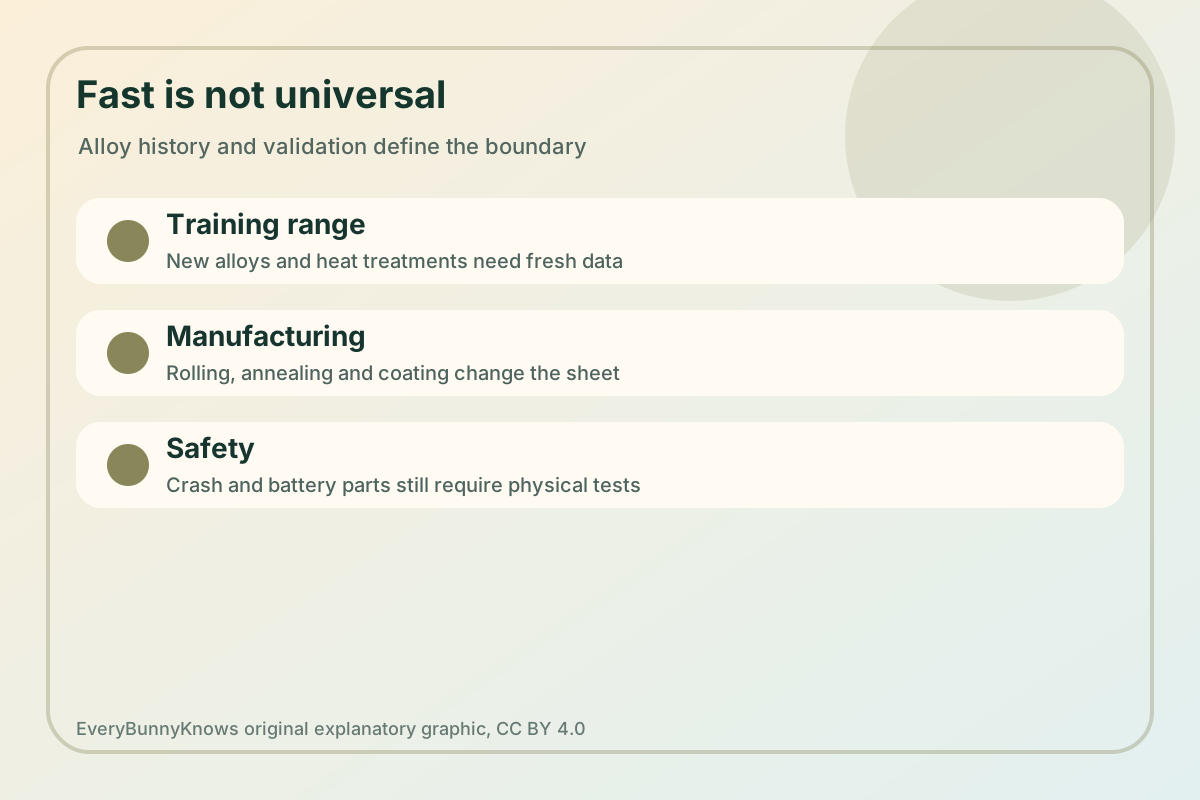
The maturity is research-to-engineering software, not a universal oracle for metal. A model trained or calibrated on one steel, aluminium or battery material may not work for another without fresh data. Heat treatment, rolling reduction, coating, grain size, phase balance and strain history can all shift behaviour. The phrase “within seconds” is valuable only if the prediction remains accurate across the manufacturing range a company actually uses.
There are also deployment limits inside factories. The model needs reliable microstructure inputs, which may come from electron backscatter diffraction, X-ray texture measurement, microscopy or a linked process database. Those measurements cost time and require quality control. Engineers must also decide how the fast model connects to existing finite-element forming software, material cards and supplier specifications. For crash and battery safety parts, physical tensile tests, forming-limit tests, fatigue tests and prototype stamping trials remain necessary.
The hopeful part is that materials knowledge can move earlier in design. Instead of discovering late that a sheet tears after a die has been machined, teams can compare candidate microstructures, forming directions and processing routes sooner. That can reduce scrap, shorten development cycles and make lightweight designs less dependent on trial and error. It can also help suppliers explain why two sheets with the same nominal chemistry behave differently after rolling and annealing. A faster model does not make metal simple or remove responsibility for margins. It helps engineers respect the complexity inside a thin sheet before the press closes.