MIT’s ultrasound wristband turns hand motion into robot lessons, with limits
MIT researchers use an AI-powered ultrasound wristband to infer detailed hand motion beneath the skin. It could make robot demonstrations easier, but contact, calibration and task context still matter.
Elena Moss ·
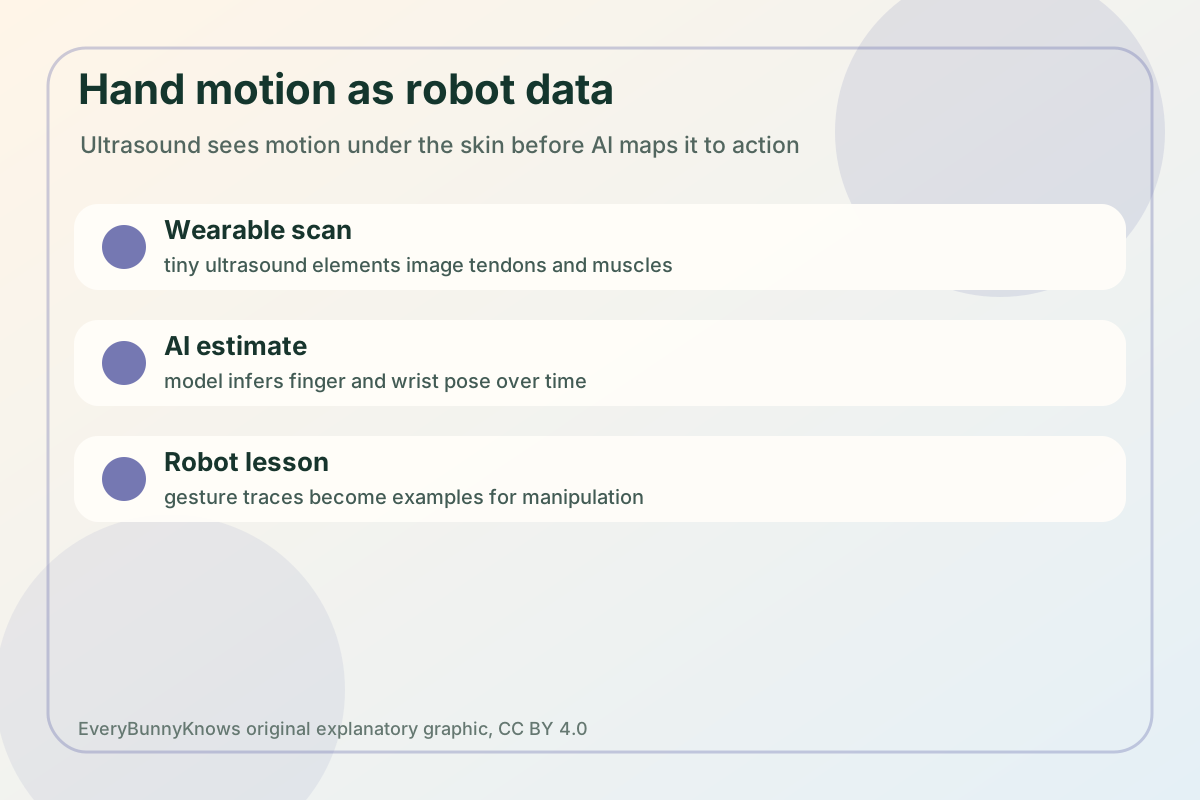
MIT’s ultrasound wristband for hand tracking is easy to oversell if it is described only as “AI reading gestures.” The more useful description is physical: a wearable ultrasound array looks under the skin at moving muscles, tendons and ligaments, while a machine-learning model translates those echo patterns into estimates of finger and wrist motion. Tech Xplore connected the work to robot training data in June 2026, after the underlying Nature Electronics paper described an artificial-intelligence-powered wristband that tracks full hand motion.
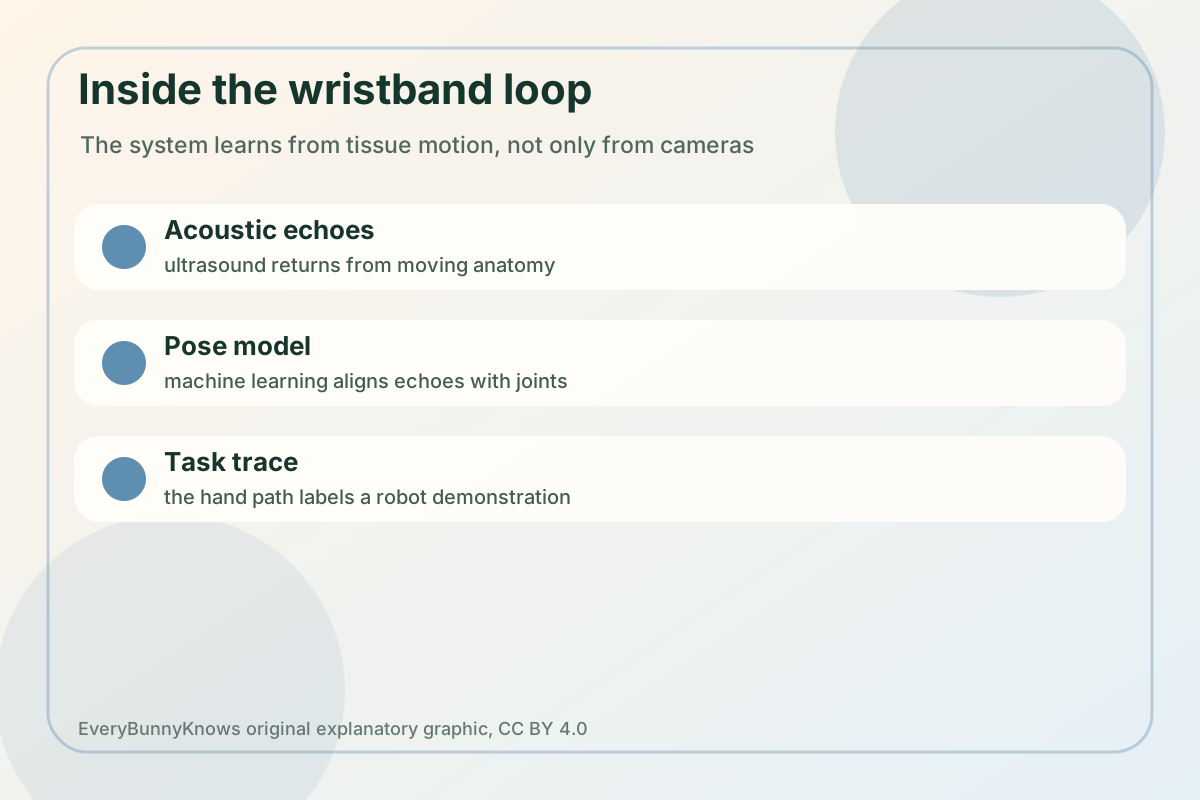
The mechanism differs from camera-based gesture capture. Cameras see the outside of the hand and can lose information when fingers occlude each other, lighting changes or an object blocks the view. Ultrasound sends sound pulses into the wrist and reads returning echoes from tissue layers that move as fingers flex, extend and grip. The AI model learns the relationship between those internal patterns and visible hand pose. Once trained and calibrated, it can estimate joint motion even when the hand itself is partly hidden.
That matters for robotics because dexterous manipulation is still data-hungry. A humanoid or service robot needs examples of how humans grasp a cup, twist a cap, fold cloth or place a small object without crushing it. Demonstrations can be collected with motion-capture gloves, cameras, teleoperation rigs or expensive lab setups. A wrist-worn sensor could make some demonstrations cheaper and more natural: a person performs a task, the system records a time series of hand motion, and that trace becomes one input for imitation learning or policy training.
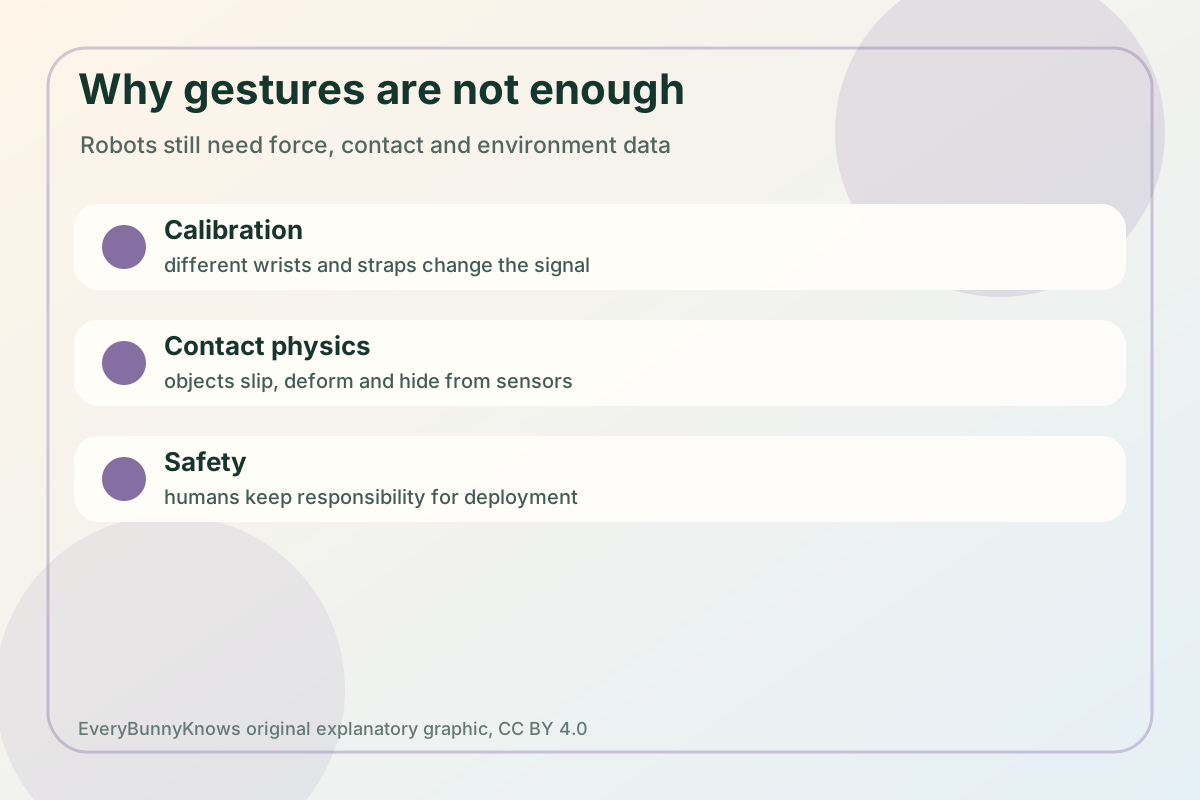
The limits are as important as the signal. Ultrasound coupling depends on strap fit, skin contact, sweat, motion and anatomy. A model trained on one person may not transfer cleanly to another without calibration. Hand pose is also not the whole task. Robots need object position, surface friction, force, failure examples and environmental constraints. A human can feel a lid slip and adjust pressure; a wristband alone records motion, not necessarily the contact forces that made the motion succeed.
There are AI-training limits too. More demonstrations do not automatically make a robot safe or general. The dataset can be biased toward the bodies, tools and tasks used in the lab. A robot policy trained from gestures may fail when the object is heavier, deformable, wet, reflective or placed in a cluttered room. Researchers therefore need validation on held-out users, different tasks and real robots, not just reconstruction accuracy on recorded hand movements.
The hopeful use is bounded and practical. A wearable sensor can lower the cost of collecting demonstrations and can capture hidden aspects of hand motion that cameras miss. It may help teach robots household, factory or assistive tasks by making human examples easier to record. But it does not remove the need for robot perception, force sensing, safety stops, privacy rules for body data or human responsibility for deployment.
The lesson is that better robot learning often begins before the robot moves. It begins with cleaner demonstrations, richer labels and honest measurements of what the training signal contains. If MIT’s ultrasound approach proves robust across people and tasks, it could become one more bridge between ordinary human skill and machines that need careful examples. The bridge is promising because it is specific: tissue motion becomes a signal, the signal becomes a pose estimate, and the pose estimate becomes only one part of a robot lesson.