Why Modern Boats Can Sail Toward the Wind
A sailboat cannot sail straight into the wind, but airfoil-shaped sails, a keel and a zigzag course explain how modern rigs gain ground upwind.
Sofia Lane ·
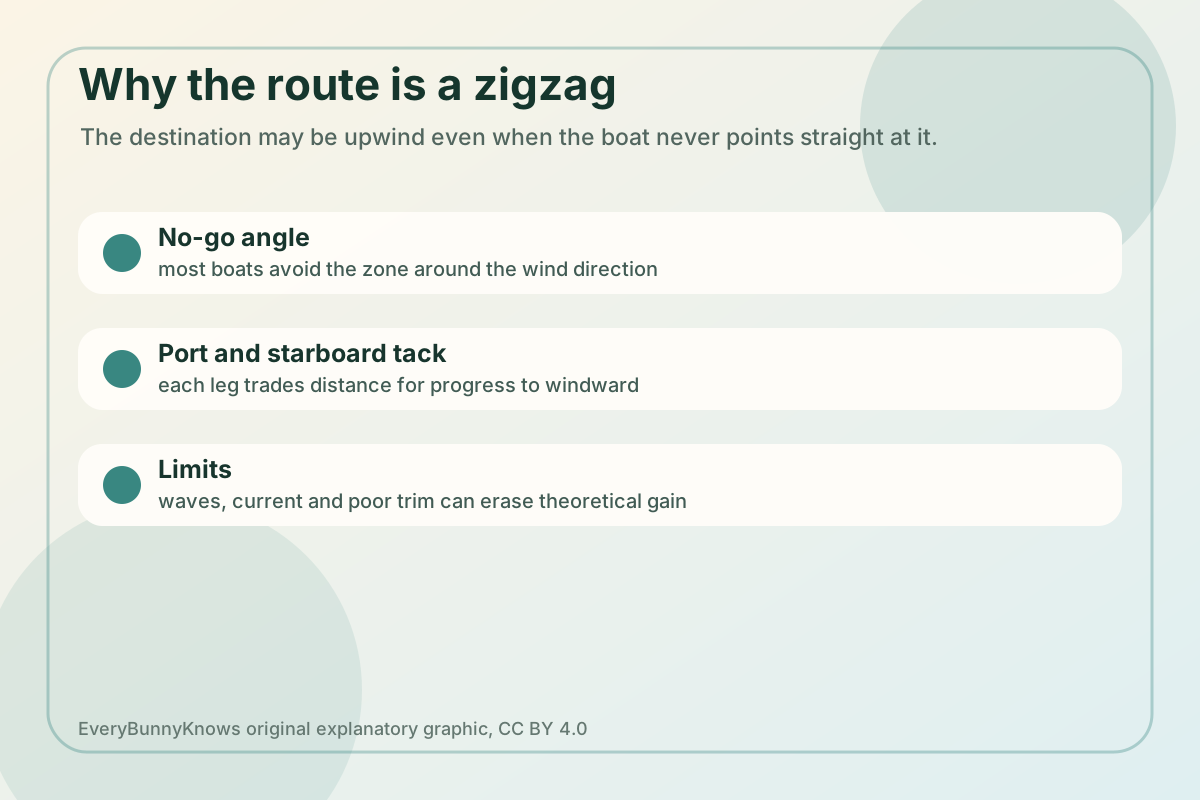
Old square-rigged ships were excellent when the wind helped from behind or from the quarter. Close to the wind they had fewer choices. Modern fore-and-aft rigs, shaped sails, deep keels and lighter materials changed the useful range of a sailing boat without changing one stubborn rule: no sailboat drives straight into the wind. The practical achievement is narrower and more interesting. A dinghy, cruiser or racing yacht can sail at an angle to the wind, tack onto the opposite angle, and make progress toward an upwind mark by drawing a zigzag across the water.
The mechanism is lift. A trimmed sail behaves more like a vertical wing than a sheet being pushed. Air must curve around the sail, and the pressure difference creates a force across the sail. Part of that force points sideways. The keel, centreboard or leeboard pushes against the water and resists that sideways motion. What remains is a forward component that the hull can use. This is why the shape and angle of the sail matter as much as its area.
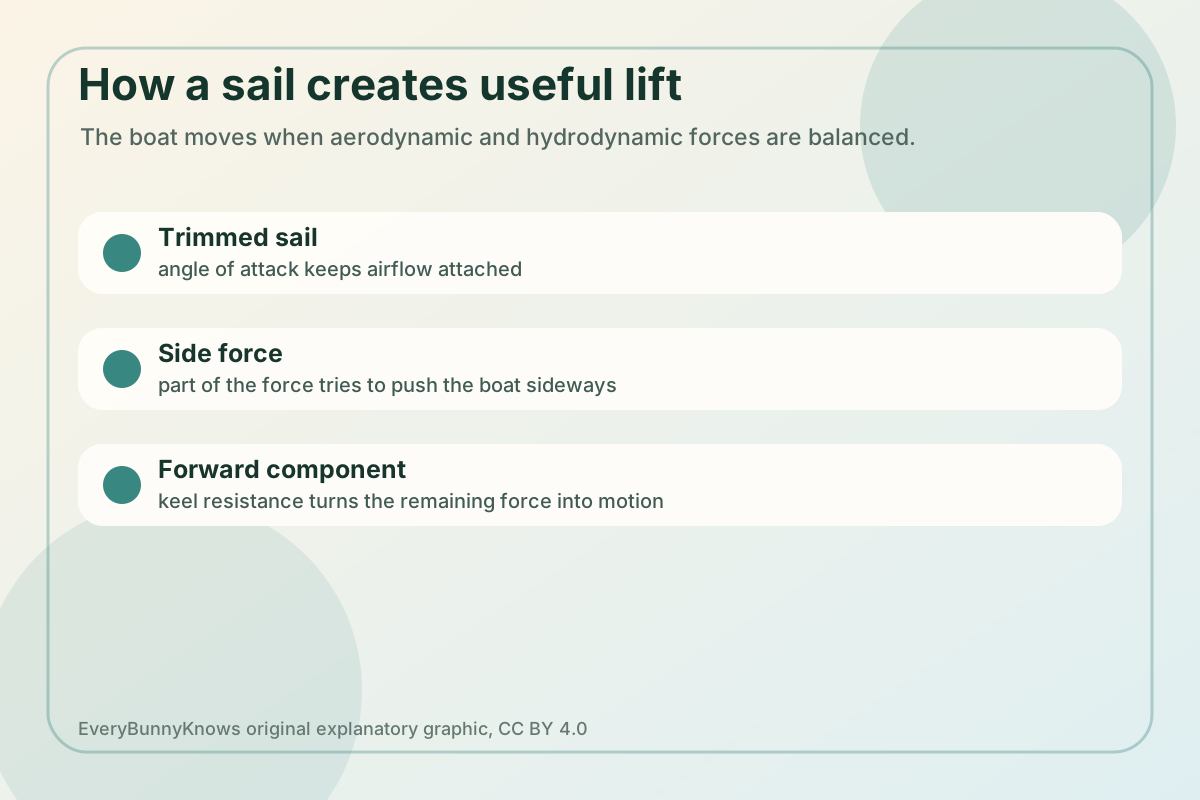
Training manuals from the Royal Yachting Association and US Sailing explain the same idea through points of sail, telltales and tacking. The sailor does not ask the boat to point at the destination at all times. Instead, the crew keeps airflow attached, watches speed, and changes tack before the course becomes wasteful. On a modern boat with a high-aspect sail and efficient underwater foils, the best angle may be much closer to the wind than on a broad square-rigged vessel. On a traditional working boat, a wider angle could still be faster because it kept the rig powerful and the crew safe.
Technology added precision rather than magic. Aluminium and carbon masts hold better shapes. Synthetic sailcloth stretches less than cotton or flax. Winches, travellers, GPS instruments and computer-designed hulls help crews repeat trim settings. Foiling yachts go further by lifting much of the hull from the water and reducing drag, as seen in recent America’s Cup designs. Yet the physics remains a coupled problem: air, water, hull, rig and human timing must all agree.
The limits keep the comparison honest. A boat that points extremely high can stall its sail and slow down; a boat sailing a slightly wider angle may reach the mark sooner. Waves knock airflow loose, current changes the real track over ground, and a heavy cruising boat loaded for comfort cannot behave like a stripped racing skiff. Older rigs were not primitive failures. They were optimized for cargo, ocean trade winds, large crews, repairable materials and the routes of their time.
The useful lesson is that sailing upwind is a mature technology of compromise. It turns resistance into route-making, but only through attention. The wind refuses the straight line. Sail, keel and crew answer with a sequence of measurable choices, each one small enough to trim and large enough to move the boat home.
A further detail is maintenance. Modern sail shape depends on stitching, battens, halyard tension, clean sheets and a hull bottom that is not dragging a garden of weed. The technology therefore lives in routine practice as much as in design drawings. Two boats with similar rigs can behave differently if one has tired cloth and a rough keel while the other is tuned and clean.