More Trees Can Mean Fewer Birds, a Japanese Wetland Study Reveals
Japanese wetland-farmland research shows that shelterbelts can support edge birds while reducing habitat quality for grassland and wetland specialists that need open space.
Nina Kaplan ·
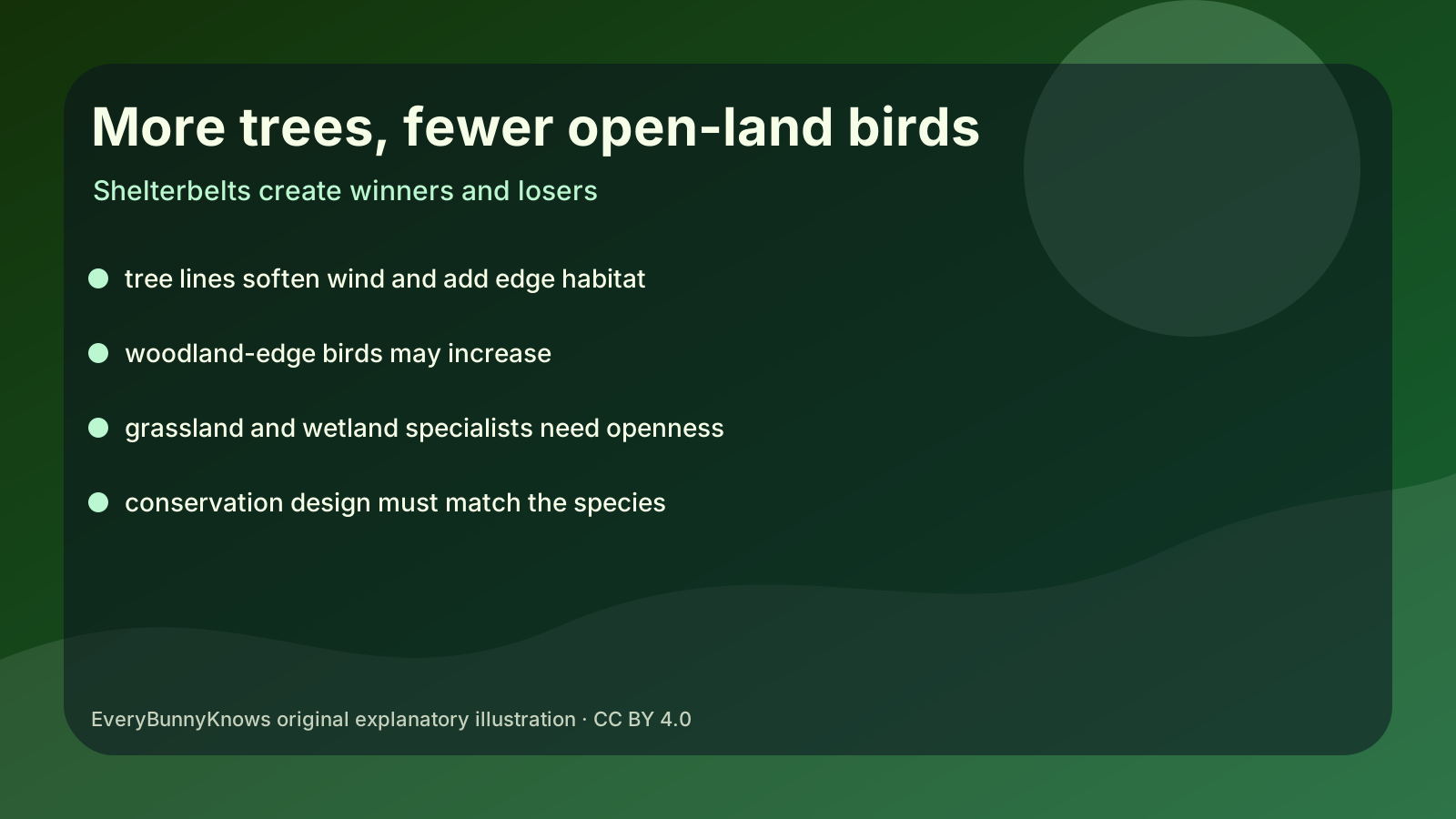
Planting trees is usually treated as an uncomplicated good, but a wetland-farmland study from Japan shows why conservation has to ask a sharper question: good for which species, in which landscape, and at what scale? The Journal of Environmental Management paper, “Shelterbelts support edge birds but limit grassland and wetland specialists in agricultural landscape,” examined tree belts planted around fields and found a split response. Some edge and woodland-associated birds gained habitat, while birds that depend on open grassland and wetland space lost room.
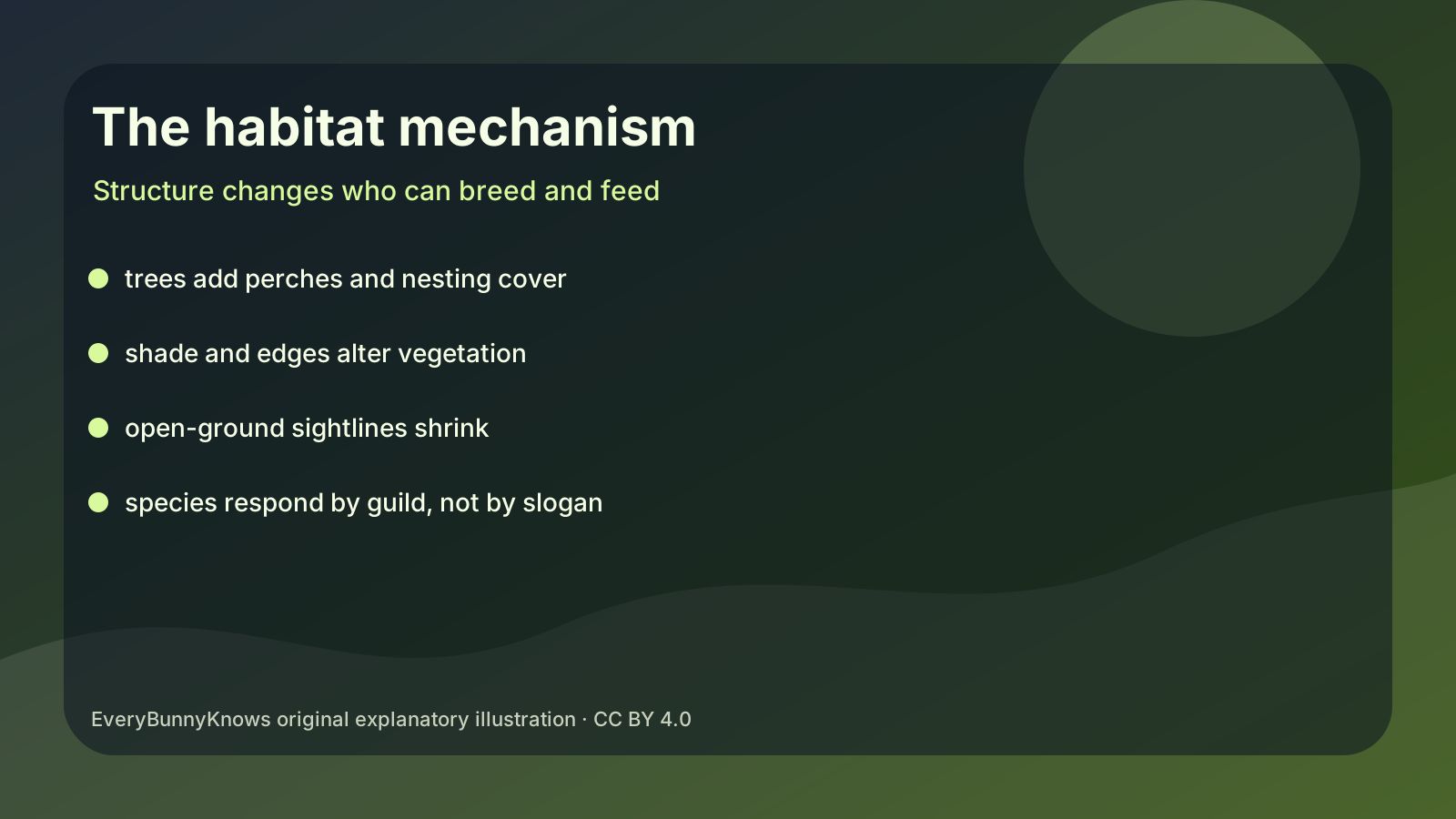
The mechanism is not mysterious. Shelterbelts break wind, protect soil and create strips of woody cover. For species that forage or nest along edges, that new structure can be useful. It offers perches, song posts, insects, nesting cover and movement corridors. But the same trees also break up open views, shade vegetation and create edges that may feel risky to grassland and wetland birds adapted to seeing predators across broad, low landscapes. A tree line can therefore be habitat for one guild and a barrier for another.
That makes the headline deliberately uncomfortable: more trees can mean fewer birds if the birds being counted are specialists of open habitat. The lesson is not that tree planting is bad. It is that biodiversity does not respond to a single green symbol. A shelterbelt built to protect farmland from wind may be excellent for erosion control and useful for generalist birds, while still reducing the quality of nearby breeding or feeding habitat for species that need uninterrupted openness.
The Japanese setting matters because wetland farming landscapes can hold a close mix of rice fields, drainage channels, reedbeds, grass strips and planted tree lines. Small changes in structure can shift bird communities. A conservation plan that counts only the number of trees may miss whether it has preserved enough open sightlines, nesting ground and wet feeding areas for the species that made the landscape valuable in the first place.
There is also a measurement lesson. If monitoring groups birds only as a total number, a rise in adaptable edge species can hide a decline in rarer specialists. Conservation targets need to name the guilds they are trying to protect: reedbed singers, open-field nesters, shorebirds using wet margins, woodland-edge residents or generalist farmland birds. The same map can look successful or damaging depending on which response is treated as the goal.
The study also has limits. It does not prove that every shelterbelt everywhere reduces bird diversity, and it should not be used as an argument against restoration planting in degraded places that need trees. Bird responses depend on region, predator communities, field size, wetland condition, management timing and the species chosen as priorities. The result is a planning warning, not a universal ban.
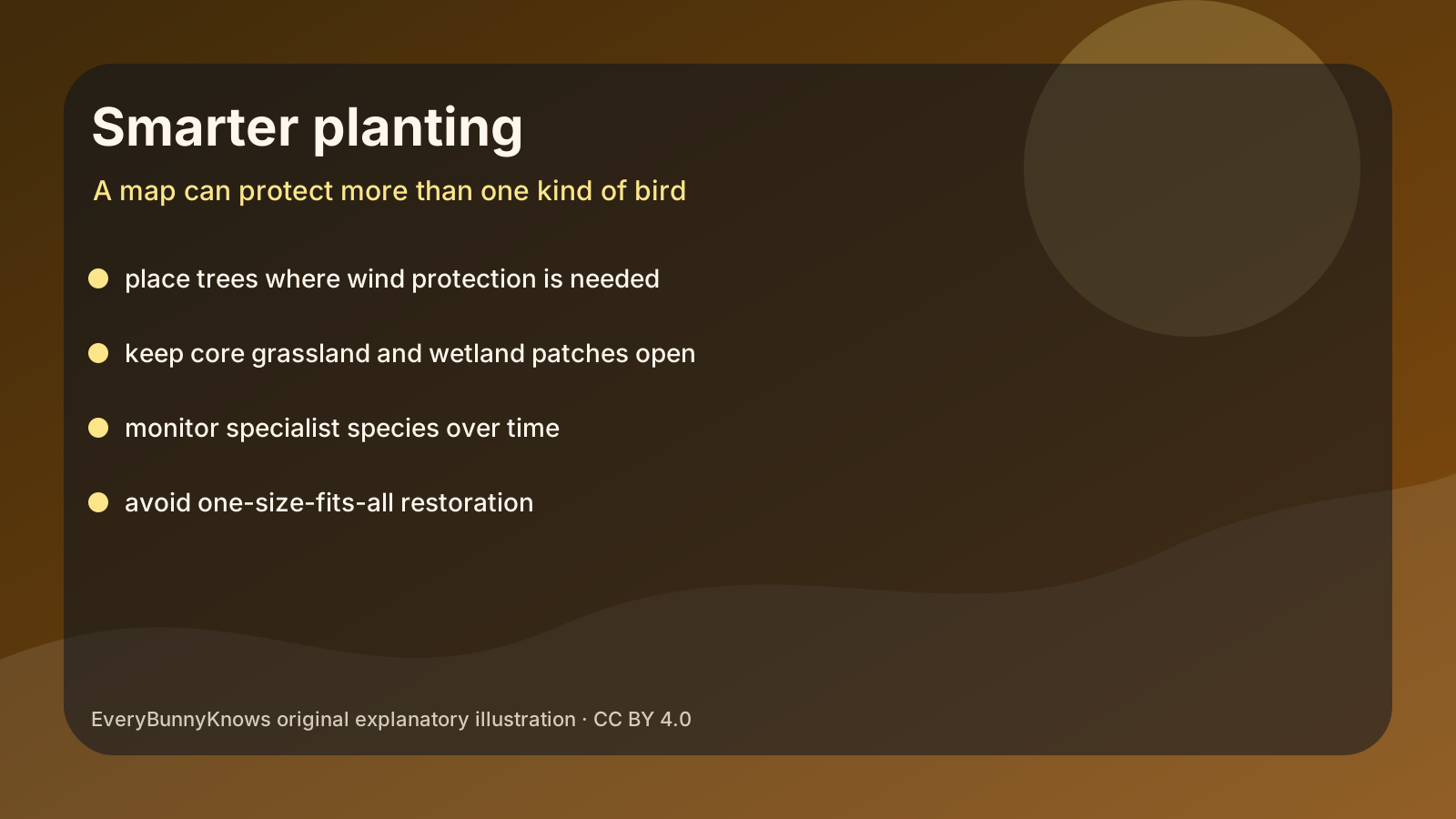
The hopeful conclusion is practical. Better maps can make better plantings. If managers know which birds need woody edges and which need open cores, they can place shelterbelts as tools rather than slogans: protect soil where wind is severe, keep the best wetland and grassland patches open, monitor specialist birds after planting and adjust before the landscape becomes uniformly wooded. Conservation becomes stronger when it stops asking whether trees are good and starts asking where each tree belongs.