Aspendos’ River-God Mosaic Turns a Roman Street Into a Water Story
A third-century mosaic of Young Eurymedon found beside Aspendos’ Theatre Street shows how Roman Anatolian cities made water, fertility and civic identity visible underfoot.
Emma Rybar ·
Aspendos already has one of the ancient Mediterranean’s most memorable theaters, but the new mosaic reported from the site asks readers to look lower and more slowly. Archaeologists working in Antalya Province have uncovered a third-century CE floor image described as “Young Eurymedon,” a personification of the Eurymedon River that flowed near the city. The figure wears reed leaves, holds reeds in one hand and leans on an amphora from which water pours. Fish swim in the stream. It is a compact picture, yet it ties art, landscape and civic identity together.
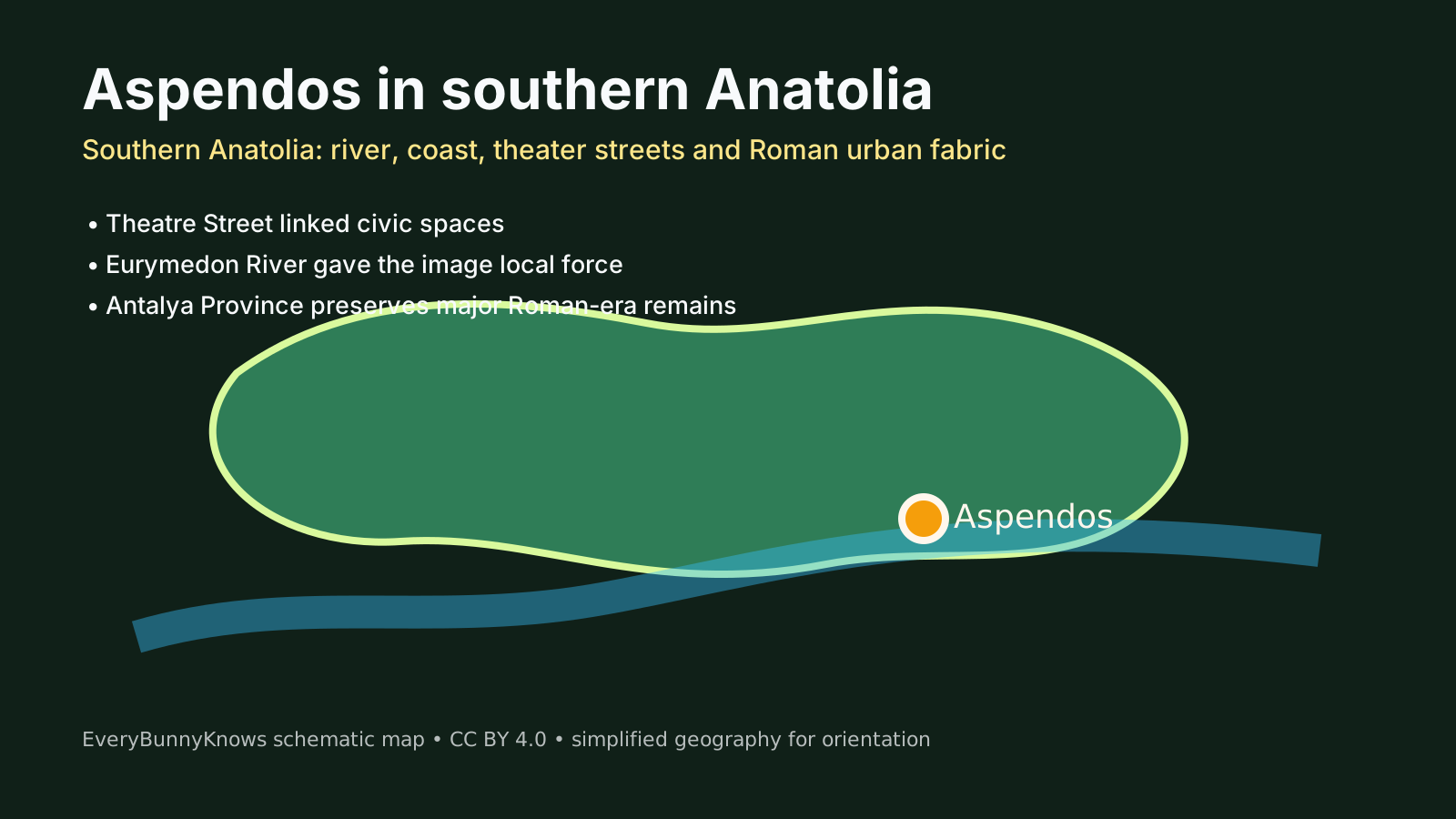
The detail that makes the discovery especially useful is its setting. Archaeology Magazine, citing Türkiye Today, reports that the mosaic was found along Theatre Street, the route connecting the acropolis with the theater. The structure in which it appeared may have been a pool roughly eighty feet long and twenty feet wide. After an earthquake in 262 CE, it seems to have been divided by interior walls. Those observations turn the mosaic from a pretty picture into evidence for how a city changed, repaired and reused space.
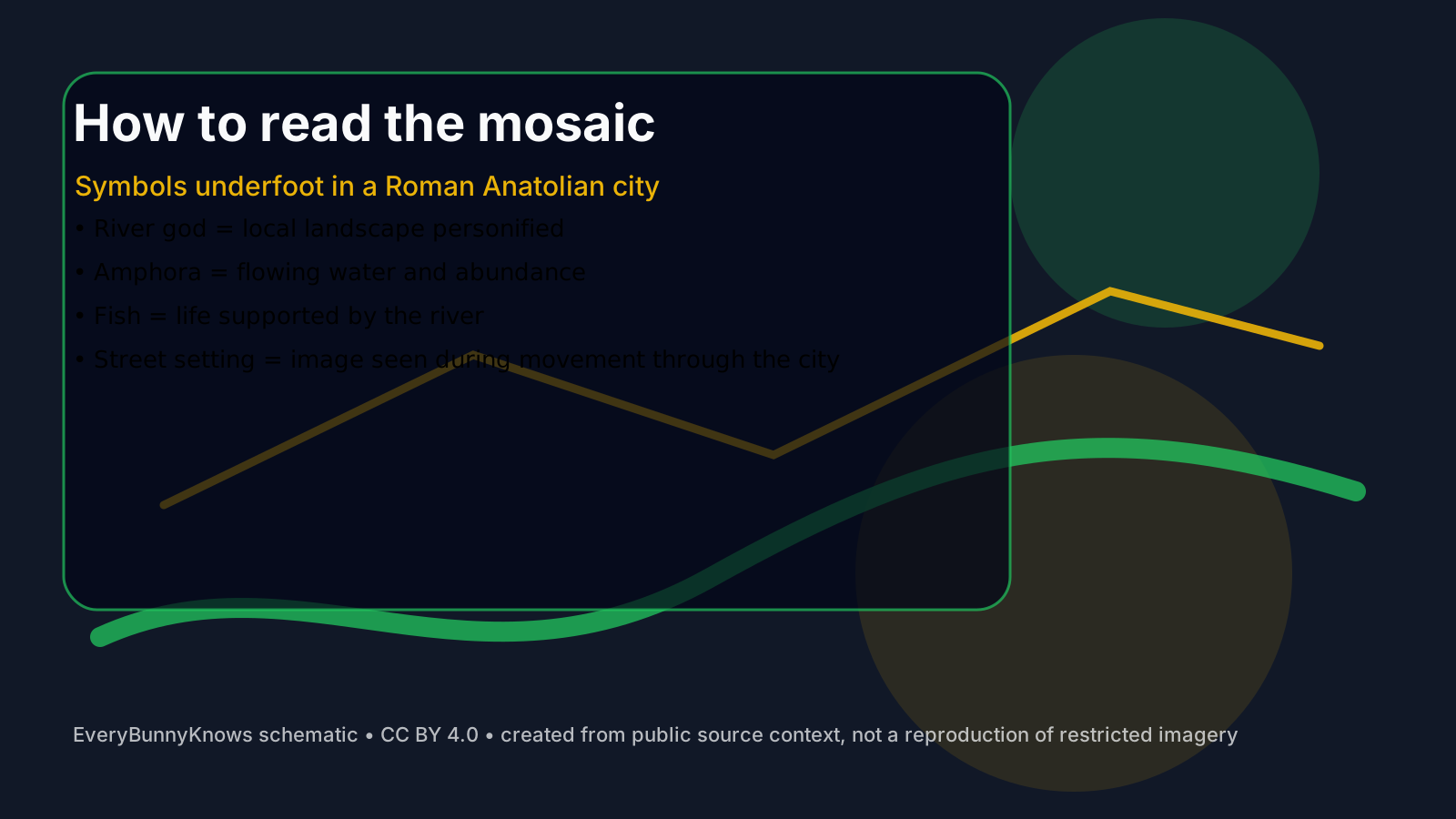
The mechanism is visual water management. Roman and Roman-period Anatolian cities did not treat water only as plumbing. Aqueducts, fountains, baths, pools and mosaics made water visible as abundance, cleanliness, status and divine favor. A river god gave local water a face. The amphora made flowing water legible. Reeds and fish connected the image to a living river rather than to an abstract decoration. Anyone moving through that street would have encountered not only stone paving, but a reminder that the city depended on the river valley around it.
Aspendos is a particularly good place for that lesson. The city, in ancient Pamphylia, prospered through agriculture, trade and its position near routes through southern Anatolia. Its surviving theater is famous because it preserves the scale and acoustic ambition of Roman public architecture. Its water systems and urban streets remind us that performance buildings did not stand alone. They were part of a working settlement where crowds arrived, water moved, repairs were made and images helped people understand the city’s relationship with its landscape.
The mosaic also helps correct a common way of reading archaeology. Spectacular statues and temples often get attention first, while floors can seem secondary. Yet floors are where bodies moved. A floor mosaic could guide mood, advertise taste, mark a threshold or frame a place where water was meant to be heard and seen. Because it was underfoot, it belonged to daily experience as much as to elite display.
There are limits. Public reports so far are short, and the pool interpretation should remain an interpretation until full excavation and conservation records are published. The mosaic does not tell us every ritual or social use of the space. What it does show clearly is that Aspendos’ Roman-era residents made local nature part of urban art. The hopeful part is practical: careful conservation of a floor can restore not just an image of a river god, but a richer map of how an ancient city connected water, movement and memory.