Mountain Lions Showed How a Tiny California Preserve Can Change When Fear Returns
At Stanford’s Jasper Ridge preserve, more visits by Puma concolor coincided with less deer activity, recovering woody plants and shifts among smaller carnivores — a local trophic cascade with careful limits.
Klára Novák ·

A small protected landscape south of San Francisco became a rare test of a big ecological idea. At Stanford’s Jasper Ridge Biological Preserve, known also by the Muwekma Ohlone name ’Ootchamin ’Ooyakma, motion-triggered cameras recorded more visits by mountain lions, Puma concolor, between 2015 and 2020 than in earlier years. Over the same period, researchers reported lower deer activity, recovering woody vegetation and changed use of the preserve by coyotes, bobcats and gray foxes. The result, published in Ecology and Evolution and described by Stanford, is a local example of a trophic cascade: a predator altering a food web partly by changing the behavior of prey.
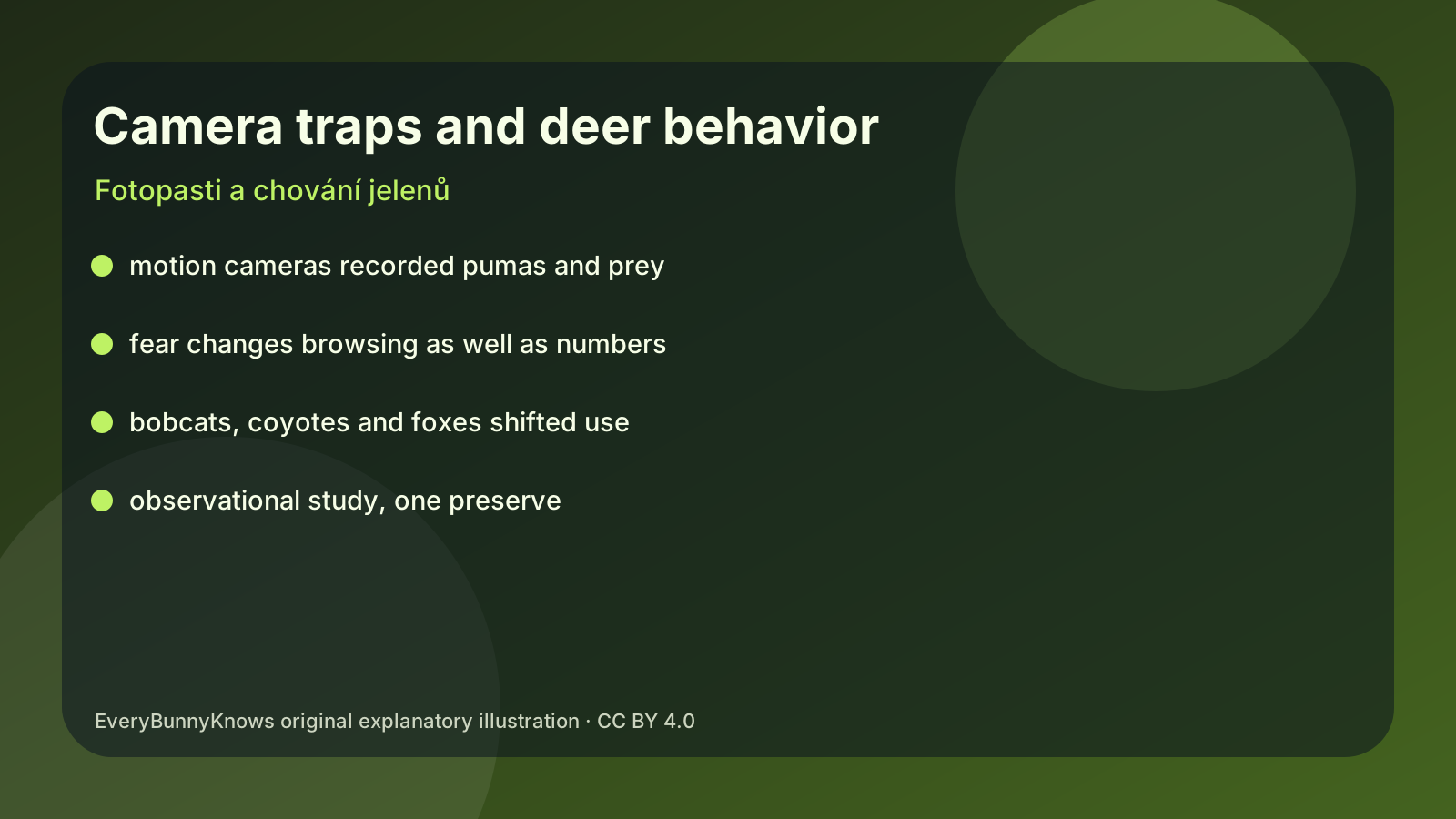
The mechanism is not simply that pumas ate every deer. Large carnivores can create a “landscape of fear.” Mule deer and other deer may spend less time browsing in risky places, move differently, or avoid exposed areas when a predator is present often enough to matter. When browsing pressure drops, seedlings and shrubs that were repeatedly nipped can gain height and leaves. At Jasper Ridge, young oaks and other woody plants eaten or damaged by deer showed signs of recovery, which is why the plant response is central to the story rather than decorative background.
That change can ripple sideways as well as downward. Coyotes, bobcats and foxes are all predators, but they do not use a landscape in the same way when a larger carnivore is around. A puma can kill or displace smaller carnivores, while reduced deer activity can change carcass availability, cover and prey communities. The study therefore reads the preserve as a living network: cameras, vegetation surveys and long-term records together show shifts in behavior and habitat, not a single dramatic event.
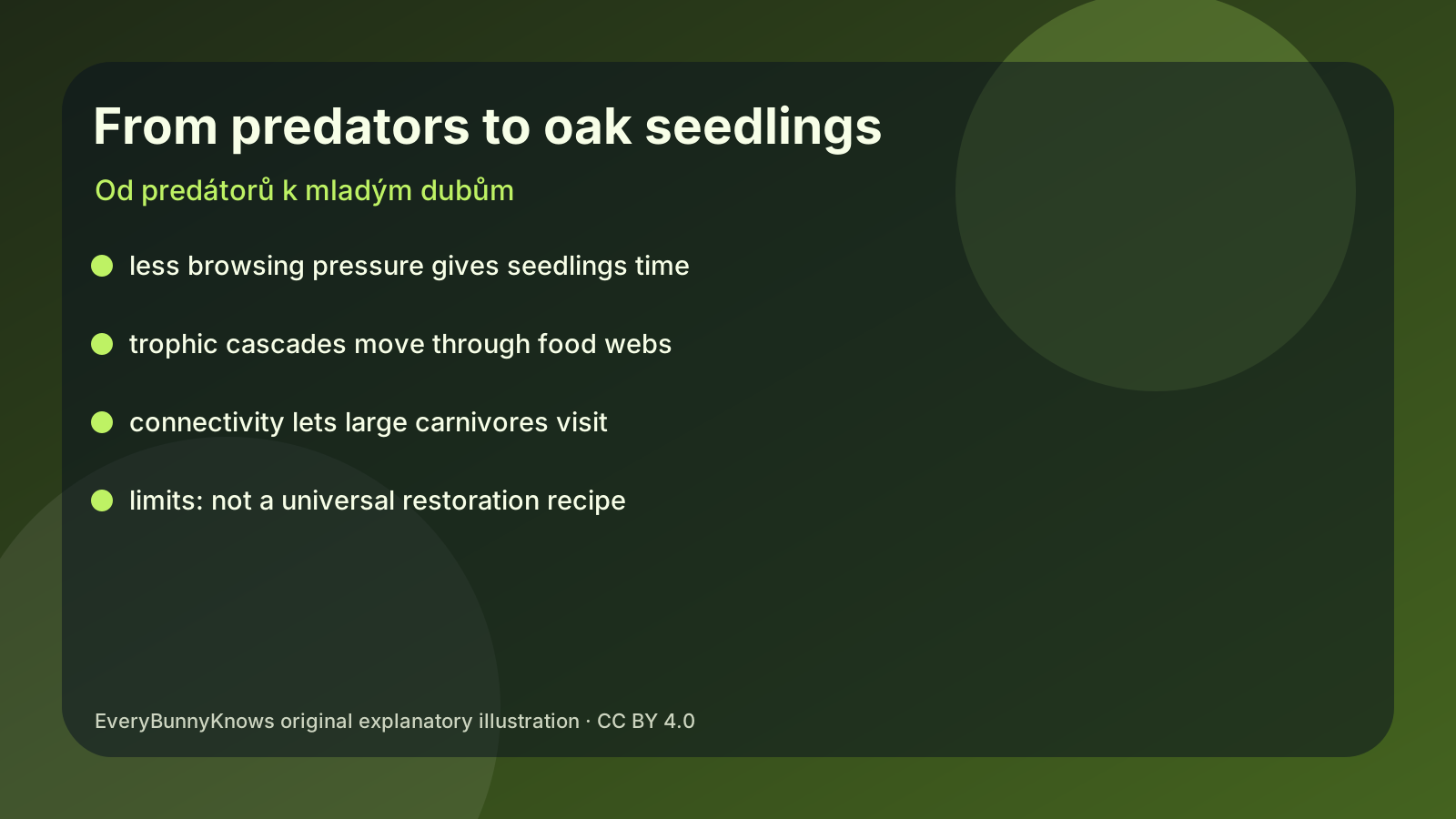
The place matters. Jasper Ridge is not Yellowstone or a remote mountain wilderness. It is a relatively small preserve embedded in the suburban peninsula, about 45 miles south of San Francisco. That makes the finding hopeful in a practical way: if protected areas remain connected enough for wide-ranging carnivores to pass through, even small reserves can host ecological processes that many people assume belong only to large parks.
The limits are just as important. The evidence comes from one preserve over a particular window of time, and it is observational. It cannot prove that every change was caused by pumas alone, because drought, habitat management, disease, human disturbance and changing deer numbers may also matter. It also does not mean every suburban preserve should expect the same cascade, or that living with pumas is simple for nearby communities, pets and livestock.
The careful lesson is about connectivity and patience. Apex predators are not symbols pasted onto a landscape; they are animals whose movements can reorganize risk, browsing and recovery. When people leave room for them to move safely, monitor the effects and manage conflicts honestly, even a tiny preserve can remind us that ecology is not only about how many species are present. It is about who changes whose behavior, and whether the web has enough space to respond.
One further point keeps the story practical: a conservation result is not made by one image or one measurement alone. It needs repeated monitoring, local context, management cooperation and a clear account of what remains uncertain. That combination is what turns an interesting finding into evidence people can use for the next decision and keeps a specific study from becoming a vague nature fable.