How Off-Peak Computing Could Ease AI’s Grid Pressure
Data centers cannot switch off like desk lamps, but some AI training, batch inference and maintenance jobs can be scheduled for hours when the grid has more room. The useful idea is demand flexibility, not a claim that software alone solves power shortages.
Sofia Lane ·
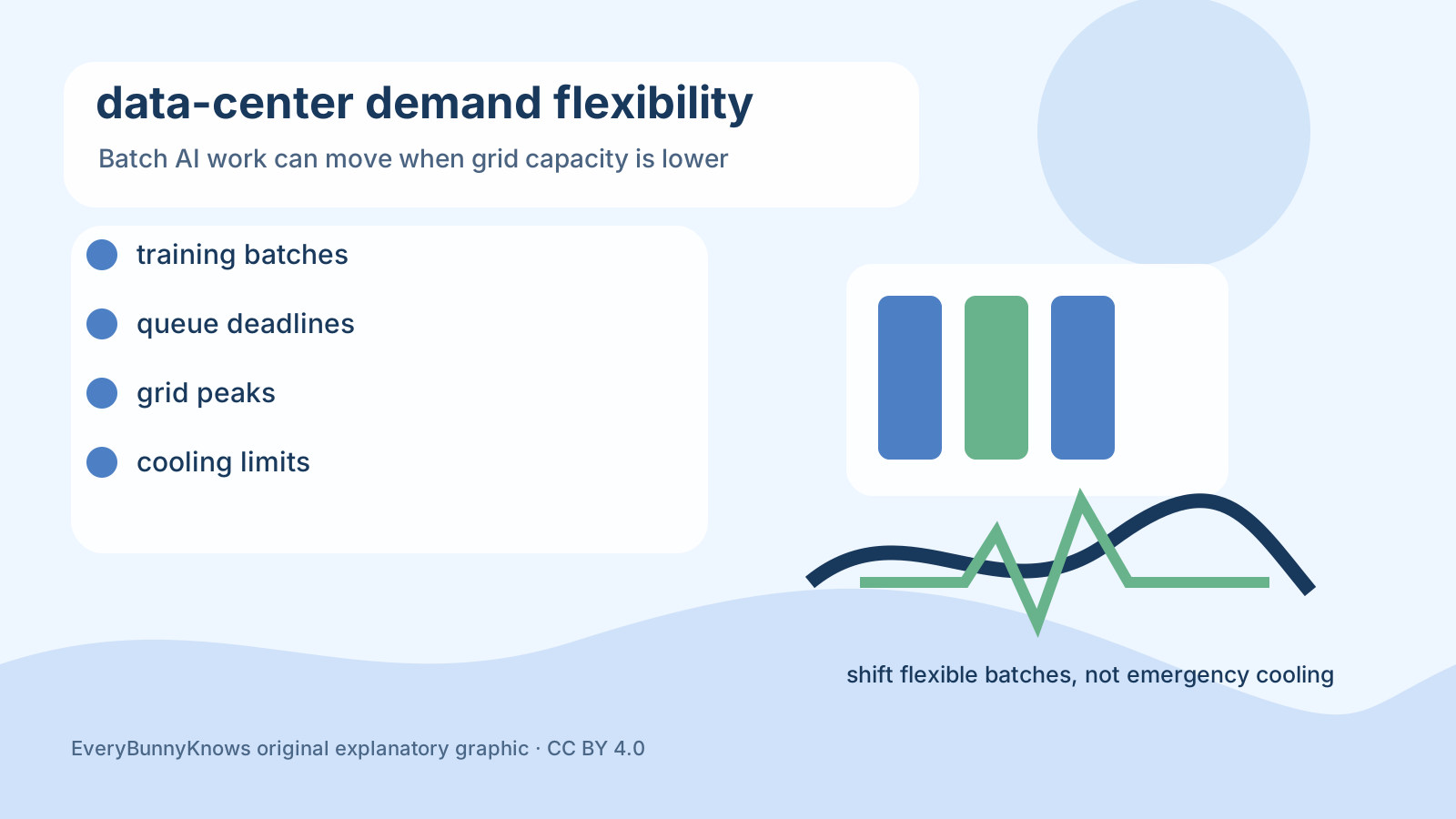
The pressure that AI places on electric grids is not only a question of how many data centers are built. It is also a question of when they ask for power. A June 2026 Tech Xplore report framed the issue as demand flexibility: if some data-center work can be moved away from the busiest hours, utilities may need fewer expensive upgrades for the same amount of useful computing. That is a practical idea, but it only works when the movable work is clearly separated from the work that must happen immediately.
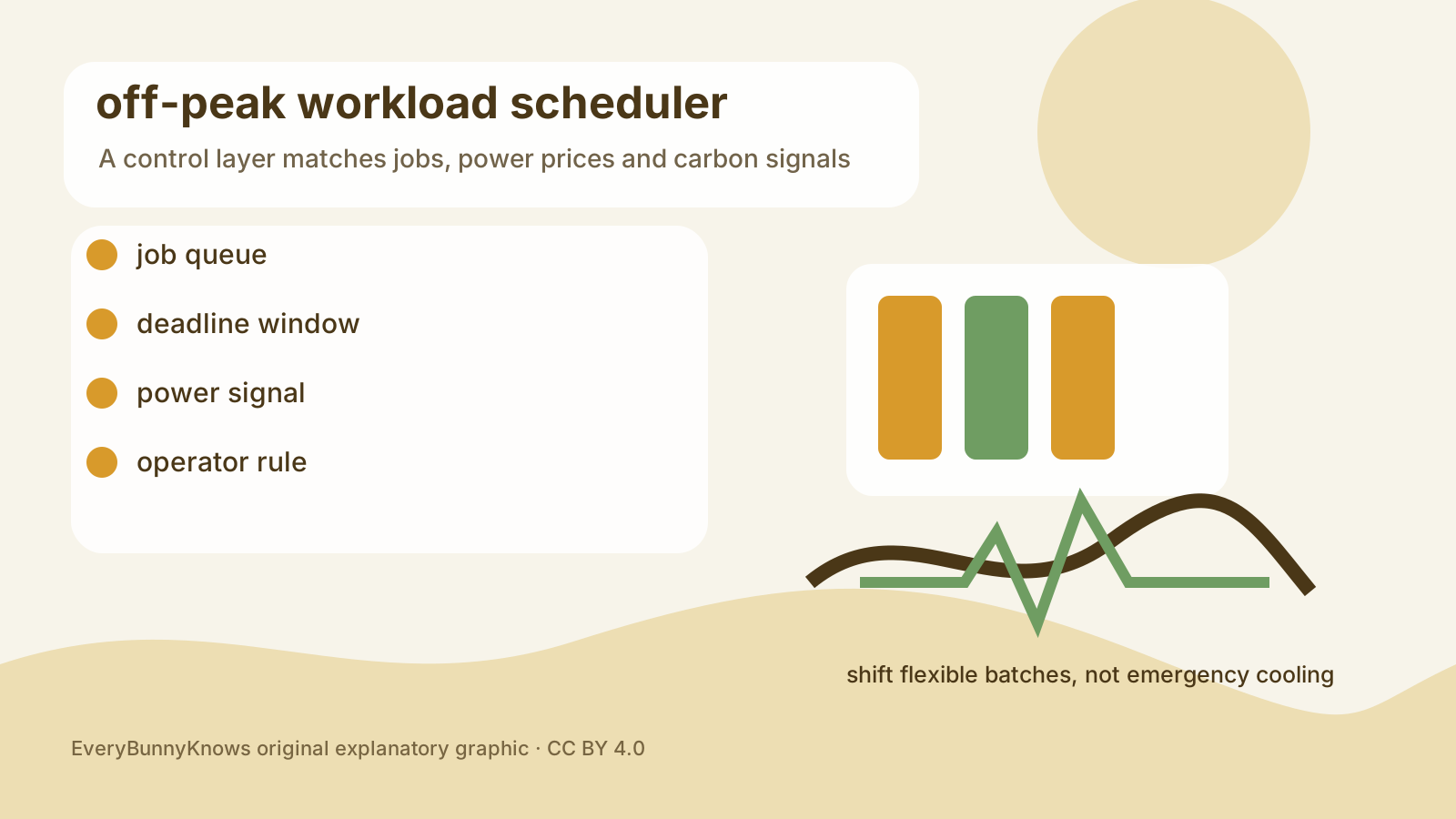
The mechanism is familiar from other grid programs. A data center receives jobs, assigns them to servers, cools the building and buys electricity under contracts that may include time-of-use prices or capacity charges. Some jobs are latency-sensitive: a search request, a medical record lookup or a customer-facing AI assistant cannot wait until midnight. Other jobs have a window. Model training checkpoints, offline analytics, software builds, backup validation and some batch inference can be queued for later if their deadlines are honest and the operator has enough spare capacity.
That means the useful control layer is a scheduler, not a miracle switch. It has to read job priority, thermal limits, electricity prices, carbon-intensity signals and grid requests, then decide which work can run now and which can wait. In a region with solar power, the best hour may be the middle of the day; in another region it may be overnight, after household and commercial demand falls. If several data centers respond to the same signal, the system also needs coordination so that yesterday’s peak is not simply moved into a new synchronized spike.
The maturity is closer to operations research and demand response than to a new kind of computer. Cloud companies already move some workloads across time and geography for cost, reliability and carbon reasons. Utilities already pay factories, cold-storage operators and buildings to reduce or shift load during stressed hours. The newer challenge is scale: AI clusters draw large, dense loads, and their growth can arrive faster than transmission lines, substations or local transformers can be rebuilt.
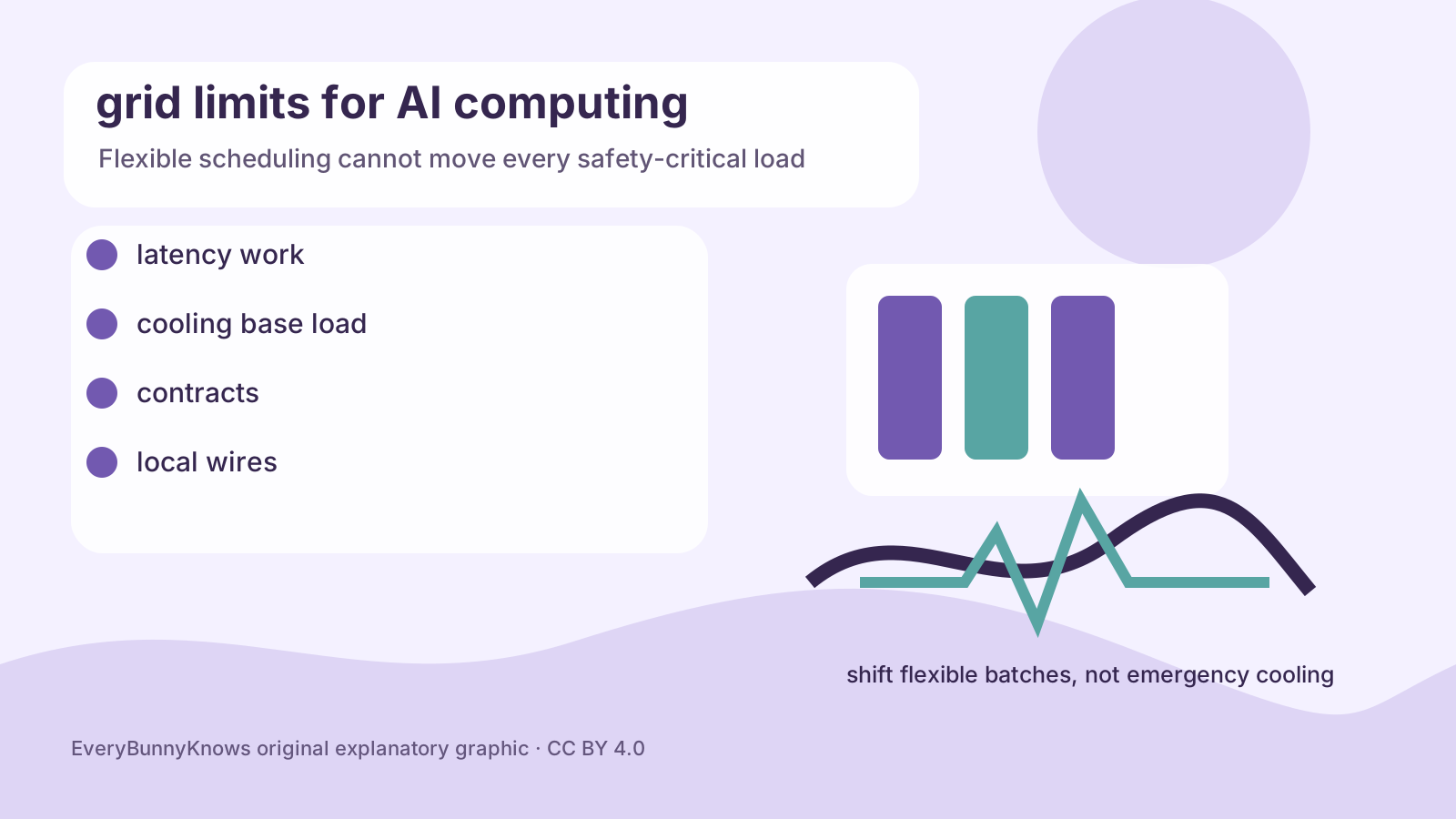
The limits are just as concrete. Cooling, networking, security, storage replication and real-time services create a base load that cannot vanish. Customers may not accept slower completion times. Moving work to a distant region can increase data-transfer costs, privacy complications or water and energy stress somewhere else. Off-peak scheduling also does not replace efficiency improvements in chips, cooling systems, power supplies and buildings. It is one tool among capacity planning, cleaner generation, grid upgrades and stricter siting decisions.
There is also a governance question. A flexibility program should say who can pause work, how customers are notified, what happens during emergencies, and whether savings are shared with the community that hosts the substation and transmission line. Without those rules, the clean technical idea can look like a private workaround for a public grid problem.
The hopeful part is modest but useful. If operators expose more flexible jobs to grid-aware scheduling, a city may get more computing from the wires it already has while buying time for better infrastructure. The next evidence to watch is not a press-release promise; it is measured peak reduction, transparent service-level effects, and agreements that let grid operators request flexibility without compromising safety or reliability.