Native American breast-cancer tissue study shows why precision medicine needs fairer evidence
A Notre Dame-led npj Precision Oncology study profiled 17 breast tumors from Native American women and found molecular differences worth testing in larger cohorts. Its most important message is about evidence gaps, community trust and precision oncology that does not leave small populations behind.
Hana Meridian ·
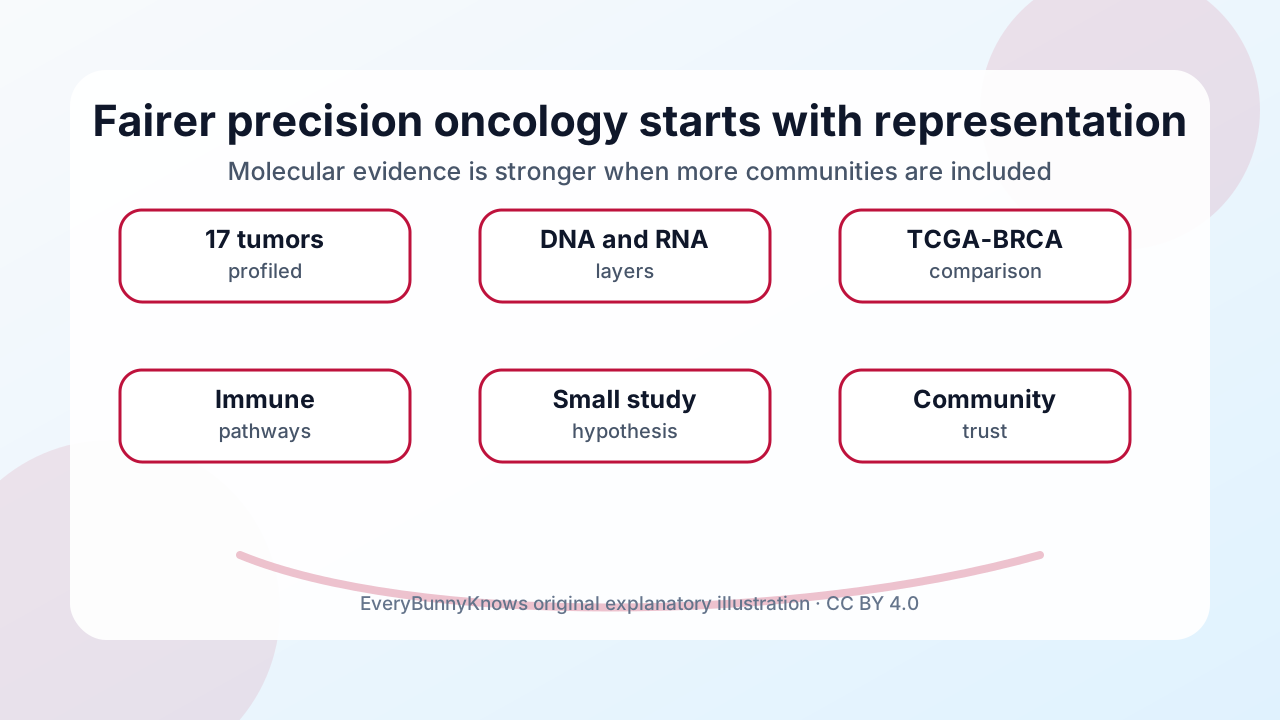
Precision oncology depends on comparison. A tumor sample is read for mutations, copy-number changes, gene expression and pathways, and those signals are compared with reference datasets that help researchers ask what might matter for prognosis or treatment. A study in npj Precision Oncology, led by researchers including University of Notre Dame scientists, asks a difficult equity question: what happens when Native American women are scarcely represented in those reference maps?
The team generated matched somatic-mutation, copy-number and RNA-sequencing profiles for 17 breast tumors from Native American women, then compared the results with White cases from The Cancer Genome Atlas breast invasive carcinoma cohort. The study reported population-associated differences across molecular layers, including higher mutation frequencies in ARID1B, NOTCH4 and MHC class II genes such as HLA-DRB1 and HLA-DRB5 in the Native American tumors, and broader copy-number alterations in the White comparison cohort.
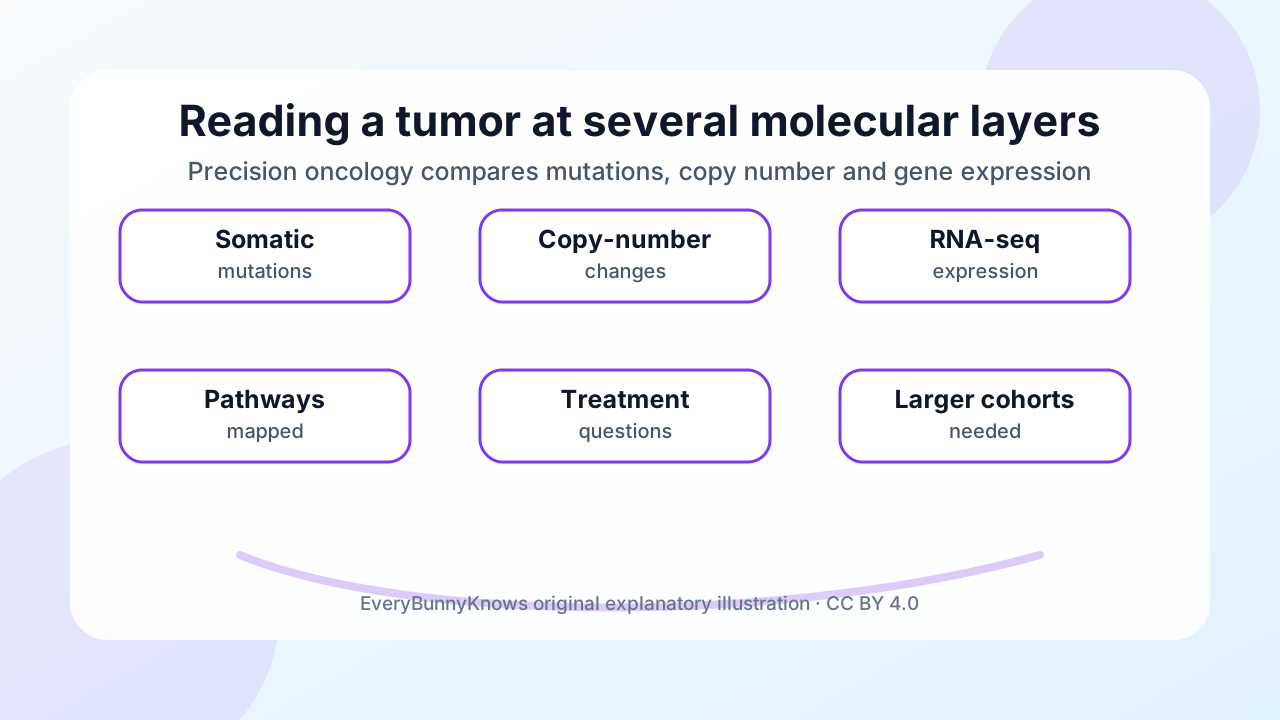
The most reader-friendly way to understand the finding is not as a label attached to identity, but as a reminder that tumor biology is measured through the datasets we build. The authors highlighted immune-related pathways, including antigen processing and presentation, along with differences involving immune visibility and checkpoint modulation. Those signals could become hypotheses for future work on prognosis or treatment response, but they are not treatment instructions and do not tell any individual patient what therapy to choose.
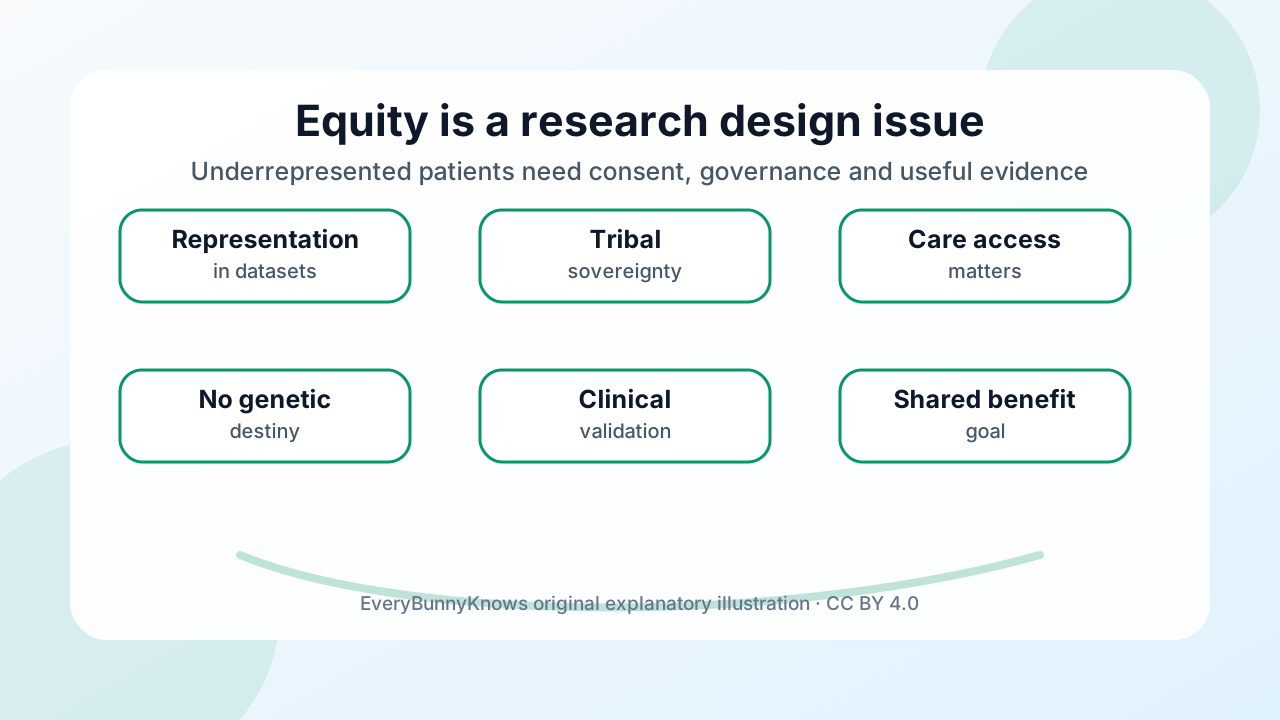
That distinction is especially important in Indigenous health. American Indian and Alaska Native communities have faced underrepresentation in biomedical datasets, uneven access to cancer screening and treatment, and a long history of research done without adequate community control or benefit. Better precision medicine therefore cannot mean simply collecting more samples. It has to mean consent, data governance, tribal sovereignty where relevant, and research questions that return value to the people involved.
The limits are clear. Seventeen tumors can reveal patterns worth following, but they cannot define Native American breast cancer as one biological category. Native American communities are diverse, and ancestry, environment, access to care, tumor stage, coexisting illnesses and social conditions can all shape outcomes. The comparison with TCGA is useful, but larger harmonized cohorts are needed before any clinical conclusions can be drawn.
For clinicians and patients, the near-term value is therefore educational rather than prescriptive. It helps explain why a genomic report should be interpreted within a person’s full clinical picture and why population labels are poor substitutes for individual testing, shared decision-making and access to quality oncology care. Better data can guide better questions, but it does not remove the need for a trusted care team.
The study’s hopeful message is not that molecular profiling has solved a disparity. It is that a gap has been made visible in a way researchers can now address more responsibly. Precision oncology will be more trustworthy when the evidence behind it is broad enough, governed well enough and humble enough to serve communities that earlier cancer datasets often left out.