Why new radiator materials matter for satellites trying to cool themselves in vacuum
In space, satellites cannot dump heat into air; they must radiate it away. New high-emissivity thermal materials could help spacecraft protect electronics, but they still need durability, contamination and flight-qualification tests before deployment.
Hana Meridian ·
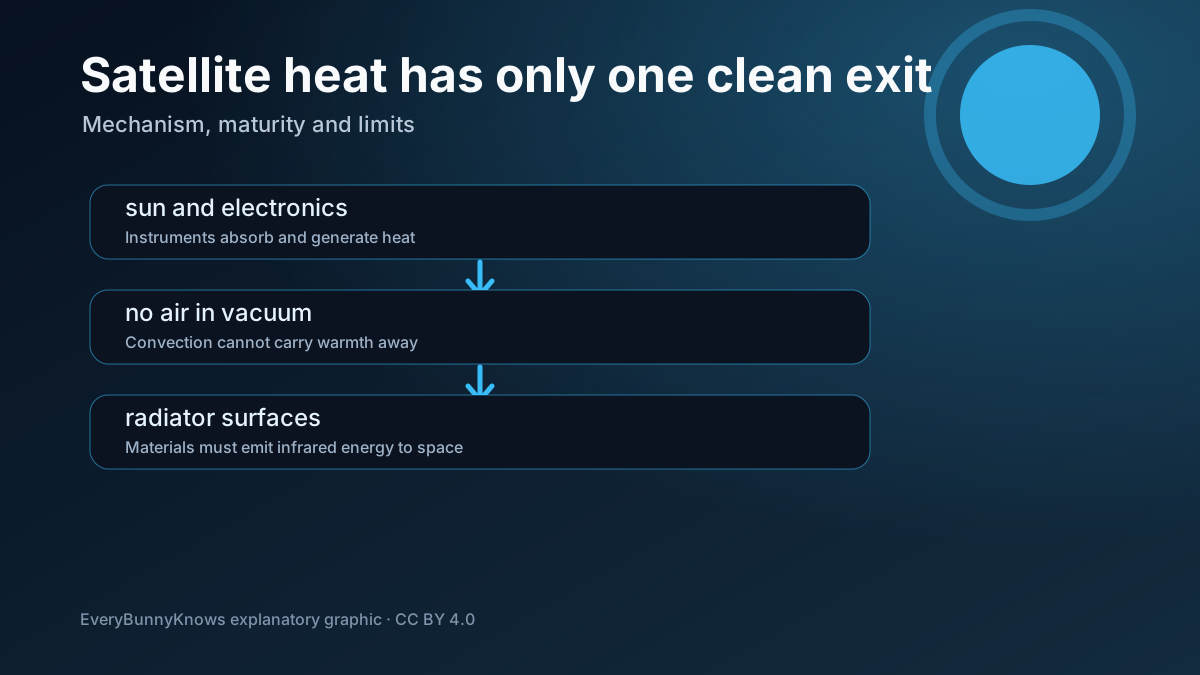
A satellite in orbit has a cooling problem that feels backwards on Earth. There is almost no air around it, so fans and fins cannot hand heat to a breeze. Electronics, batteries, radios, cameras and solar exposure still produce warmth, and that heat has to leave mainly as infrared radiation. That is why reports of new spacecraft thermal materials are not just materials science trivia; they touch mission lifetime, instrument accuracy and the cost of small satellites.
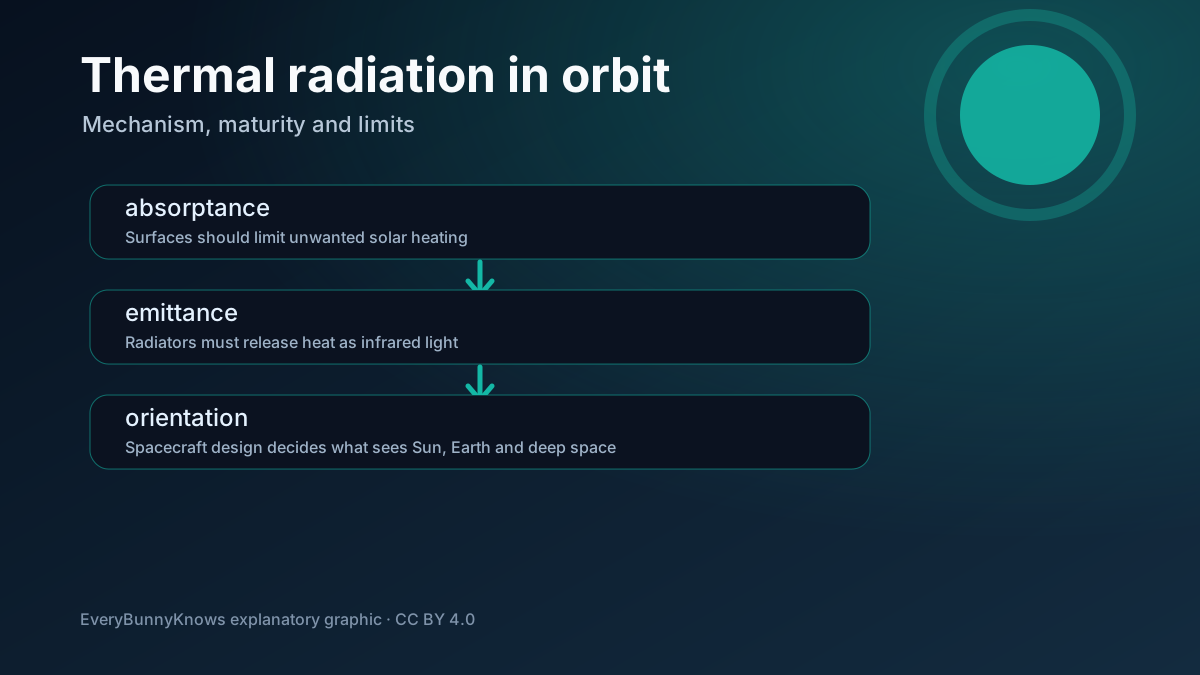
The basic mechanism is thermal radiation. Every warm surface emits electromagnetic energy, and in space a well-designed radiator tries to emit strongly in the infrared while avoiding unnecessary solar heating. Engineers describe this balance with properties such as emissivity, absorptivity and stability after exposure. A material that looks promising on a bench must keep its optical and thermal behavior after ultraviolet light, atomic oxygen in low Earth orbit, charged particles, vibration, thermal cycling and contamination from the spacecraft itself.
New radiator materials usually aim to improve one of three things. Some coatings release heat more efficiently for a given area, which matters because spacecraft surface area is limited. Some materials maintain performance after harsh exposure, which matters for missions designed to last years. Others can be made thinner, lighter or easier to integrate with panels, deployable radiators or compact satellite buses. The article reported by Tech Xplore fits this practical world: the point is not a glamorous engine, but a quieter surface that helps a spacecraft stay within its temperature budget.
Thermal control is also a systems problem. A coating cannot fix a poor spacecraft layout by itself. Mission designers decide which sides see the Sun, Earth, deep space or reflected light; they route heat through conductive straps and panels; they use heaters when instruments become too cold; and they verify the whole design in thermal-vacuum chambers. Better materials give engineers more margin, but they do not remove the need for careful architecture.
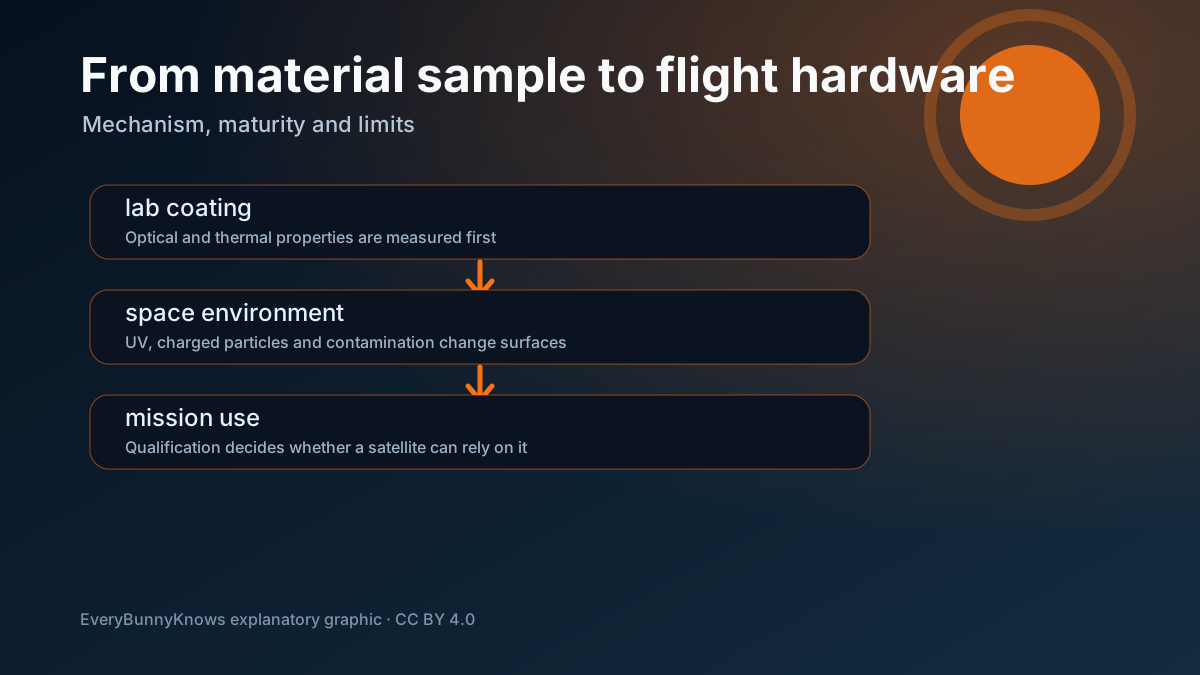
The maturity limit is therefore central. A new material can be convincing in laboratory measurements and still be far from routine flight use. It must be manufactured reproducibly, attached without peeling or outgassing, survive launch vibration, avoid contaminating optics, and prove that its performance remains predictable after repeated heating and cooling. Spacecraft teams are conservative for good reason: once a satellite is deployed, a radiator cannot be cleaned or replaced by a technician.
There is another practical benefit: thermal margin can become design freedom. A spacecraft that spends less area and mass on radiators may be able to allocate more room to payload, shielding or communications. Conversely, a mission that keeps the same radiator area but improves material performance may gain resilience during hot orbital conditions or instrument peaks.
The hopeful part is specific. As satellites become smaller and carry more capable electronics, heat management becomes harder, not easier. If high-emissivity, durable materials can shed heat with less mass or area, future spacecraft may carry better sensors, last longer or use simpler thermal designs. The advance is not a promise that satellites will ignore physics; it is a reminder that in vacuum, a well-made surface can be as important as a powerful chip.