A quantum sensor for counting faint photons is still a careful lab instrument
A superconducting sensor that can register sub-zeptojoule energy changes could help photon counting and dark-matter searches, but it needs cryogenic control and careful background rejection.
Ada Brooks ·
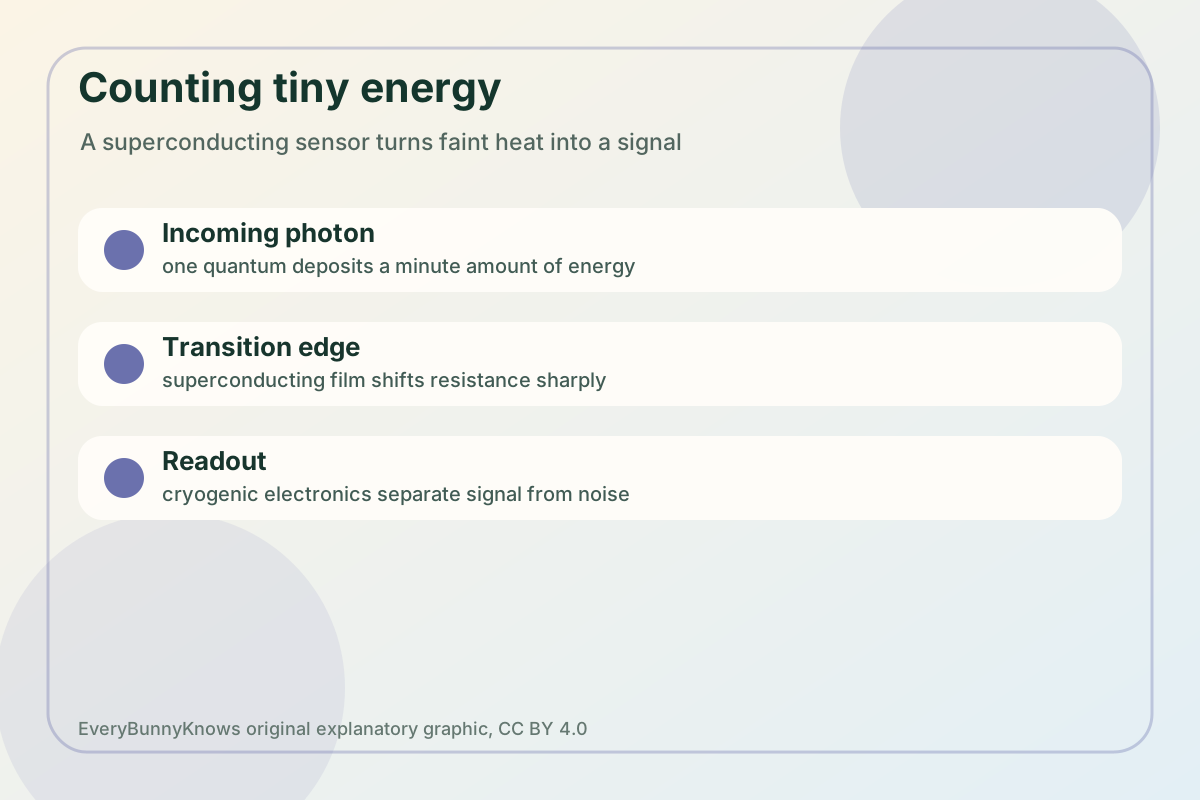
A quantum sensor that can notice less than a zeptojoule of energy sounds impossibly small because it is. A zeptojoule is 10^-21 joule, the scale where a single faint photon or a hypothetical dark-matter interaction may be the whole event. ScienceDaily described a new ultra-sensitive sensor built from fragile superconducting materials that respond to tiny temperature changes. The point is not that dark matter has been found. The point is that some experiments need detectors quiet enough to count energy deposits that ordinary electronics would drown in noise.
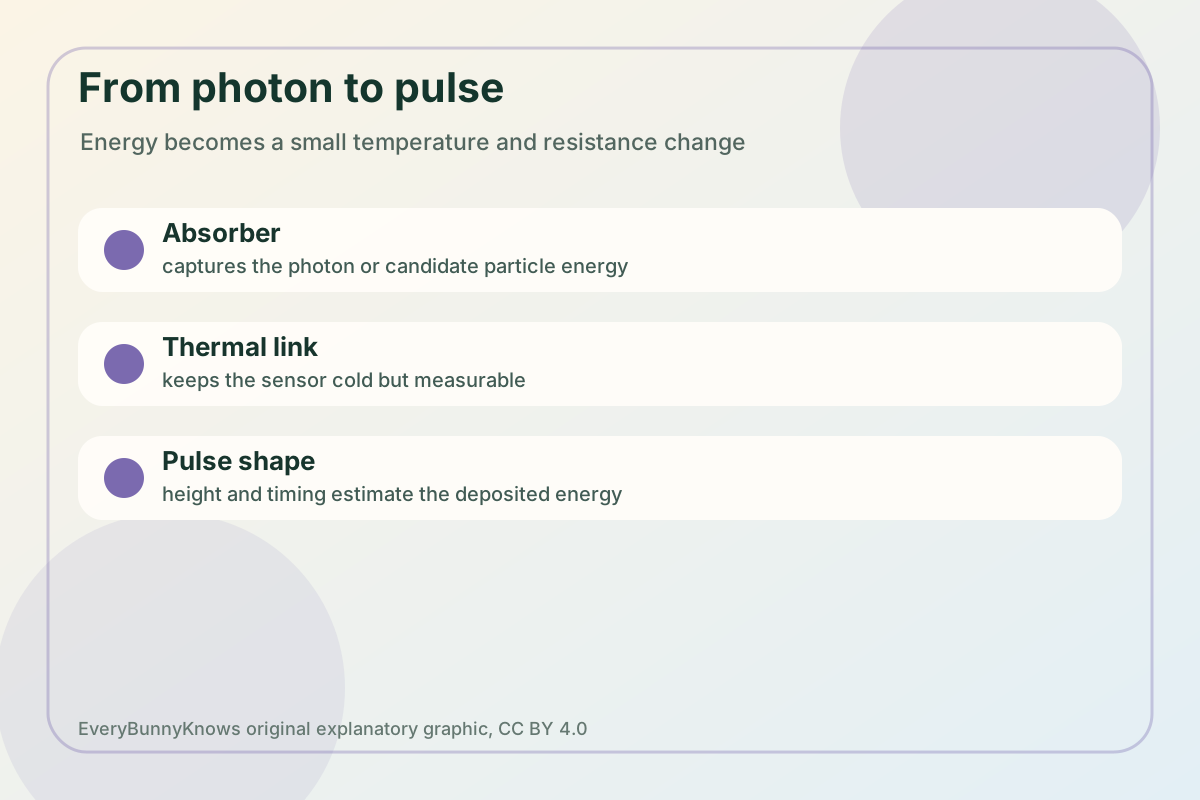
The mechanism resembles a microscopic calorimeter. A photon, or another tiny energy deposit, is absorbed in a cold element. That energy raises the temperature by a minute amount. A superconducting film biased near its transition temperature then changes electrical resistance sharply, turning the thermal nudge into a measurable pulse. Transition-edge sensors and related superconducting detectors already help in astronomy, quantum optics and materials research because they can estimate not only that a photon arrived, but how much energy it carried.
That energy information matters for quantum technology. Quantum communication experiments need to know whether a detector has seen one photon, several photons or a background event. Photonic quantum computers and simulators need reliable single-photon sources and detectors to build useful states of light. A sensor with lower energy threshold and cleaner pulse shapes can improve calibration, error budgets and the confidence that a recorded event is real rather than an electrical artifact.
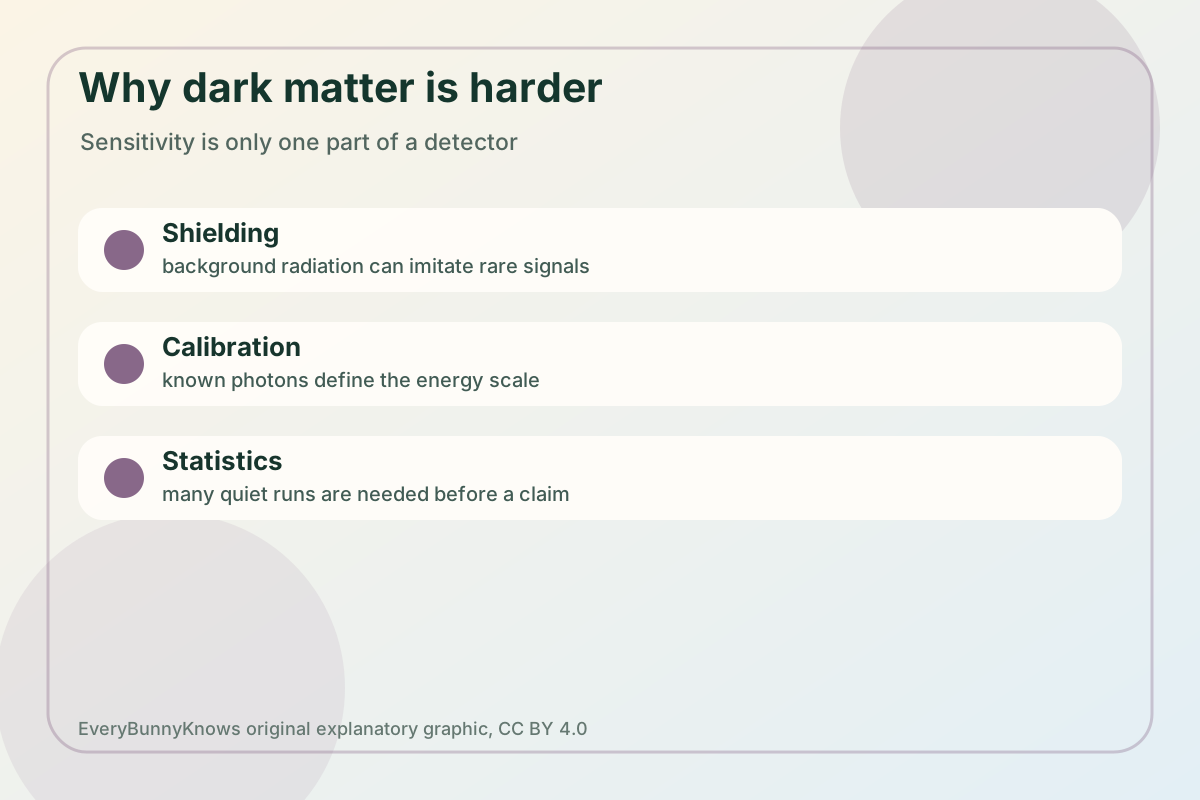
The dark-matter link is more speculative but technically meaningful. Some proposed dark-matter particles, including axions or hidden photons, could deposit tiny amounts of energy in a detector rather than leaving a bright track. To search for them, physicists build instruments that are cold, shielded and exquisitely calibrated, then look for rare signals that match a predicted energy and rate. A better low-energy sensor expands the range of possible searches. It does not by itself identify the particle that makes up dark matter.
Maturity is the important boundary. Superconducting sensors usually require cryogenic temperatures, vibration control, magnetic shielding and careful readout electronics. They can be delicate, slow to scale into large arrays and sensitive to cosmic rays, radioactive contamination, thermal drift and electronic cross-talk. The hardest part of a dark-matter claim is not making one tiny pulse; it is proving, across many runs and controls, that the pulse cannot be explained by known backgrounds.
The immediate applications may be less dramatic than dark matter. A more precise photon counter can help laboratories test quantum light sources, characterize faint infrared signals and compare detector designs. Those calibration jobs are valuable because they create trusted instruments for later, riskier claims. In precision physics, the tool often has to become boring before the discovery can become believable.
The hopeful part is therefore disciplined. The sensor gives researchers a sharper ear for faint quanta in a noisy universe. It may improve photon counting for quantum information and widen the search space for dark-matter experiments. But its value will be measured by calibration curves, false-event rates, reproducibility and integration into larger instruments. In this field, careful listening is progress only when the laboratory can also say what it has ruled out.