How a smart window could tint itself and store a little solar energy
Electrochromic solar-window materials aim to combine shade control, light harvesting and charge storage in one pane. The hard part is durability, scale and honest expectations.
Simon Glass ·
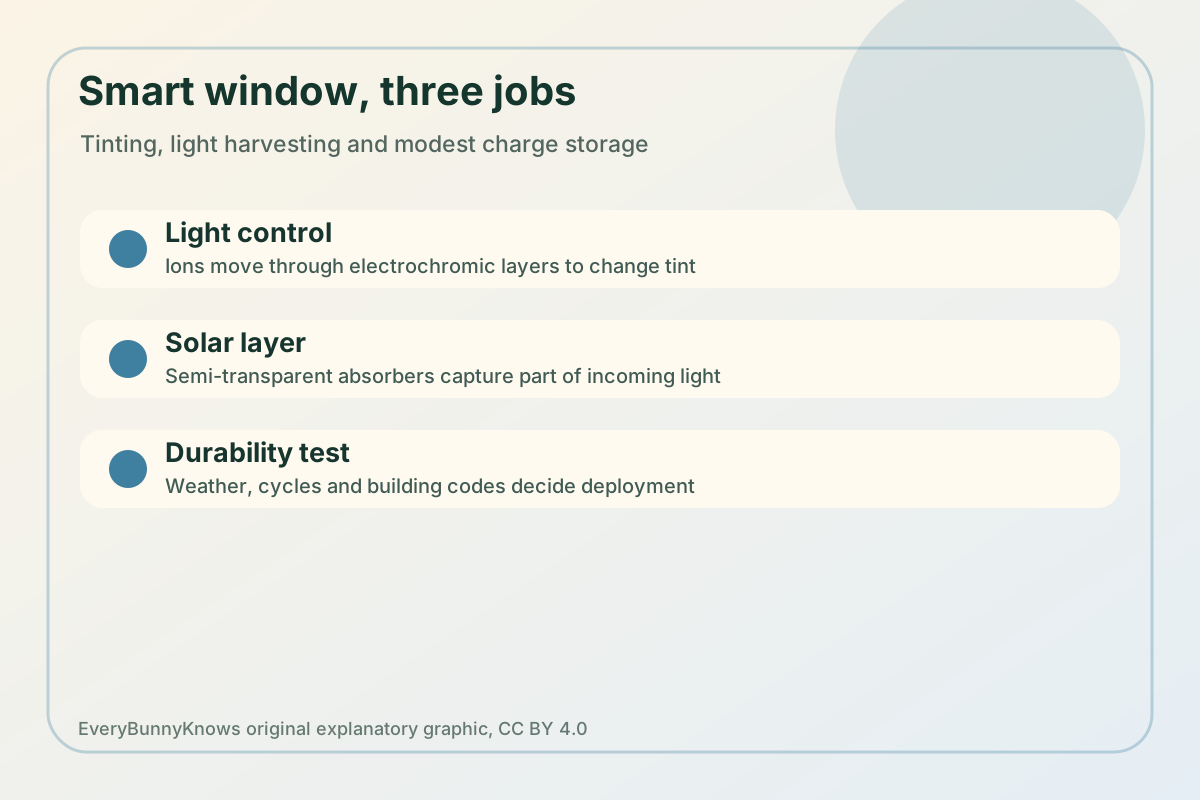
A window that can darken on command and store some solar energy sounds like a building gadget, but the mechanism is a serious materials problem. Researchers working on electrochromic solar windows are trying to make one pane do several jobs at once: admit daylight, reduce glare and heat when the sun is strong, harvest a share of that light, and hold a small amount of charge for later use. The point is not to turn a skyscraper façade into a giant battery. It is to make glass, one of the weakest parts of the building envelope, behave more intelligently.
The tinting part is the best-established idea. Electrochromic glass changes colour when ions and electrons move through a thin material after a small voltage is applied. In one state the coating is clearer; in another it absorbs more visible or infrared light. Commercial smart windows already use related principles to reduce cooling loads and improve comfort, although cost, switching speed and installation complexity still matter. The newer research direction adds light-harvesting and charge-storage layers so that sunlight does not merely trigger tinting but contributes some usable electrical energy.
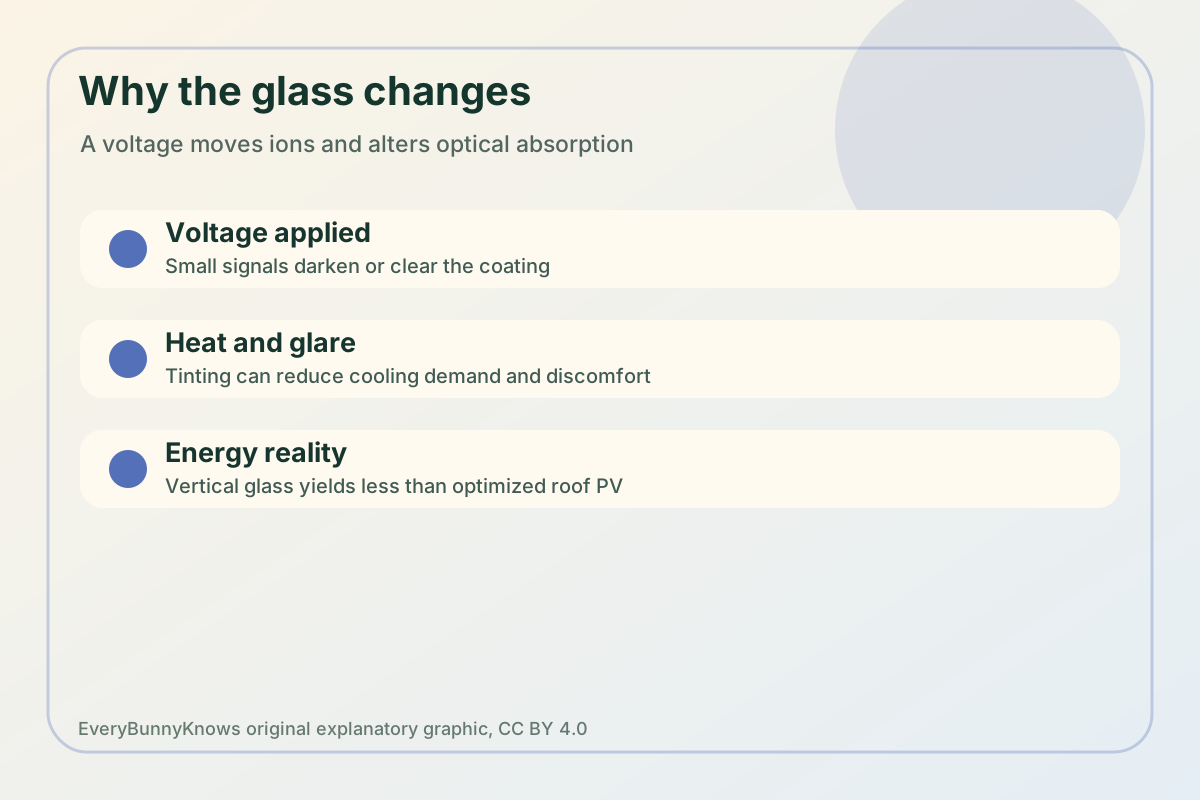
That combination is technically hard because the requirements pull against one another. A photovoltaic layer wants to absorb light, while a window must remain transparent enough to be useful. A storage layer wants capacity and stability, while a pane must stay thin, safe and visually acceptable. Electrochromic materials need repeated ion motion without cracking, bleaching unevenly or losing contrast. If the device is sealed inside architectural glass, repair is not as simple as replacing a phone battery.
For readers, the useful comparison is with mature technologies rather than science fiction. Conventional roof solar panels are better positioned, better ventilated and usually more efficient than vertical glass. Ordinary low-emissivity coatings, external shading and good insulation already save energy without producing electricity. A smart solar window would have to justify itself by combining comfort, daylight control, peak cooling reduction and local low-power storage in places where glass is abundant and roof area is limited.
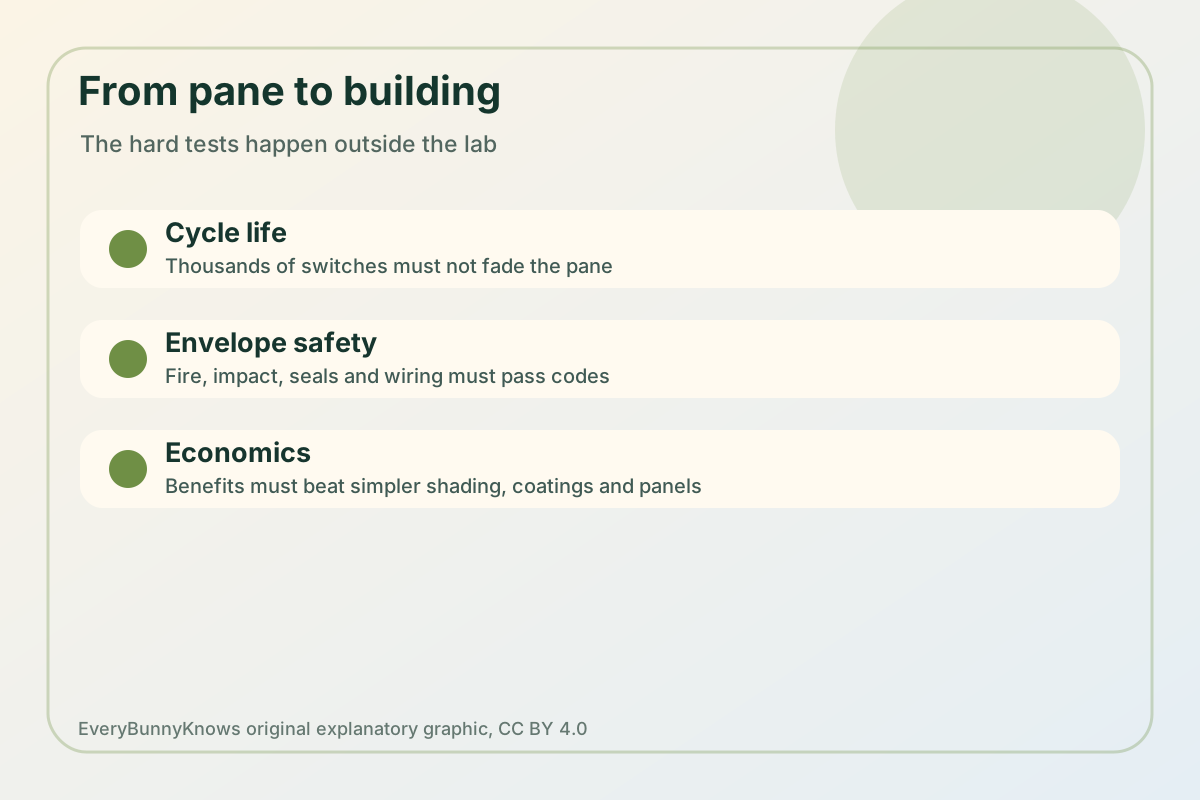
The maturity level is therefore cautious. Laboratory cells and prototype panes can show promising colour change, charge retention or transparency, but buildings punish materials for decades with ultraviolet light, humidity, thermal expansion, cleaning chemicals, seal failure and electrical cycling. Developers also have to satisfy fire rules, impact standards, wiring practice, privacy expectations and end-of-life recycling. A device that works for weeks in a lab is not yet a bankable façade product. The economic test is just as important: the new pane has to beat simpler shading, better glazing, rooftop solar, batteries and ordinary controls that already have supply chains and installers.
The hopeful part is practical. If the materials become durable and affordable, smart windows could trim glare and cooling demand while supplying small amounts of power for sensors, controls or local electronics. That is a quieter promise than “windows replacing power plants,” and it is stronger because it matches the physics. The best version of the idea treats glass not as a miracle generator, but as a controllable surface that helps a building waste less sunlight, heat and attention.