Not all green space is equal: why biodiversity changes the health value of nature prescriptions
A new nature-prescribing framework argues that parks, trees and blue spaces should be judged not only by access, but also by ecological quality, biodiversity and safety limits.
Tereza Field ·
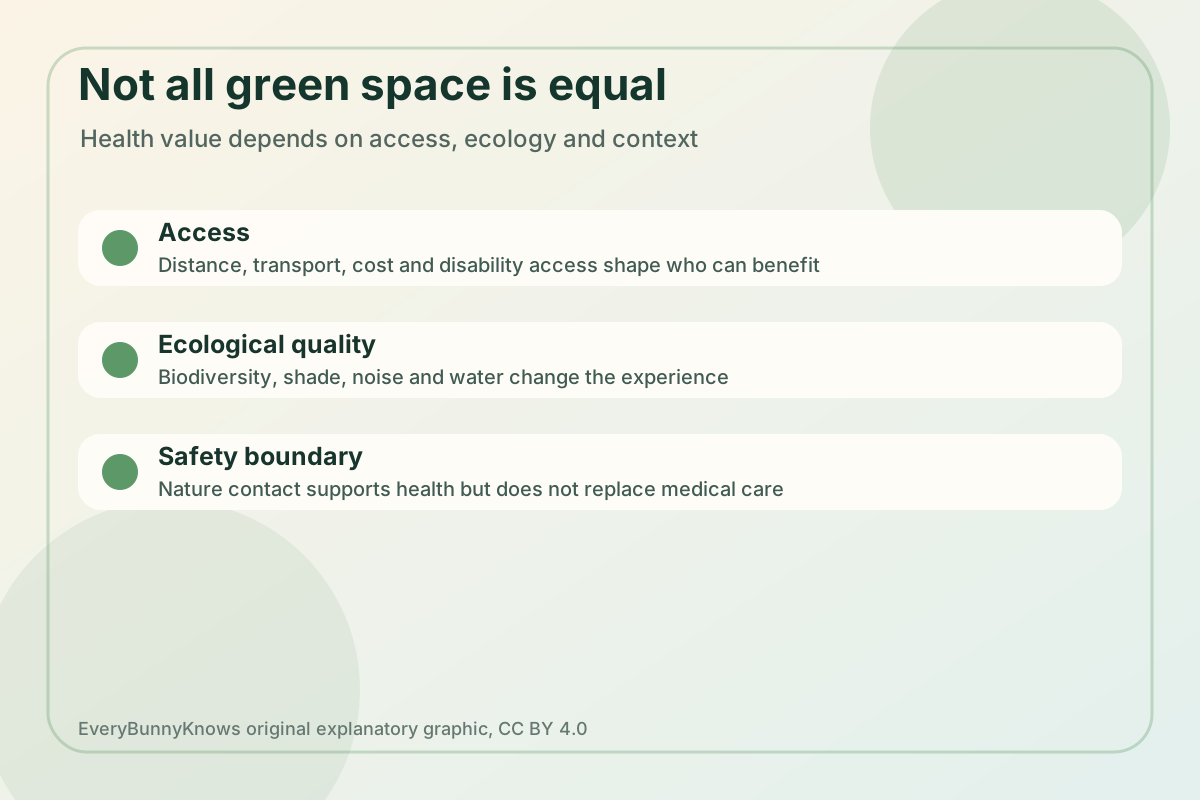
A new framework for nature prescribing begins with a simple correction: green space is not one medicine in one dose. A clipped lawn beside traffic, a shaded woodland path, a biodiverse wetland edge and a small community garden may all be “green,” yet they offer different sounds, smells, temperatures, social cues, microbial exposures, wildlife encounters and feelings of safety. The Swansea University-led work reported in 2026 builds on a growing public-health conversation about using parks, blue spaces and nature contact to support wellbeing, but asks clinicians and planners to look more closely at ecological quality.
That matters because nature prescribing is often described as if the key variable were only access: can a patient get to a park, and how often? Access is essential, especially for disabled people, low-income neighbourhoods and communities with little tree cover. But access alone misses the mechanism. Biodiversity, shade, air quality, noise, water, seasonality, seating, path condition and social welcome all shape whether time outdoors becomes restorative or stressful. Studies such as the 2018 Frontiers in Psychology paper on urban biodiversity and restorative benefits suggest that richer living environments can be associated with stronger psychological restoration than species-poor spaces.
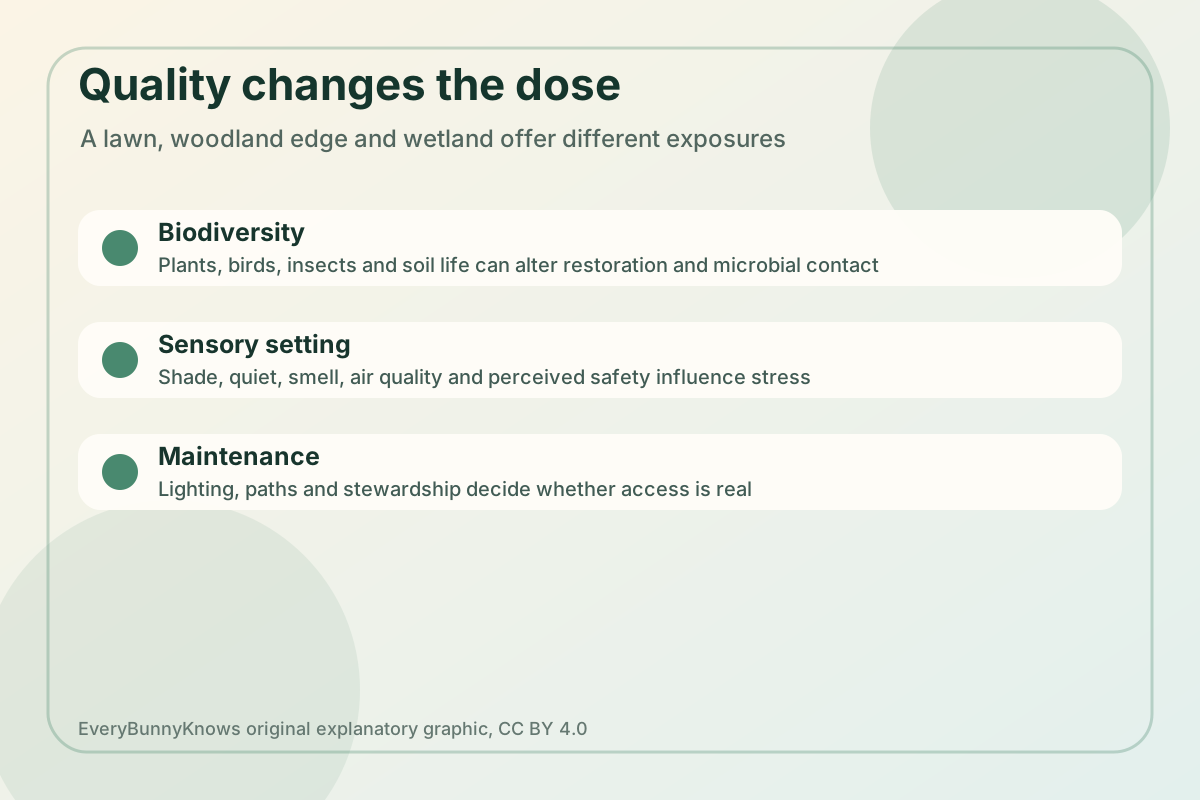
The proposed shift is useful because it connects medicine to ecology without turning nature into a miracle treatment. A clinician might suggest time outdoors to support mood, movement, social connection or recovery routines, but the effect depends on the place. A person with anxiety may respond differently to a quiet garden than to an isolated trail. Someone with asthma may need to avoid high-pollen periods or polluted roads. Older adults may need benches, toilets and even surfaces. Parents may need safe crossings and shade. The “dose” is therefore not only minutes per week; it is the whole living and social setting.
For cities, the framework changes what counts as a health investment. Planting trees is valuable, but so is protecting old canopy, restoring native plants, reducing pesticide overuse, improving soil, connecting habitats, cleaning streams and maintaining paths. A small pocket park can be meaningful when it is safe, cared for and close to home. A large park can fail if it is inaccessible, poorly lit or ecologically simplified. Public health and urban planning meet at exactly that point: the quality of ordinary places.
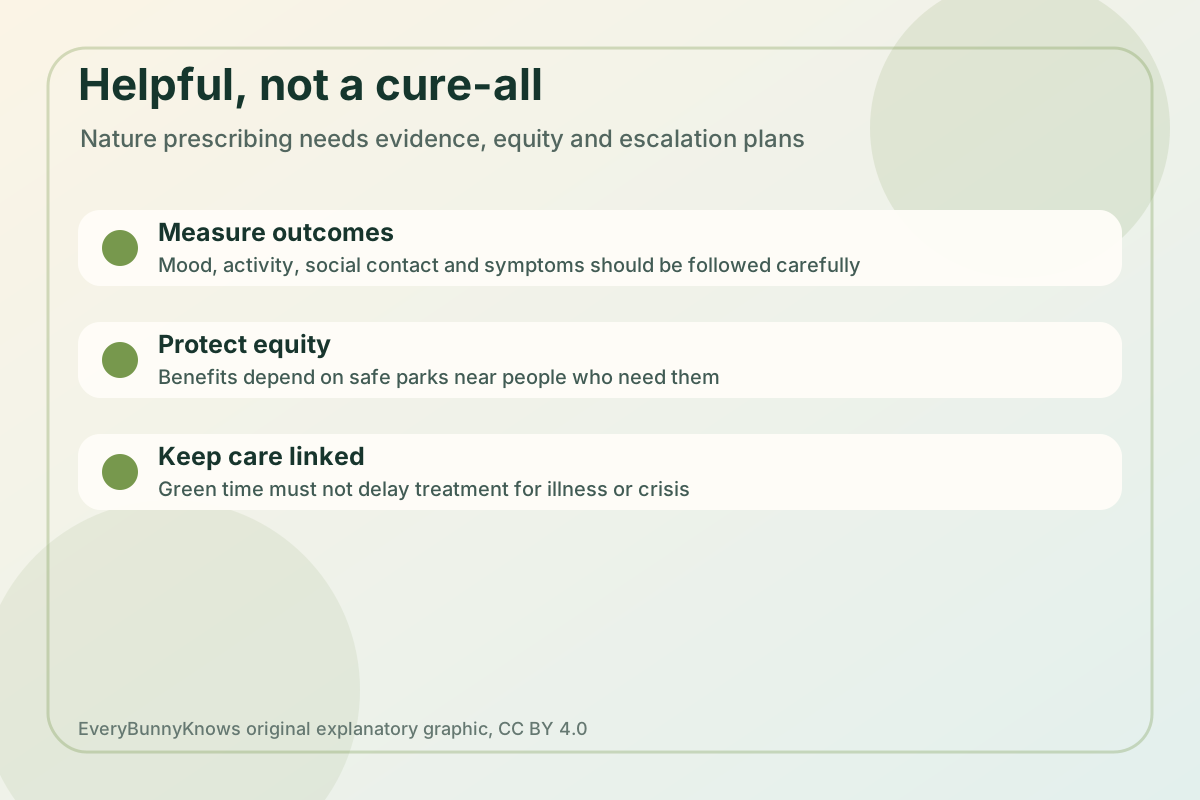
The medical boundary is important. Green prescriptions should not be presented as treatment for depression, heart disease, chronic pain or any other condition by themselves. They are supportive interventions that may help some people move, rest, connect or reduce stress, while others need medication, therapy, urgent assessment, social support or environmental protection first. Evidence also varies by outcome and study design; many studies are observational, local or difficult to blind. A careful programme therefore measures outcomes, asks who is left out, and keeps routes back to clinical care open.
The hopeful idea is practical rather than romantic. If health systems are going to recommend nature, they should help communities build nature worth recommending: biodiverse, shaded, welcoming, safe and reachable. The most generous version of nature prescribing is not a leaflet telling people to “go outside.” It is a collaboration among clinicians, ecologists, councils and residents to make everyday environments healthier without pretending that a park can replace a doctor.