Nusa Penida and Nusa Lembongan: Limestone Cliffs, Blue Water and Seaweed Villages
The islands southeast of Bali are not just viewpoints: Nusa Penida’s limestone cliffs, manta-rich currents and Nusa Lembongan’s seaweed farms reveal a small seascape where beauty depends on timing, tides and local work.
Simon Glass ·
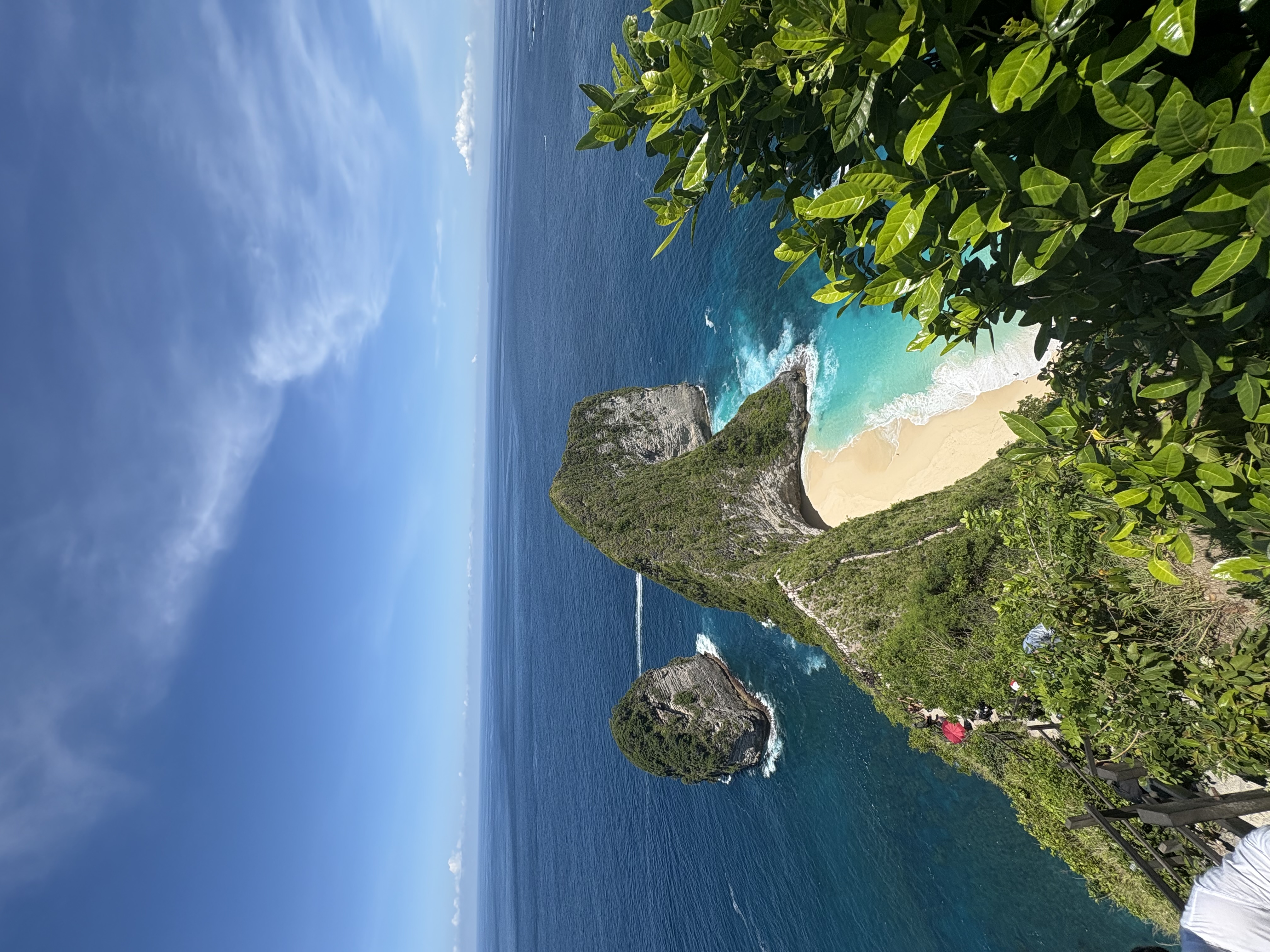
Nusa Penida and Nusa Lembongan sit just southeast of Bali, close enough for day trips and different enough to punish haste. Penida is larger, drier and more dramatic, with limestone cliffs dropping into bright water. Lembongan is lower and more intimate, known for beaches, boat channels and the seaweed farming that long shaped much of the island’s working shoreline.
The mechanism of these islands is the meeting of rock and current. Limestone edges create the famous viewpoints, but the water below is not a swimming pool. Channels between Bali, Penida, Ceningan and Lembongan can run fast, and dive or snorkel trips depend on tides, wind, swell and local judgment. That is also why manta encounters around Penida must be treated as wildlife experiences, not guaranteed performances.
Penida’s cliff sites, including Kelingking, Broken Beach and the viewpoints above Crystal Bay, are powerful because they expose scale: rough rock, steep steps, narrow roads and coves that look close from above but take time and care to reach. A good itinerary leaves space for that friction. It avoids packing every famous viewpoint into one rushed circuit and listens when local operators warn about sea conditions or unsafe paths.
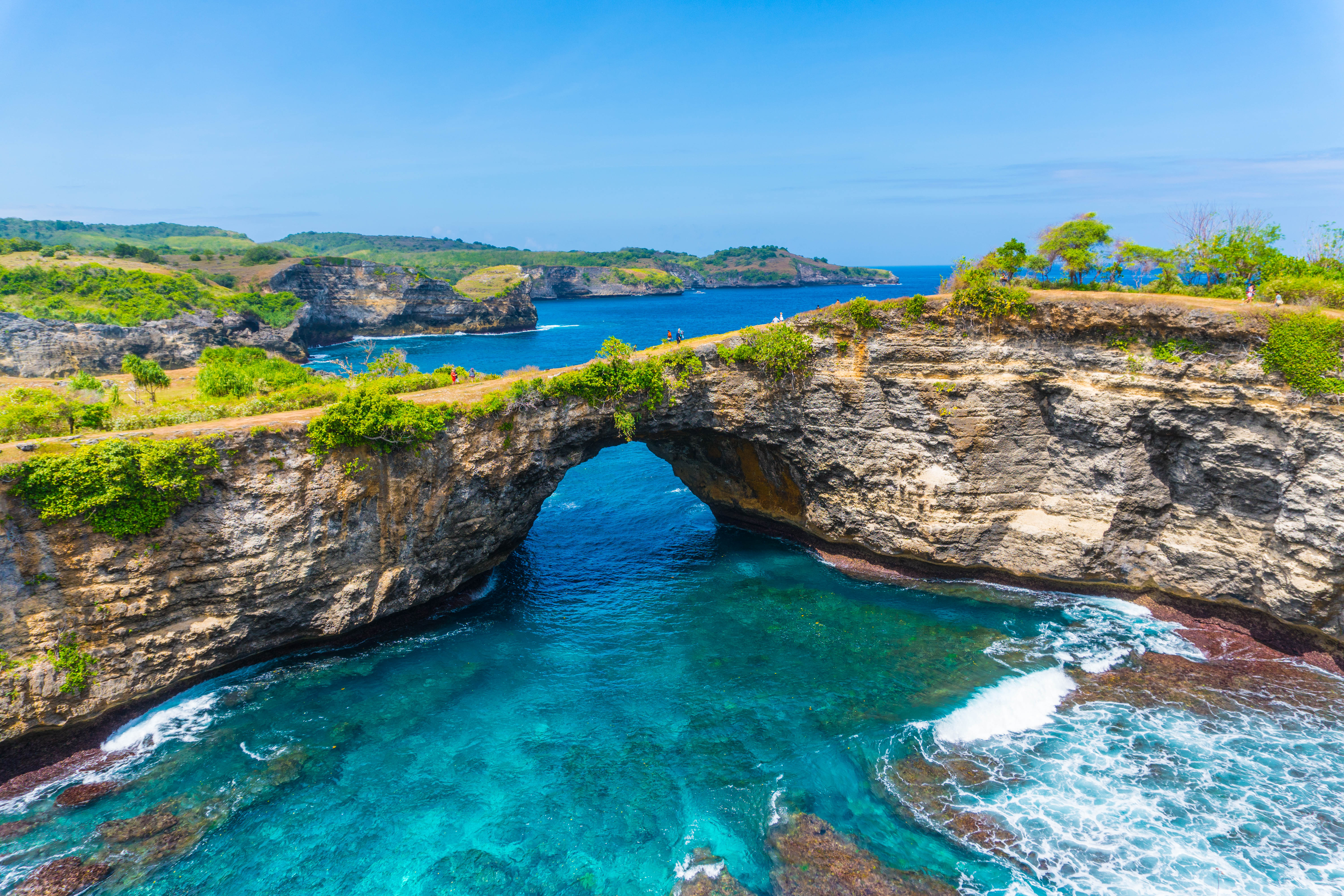
The blue water is part of the same story, not a separate postcard. Around Crystal Bay and the straits, visibility can be beautiful, but currents and seasonal conditions decide what is safe. Responsible guides brief guests, choose sites according to the day, keep boats from crowding animals and make it acceptable to cancel or move when the sea says no.
That caution is ecological as well as personal. The waters around Nusa Penida, Lembongan and Ceningan are known for manta rays, seasonal ocean sunfish sightings and reef life that depends on currents bringing food through the straits. A respectful trip treats those animals as part of a marine system, not as checklist trophies: no touching, no blocking movement, no drone or boat pressure close to wildlife, and no pretending that a crowded manta stop is automatically conservation-minded.
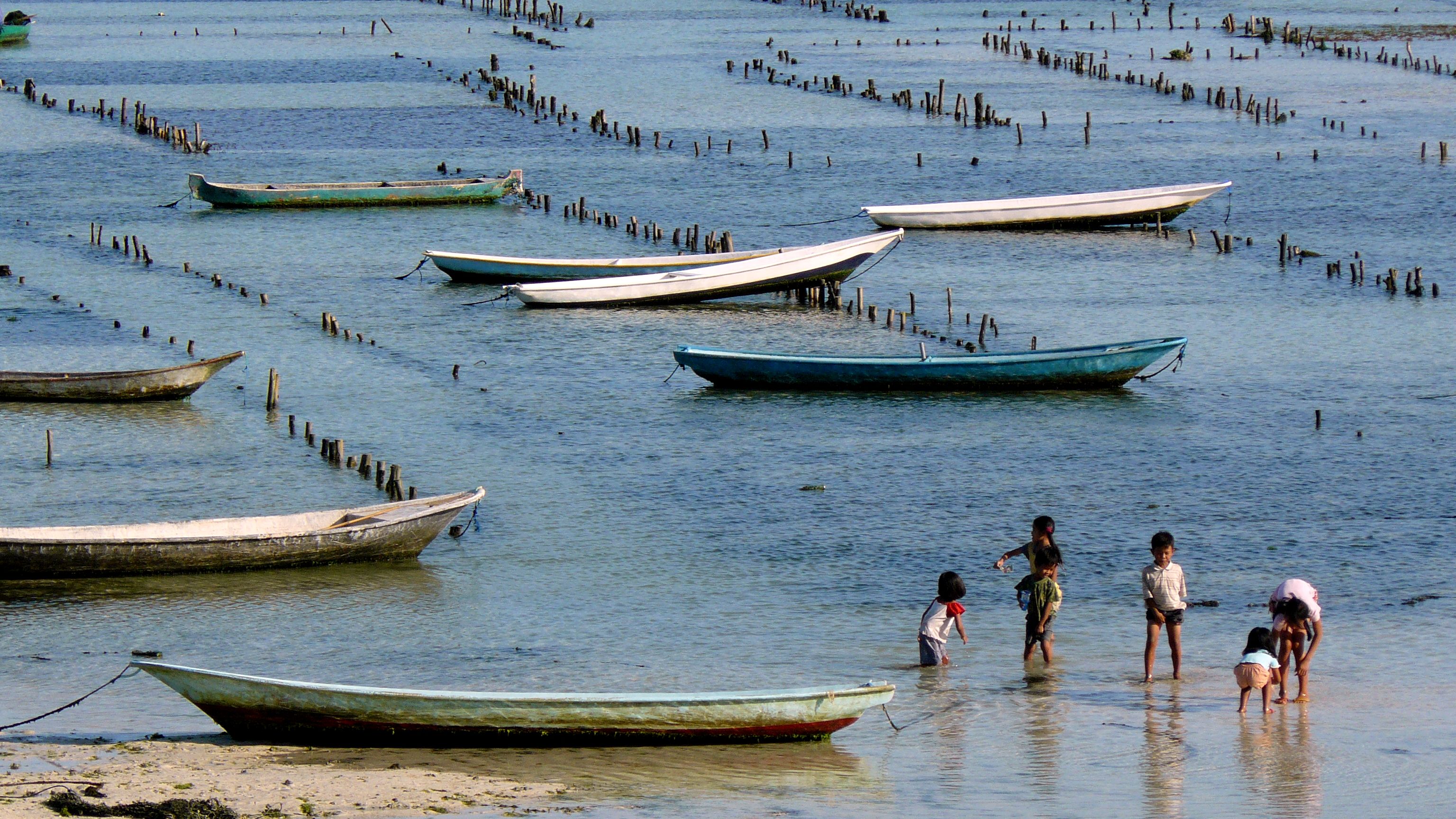
Lembongan tells a quieter story. In the shallow lagoon, seaweed lines show how households have worked with tides, boats and drying racks. Tourism has changed the island’s economy, but the rows in the water remain a reminder that the view is also labour. Warungs near the shore, grilled fish, sambal matah, coconut, coffee and simple rice dishes make more sense when the sea is seen as workplace as well as scenery.
The limit is visitor pressure. Short crossings and social-media viewpoints can make the islands feel simple, but roads, waste, reef health, boat safety and wildlife disturbance are real constraints. The better promise is modest: choose licensed boats and careful guides, do not chase mantas, keep distance from cliff edges, stay overnight if possible, and let the islands be more than a blue photograph taken between ferries.