Octopuses Can Learn to Use a Mirror as a Clue to Hidden Food
A Dartmouth mirror experiment suggests that octopuses can learn to use reflected visual information to locate food outside direct view, a demanding task that should be read as flexible problem solving rather than human-like self-awareness.
Klára Novák ·
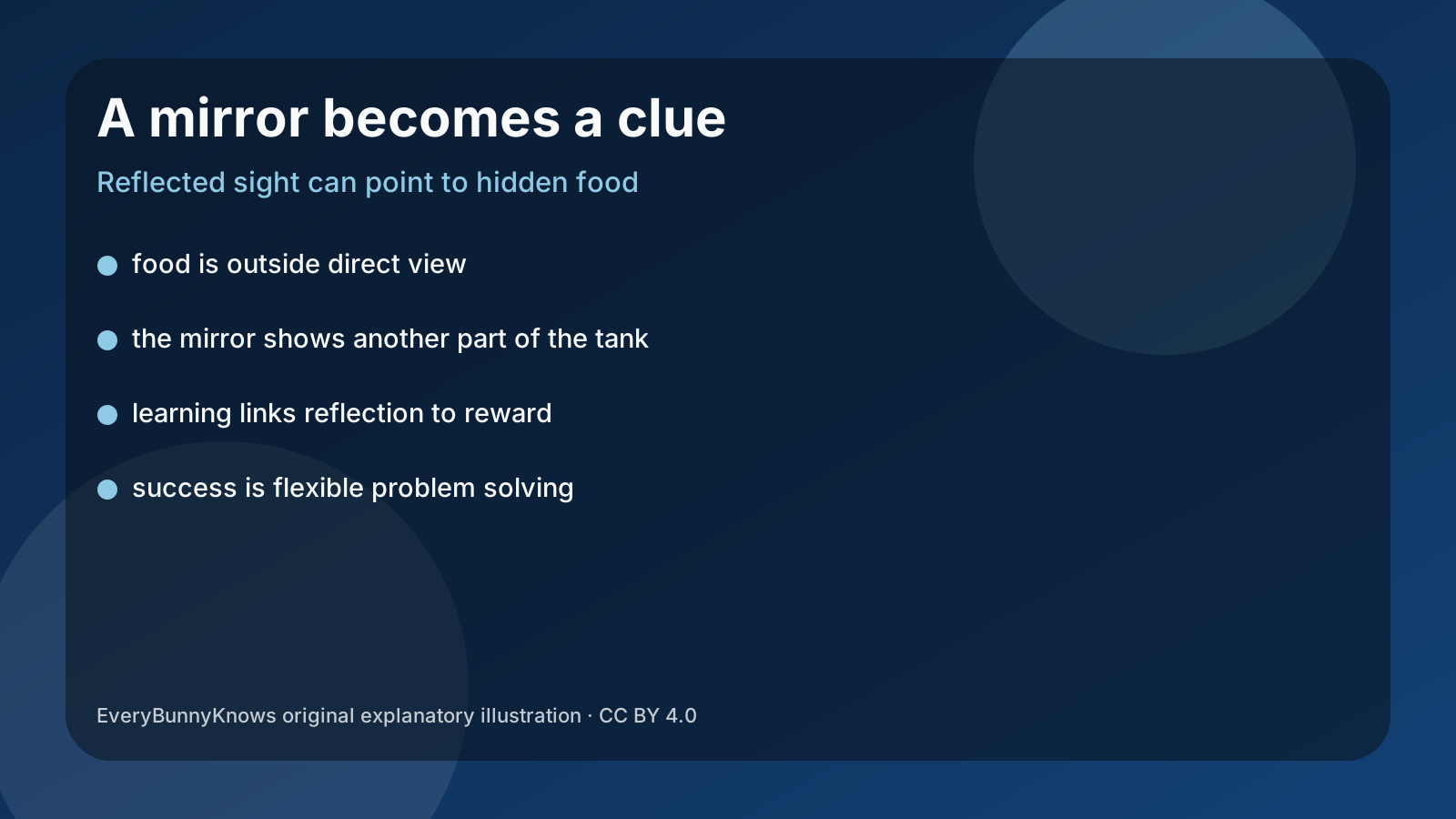
An octopus using a mirror to find food sounds like a parlour trick until the task is slowed down. The animal is not simply grabbing something it sees in front of its arms. It must notice a reflection, treat that reflection as information about a different part of the tank, and then move toward food that is outside direct view. That is why the Dartmouth result is interesting: the experiment tests mirror-mediated information use, not a mirror self-recognition claim.
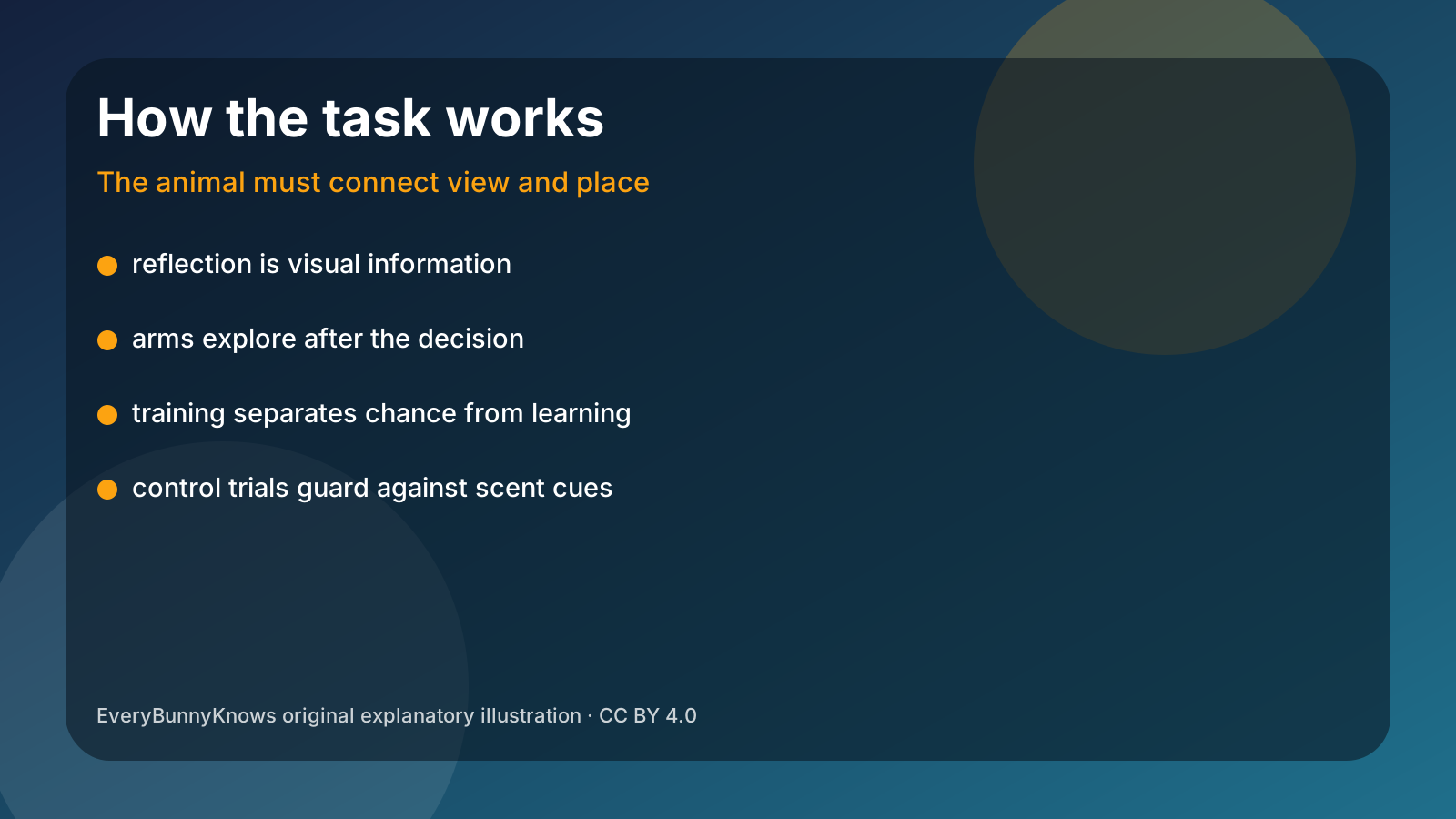
The mechanism is a learned visual shortcut. In a simple version of the task, the food reward sits where the octopus cannot see it directly. A mirror provides the missing view. To succeed more than by chance, the octopus has to connect the image in the mirror with the real location of the reward and then send its body or arms to the right place. Controls matter because octopuses are excellent at using smell, touch and exploration. A good mirror experiment must separate reflected visual information from scent trails, random arm searching or a simple preference for one side of the tank.
Octopuses make the question especially rich because they are molluscs, not vertebrates. Their nervous system is large for an invertebrate and partly distributed through the arms. They explore with skin, suckers, vision and flexible movement rather than with a mammal-like body plan. They can solve mazes, open containers, remember features of a tank and learn from repeated trials. Mirror use therefore does not put them into a human club; it widens the set of animal bodies that can use reflected light as a tool for action.
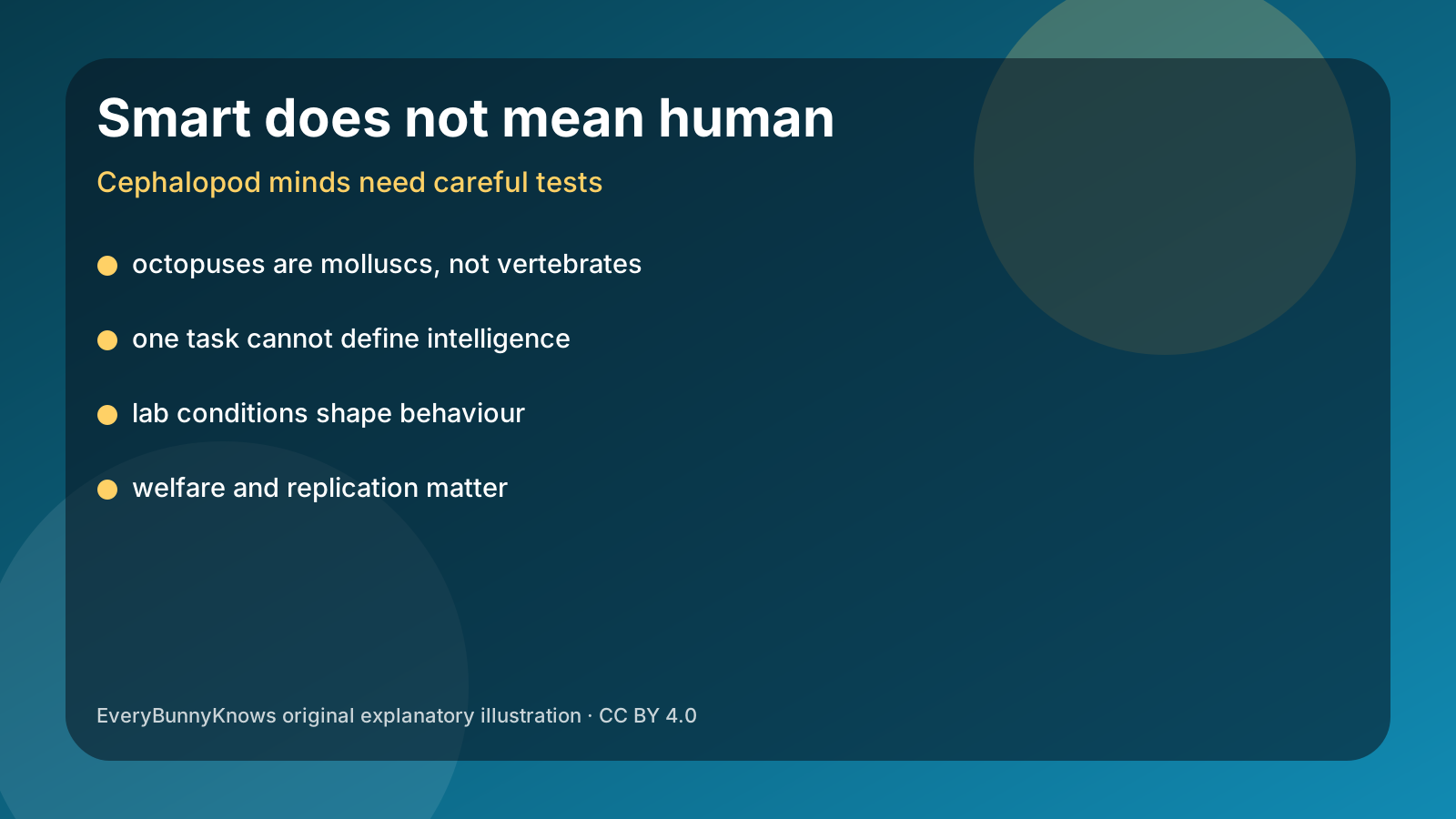
The comparison with birds and mammals needs care. Some vertebrates can use mirrors to guide search, and a smaller set has passed versions of the mark test used in debates about self-recognition. Those are not the same question. Finding hidden food through a mirror shows that a reflected image can be used as spatial information. It does not prove that the octopus thinks, “that is me,” or that its intelligence works like a child, a crow or a dolphin. The safer conclusion is still impressive: a very different nervous system can learn a difficult visual relation.
Limits also include the laboratory setting. Sample size, species identity, housing conditions, hunger, training history and trial design all affect performance. A result from a controlled tank cannot be pasted directly onto every octopus on a reef or in a den. Wild octopuses face different problems: escaping predators, opening shells, choosing dens, changing colour and judging when to hide or hunt. The mirror task isolates one cognitive skill from that wider life.
The hopeful part is not that octopuses are secretly people. It is that intelligence has more than one evolutionary route. A soft-bodied animal with arms full of sensors can still learn a relation between image, place and reward. That insight should make research more careful and animal welfare more serious: if an experiment reveals flexible problem solving, the tank, enrichment and handling of the animal become part of the ethical story as well as the scientific one.