What China’s wind-powered undersea data center is really testing
A data-center module off Shanghai uses seawater cooling and offshore wind to cut land and freshwater demand. The hard questions are uptime, repair, ecology and scale.
Simon Glass ·
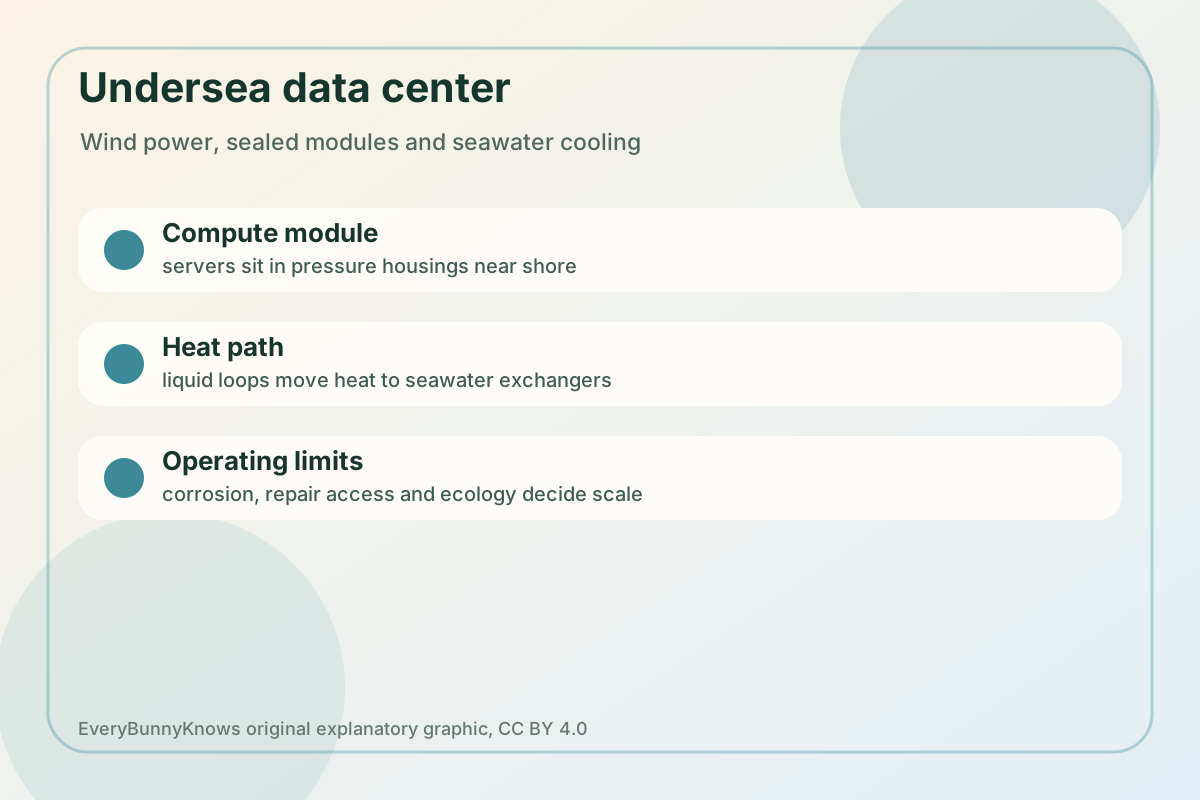
China’s wind-powered undersea data center off Shanghai is not interesting because servers have suddenly become aquatic. It is interesting because it moves two ordinary data-center problems — heat and real estate — into a harsher place where the benefits and risks are easier to see. New Atlas reported that the project in the Lin-gang Special Area was switched on in late May after an earlier construction phase, with offshore wind supplying power and seawater replacing the freshwater-hungry cooling used by many land facilities.
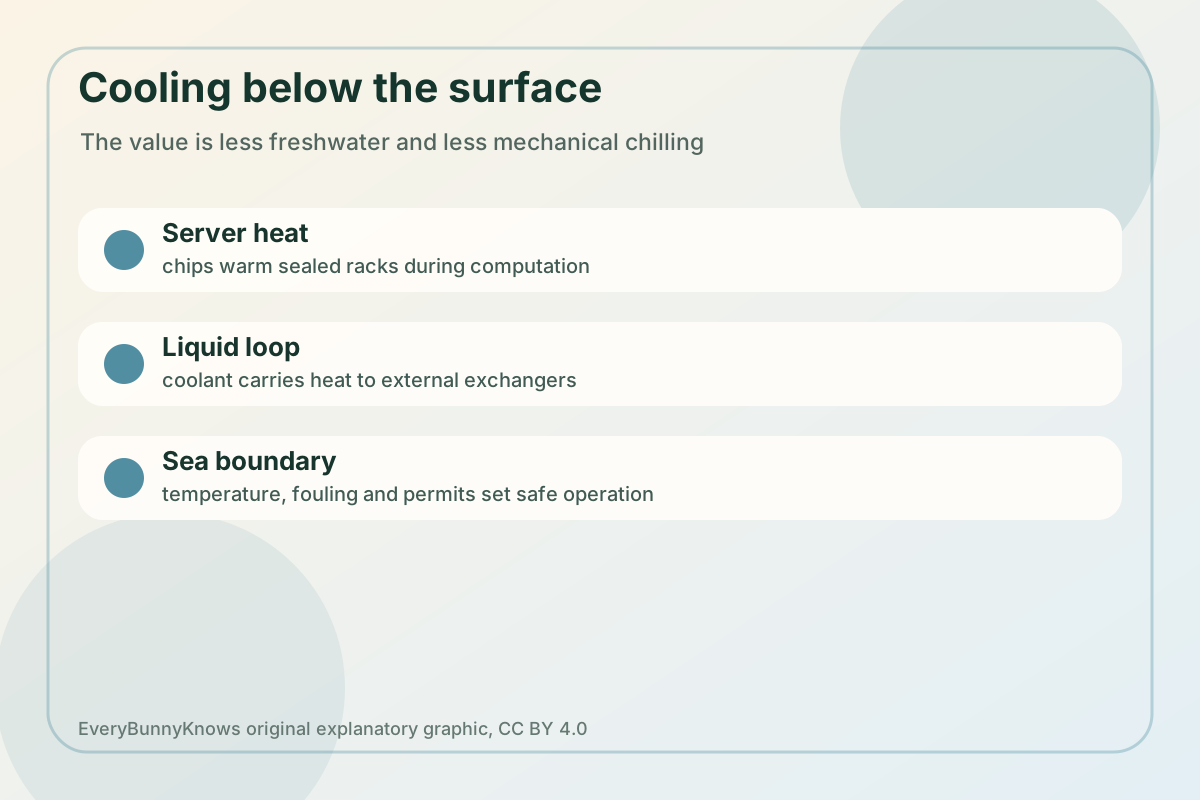
The mechanism is a sealed module, not a loose pile of computers on the seabed. Servers sit inside pressure-resistant housings. Power, networking and monitoring lines connect them to shore. Heat is collected by internal liquid loops and passed to heat exchangers, where the surrounding seawater becomes a large thermal sink. In principle, this can reduce chillers, cooling towers, evaporated freshwater and the land footprint of a conventional data hall. Those are real advantages in crowded coastal regions where digital demand, water stress and land competition meet.
The idea also has a recent precedent. Microsoft’s Project Natick placed a sealed data-center cylinder off Orkney in Scotland and later reported lower failure rates than a comparable land deployment, partly because the capsule had a controlled atmosphere and no human traffic inside. That result helped prove that submerged computing can work as an engineering experiment. China’s coastal project asks a different, more operational question: can a submerged module be connected to ordinary cloud workloads, offshore renewable power and local maintenance routines at useful scale?
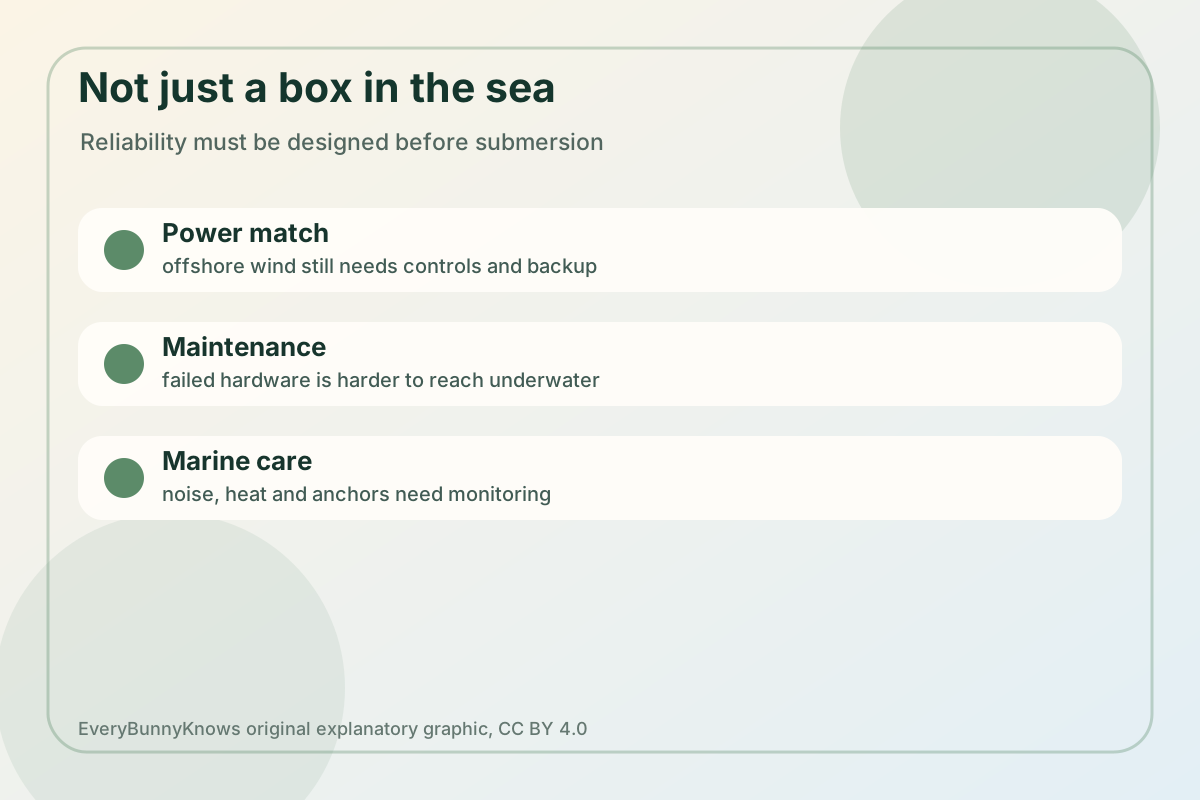
Maturity is therefore pilot-to-early deployment, not a universal replacement for land data centers. Offshore wind is variable, so the system still needs grid controls, storage or backup arrangements if customers expect continuous service. Subsea hardware must resist corrosion, biofouling, pressure, cable damage and storms. A failed server that would take minutes to swap in a land facility may require a vessel, a lift operation and a planned service window underwater. That changes the economics of redundancy and repair.
There are environmental limits too. Using seawater as a heat sink does not make waste heat disappear; it spreads it into a local marine setting that must be monitored for temperature, noise, anchors, cables and construction disturbance. Regulators and operators also need clear answers about end-of-life removal, leaks, emergency recovery and who is responsible if a module or cable fails. “No freshwater cooling” is valuable, but it is not the same as “no environmental cost.”
One practical metric will be whether operators publish ordinary performance evidence: power usage effectiveness, water savings, module retrieval times, component failure rates and marine-temperature monitoring. Without those numbers, the project is only an eye-catching location. With them, it becomes a test that other coastal planners can compare with land-based halls, district cooling and ordinary efficiency upgrades.
The useful lesson is narrower and stronger than the headline. Data centers are physical infrastructure: they occupy land, use energy, reject heat and need constant maintenance. Putting some compute capacity underwater may help certain coastal cities reduce freshwater use and pair digital loads with nearby offshore power. It will be successful only if the hidden work — uptime engineering, repair planning, marine permitting and transparent monitoring — proves as solid as the sealed module itself.