On the Brink, the Vaquita Gets a Digital Lifeline
A 3D archive of a rare vaquita skeleton can preserve anatomy for science and education, but the living species still depends on removing gillnet bycatch from its tiny Gulf of California range.
Nina Kaplan ·
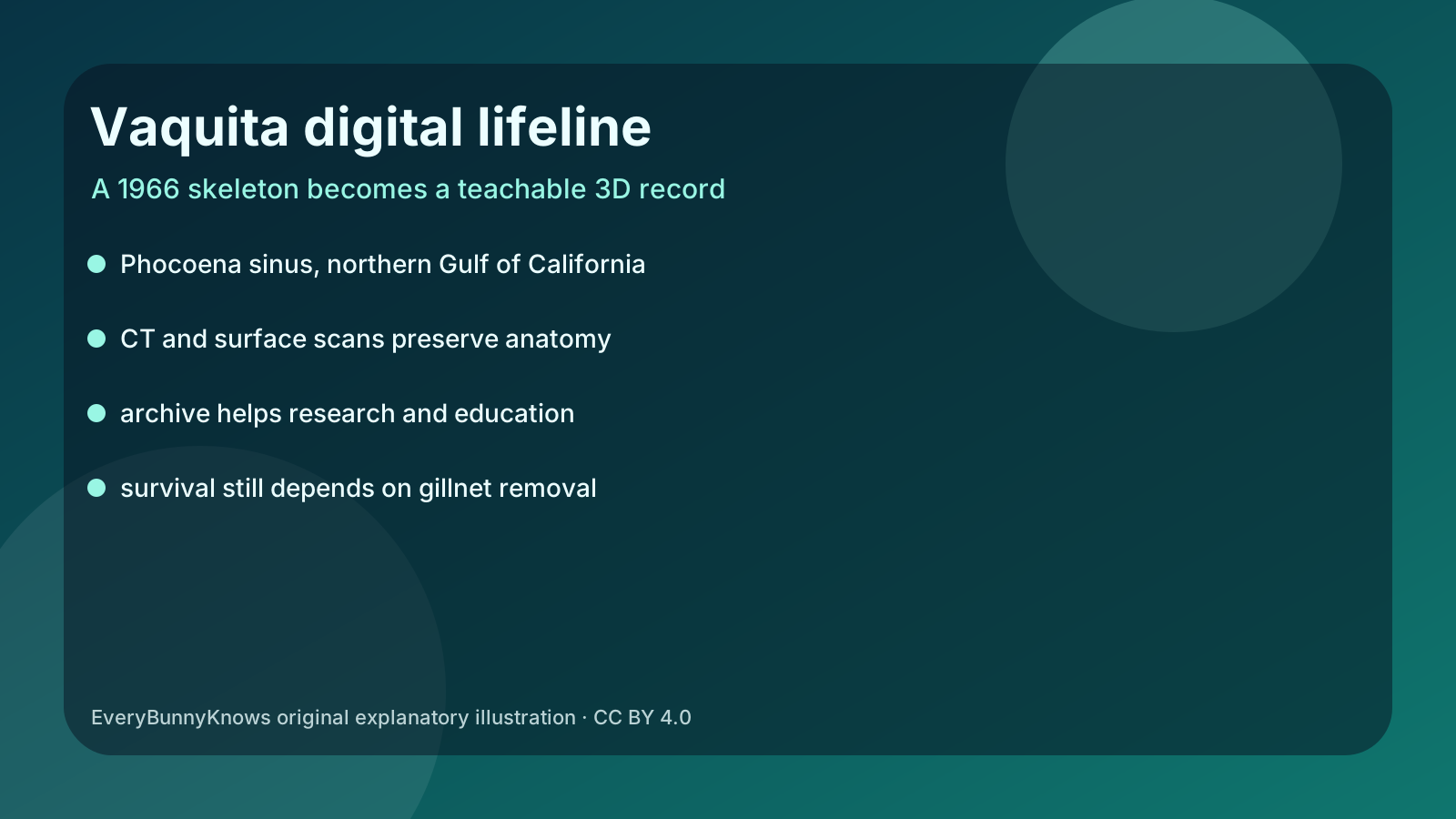
The vaquita’s new “digital lifeline” begins with a quiet object: the skeleton of a female Phocoena sinus collected in 1966, before the species became a global symbol of marine-mammal extinction risk. Researchers at Florida Atlantic University used detailed imaging to turn that rare specimen into 3D models that can be measured, taught from and revisited without repeatedly handling fragile bones. For an animal now restricted to the northern Gulf of California, that archive is a way to keep anatomical evidence available even when living encounters must remain rare and carefully protected.
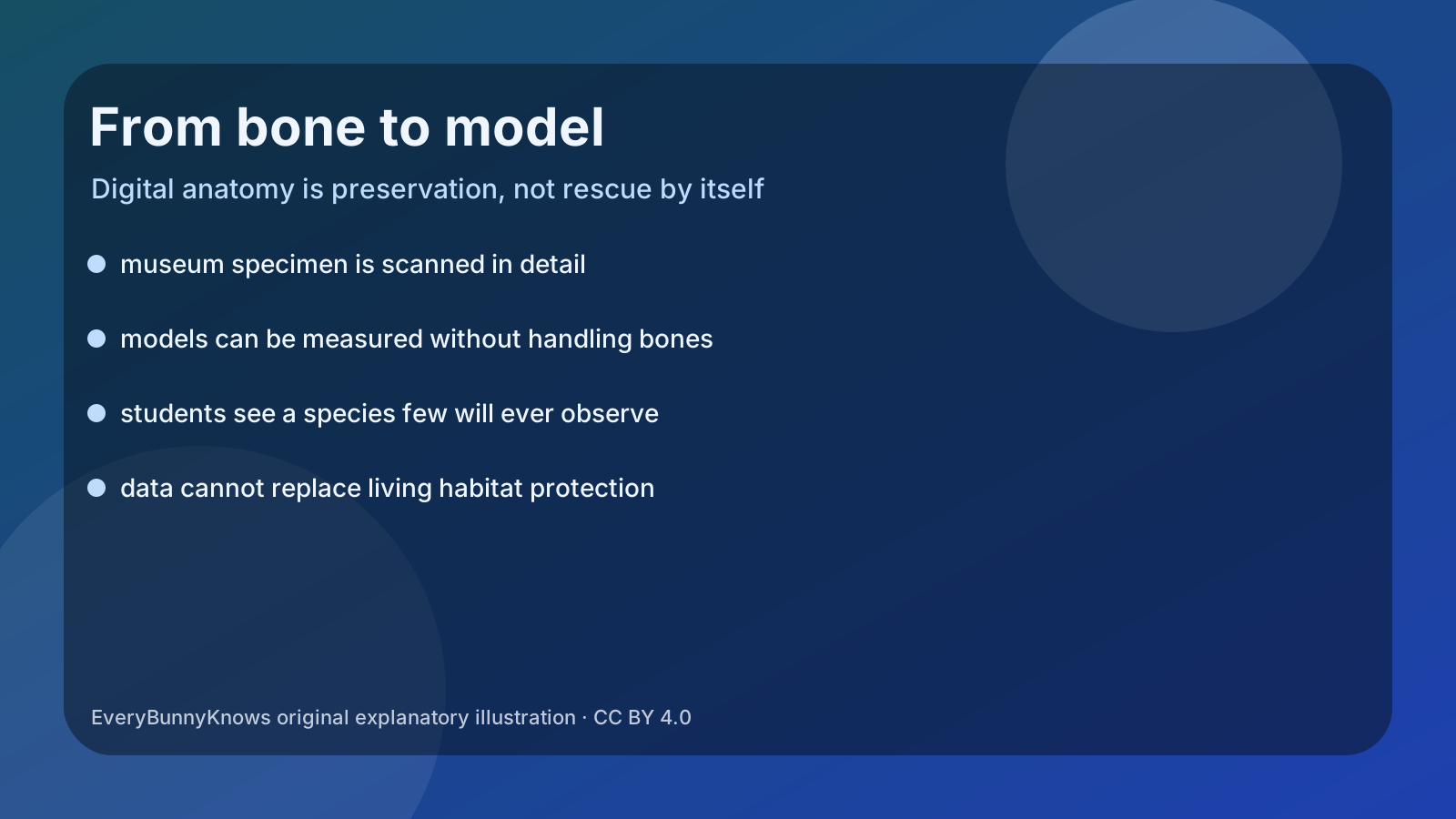
The mechanism is preservation through access. A physical skeleton can sit in one collection and slowly become harder to loan, photograph or examine. A digital model can be shared with students, anatomists and conservation educators who need to understand the proportions of the skull, flippers, vertebrae and hearing structures of the world’s smallest porpoise. It also lets future researchers ask new questions: how the vaquita’s coastal life shaped its body, how it compares with related porpoises, and how museum specimens can support science long after collection.
That does not mean a scan saves the species by itself. The vaquita lives only in the upper Gulf of California, where shallow, productive water also supports fishing communities and the illegal trade in totoaba swim bladders. The immediate conservation mechanism is still the removal of gillnets that entangle vaquitas as bycatch. Acoustic monitoring and field surveys have suggested that only a handful of animals remain, with calves occasionally observed, so every surviving female matters far more than any model on a screen.
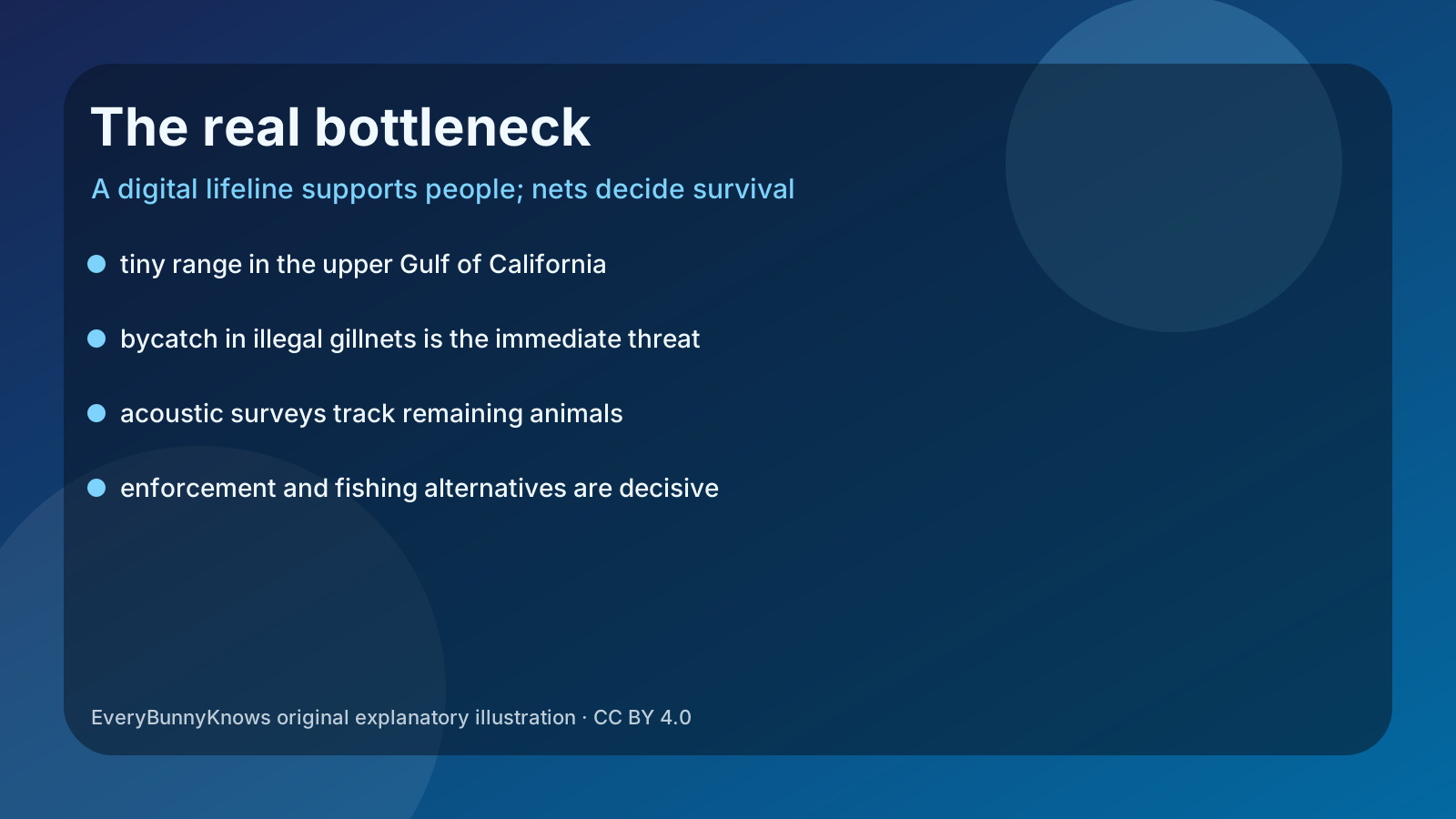
The useful role of the digital archive is therefore indirect but real. It gives museums and classrooms a non-invasive way to introduce the animal without turning the last vaquitas into spectacles. It helps explain why a small porpoise evolved for turbid, coastal waters needs acoustic senses, compact movement and enough living habitat to find mates. It can also make extinction feel less abstract: a skeleton that can be rotated on a laptop is evidence of a lineage, not an icon on a poster.
There is another practical advantage. Digital specimens can be revisited as software improves, allowing measurements, classroom prints, animations or comparative studies that were not imagined when the original bones entered a collection. For an endangered species, that reduces pressure on irreplaceable material and keeps older evidence useful for younger scientists.
The limits should be stated plainly. A specimen from 1966 cannot represent every vaquita, every age class or the current health of the population. Digital surface and CT models depend on scan resolution, segmentation choices and the condition of the bones. They are best used alongside field biology, genetics, acoustic detections and local conservation policy, not as substitutes for them.
The hopeful part is not technological magic. It is that careful documentation can widen the circle of people who understand what is at stake while the practical work continues at sea. If gillnet-free enforcement, safer livelihoods and habitat protection keep even a tiny breeding population alive, the digital skeleton becomes a teaching bridge to a species that still has a future, not merely an elegant record of what was lost.