People who do muscle-strengthening activity often live longer, but the study is not a gym prescription
A new public-facing review of strength-training evidence fits a broader literature linking muscle-strengthening activity with lower mortality risk. The useful message is about mechanisms and population patterns, while individual exercise choices still depend on health, access and clinical context.
Noah Circuit ·
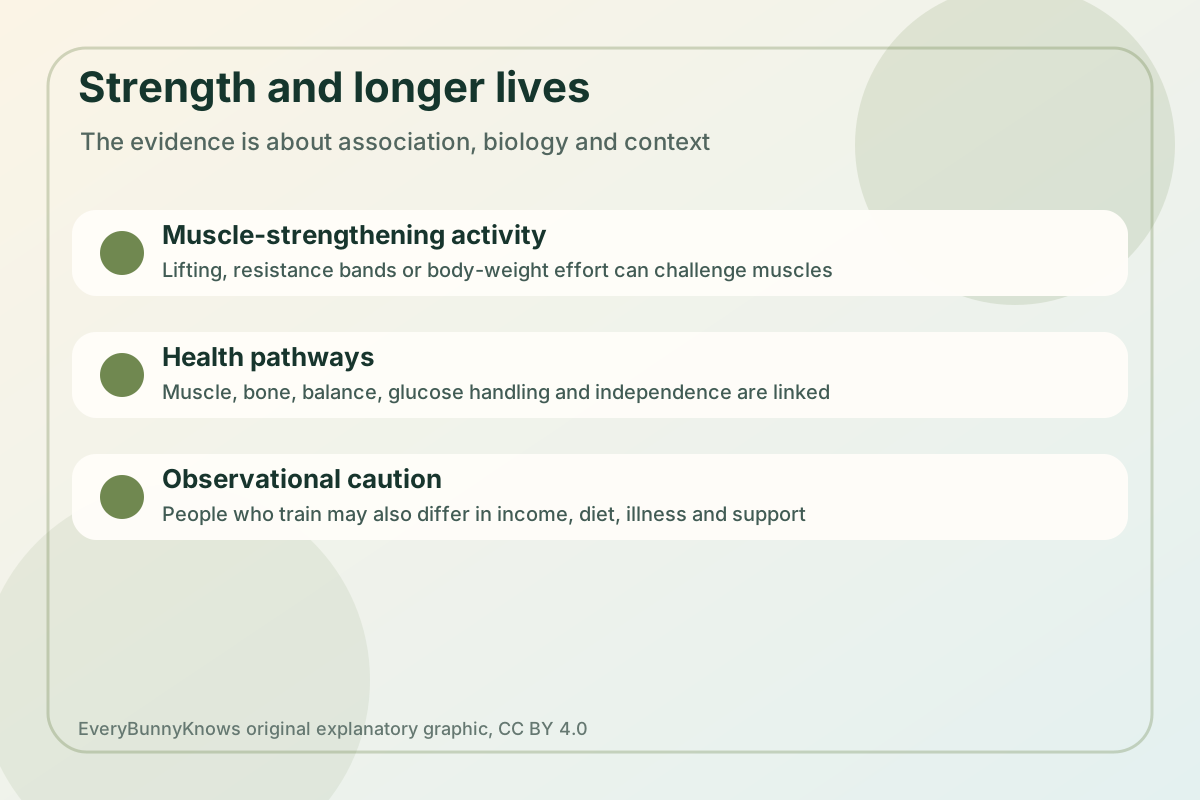
A headline saying that people who lift weights live longer is tempting because it sounds simple. The science behind it is more useful when it is less simple. A 2026 article by exercise scientist Jack McNamara drew attention to a growing body of evidence that muscle-strengthening activity is associated with lower mortality risk. That message fits earlier cohort studies and meta-analyses, including work in the British Journal of Sports Medicine and Preventing Chronic Disease. But it should be read as a population signal with plausible biology, not as a personal gym prescription.
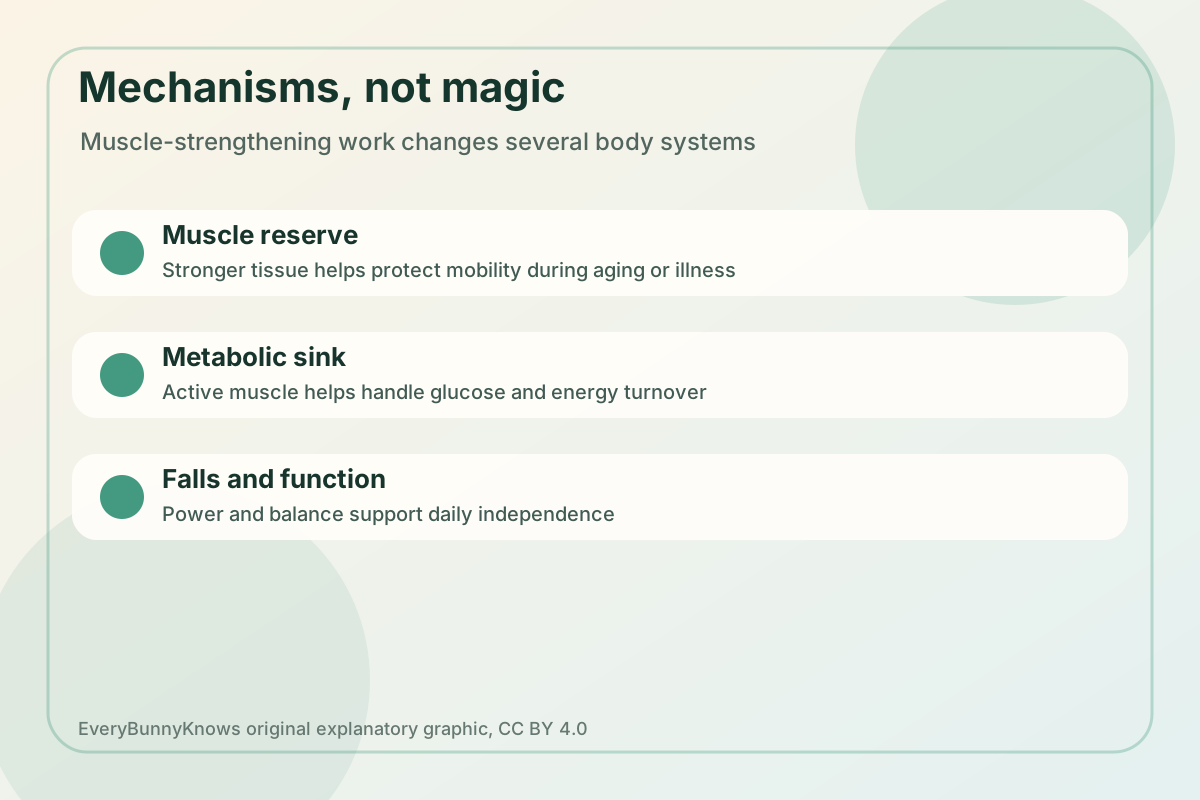
The useful lesson is less about weights themselves than about muscle as a reserve. Muscle is metabolically active tissue. It helps handle glucose, stores amino acids that matter during illness, supports joints and bones, and gives people the strength to rise from a chair, climb stairs, carry groceries or recover from a setback. Resistance activity can mean free weights, machines, resistance bands, body-weight movements, heavy work tasks or supervised rehabilitation. The common thread is that muscles work against enough resistance to adapt.
Several large observational studies have found that adults reporting muscle-strengthening activity tend to have lower risks of all-cause mortality and some major chronic diseases. The 2022 BJSM systematic review and meta-analysis reported inverse associations between muscle-strengthening activity and all-cause mortality, cardiovascular disease, total cancer, diabetes and lung cancer, with evidence suggesting that benefits were not simply the same thing as aerobic activity. Other cohort work has similarly separated muscle-strengthening habits from walking, running or cycling, asking whether each contributes differently to long-term risk.
The mechanism makes sense, but it is not magic. Stronger muscles can make daily movement easier, which may reduce sedentary time and help preserve independence. Loading bones and tendons can support musculoskeletal health. More muscle and better muscle quality can improve insulin sensitivity and energy use. Resistance activity also challenges balance, coordination and confidence, especially when programs are well matched to a person’s ability. Those pathways are relevant to aging because frailty is not only a diagnosis; it is often the slow loss of reserve that makes ordinary stressors harder to survive.
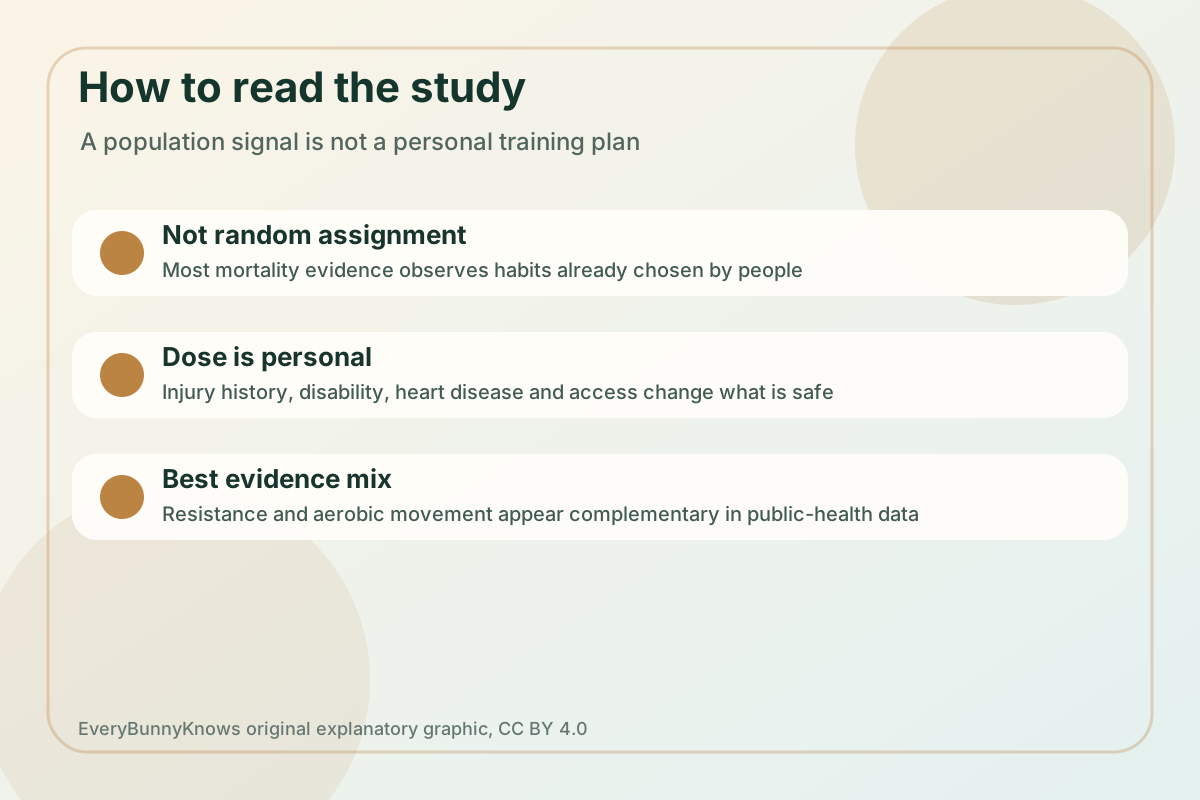
The limits are just as important. Most longevity evidence for strength training is observational. People who lift weights or do other resistance activity may also differ in income, education, diet, smoking, sleep, healthcare access, disability, social support and pre-existing disease. Researchers adjust for many confounders, but adjustment cannot turn a cohort study into a randomized lifetime experiment. Self-reported exercise is also imperfect: one person’s “strength training” may be a supervised program, another’s may be occasional yard work, and another’s may be unsafe overexertion.
That is why this article avoids prescribing sets, repetitions, loads or schedules. People with heart disease, advanced kidney disease, recent surgery, frailty, neurological problems, uncontrolled pain, pregnancy-related concerns or previous injuries may need individualized assessment before changing activity. Public-health guidance commonly includes muscle-strengthening activity alongside aerobic movement, but the safe form depends on the person, environment and support available. The evidence is strongest when it encourages better questions rather than one-size-fits-all rules.
The hopeful conclusion is practical. Longevity is not controlled by a single habit, and a dumbbell is not a shield against every disease. Still, the study trend corrects an old misunderstanding: muscle is not cosmetic tissue reserved for athletes. It is part of how bodies manage sugar, posture, falls, bones, illness and independence. If healthcare, urban design and community programs treat strength as a normal part of healthy aging, the benefit may be less dramatic than a headline, but more durable: more years in which people can move, recover and take part in their own lives.