A Radiation Sensor Is Most Useful When It Can Point to the Source
Physicists at Vilnius University report a detector concept aimed at measuring radiation and locating its source. The value lies in combining signal strength, geometry and calibration so trained teams can map risk faster and with clearer limits.
Jonah Reed ·
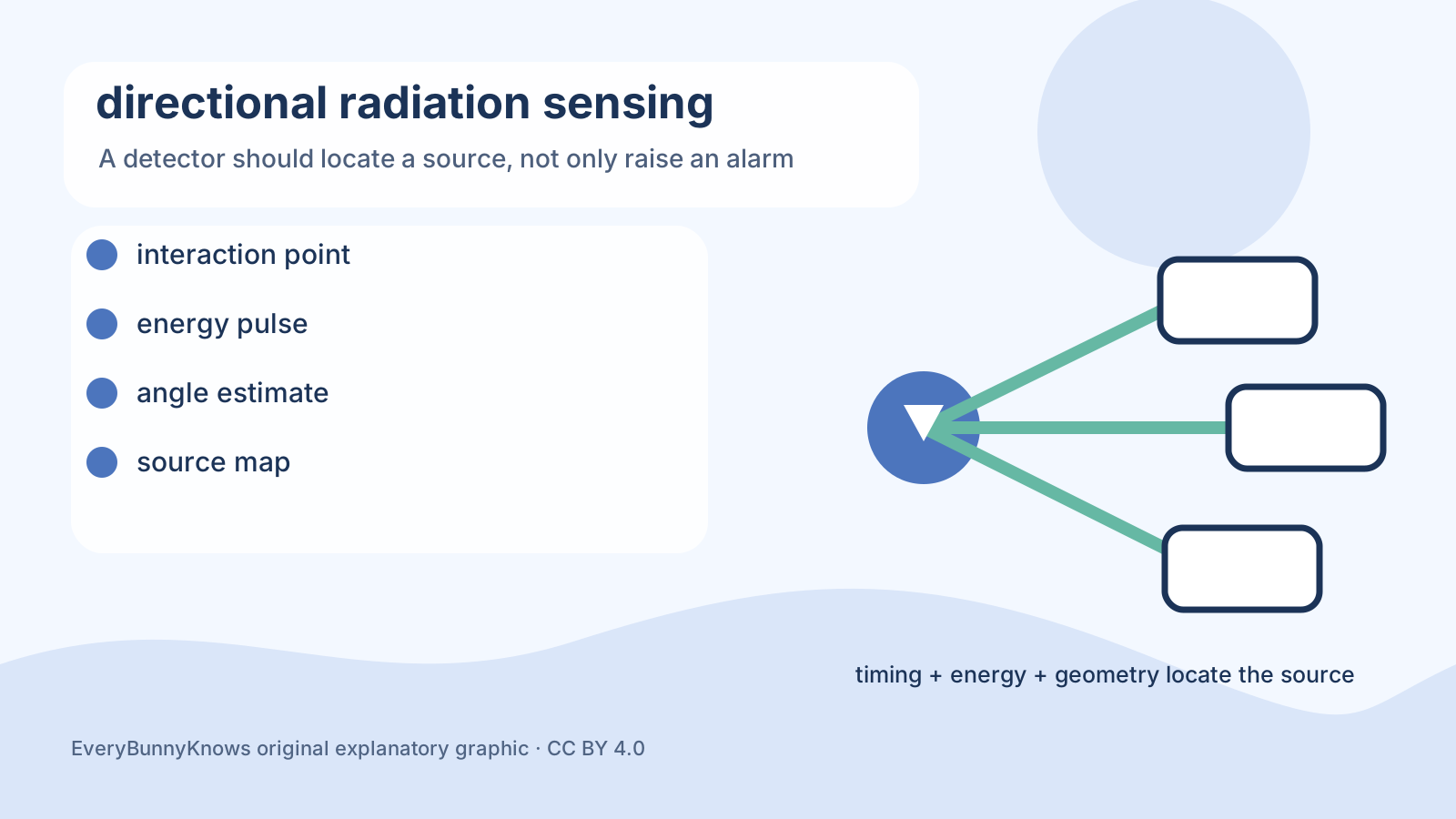
Radiation safety often begins with a simple question: where is the source? A detector that only clicks louder near radiation can warn a worker, but it may still leave a team searching a room, a shipment or a piece of equipment by trial and error. Physicists at Vilnius University reported in 2026 a sensor concept intended to detect radiation and help locate its source, intensity and position more precisely. The practical value is not drama; it is faster, better bounded information for people who already follow radiation-safety rules.
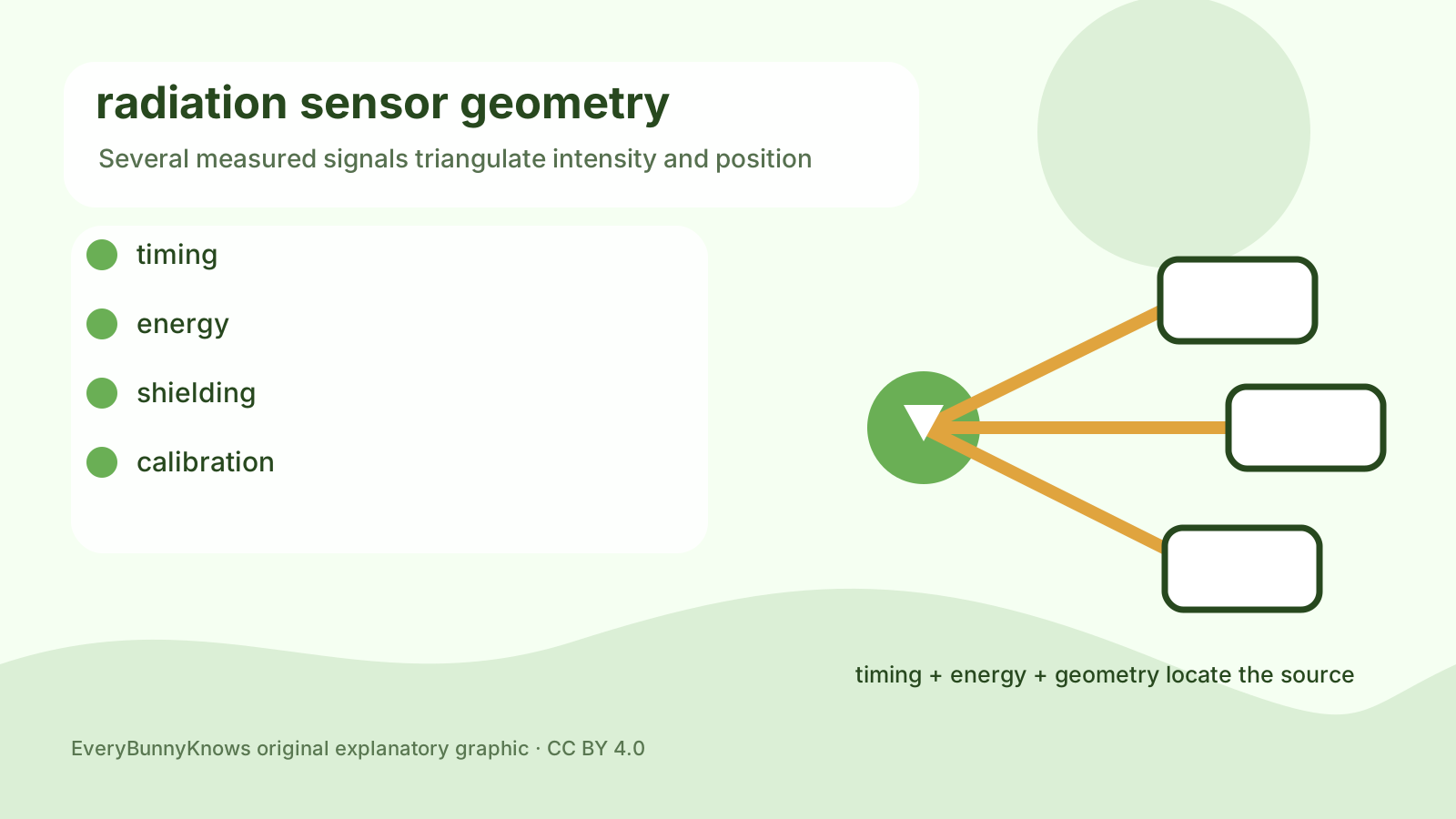
The mechanism is measurement geometry. Ionizing radiation can deposit energy in a detector material, producing charge, light or another electrical signal. A basic counter records that an interaction happened. A locating sensor needs more structure. It may compare signals from several detector elements, use shielding or collimation to admit radiation from some directions more than others, measure energy to distinguish source types, and combine timing or intensity differences into an estimated direction. Calibration then translates those signals into a map with uncertainty, not a perfect arrow.
That distinction matters. Radiation comes in different forms, including alpha particles, beta particles, gamma rays, X-rays and neutrons. They penetrate materials differently and require different detector designs. A sensor optimized for one field may be poor in another. Background radiation, scattering from walls, shielding by metal, distance from the source and detector orientation can all distort the pattern. The best instrument is therefore a trained system: hardware, calibration, software and operator procedure working together.
The maturity should be read as prototype or laboratory instrumentation unless a device has passed field trials and regulatory use. A university result can show that a design improves angular resolution, sensitivity or source reconstruction in controlled tests. To become routine equipment, it must be rugged, affordable, easy to decontaminate if needed, stable over temperature, and clear enough that emergency teams or hospital physicists can trust its alarms under pressure. Software also has to show confidence ranges, because a false sense of precision can be dangerous.
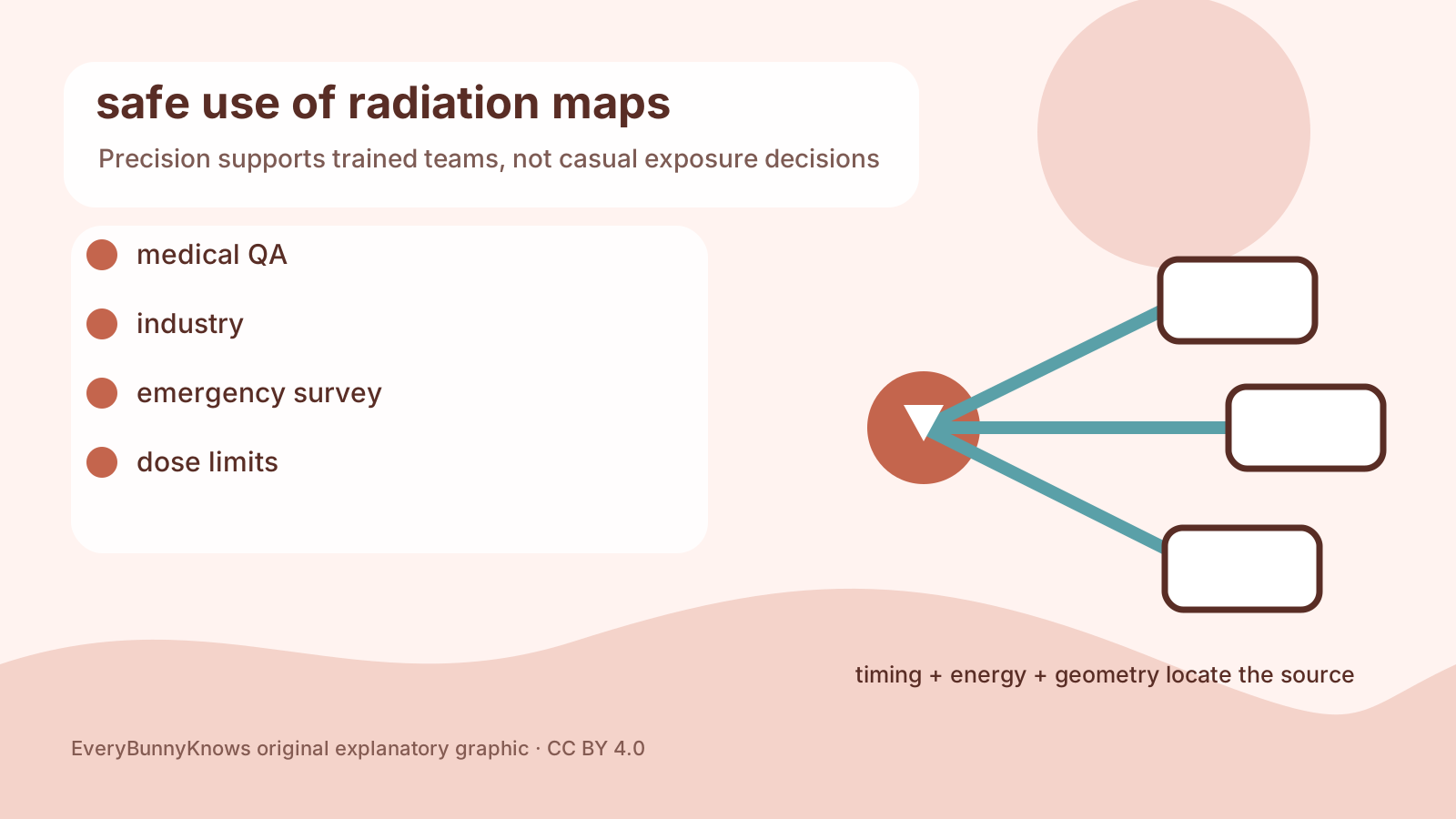
The applications are broad but bounded. In medicine, better detectors can support quality assurance around imaging or radiotherapy equipment; they do not replace clinical dose planning. In industry, they can help find misplaced gauges or inspect shielded areas; they do not remove licensing and training. In research facilities or emergency response, they can shorten a search and reduce unnecessary exposure; they still require time, distance, shielding and formal procedures.
Good field use also needs records. A search team must know the background level before the alarm, the calibration date, the assumed isotope, the shielding between detector and source, and the path already checked. Those ordinary details make a location estimate auditable, so another team can repeat the measurement instead of trusting a single screen.
The hopeful part is the map. Radiation is invisible to human senses, and uncertainty makes people either careless or afraid. A sensor that gives a clearer direction and intensity can help professionals act earlier, close the right area, and avoid exposing others while they search. The next evidence to watch is performance with mixed sources, cluttered rooms, shielding and moving operators, because precision on a bench becomes public value only when it survives messy places.