Plants Boost Carbon Uptake Through Water Efficiency, Not Heat Adaptation
A global analysis reframes a key climate question: many plants are gaining more carbon because they lose less water for each unit of photosynthesis, not because photosynthesis has simply adapted to hotter leaves.
Hana Meridian ·
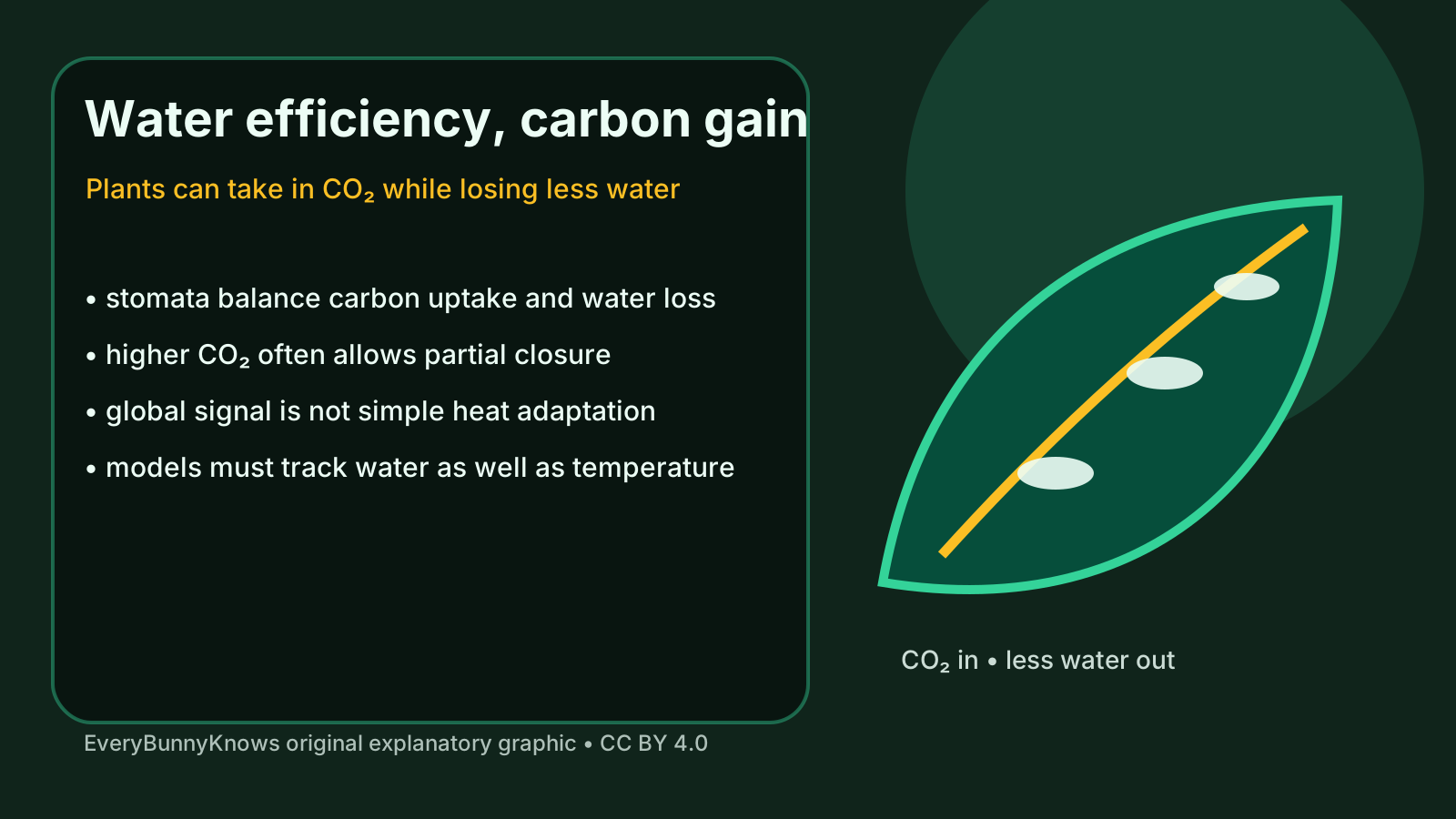
Plants do not answer climate change with one simple adjustment. A global analysis of plant carbon uptake points to a more specific mechanism: many plants appear to be taking in more carbon because they use water more efficiently, not because their photosynthesis has broadly shifted to prefer hotter conditions. That distinction matters for anyone trying to understand forests, crops and the land carbon sink in a warming world.
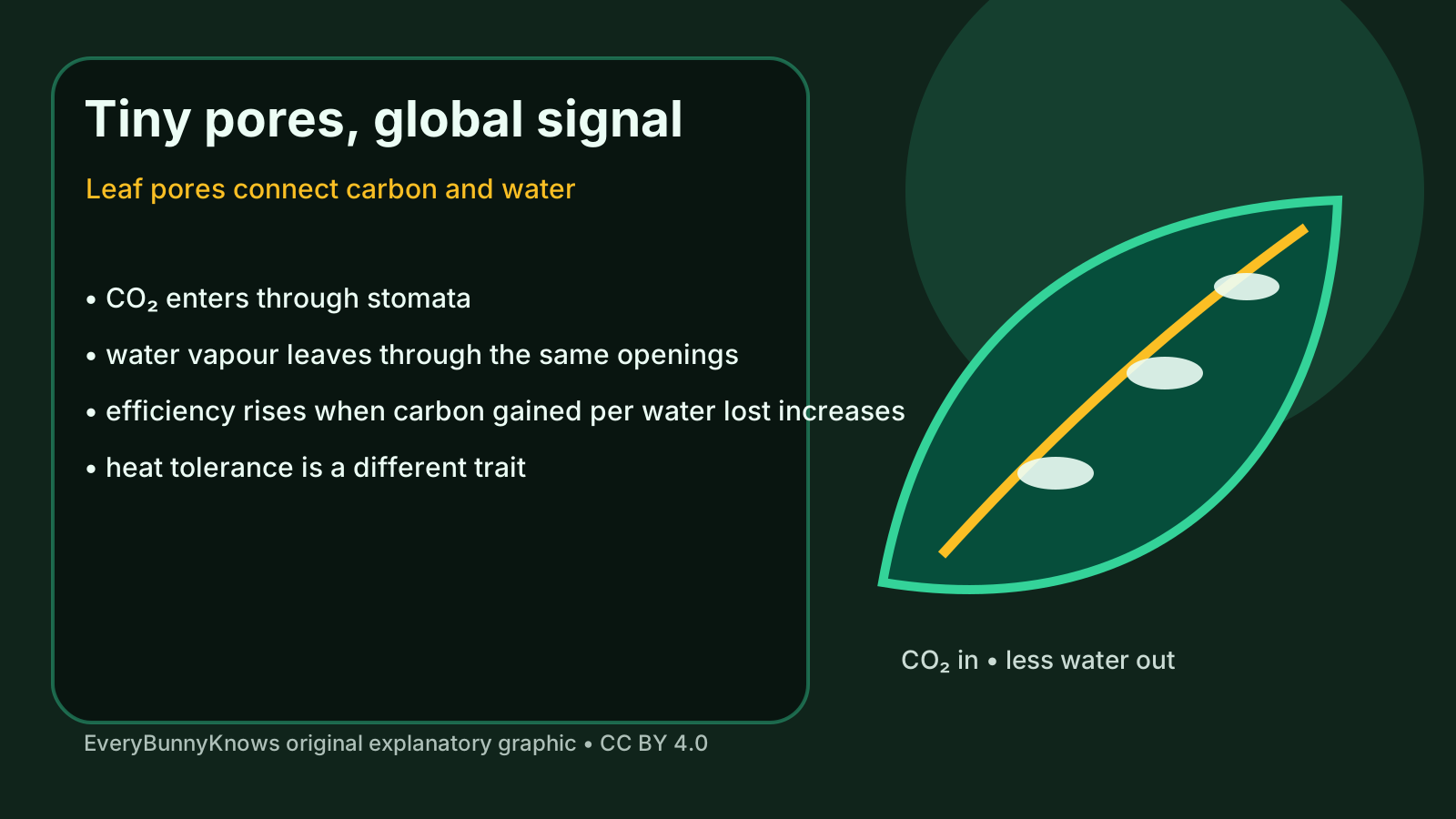
The physical link is the stomate, the tiny pore on a leaf surface. When stomata open, carbon dioxide can enter and feed photosynthesis. At the same time, water vapour escapes. Plant water-use efficiency describes the amount of carbon gained for a given amount of water lost. If atmospheric carbon dioxide rises, many plants can partly close their stomata while still taking in enough carbon, so the exchange becomes less water-expensive. Satellite observations, flux-tower measurements and plant-physiology experiments all point to this carbon-water bargain as a central part of recent vegetation change.
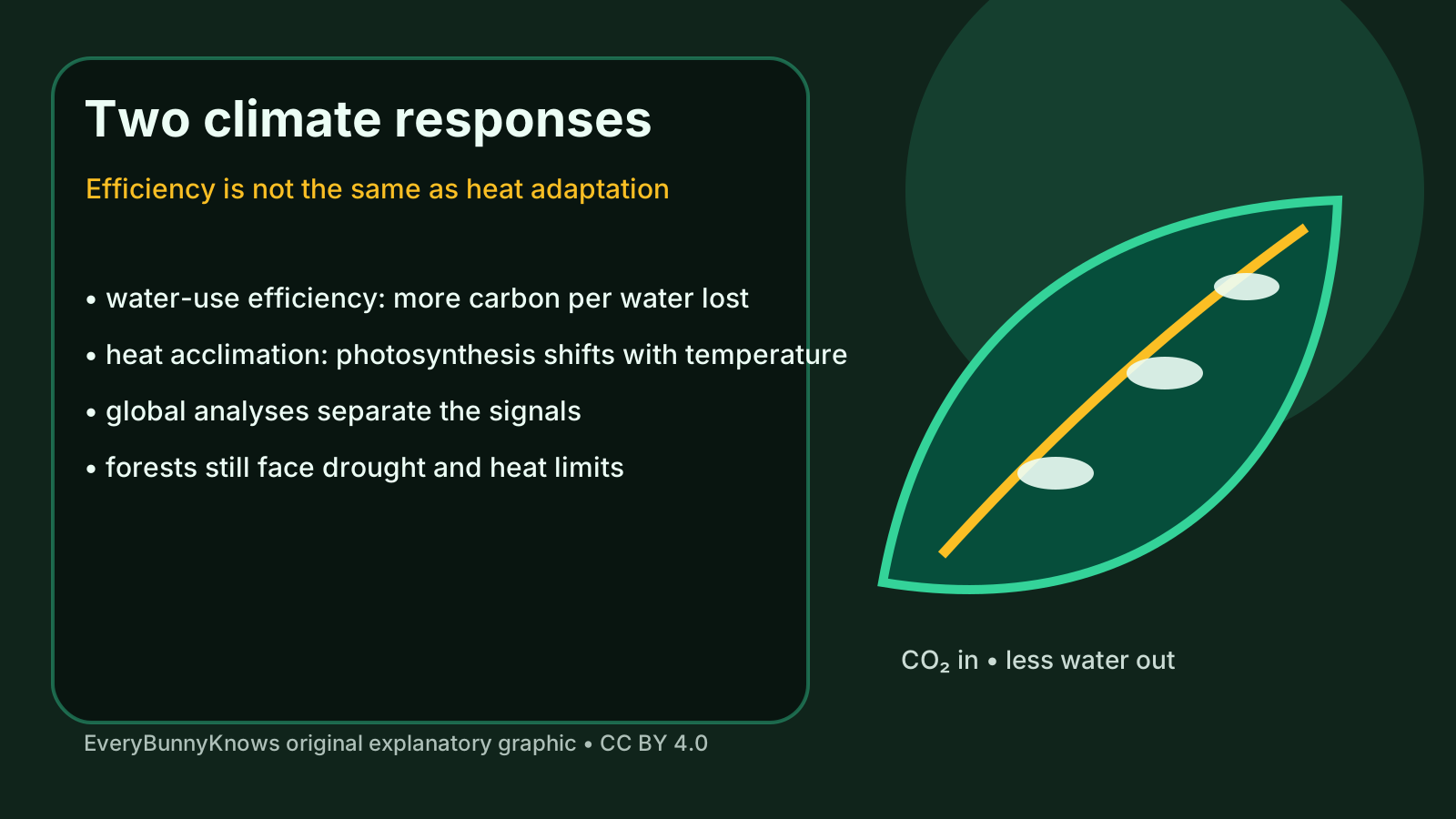
That is different from heat adaptation. Photosynthesis has temperature optima, enzymes and membranes that can acclimate within limits, and some plants are better suited to hot environments than others. But a warmer leaf is not automatically a more productive leaf. Heat can increase evaporative demand, speed respiration, dry soils and push photosynthetic machinery beyond comfortable ranges. The analysis behind the article asks whether rising uptake is better explained by a broad thermal shift or by improved water economics. Its answer is cautious but important: water efficiency carries more of the signal.
The geography is uneven. A humid forest, a dry shrubland and a rain-fed crop field do not experience the same trade-off. In some regions, higher carbon dioxide can help leaves conserve water and keep photosynthesizing longer during dry spells. In others, hotter air, depleted soil moisture, fire, pests or land clearing can erase the benefit. The result is not a promise that plants will rescue the climate. It is a better map of why the land sink strengthens in some places and stalls or weakens in others.
The limits are just as important as the finding. Water-use efficiency does not guarantee more biomass if nutrients are scarce, roots cannot reach water, drought becomes severe, or disturbance removes vegetation. Measurements also differ by scale: a leaf-level response can look cleaner than a whole ecosystem where species, age, soils and management all matter. Climate models must therefore represent both stomatal behaviour and the stresses that decide whether saved water becomes extra growth.
This also keeps the story geographic rather than merely botanical. The same atmospheric change is filtered through monsoon timing, mountain snowpack, irrigation, fire history and soil depth before it becomes a local carbon outcome. A global average can reveal the signal, but local maps decide where the signal becomes resilience and where it becomes risk.
The hopeful part is practical. If scientists can separate water efficiency from heat tolerance, forecasts of carbon storage, crop risk and ecosystem stress become less blurry. Land managers can ask sharper questions: which forests are gaining carbon because water loss is lower, which are nearing drought limits, and where restoration would genuinely improve resilience? The answer begins in a leaf pore, but it reaches all the way to global carbon budgets.