Polymer cold spray repairs composites without baking the whole part
Rowan University researchers report that polymer cold spray restored up to 80 percent of strength in damaged composite coupons. The promise is faster repair, but certification, fatigue, surface preparation and environments remain decisive.
Felix Arden ·
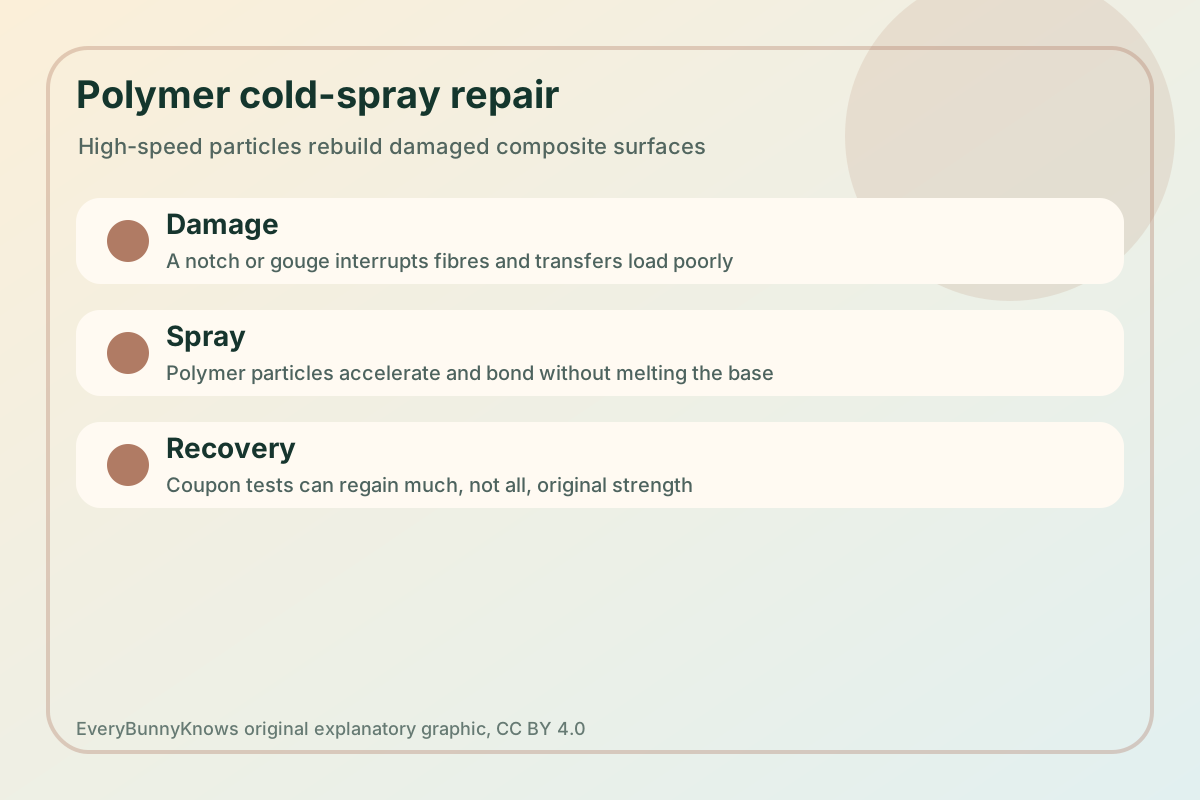
Composite materials are strong because fibres and polymer matrix share loads in carefully arranged layers. They are also awkward to repair. A gouge, impact mark or drilled mistake can cut fibres, disturb the matrix and concentrate stress in a part that may be expensive, large or already installed. Rowan University researchers have reported a polymer cold-spray repair approach that restored up to 80 percent of strength in damaged composite material tests, according to the Tech Xplore story from July 2026. The result is interesting because it points toward faster repairs that do not require baking an entire structure in an autoclave.
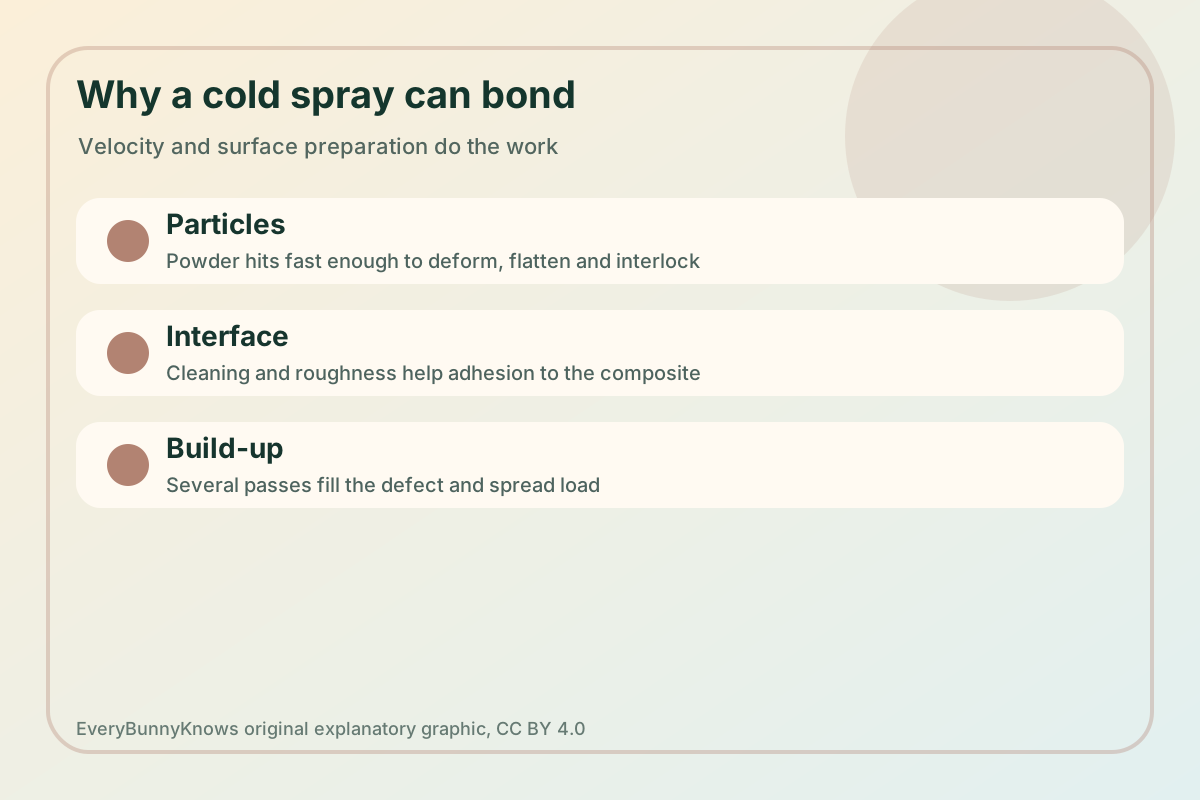
Cold spray is a solid-state deposition process. In metal cold spray, particles are accelerated in a gas stream and hit a surface fast enough to flatten, deform and bond without fully melting. A polymer version adapts the same principle to lower-temperature materials. The repair powder, gas temperature, particle speed, nozzle distance and surface preparation all matter. Instead of pouring resin into a defect and waiting for a traditional cure, a technician could build material layer by layer onto the damaged region.
The mechanism is not magic glue. A good repair needs a clean and prepared interface so the sprayed polymer can mechanically interlock and adhere. The deposited material must spread load around the defect rather than creating a new stiff or weak spot. The underlying composite may contain carbon fibre, glass fibre or other reinforcement, and the damage may include invisible delamination below the surface. Restoring coupon strength in a controlled test is therefore a necessary first sign, not a complete field qualification.
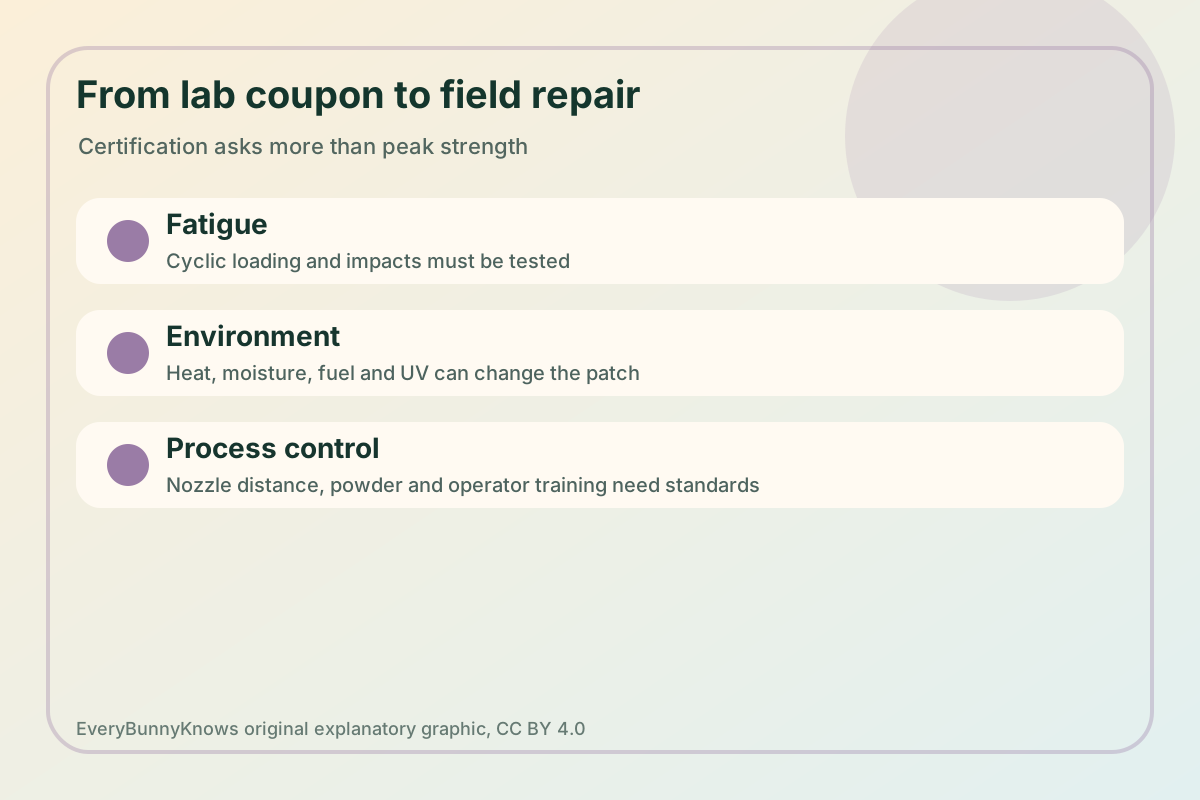
The maturity level is laboratory demonstration and process development. The reported 80 percent figure should be read as a measured result for particular materials, damage geometry and test conditions. Aerospace, automotive, wind-turbine and infrastructure repairs require much more: fatigue tests, impact tests, hot-wet ageing, chemical exposure, inspection methods and repeatability across operators. A patch that performs well in a short tensile test may behave differently after vibration, ultraviolet exposure, freeze-thaw cycling or fuel contact.
Manufacturing limits are also practical. Cold-spray equipment needs compressed gas, powder handling, trained operators and a way to control overspray. The nozzle must reach the damaged area at a useful angle. The repaired surface may need finishing or sealing. For safety-critical parts, engineers must know whether the repair is structural, cosmetic or temporary, and whether it can be inspected later by ultrasound, thermography or another non-destructive method.
The environmental case is cautious but attractive. If a composite panel, aircraft fairing, rail component or vehicle part can be repaired instead of discarded, the material and energy savings can be large. But repair is greener only when it is durable, documented and safe. The repair record should name the powder, parameters, inspection result and allowed service conditions, so the next engineer knows exactly what changed. The useful promise of polymer cold spray is not that broken composites become new again. It is that some damage may become repairable with a lower-heat, more local process, giving engineers another option before replacement.